



Small Rotating Bookcase
A small rotating bookcase brings desk-height order to crowded rooms, turning smoothly to keep reference volumes at your fingertips.
Small Rotating Bookcase
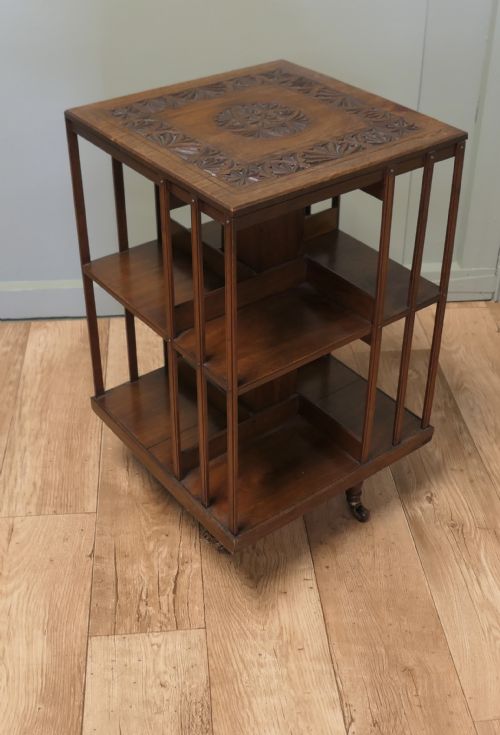
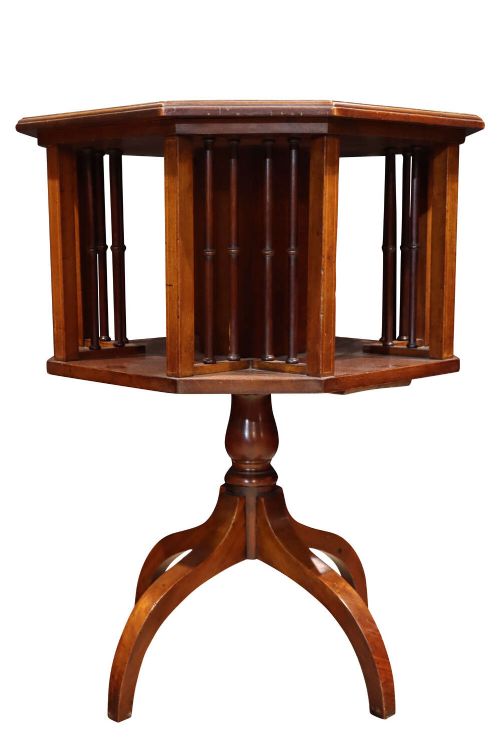
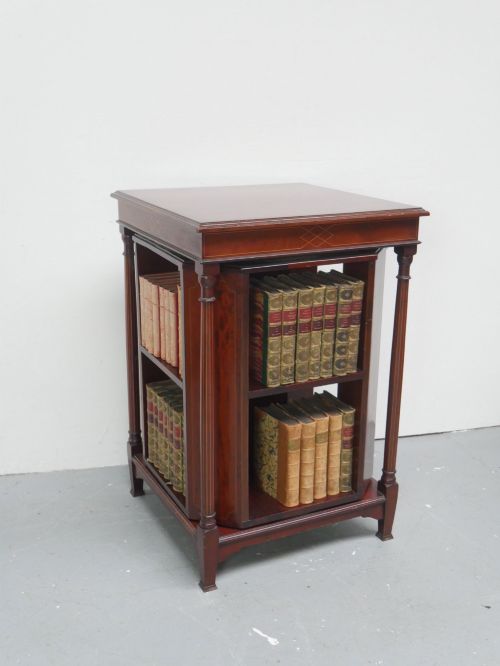
A small rotating bookcase is a compact piece of furniture designed to hold books on multiple sides while spinning freely on a central pivot. You will most frequently meet Edwardian and late Victorian examples on this page, spanning the turn of the twentieth century.
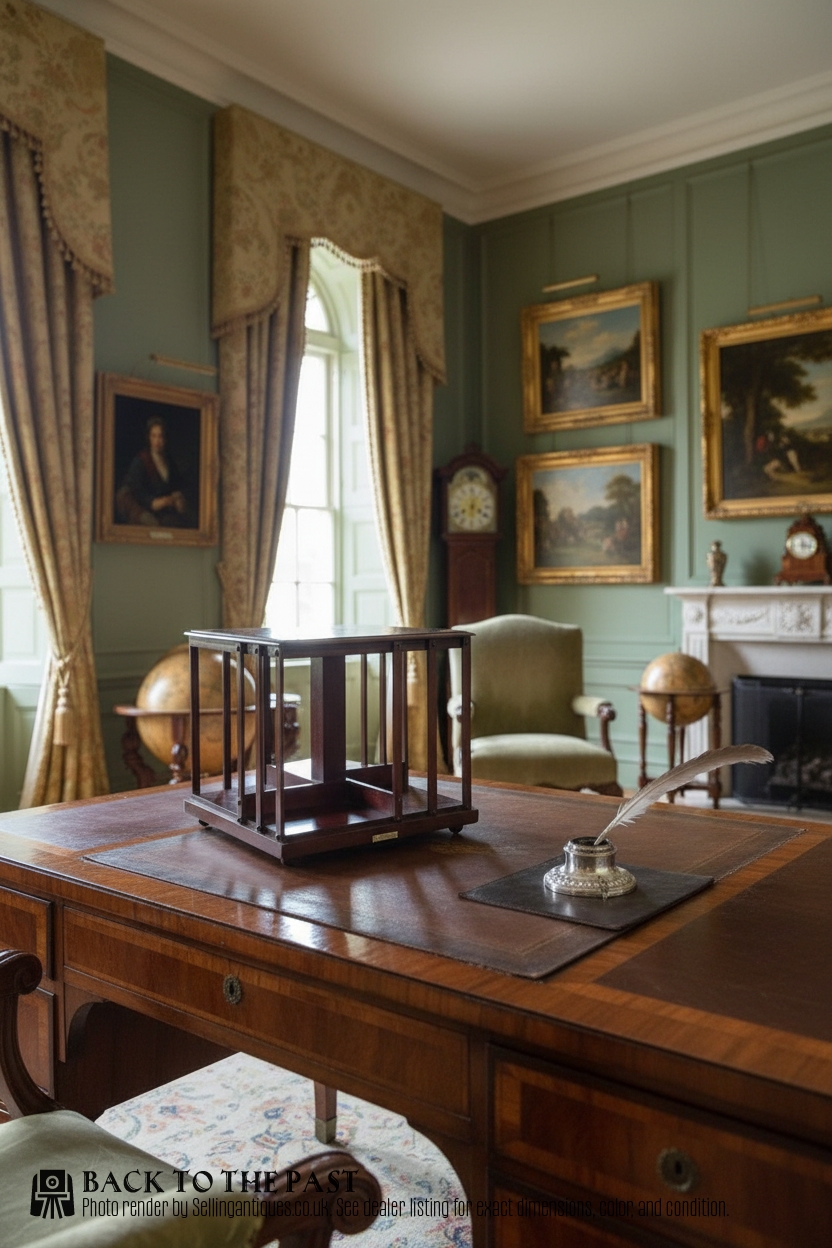
Most pieces encountered here are constructed from mahogany, often embellished with satinwood inlay, alongside sturdy oak and warm walnut. These items appear in both full floor-standing proportions and smaller desktop formats suited to a library table.
The styles range from restrained Edwardian Sheraton Revival pieces to expressive Art Nouveau designs and utilitarian Arts & Crafts forms. They serve the practical purpose of keeping a library accessible within arm's reach without occupying excessive floor space.
How they were made
Makers built these revolving bookcases using solid timbers and handsome veneers like mahogany and walnut, frequently enhancing the surfaces with delicate satinwood inlay work. The structural integrity relies on sturdy framing that supports the weight of dense volumes while spinning.
The concealed internal mechanism typically incorporates iron, metal, and brass components to ensure a smooth, balanced rotation without wobbling. Joinery techniques from the Edwardian and Victorian periods keep the partitions rigid under daily use.
Small Rotating Bookcase Retail Price Guide 2026
Typical asking prices for small rotating bookcase among the pieces listed under this phrase on Sellingantiques today, from the lower quarter to the upper quarter. They describe what is for sale here now, not the wider market.
Current listings feature mahogany, oak, and walnut, spanning the Victorian and Edwardian eras with styles from Art Nouveau to Sheraton Revival.
What varies in quality
The distinction between standard utility items and finer examples rests on the crispness of the cabinetwork and the subtlety of the timber selection. Bookcases featuring finely figured mahogany veneers, clean satinwood banding, and inlaid motifs demonstrate superior craftsmanship.
The engineering of the revolving pivot dictates the daily pleasure of use, with superior mechanisms offering silent, effortless rotation. The presence of well-cast brass hardware and tight, square joinery separates accomplished cabinetmaking from simpler production.
The Small Rotating Bookcase Glossary
- Satinwood inlay
- A contrasting light wood embedded into the darker primary timber to form geometric borders or decorative motifs. This technique brightens the surfaces of Edwardian furniture.
- Revolving pivot
- The central internal mechanism that allows the bookcase to spin on its base. Proper construction ensures the weight distributes evenly during rotation.
- Arts & Crafts
- A design movement prioritising honest construction, visible craftsmanship, and simple oak forms over excessive ornamentation. Pieces from this tradition avoid elaborate veneers in favour of plain timber character.
Small Rotating Bookcase: Frequently Asked Questions
How do I maintain the rotating mechanism?
Keep the central pivot clean of dust and debris to ensure the bookcase continues to spin smoothly without catching.
Avoid applying heavy household oils to the internal hardware unless necessary, as simple dry maintenance preserves vintage metal components best.
Can these hold heavy books?
Most small rotating bookcases are engineered to support standard octavo library volumes and novels without strain.
Desktop and table top versions suit lighter reference books, while floor-standing models handle heavier sets safely across their compartments.
How do I tell Edwardian from Victorian?
Edwardian pieces often feature lighter satinwood inlay and a slightly brighter mahogany tone reflecting turn-of-the-century tastes.
Victorian examples from the late nineteenth century tend toward denser timber finishes and more sombre, robust structural lines.
Where should I place a revolving bookcase?
These pieces thrive beside an armchair or desk where their rotating design permits easy access from a seated position.
Because all sides feature shelving, they function effectively as freestanding elements within a room rather than pressed flat against a wall.