
Mahogany Rotating Book Table
A mahogany rotating book table brings books to hand with a spin, balancing practical reading storage with fine cabinet work.
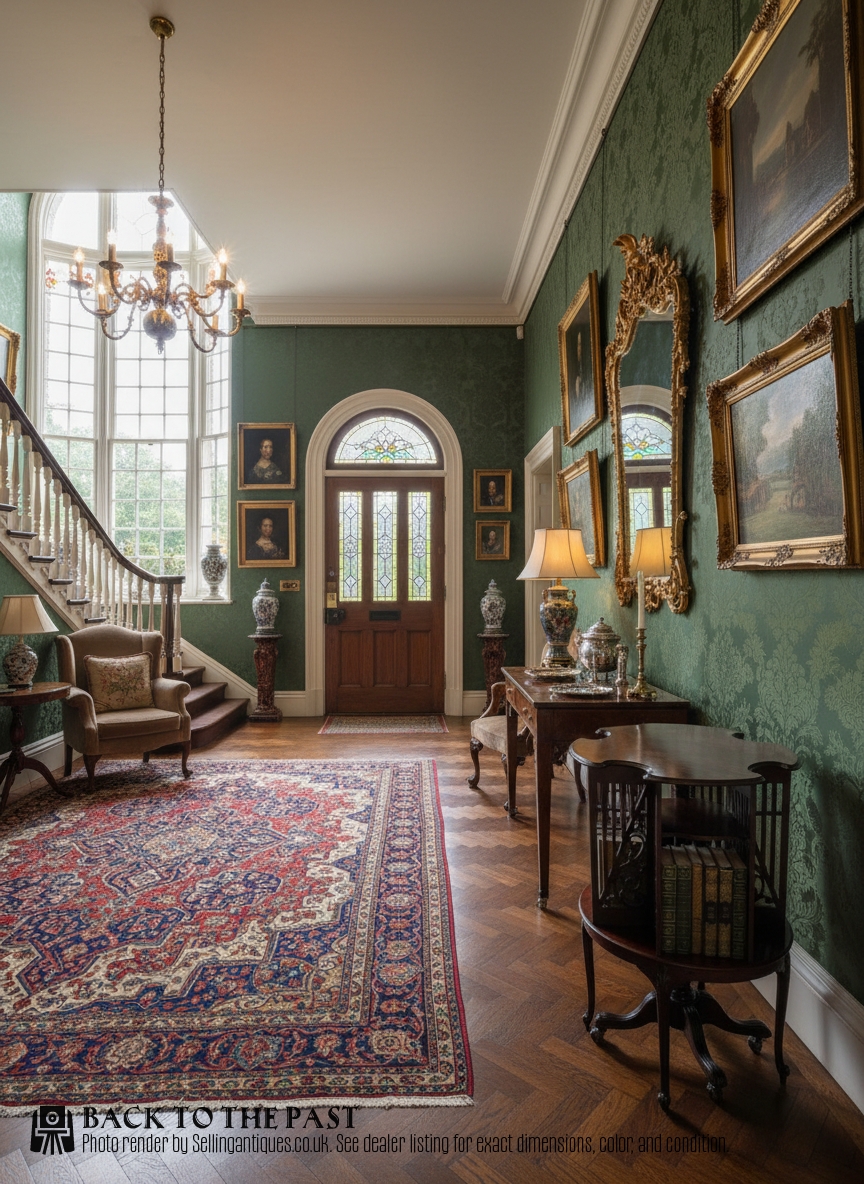
Mahogany Rotating Book Table
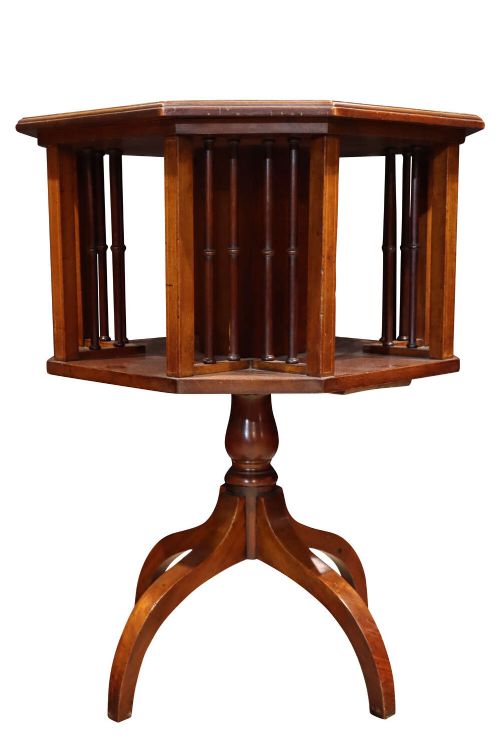
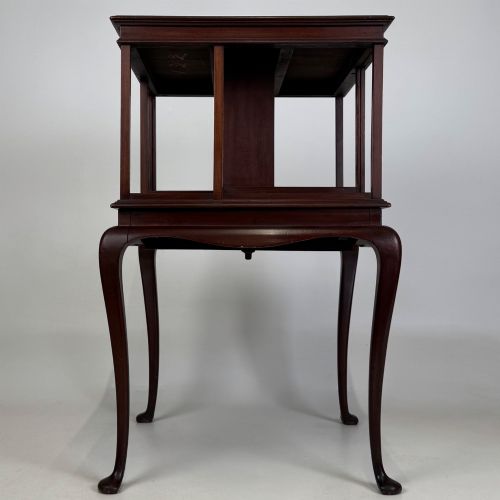
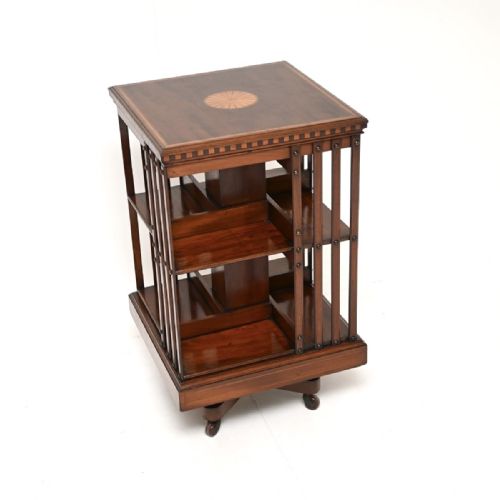
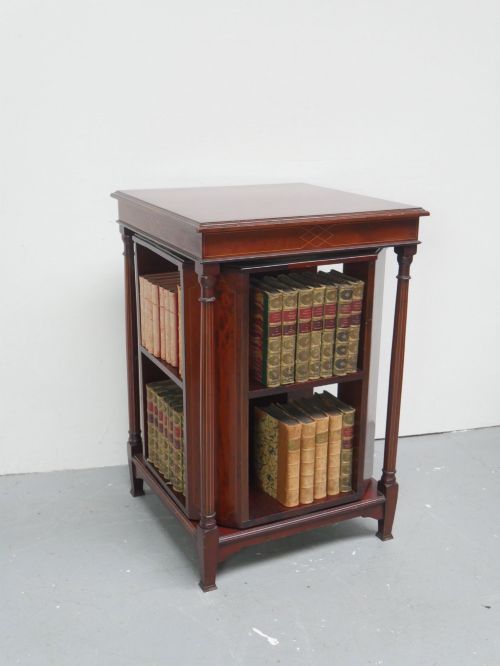
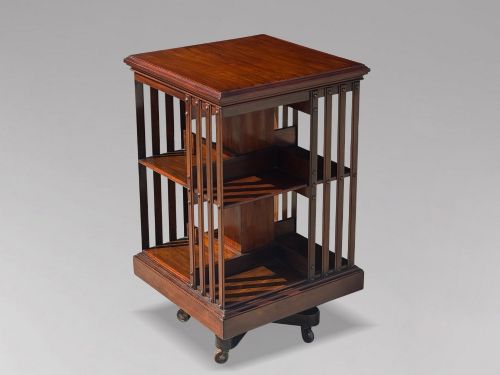
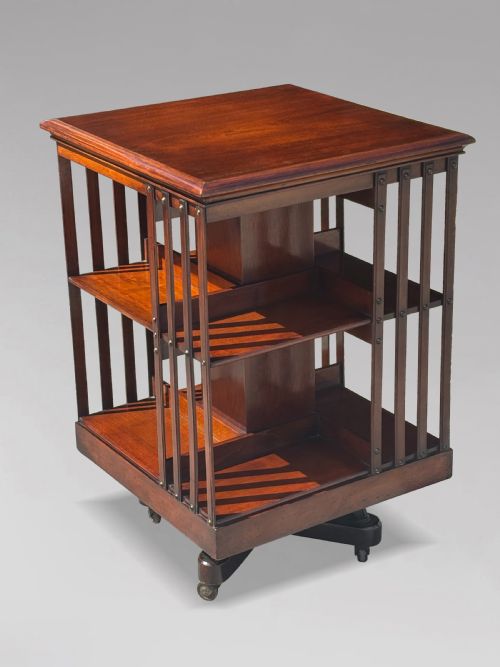
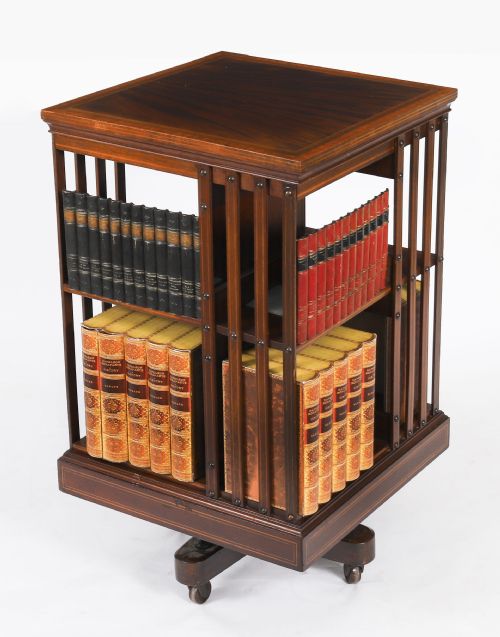
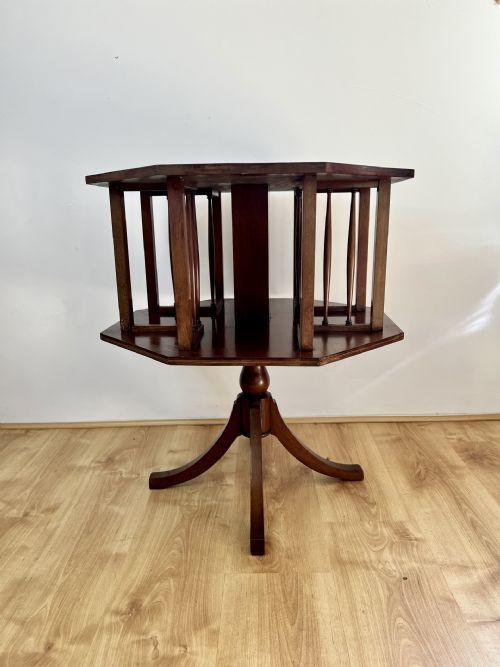
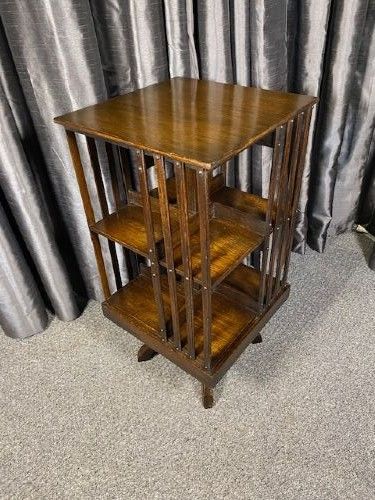
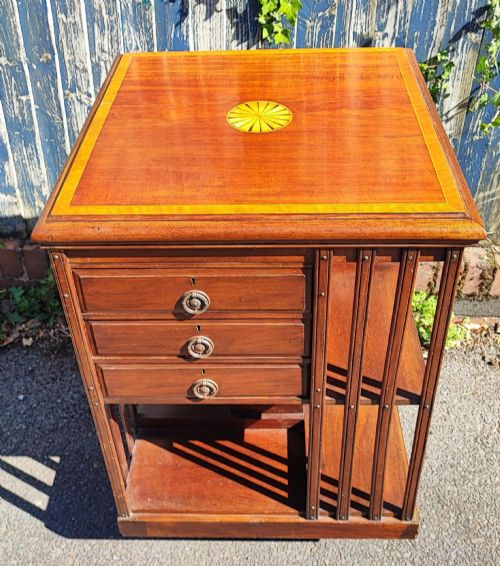
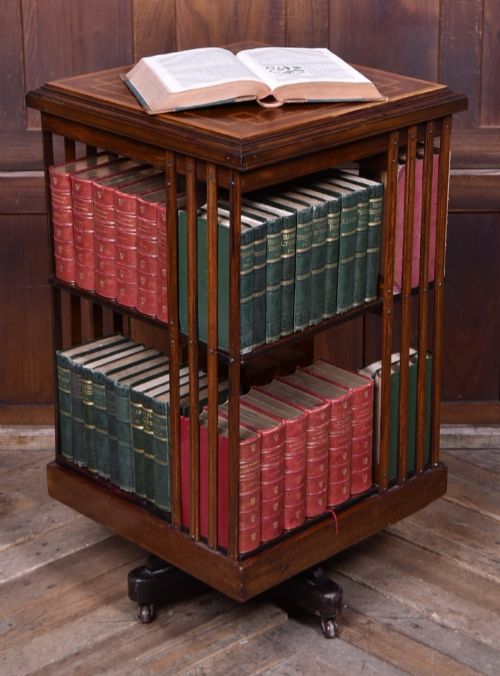
A mahogany rotating book table serves as a convenient multi-tiered container designed to hold volumes upright while sitting atop a revolving mechanism. Most examples met here hail from the Edwardian period or the late Victorian era, spanning floor-standing models and smaller table-top variants.
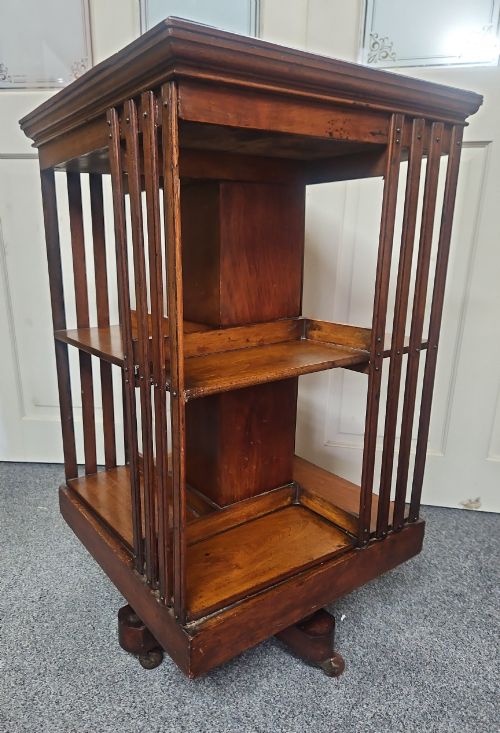
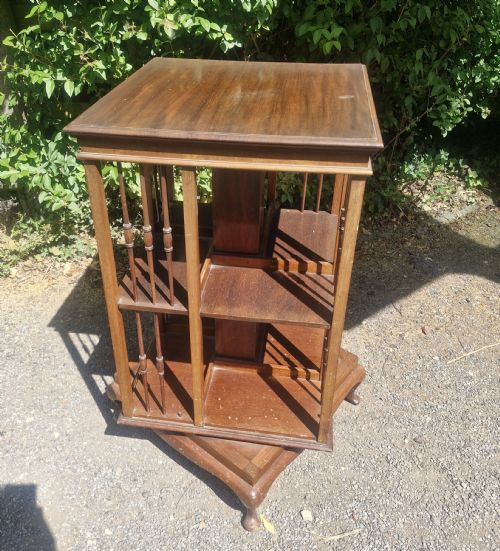
The primary form involves slatted or panelled sides divided into quadrants that spin freely on a concealed base. These tables suit studies, drawing rooms and libraries where quick access to dictionaries, novels or reference sets matters.
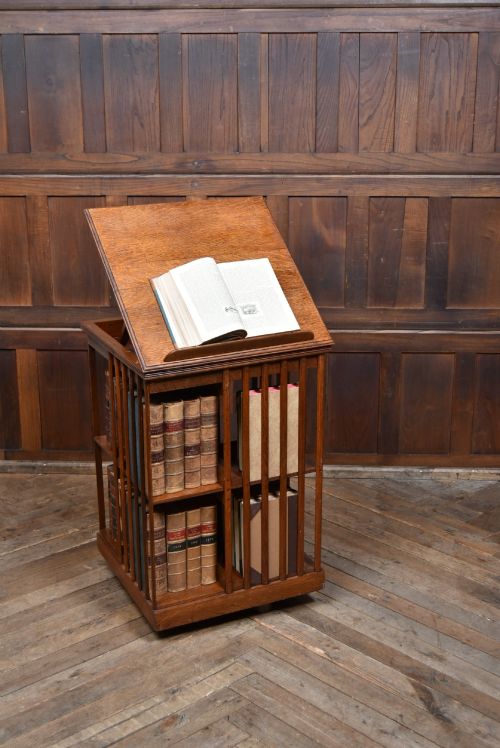
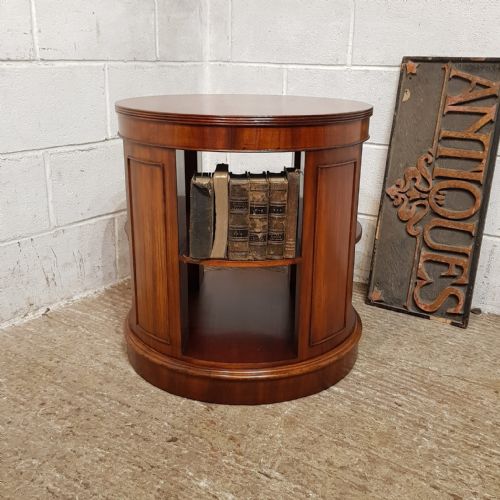
Makers produced these pieces in various scales, from compact desk stands to taller tiered bookcases. Variations in style include plain timber finishes, inlaid satinwood details and occasional brass or marble integrations.
How they were made
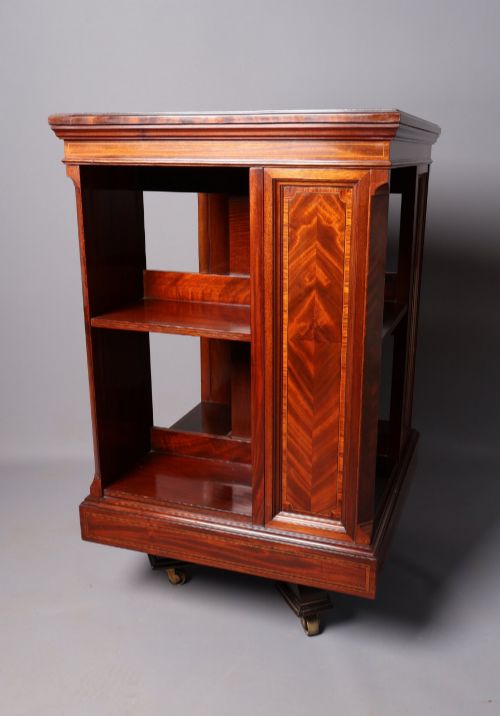
Makers relied principally on solid and veneered mahogany, often selecting flame or figured grain for primary visual surfaces. Secondary woods like oak appear within the interior framing and slatted dividers.
Decoration frequently involved satinwood inlay, contrasting stringing and occasional brass mounts or cast-iron internal mechanisms to ensure smooth rotation. Table-top versions utilised similar cabinet-making techniques on a reduced scale.
The listings show a strong concentration of Edwardian and Victorian pieces, with mahogany as the dominant structural timber.
What varies in quality
The sophistication of the timber selection and the precision of the inlay set the baseline for quality. Plain stock sits at one end, while rich flame mahogany matched with detailed satinwood banding marks the upper tier.
Mechanical execution defines the daily experience of the piece. Superior examples rotate silently and evenly on well-engineered iron or brass pivots, whereas lesser pieces suffer from wobble or resistance in the turn.
Maple & Co
The Mahogany Rotating Book Table Glossary
- Revolving bookcase
- A freestanding or table-top tier of shelves designed to spin on a central pivot. This allows a seated reader to browse multiple directions without leaving a chair.
- Satinwood inlay
- A contrasting light-coloured exotic timber embedded into the darker mahogany surface in geometric or floral patterns. This decorative technique defines many Edwardian Sheraton Revival pieces.
- Flame mahogany
- A decorative veneer cut from the fork of the tree where branches meet the trunk, yielding a distinctive flickering flame pattern. Cabinet makers reserved this timber for the most prominent display surfaces.
- Book mill
- An alternative term for a compact revolving book table or stand designed to keep active reading volumes close at hand. These were popular in late nineteenth and early twentieth-century studies.
- Quadrants
- The four distinct storage compartments that make up the typical circular or square revolving bookcase. Each section holds volumes upright between vertical slats.
Mahogany Rotating Book Table: Frequently Asked Questions
How do I date a revolving bookcase?
Dating relies on stylistic clues and construction methods visible across the piece. Edwardian and late Victorian examples dominate the record, often identified by specific inlay motifs or timber treatments.
Heavier proportions and plain mouldings generally point towards the nineteenth century, whereas lighter satinwood decoration and Sheraton revival styles align with the early twentieth century.
Where were these tables used?
These revolving tables found places beside armchairs in studies, libraries and drawing rooms where quick access to reference books mattered. Their compact footprint suited spaces where standard bookcases took up too much wall room.
Table-top versions sat directly on desks or larger tables to hold immediate reading materials, while floor-standing variants stood independently beside seating.
Do table-top and floor models differ in age?
Both table-top and floor-standing variants appear predominantly across the Victorian and Edwardian periods. The scale changed according to the intended workspace rather than a specific chronological shift.
Smaller desk versions utilised the same revolving mechanisms and inlaid mahogany construction as their taller floor-standing counterparts.
How should I care for a mahogany rotating table?
Maintain the timber by keeping the surface away from direct heat sources and strong sunlight, which can dry out or fade the mahogany veneer. Regular dusting with a dry, soft cloth preserves the polish.
Avoid excessive moisture, and occasionally check the central rotating mechanism beneath the base to ensure it continues to turn smoothly without friction.