



Dark Mahogany Bookstand
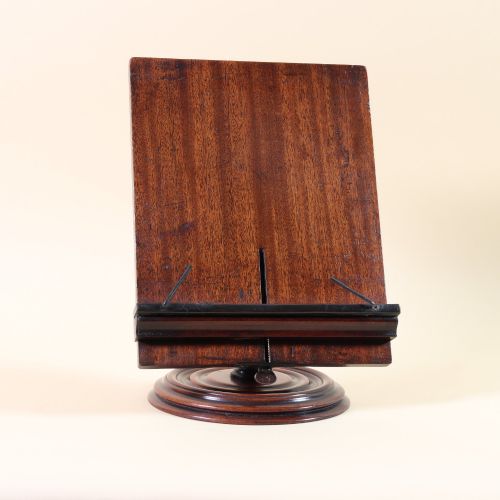
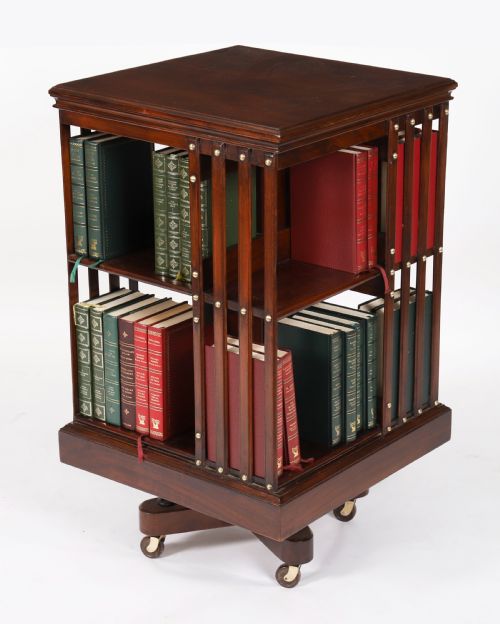
A dark mahogany bookstand is a sturdy desk-top rest or revolving bookcase designed to keep heavy volumes close at hand.

Dark Mahogany Bookstand
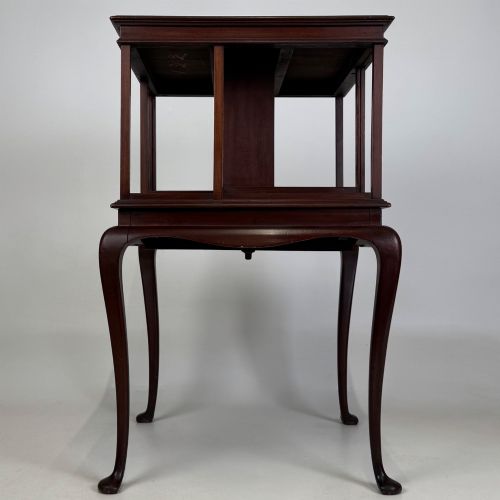
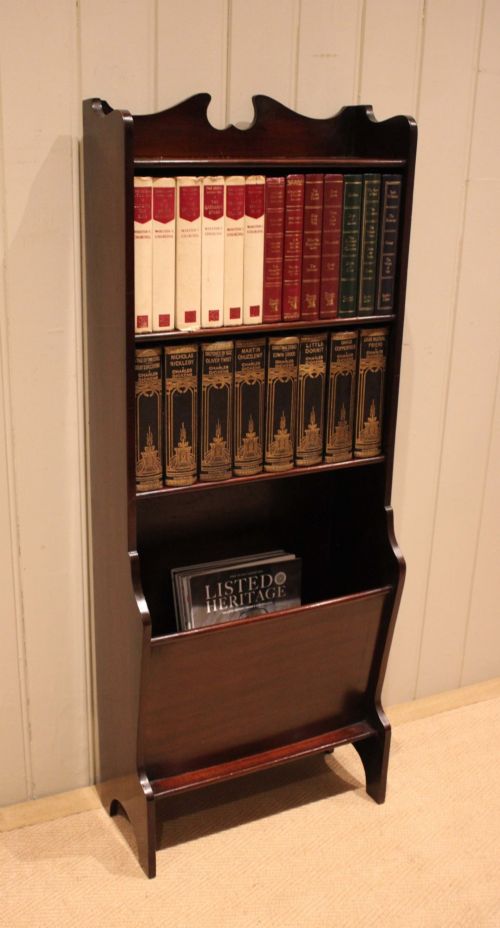
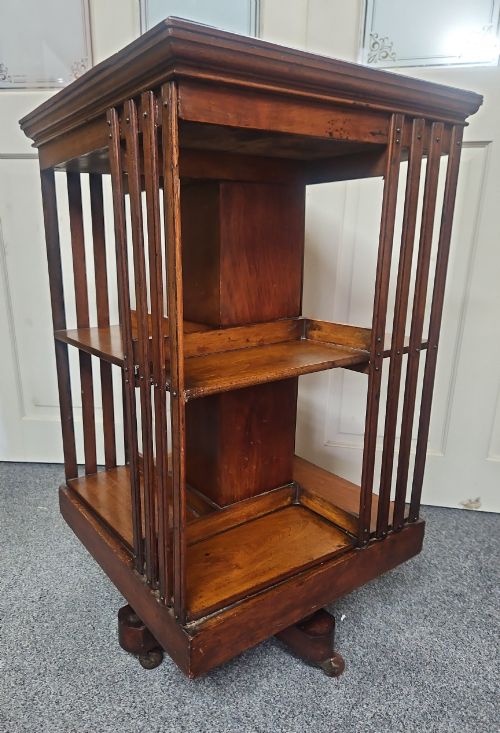
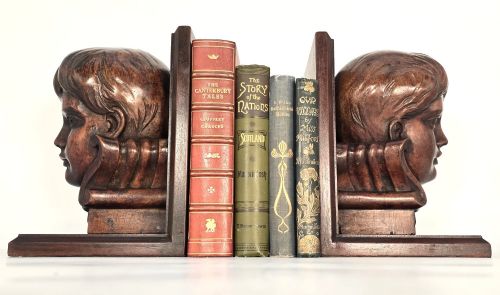
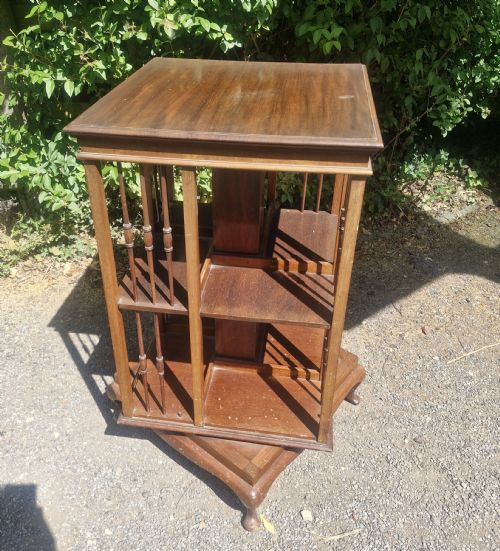
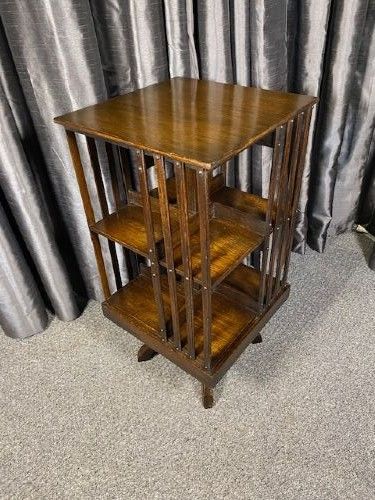
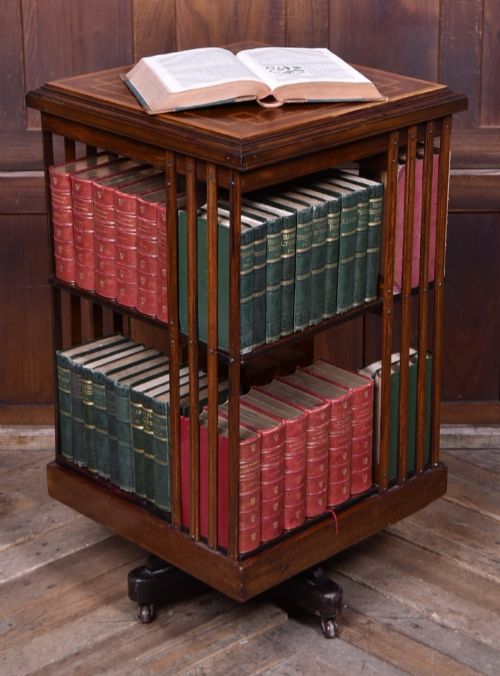
A dark mahogany bookstand encompasses desk-top rests, library book troughs, and revolving bookcases built during the Victorian and Edwardian eras. Buyers searching for a dark mahogany bookstand will most frequently encounter revolving bookcases from the Edwardian period or late nineteenth century.
The selection ranges from compact desk-top book rests to tall revolving stands and open shelving units. Pieces incorporate practical additions like magazine racks and brass fittings, reflecting the functional demands of Victorian and Edwardian libraries.
Materials and construction
Construction relies primarily on rich mahogany, occasionally paired with secondary timbers like oak, alongside brass mechanisms and cast iron supports. Cabinetmakers utilised durable joinery to ensure rotating tiers and extending book rests functioned smoothly under the weight of heavy volumes.
Surface treatments accentuate the natural grain of the timber through polishing, whilst decorative elements include satinwood inlay and ecclesiastical carving. Metal components such as brass brackets and iron ratchets provide structural reinforcement to moving parts.
Listings span the Victorian and Edwardian periods, featuring mahogany, oak, brass, and cast iron.
Assessing quality and craftsmanship
Superior examples distinguish themselves through crisp carving, balanced proportions, and the integration of fine secondary woods like satinwood inlay. The smoothness of the revolving mechanism and the soundness of the internal framework separate standard utility pieces from finer cabinet work.
Meticulous attention to detail in the brass fixtures and the depth of the mahogany finish indicate higher standards of workshop production. Pieces bearing maker attribution, such as work by established firms, demonstrate elevated levels of design and execution.
Maple & Co
The Dark Mahogany Bookstand Glossary
- Revolving bookcase
- A freestanding tiered bookcase designed to rotate on a central pivot for easy access to books from any angle.
- Book rest
- A portable desk-top stand intended to hold a single volume at an angled reading position.
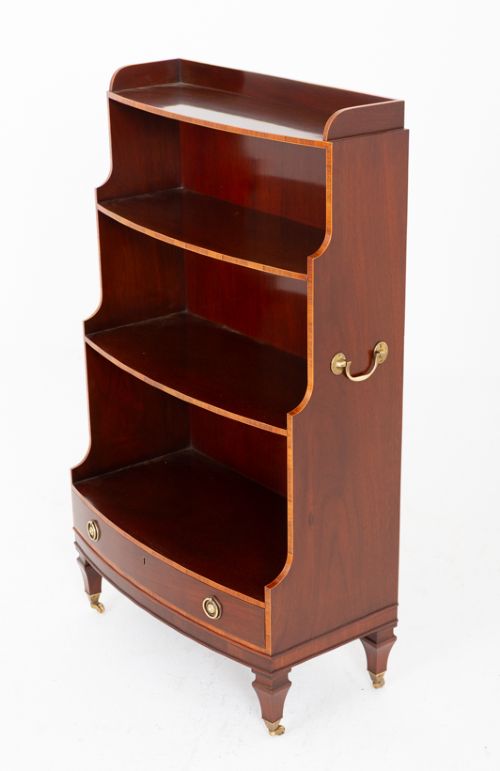
- Waterfall bookcase
- A set of open shelves where each tier steps back progressively from the one below it.
- Satinwood
- A light-coloured, durable timber frequently utilised for contrasting inlay and stringing on dark mahogany furniture.
- Gothic Revival
- A nineteenth-century architectural and decorative style incorporating pointed arches, trefoils, and ecclesiastical motifs.
Dark Mahogany Bookstand: Frequently Asked Questions
How do I clean a mahogany bookstand?
Dust the wood regularly with a soft, dry cloth to prevent dirt accumulation. Avoid using silicone-based polishes or harsh chemical sprays.
Apply a traditional beeswax sparingly once or twice a year to nourish the timber and maintain its lustre.
Will a revolving bookcase damage my floor?
Most revolving stands sit on a cruciform base with small castors or feet that distribute weight evenly. Placing the stand on a sturdy rug or using protective cups prevents indentation on delicate wooden floors.
Ensure the mechanism turns freely without scraping the supporting base against the ground.
How do I tell Victorian from Edwardian pieces?
Victorian pieces tend to feature heavier proportions, darker finishes, and sometimes Gothic revival carving or elaborate brass work. Edwardian examples often display lighter construction, satinwood inlay, and simpler classical lines.
Examine the secondary woods and construction methods inside the shelves for clues to the period of manufacture.
Can these stands hold heavy textbooks?
Revolving bookcases and desk rests were originally built to support heavy reference volumes, atlases, and bound journals. Solid mahogany construction provides the structural integrity required for daily library use.
Distribute heavier books evenly across the lower tiers of a revolving bookcase to maintain stability.