
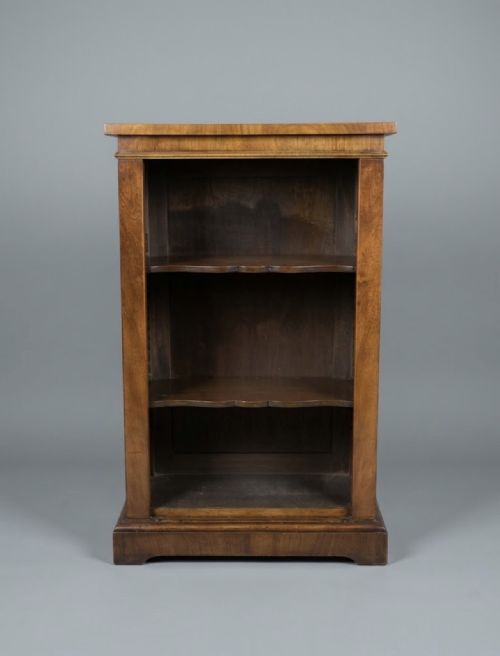
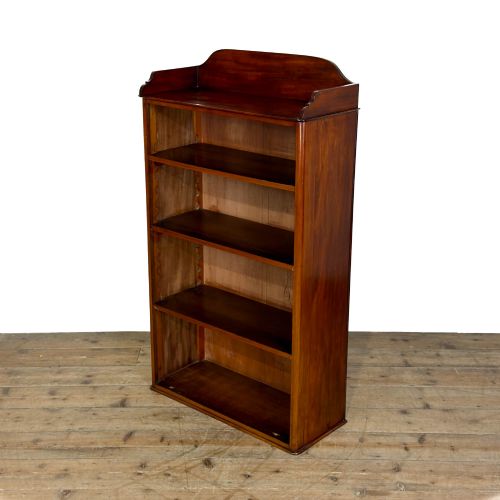
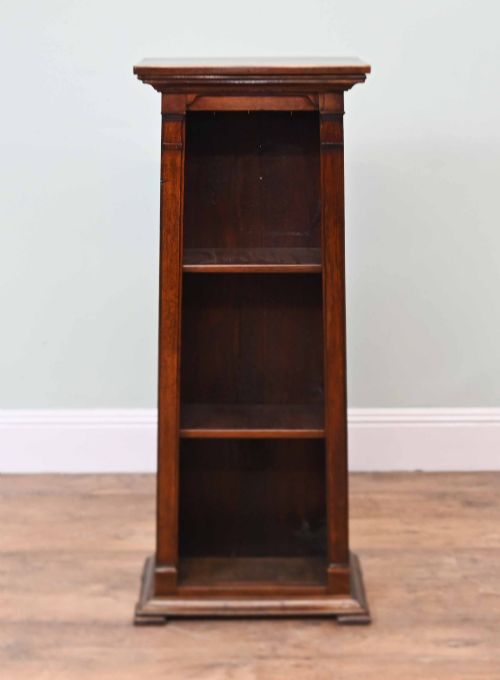
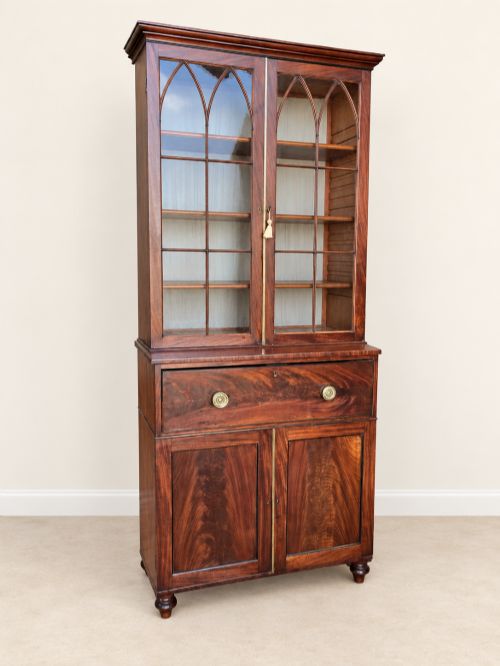
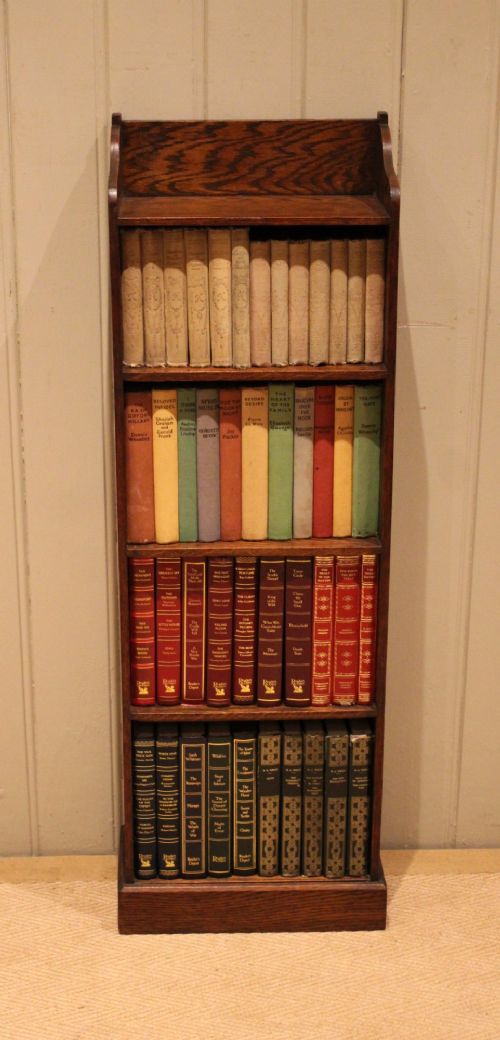
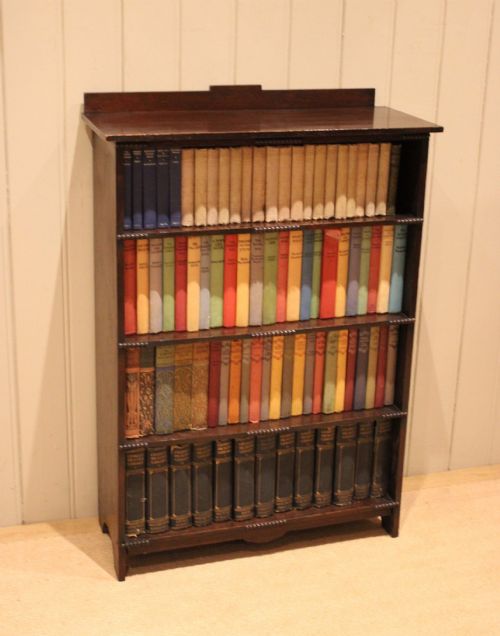
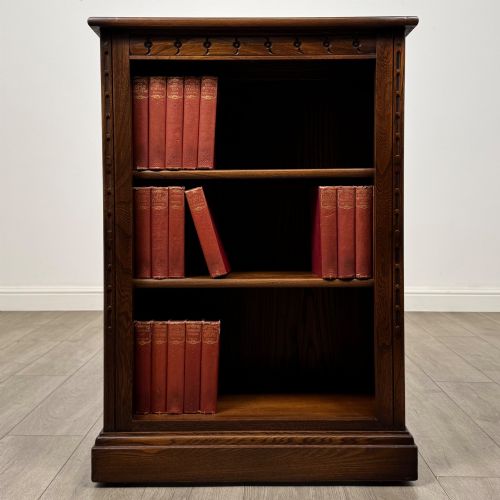
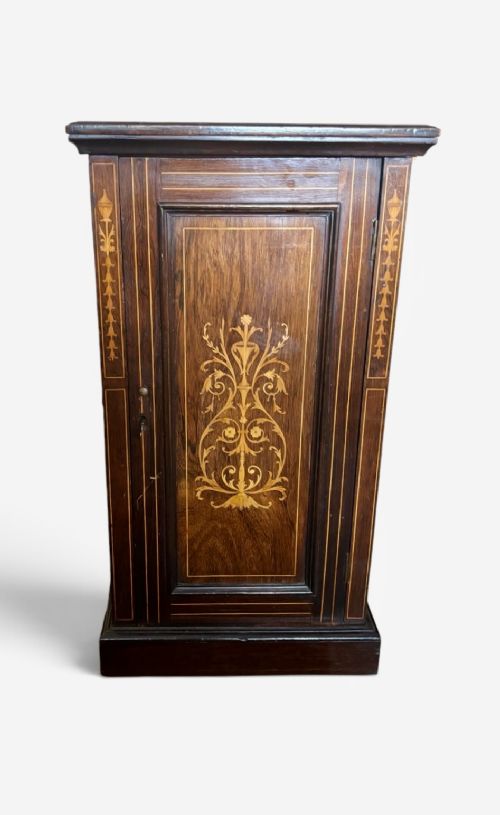
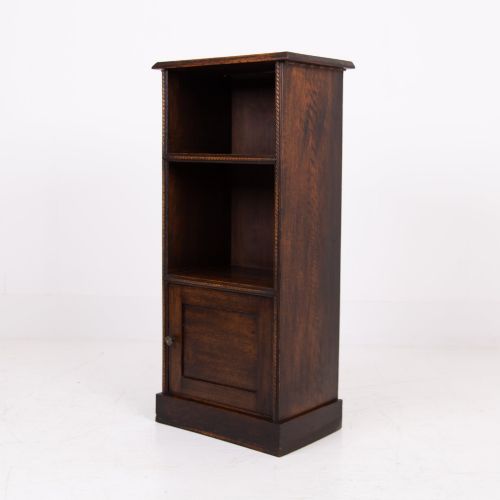
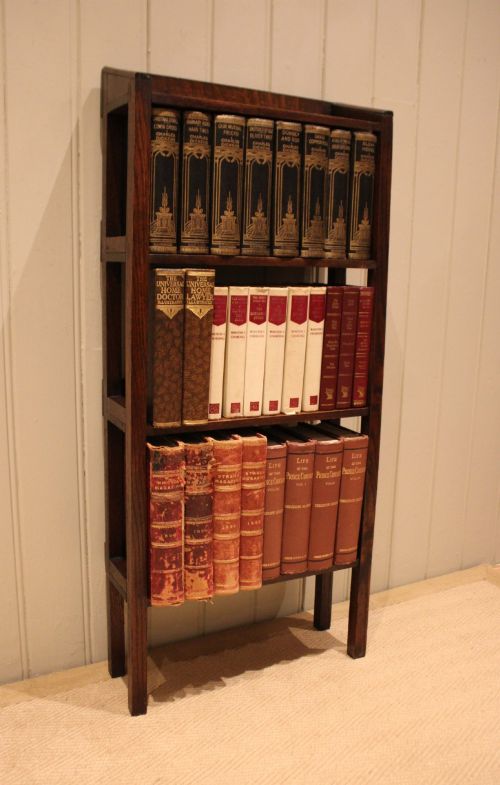
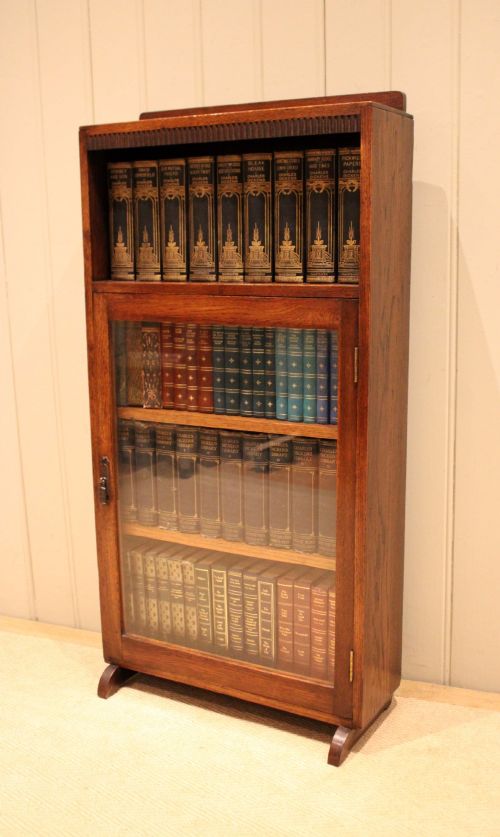
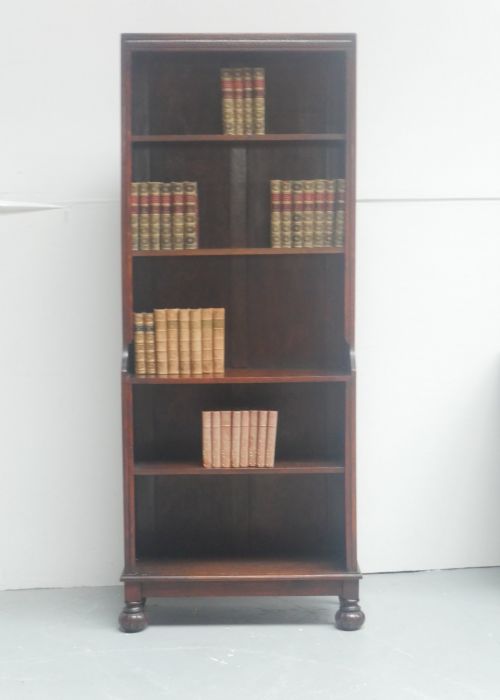
Narrow Wood Bookcase
A narrow wood bookcase delivers practical shelf space in tight footprints, drawing on centuries of cabinetmaking in mahogany, oak and rosewood.
Narrow Wood Bookcase
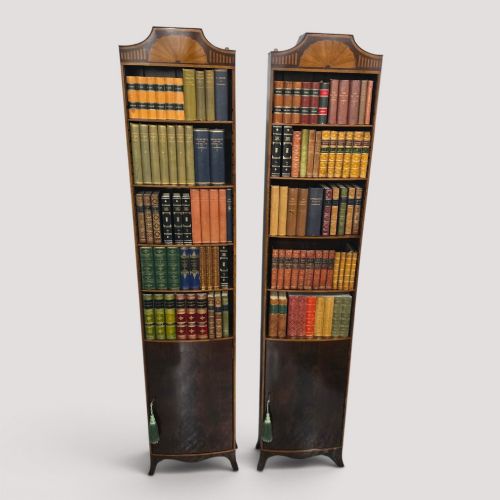
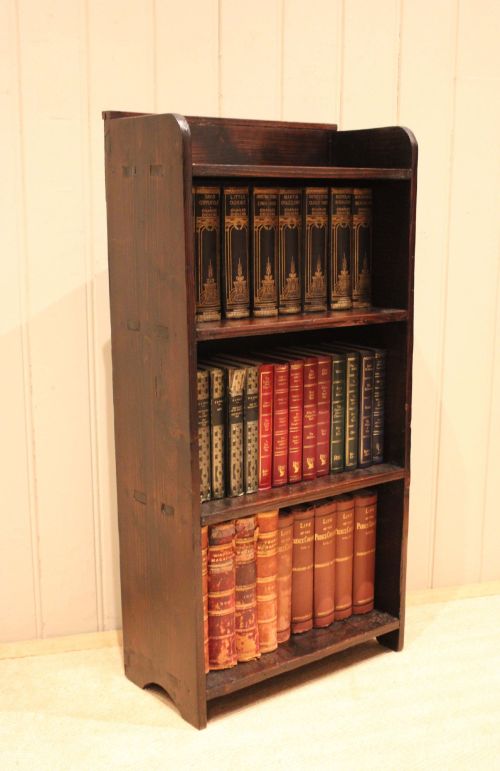
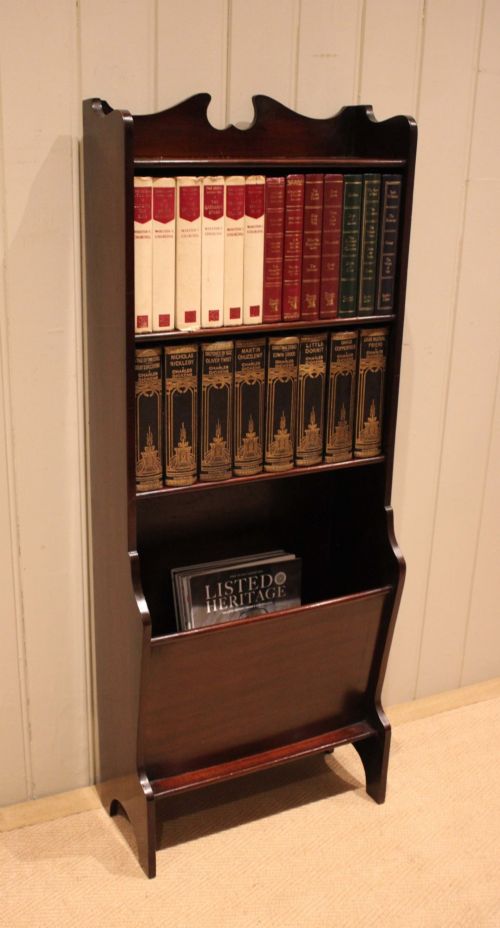
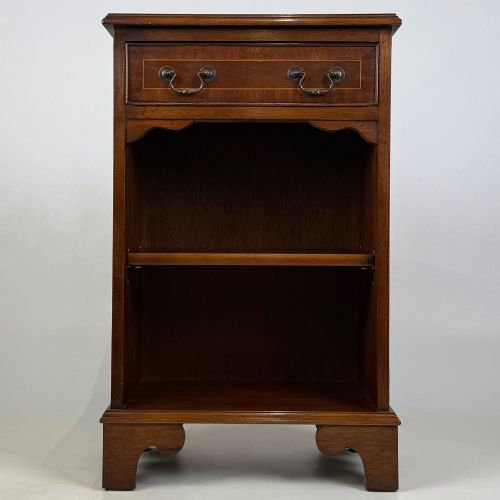
A narrow wood bookcase provides vertical shelving solutions designed for compact domestic spaces. These pieces emerge in forms ranging from open shelf units to glazed display cabinets and bureau bookcases.
The selection spans periods from the nineteenth century through the Edwardian era and into the early twentieth century. Common formats include slim open bookcases, corner cabinets, and standing shelf units.
Makers utilise timbers such as mahogany, oak, rosewood and satinwood. Construction reflects the prevailing tastes of Victorian, Edwardian, and revivalist workshops.
How they were made
Cabinetmakers construct these pieces primarily from solid hardwoods like mahogany, oak and walnut, frequently applying decorative veneers of satinwood or rosewood over secondary woods. Timber selection dictates both the structural integrity and the grain pattern visible on the finished surfaces.
Decoration relies on specialist techniques including marquetry inlay, brass mounts, ormolu, and ebonising. Joinery methods involve traditional pegged or dovetailed joints, while glass doors and beaded edges add refinement to glazed and open formats.
Listings feature narrow bookcases spanning the nineteenth century, Victorian era, Edwardian period, and the 1920s.
What varies in quality
The standard of timber selection and veneer matching defines the visual authority of a piece. Finer examples display carefully chosen grain patterns and precise inlay work rather than plain secondary woods.
The sophistication of the joinery and hardware distinguishes workshop production. Pieces retaining original castors, glazed doors with authentic glass, and well-executed mouldings command greater regard.
Waring and Gillows·Holland and Sons
The Narrow Wood Bookcase Glossary
- Waterfall bookcase
- A tiered shelving unit where each successive shelf steps back from the one below, popular during the Edwardian period. The graduated depth creates a distinctive cascading profile.
- Pier cabinet
- A low or tall narrow cabinet designed to fit against the wall space between windows. These pieces often feature glass doors or decorative mounts.
- Inlay
- A decorative technique where contrasting woods or materials are inserted into recesses within the solid timber surface. Satinwood and rosewood frequently serve this purpose on mahogany carcases.
- Beaded edge
- A narrow semi-circular moulding applied to the edge of a shelf or frame. This detail provides subtle relief and structural protection.
- Ormolu
- Gilded bronze mounts applied to furniture for decorative effect. Such hardware appears on select nineteenth-century pieces.
Narrow Wood Bookcase: Frequently Asked Questions
Where should I place a narrow bookcase?
These compact units fit comfortably into alcoves, narrow hallways, or beside fireplaces where standard furniture proves too bulky. Their restricted footprint makes them suitable for rooms with limited wall space.
Positioning them away from direct heat sources protects the timber and veneer from drying out or warping over time.
How do I care for antique wood furniture?
Dust the surfaces regularly with a soft, dry cloth to prevent the accumulation of grit that might scratch the polish. Avoid using silicone sprays or harsh chemical cleaners.
Maintain a stable room humidity to keep the solid woods and delicate veneers from cracking or separating from their carcases.
How do I distinguish Edwardian pieces from Victorian ones?
Victorian furniture often employs heavier timbers, darker finishes, and more ornate carving or classical revival motifs. The proportions tend to be robust and grounded.
Edwardian pieces generally present lighter, more slender proportions with brighter mahogany or satinwood surfaces and restrained inlay work.
Are open bookcases original or altered?
Many open configurations began life with doors that were subsequently removed to suit changing domestic fashions. Examining the interior frame reveals hinge marks or rebates where doors once hung.
Original open bookcases show consistent finishing and wear patterns across the interior and exterior shelf edges.