

Antique Mahogany Canterbury Stand
An antique mahogany canterbury stand is a tiered wooden holder for sheets, folios and journals, combining mobility with elegant partitions.
Antique Mahogany Canterbury Stand
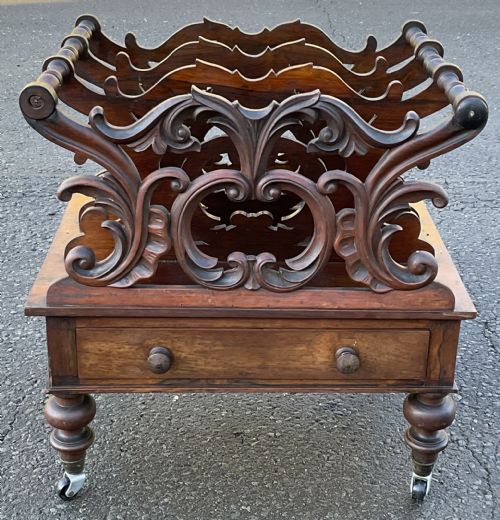
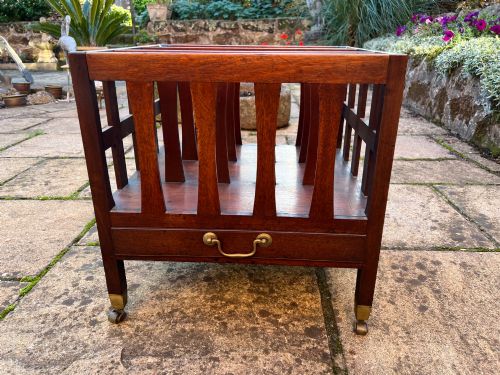
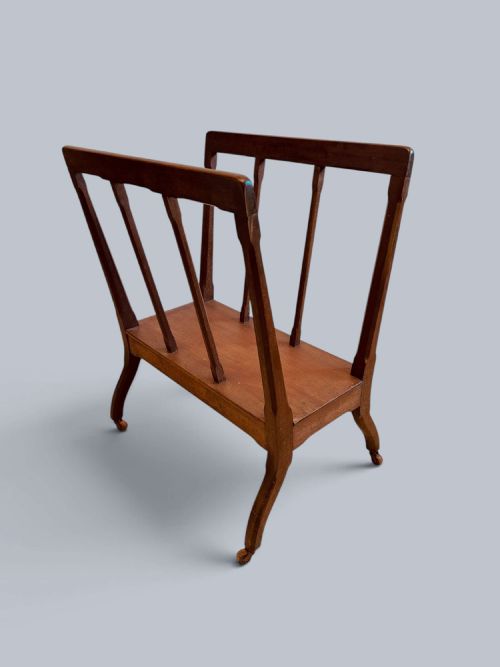
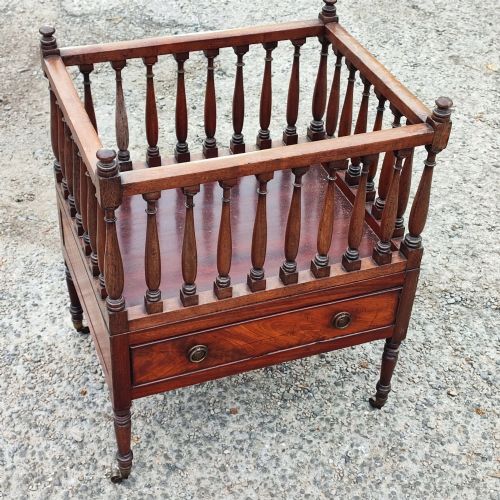
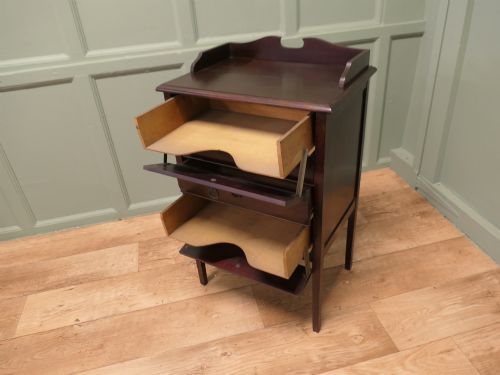
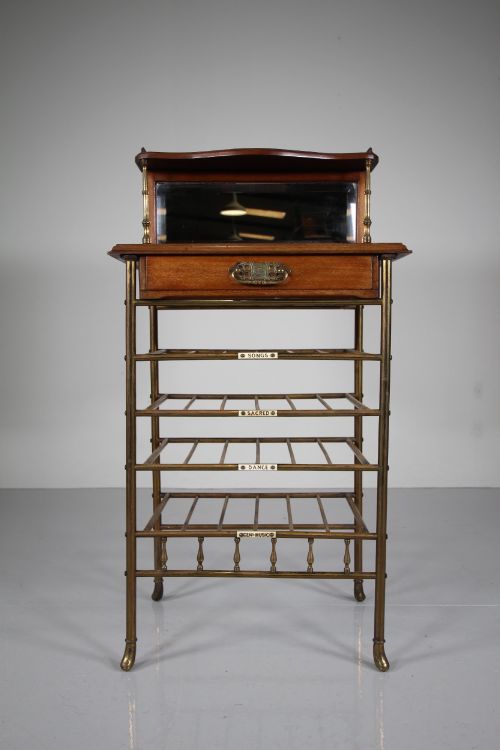
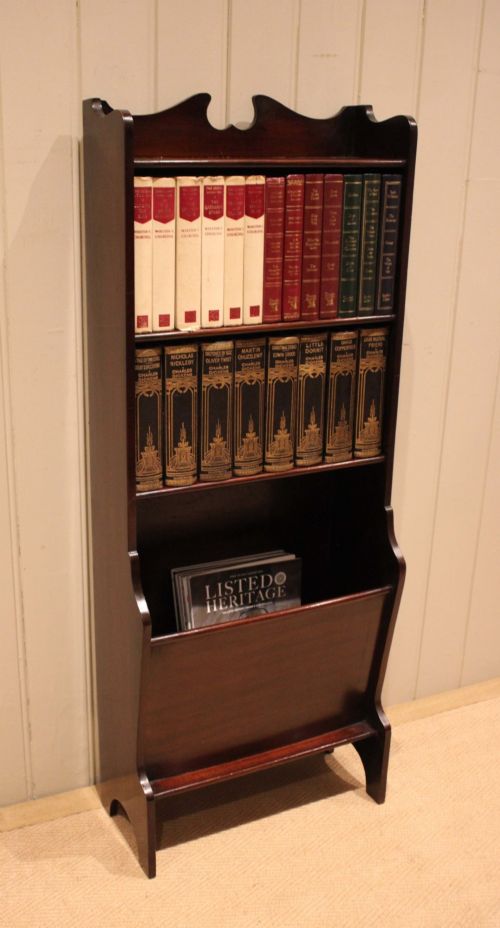
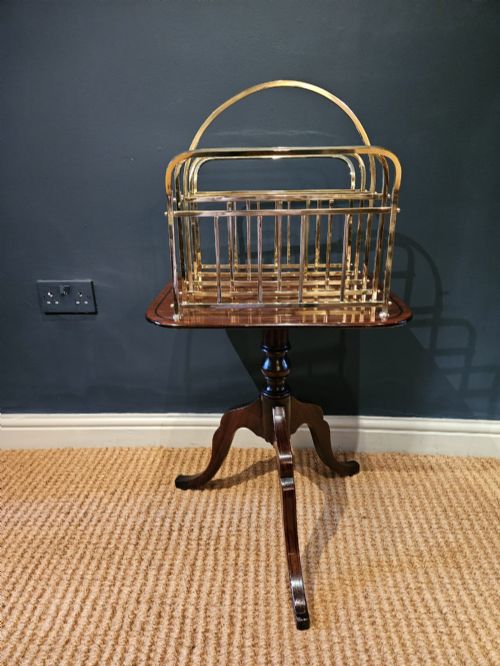
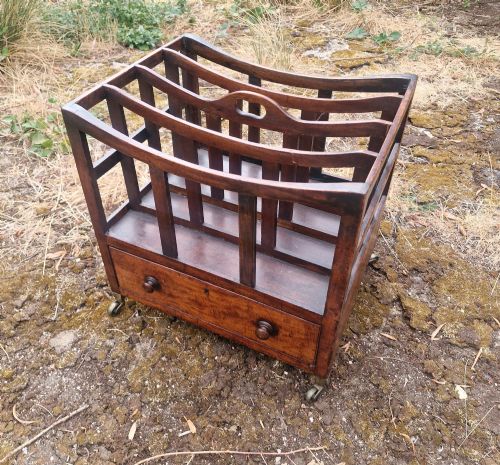
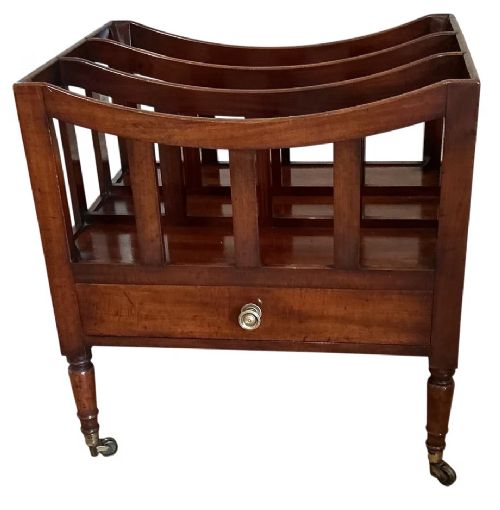
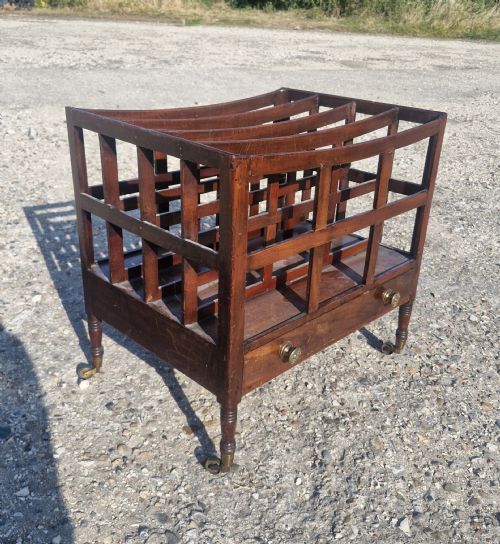
The antique mahogany canterbury stand is primarily a segmented stand designed to hold sheet music, folios, books and magazines. When you search this phrase, you encounter pieces that range from open-slatted tray structures to enclosed cabinets with drawers.
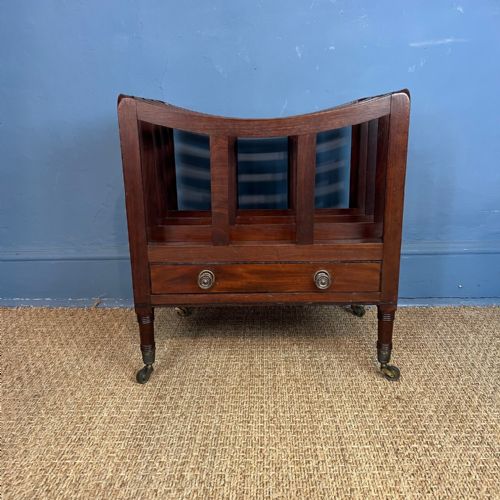
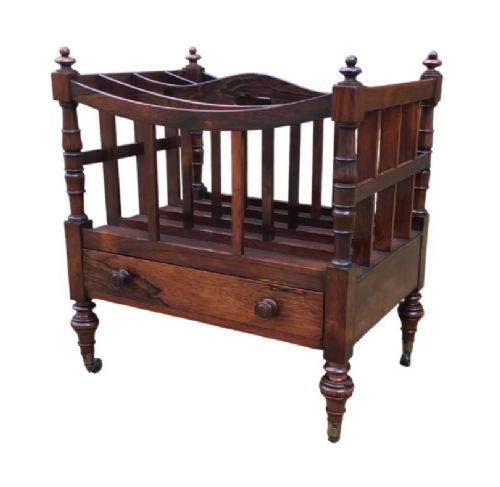
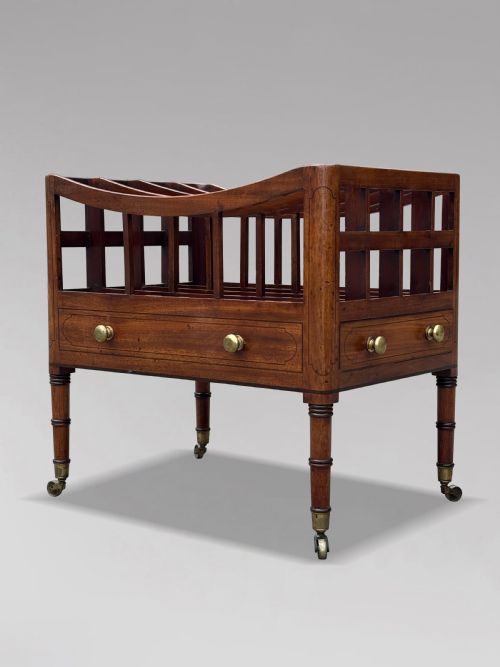
The versions most common on this page date from the Georgian, Regency and Victorian periods, executed in mahogany or rosewood. They often sit on turned legs fitted with castors, which permitted easy movement around a drawing room.
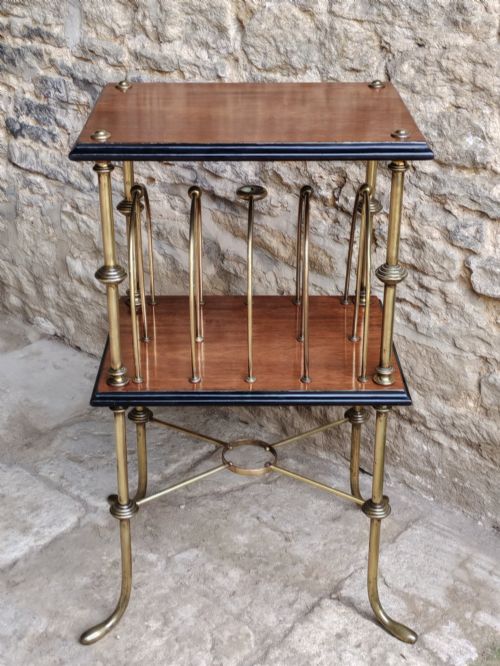
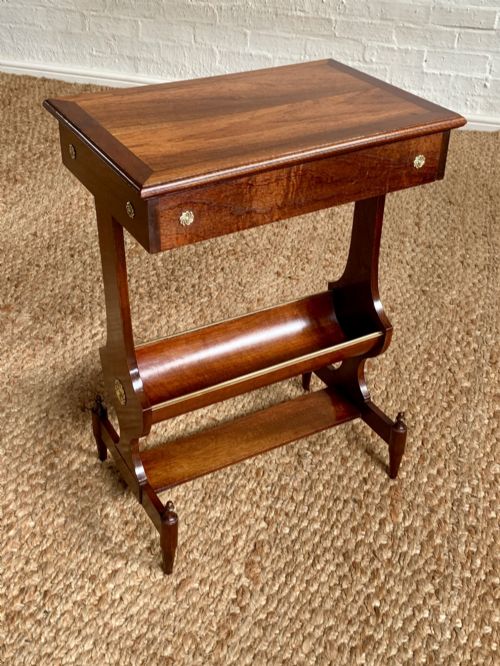
Beyond standard musical uses, forms include boat-shaped troughs, folio display stands and combination tables with lower compartments. Each variation reflects the changing domestic storage needs of the nineteenth and early twentieth centuries.
Materials and Construction
Makers relied heavily on solid mahogany and figured veneers, occasionally utilising dense Cuban mahogany for weight and rich grain pattern. Brass fittings, such as castors and handles, supplied both structural durability and decorative contrast.
Dividers and slatted rails were joined with precision to support paper and folios without snagging delicate bindings. Lower drawers frequently featured hand-cut dovetails, demonstrating traditional cabinet-making standards of the period.
Antique Mahogany Canterbury Stand Retail Price Guide 2026
Typical asking prices for mahogany canterbury stand among the pieces listed under this phrase on Sellingantiques today, from the lower quarter to the upper quarter. They describe what is for sale here now, not the wider market.
Some nineteenth-century makers evidently believed musical enthusiasm required heavy brass castors to chase the piano around the room.
Factors of Quality
Quality rests in the crispness of the turned spindle work, the integrity of the timber joints and the choice of mahogany grain. Pieces with finely figured Cuban mahogany or well-executed inlay stand apart from plainer utility items.
Proportion and stability dictate overall merit, as taller stands require robust framing to prevent wobbling on their castors. Original brass hardware and smooth-running drawers further distinguish superior examples from ordinary workshop production.
Liberty
The Antique Mahogany Canterbury Stand Glossary
- Canterbury
- A low stand with upright partitions designed originally for holding sheet music or loose folios. Later iterations frequently functioned as magazine racks.
- Folio stand
- A hinged or upright display frame meant for holding large prints, maps or unbound books. These often feature adjustable mechanisms.
- Cuban mahogany
- A dense, heavy variety of mahogany sourced from the Caribbean, prized for its deep colour and pronounced figuring. It was widely used in high-status furniture before stocks depleted.
- Castor
- A small wheel fitted to the base of furniture legs to allow easy rolling across carpets and floors. They are frequently made of brass and porcelain.
- Boat-shaped
- A descriptor for troughs whose curved sides resemble the hull of a vessel. This profile is particularly prevalent in Regency-era designs.
Antique Mahogany Canterbury Stand: Frequently Asked Questions
What were canterbury stands originally used for?
These stands were built to hold sheet music and unbound musical scores near a piano or harp.
As domestic habits shifted, owners repurposed them to store newspapers, books and weekly periodicals in the drawing room.
How do I date a mahogany canterbury?
Dating relies on stylistic clues like leg turning, brass castor design and the presence of inlay or hand-cut joinery.
Georgian and Regency pieces tend to show lighter, more architectural frames, whereas Victorian examples often feature heavier mouldings.
Are these stands sturdy enough for daily use?
Most pieces remain structurally sound, provided the upright slats and leg joints are secure.
Because they were designed to be wheeled across floors on castors, the undercarriage benefits from occasional gentle checking.
What is the difference between a canterbury and a music cabinet?
A traditional canterbury utilises open slatted partitions for visible storage of folios and sheet music.
A music cabinet encloses the contents behind doors or drop-down fronts, often incorporating internal sliding shelves.