



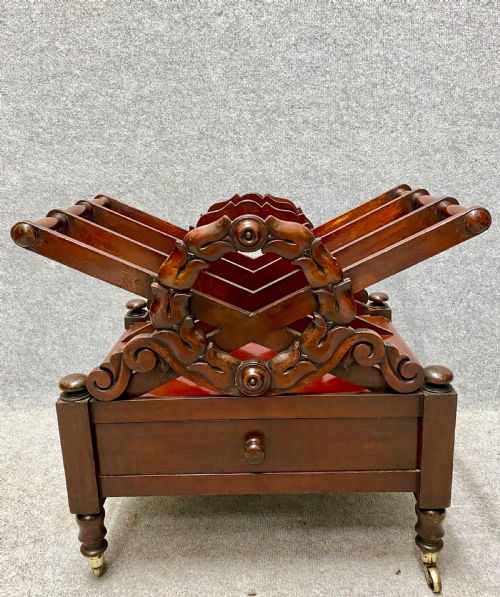


Carved Wooden Newspaper Rack
A carved wooden newspaper rack organises your periodicals with traditional craftsmanship, combining practical division with rich cabinet woods.
Carved Wooden Newspaper Rack
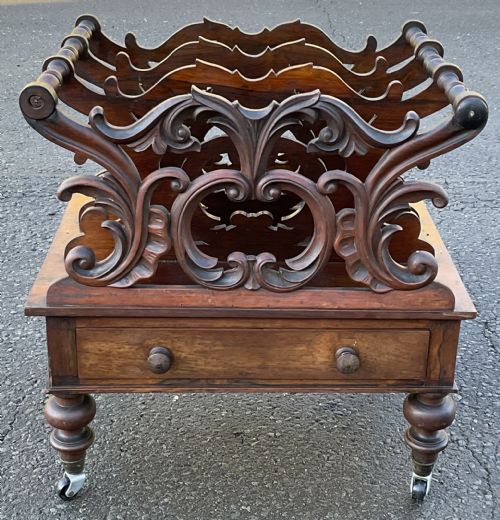
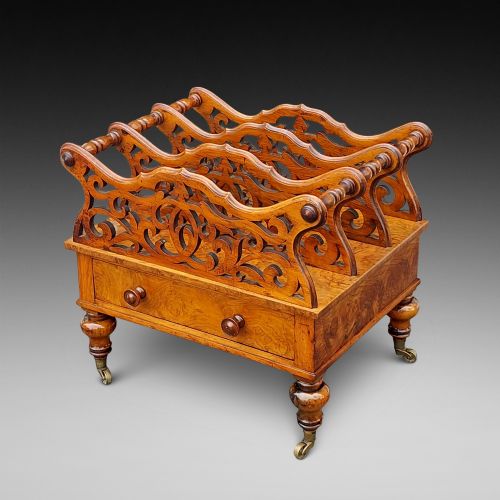
When you search for a carved wooden newspaper rack, you encounter freestanding furniture designed to hold daily journals, periodicals, and sheet music. These pieces range from early nineteenth-century Regency and Victorian canterburys to Edwardian and later twentieth-century magazine stands.
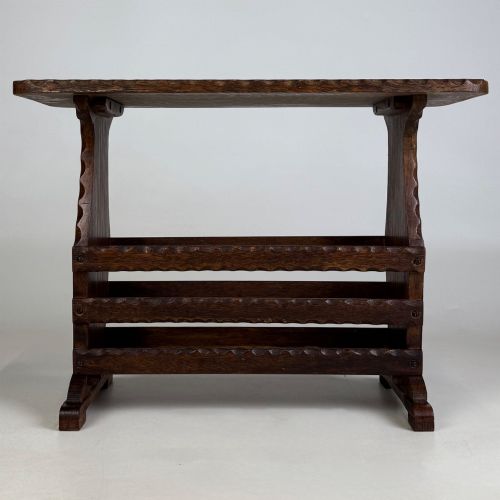
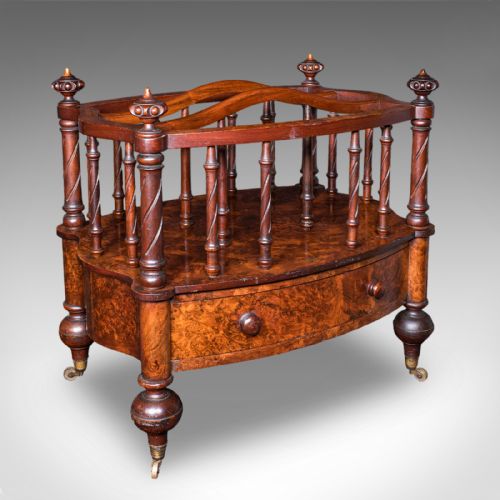
The most common forms on this page include canterburys with pierced scroll divisions, freestanding side tables, and standing racks. They appear in styles from George IV and French nineteenth-century to Arts and Crafts, reflecting varied domestic uses across the decades.
Originating primarily from English and French workshops, these items serve as both functional desktop or floor storage and decorative room furniture. The selection bridges formal mahogany pieces and sturdier oak variants from the nineteen-twenties and thirties.
How they were made
Cabinet makers utilised dense hardwoods such as mahogany, rosewood, walnut, and burr walnut for the primary structure of these newspaper racks. Wood inlay and brass details frequently enhance the timber surfaces, while oak appears in robust Edwardian and later stands.
Construction techniques involve structural joinery paired with decorative carving, piercing, and wreath motifs. Individual pieces demonstrate turned supports, scroll divisions, and precise joinery designed to bear the weight of stacked publications.
Carved Wooden Newspaper Rack Retail Price Guide 2026
Typical asking prices for carved wooden newspaper rack among the pieces listed under this phrase on Sellingantiques today, from the lower quarter to the upper quarter. They describe what is for sale here now, not the wider market.
Listings feature pieces spanning the Regency, Victorian, and Edwardian periods, constructed in mahogany, rosewood, burr walnut, and oak.
What varies in quality
Quality separates ordinary utility items from superior cabinet work through the choice of timber figure, such as highly figured burr walnut or rich rosewood. Substantial proportions and well-executed piercing on the divisions indicate a higher grade of manufacture.
Refinement in the carving work, such as wreath-carved details or crisp foliate designs, distinguishes the top end of the range. The integration of quality brass fittings and stable freestanding construction further defines superior examples.
Gillows of Lancaster·J.C.Loudon
The Carved Wooden Newspaper Rack Glossary
- Canterbury
- A low freestanding stand with divisions, originally designed for sheet music or newspapers. These pieces often feature partitioned sections above a low drawer or plinth.
- Burr walnut
- A prized timber veneer showing intricate swirling grain patterns formed from tree growths. Cabinet makers selected this material to create highly decorative surfaces on Victorian furniture.
- Pierced scroll
- Openwork carving shaped into sweeping scroll motifs, commonly found on the vertical divisions of nineteenth-century stands. This technique lightened the visual weight of the timber.
- Foliate design
- Ornamental carving based on leaf and plant motifs, frequently applied to the frames of Victorian pieces. Such decoration showcases the hand of the carver.
- Regency
- An English design period spanning the early nineteenth century, characterised by classical restraint and elegant proportions. Pieces from this era often employ fine mahogany.
Carved Wooden Newspaper Rack: Frequently Asked Questions
What is a canterbury?
A canterbury is a low, partitioned stand traditionally used for holding newspapers, magazines, and musical scores. The design typically incorporates upright wooden slats forming vertical compartments for organisation.
Many examples include a small drawer beneath the divisions or rest on short turned legs with castors. This form developed in the late eighteenth century and remained popular through the Victorian era.
How do I date a wooden rack?
Dating relies on identifying the prevailing timber choices, construction methods, and stylistic cues present in the piece. Regency and early nineteenth-century items often feature fine mahogany and restrained classical lines, whereas Victorian pieces frequently display heavier proportions and burr walnut veneers.
Edwardian and later twentieth-century stands tend to utilise simpler oak construction or lighter framing. Comparing the carved details and hardware helps narrow down the period of manufacture.
Where should I place it?
Freestanding newspaper racks sit well beside armchairs, sofas, or in studies where periodicals require accessible storage. Their compact footprints allow them to function effectively as small side tables in living spaces.
Keep these wooden pieces away from direct heat sources and strong sunlight to protect the polished timber and delicate veneers from drying out.
How do I care for the wood?
Maintain the finish by dusting regularly with a soft, dry cloth to prevent surface grit from accumulating. Occasional application of appropriate furniture wax preserves the moisture and lustre of rosewood, walnut, and mahogany.
Avoid using abrasive cleaning products or excess water, as moisture can damage both the polished surface and any underlying wood inlay.