




Victorian Carved Magazine Stand
A victorian carved magazine stand brings functional elegance to a room, offering compartments for periodicals and sheet music crafted in rich timbers.
Victorian Carved Magazine Stand
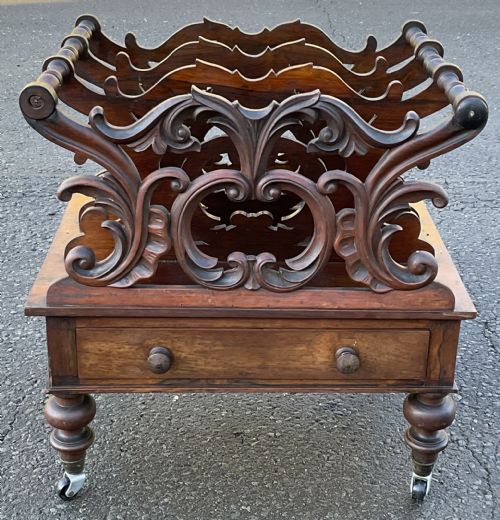
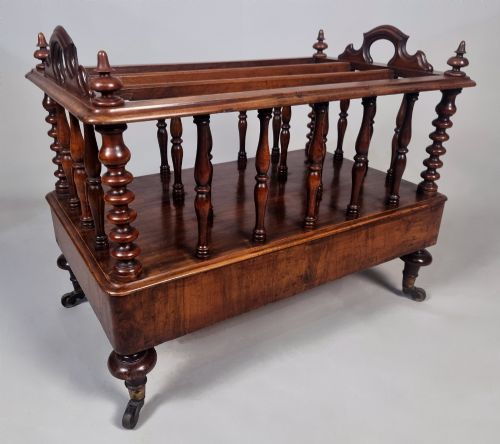
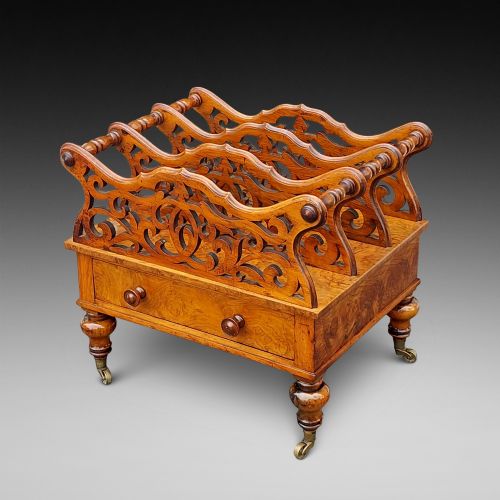
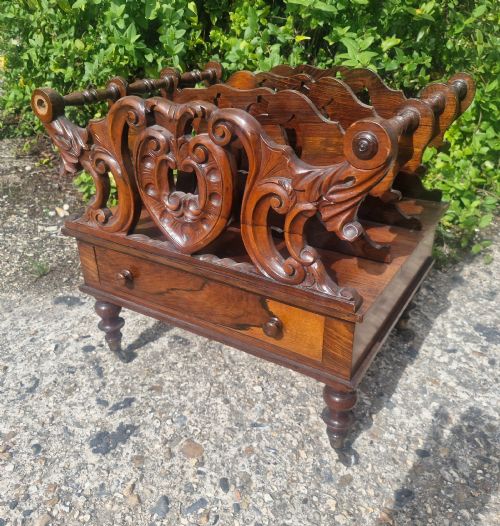
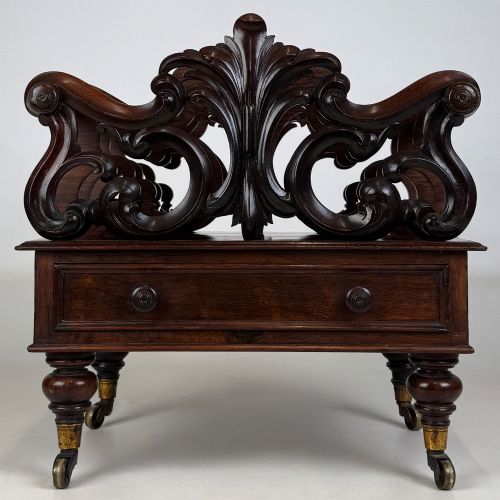
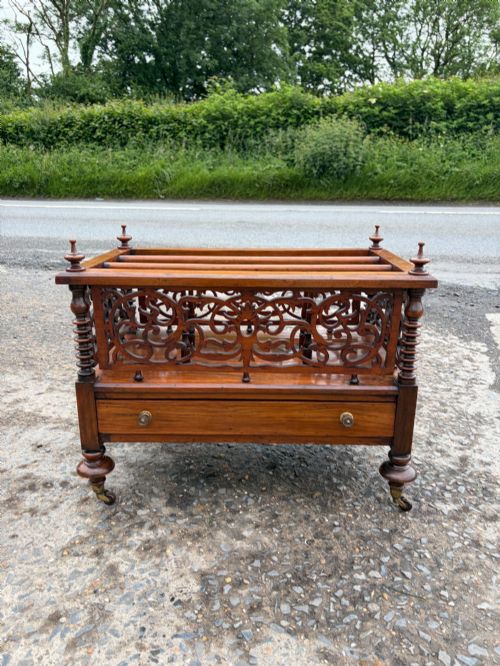
When searching for a victorian carved magazine stand, buyers encounter pieces designed to hold newspapers, folios and sheet music close to hand. Canterburys and music racks dominate the selection, combining partitioned compartments with low under-tiers or drawers.
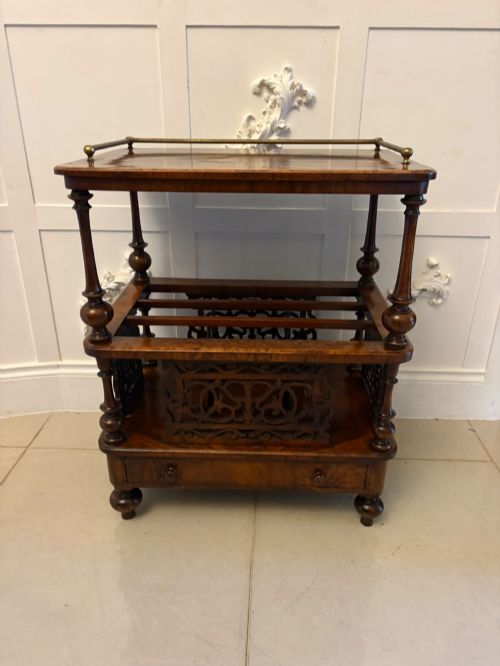
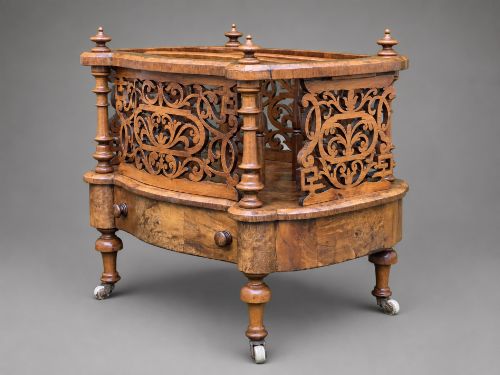
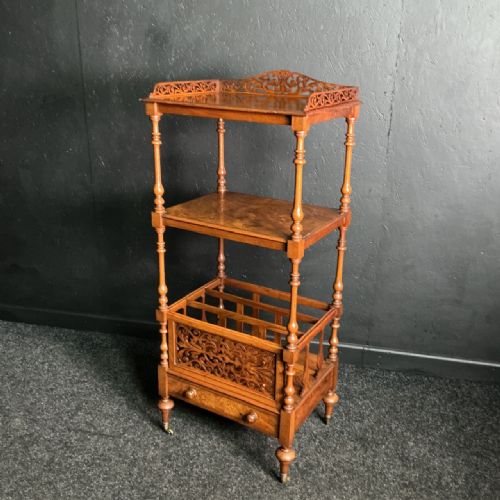
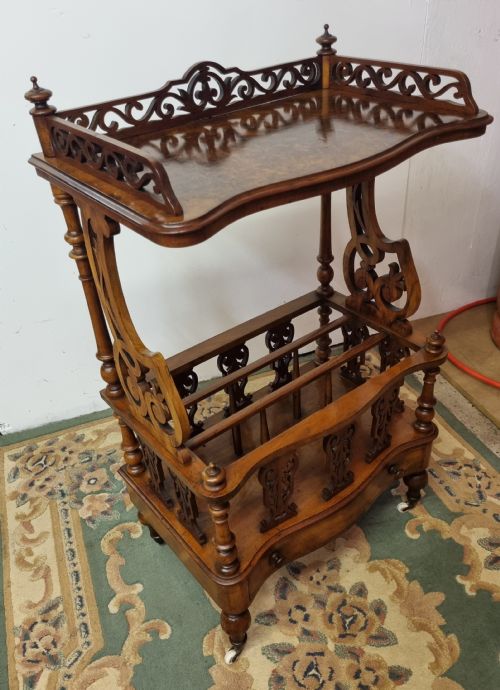
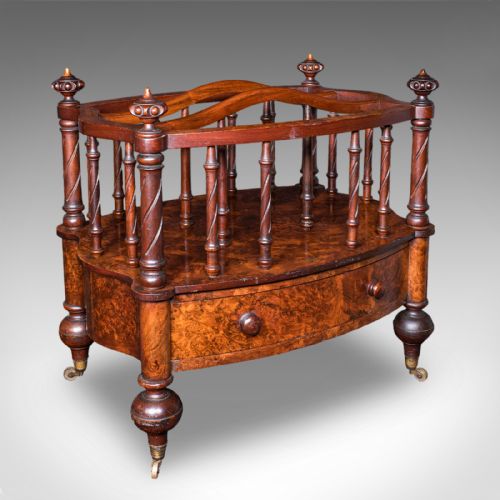
Burr walnut and rosewood form the backbone of the inventory, often shaped with serpentine fronts or pierced scroll divisions. Makers combined practical storage with display surfaces, producing whatnots and occasional tables that double as manuscript holders.
While the label covers nineteenth-century production, examples stretch from Regency designs through to Gothic revival and Arts and Crafts interpretations. Walnut and mahogany pieces from the mid-nineteenth century appear most frequently on the market.
Materials and construction
Cabinet makers utilised heavily figured timbers such as burr walnut, rosewood and mahogany to build these stands, often selecting veneers to create symmetrical grain patterns across flat surfaces. Solid hardwoods provided the strength needed for upright divisions and slender legs.
Carving, wood inlay and mother of pearl embellishments decorate the better examples, alongside turned columns and pierced fretwork. Brass castors and hinges appear frequently on freestanding items designed to move easily across carpets.
Victorian Carved Magazine Stand Retail Price Guide 2026
Typical asking prices for victorian carved magazine stand among the pieces listed under this phrase on Sellingantiques today, from the lower quarter to the upper quarter. They describe what is for sale here now, not the wider market.
Listings feature woods such as satinwood, teak, rosewood, and burr walnut, alongside ceramic and brass details.
Assessing quality
The distinction between standard pieces and exceptional ones rests on the depth of the carving and the choice of veneer. Finer examples display meticulously matched burr walnut figures and crisp fretwork rather than plain timber and stamped decoration.
Structural integrity also separates the grades, particularly where slender vertical partitions join the base. Superior craftsmanship ensures joints remain rigid and turnings retain their sharp profiles without sanding wear.
Edwards and Roberts
The Victorian Carved Magazine Stand Glossary
- Canterbury
- A low stand with upright partitions, originally designed for holding sheet music or books. It frequently includes a small drawer or lower shelf.
- Whatnot
- A piece of open shelving supported by pillars, used for displaying ornaments or holding books. Many examples combine this form with a Canterbury base.
- Burr Walnut
- Timber taken from the warted excrescence of a walnut tree, prized for its swirling, highly decorative grain patterns. Cabinet makers applied it as a veneer.
- Fretwork
- Ornamental design executed by cutting patterns through thin wood with a scroll saw. It often decorates the partitions of music stands.
- Serpentine
- A curved line of furniture shaping that undulates outward and inward. This contour appears on the tops and bases of finer walnut cabinets.
Victorian Carved Magazine Stand: Frequently Asked Questions
What is a Canterbury?
A Canterbury is a low stand featuring vertical partitions, built specifically to hold sheet music, newspapers and periodicals. Nineteenth-century examples often sit on castors and incorporate small drawers beneath the main compartments.
Cabinet makers developed various configurations, some combining the partitioned top with a lower shelf or a flat surface for a work box. They served as movable furniture for the parlour or drawing room.
How do I spot burr walnut?
Burr walnut exhibits a dense, swirling grain pattern filled with small knot clusters and irregular eyes. It creates a highly decorative surface that contrasts sharply with straight-grained timber.
Craftsmen sliced this figured wood into thin veneers to cover the primary surfaces of superior tables and stands. The pattern requires careful book-matching to achieve symmetry across panels.
Were these stands only for magazines?
Periodical storage formed only part of their original function, as many pieces served primarily to hold sheet music in nineteenth-century homes. Music canterburys were essential items when parlour piano playing was common.
Some larger variants accommodated folios, maps and newspapers alongside books and writing materials. Their versatile design allowed them to function as occasional tables and miniature bookcases.
How do I style one at home?
These stands fit naturally beside a reading chair or sofa, where their partitioned compartments keep current reading material tidy. Their compact footprint makes them suitable for hallways and studies.
Surface tops on combined whatnot models provide space for small lamps or decorative objects. The rich tones of rosewood and walnut complement both traditional interiors and modern minimalist spaces.