
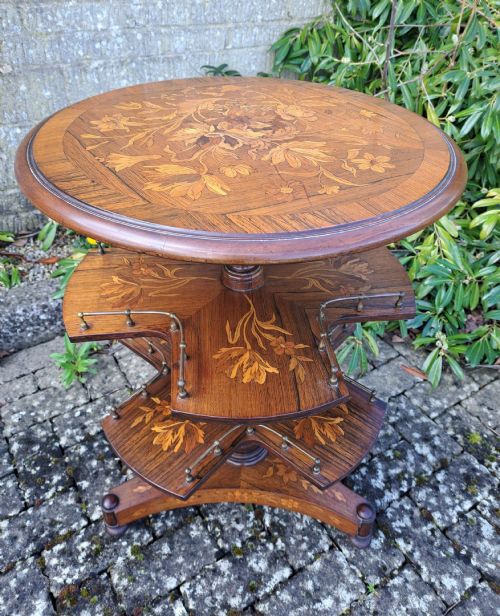


Marquetry Book Stand
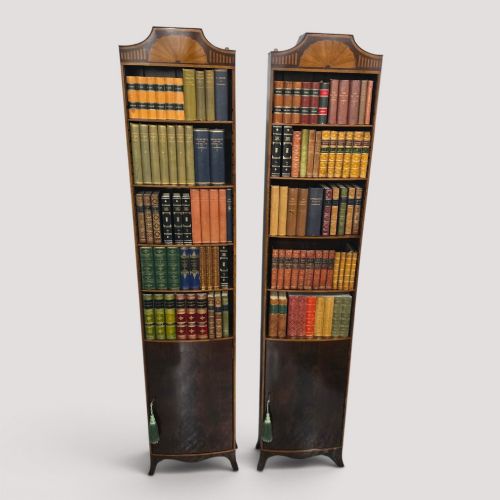
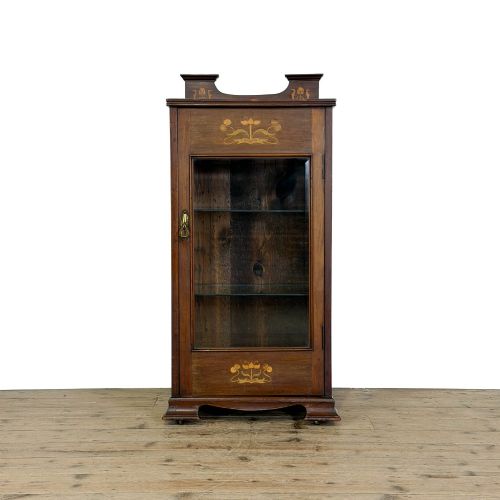
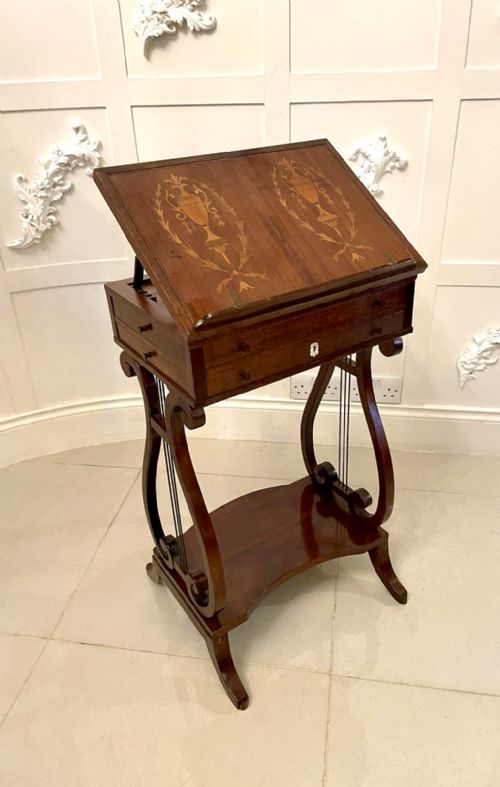
These marquetry book stand pieces bring intricate floral and geometric wood inlay to domestic libraries, offering sturdy surfaces for holding volumes.
How They Were Made
Craftsmen utilised foundational timbers such as mahogany, rosewood, walnut, and kingwood, applying contrasting fruitwood and decorative wood inlay to create intricate patterns across the surfaces. Brass and ormolu mounts frequently reinforce structural corners and add decorative detail to cabinets and revolving tiers.
Techniques relied on precise hand-cutting of veneers and meticulous joinery to ensure rotating mechanisms and folding book slides operated smoothly over decades of daily use.
What Varies in Quality
Quality depends on the precision of the veneer work and the complexity of the floral or geometric marquetry patterns set into the primary timber. Finer examples display seamless integration of multiple contrasting woods without gaps in the inlay.
The choice of secondary woods and the durability of mechanical components, such as the revolving pivots on bookcases or the adjustable ratchets on reading tables, separate standard production items from superior workshop pieces.
Listings feature woods including mahogany, rosewood, walnut, kingwood, and fruitwood inlay across pieces dating from the Georgian era through the Edwardian period.
Shapland & Petter
The Marquetry Book Stand Glossary
- Marquetry
- Decorative veneer work forming pictures or patterns by arranging pieces of contrasting wood, shell, or ivory onto a structural carcase. This technique defines the surface decoration of many Victorian and Edwardian library pieces.
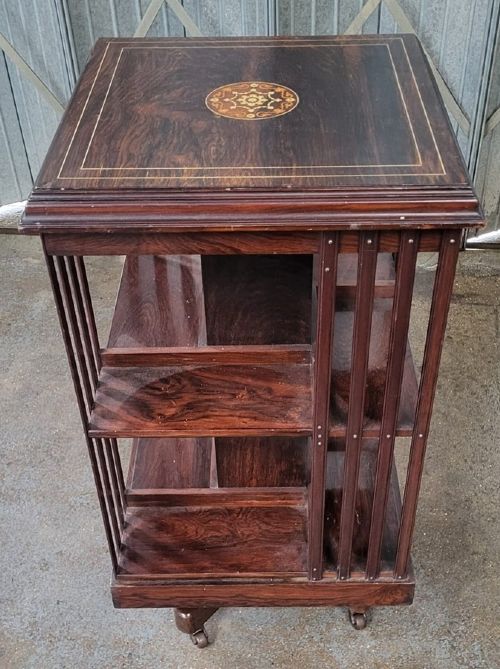
- Revolving bookcase
- A freestanding tiered shelving unit designed to rotate on a central pivot base for easy access to volumes from any angle. These items are frequently constructed from mahogany or rosewood.
- Ormolu
- Gilt-bronze mounts applied as decorative ornaments to furniture corners, feet, and friezes. This material is commonly found on nineteenth-century burr walnut and kingwood pieces.
- Tunbridge ware
- Small wooden decorative items ornamented with mosaic woodwork formed from tiny geometrically arranged coloured wood squares. This technique appears on nineteenth-century book racks and book-slides.
- Fruitwood inlay
- The practice of utilising dense, fine-grained woods from fruit trees to create pale or contrasting details within darker background veneers. Craftsmen employ this method to highlight floral stems and leaves.
Marquetry Book Stand: Frequently Asked Questions
What is a marquetry book stand?
A marquetry book stand is a piece of wooden library furniture decorated with patterned wood veneers, designed to hold or display books.
These items range from revolving bookcases to small desktop book slides produced during the nineteenth and early twentieth centuries.
How do I care for rosewood furniture?
Rosewood surfaces require stable humidity levels and protection from direct sunlight to prevent the timber from drying out or fading over time.
Dusting with a dry, soft cloth and occasionally applying appropriate furniture wax helps maintain the polished finish.
How do revolving bookcases work?
Revolving bookcases utilise an internal wooden or metal pivot mechanism hidden beneath the base tier to allow the entire shelving structure to turn smoothly.
This design lets users access volumes stored on all four sides while occupying a compact footprint in a room.
How can I tell Edwardian from Victorian?
Victorian pieces, produced during the nineteenth century, frequently feature heavier proportions and darker timbers such as burr walnut with ornate ormolu mounts.
Edwardian items from the early twentieth century often display lighter mahogany or satinwood construction with more refined, delicate marquetry details.