
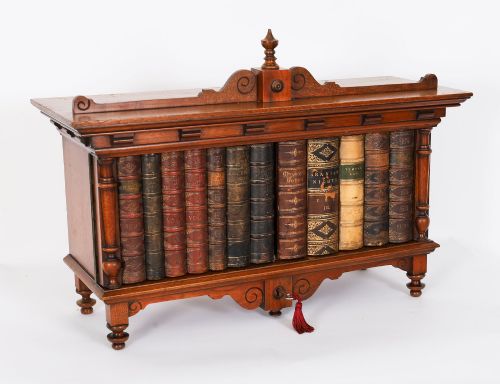


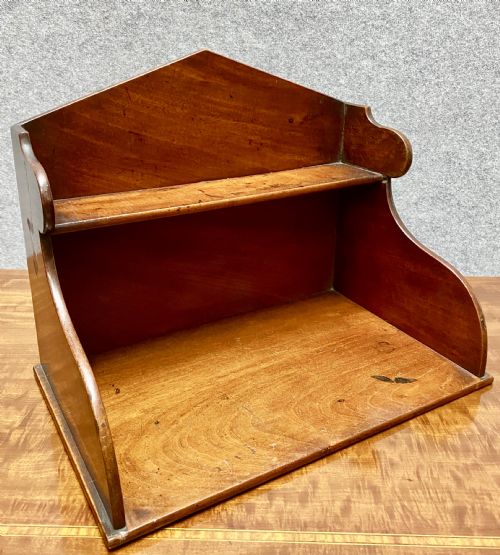
Edwardian Tabletop Bookcase
An edwardian tabletop bookcase brings compact desk organisation and period charm to any room through timber construction.
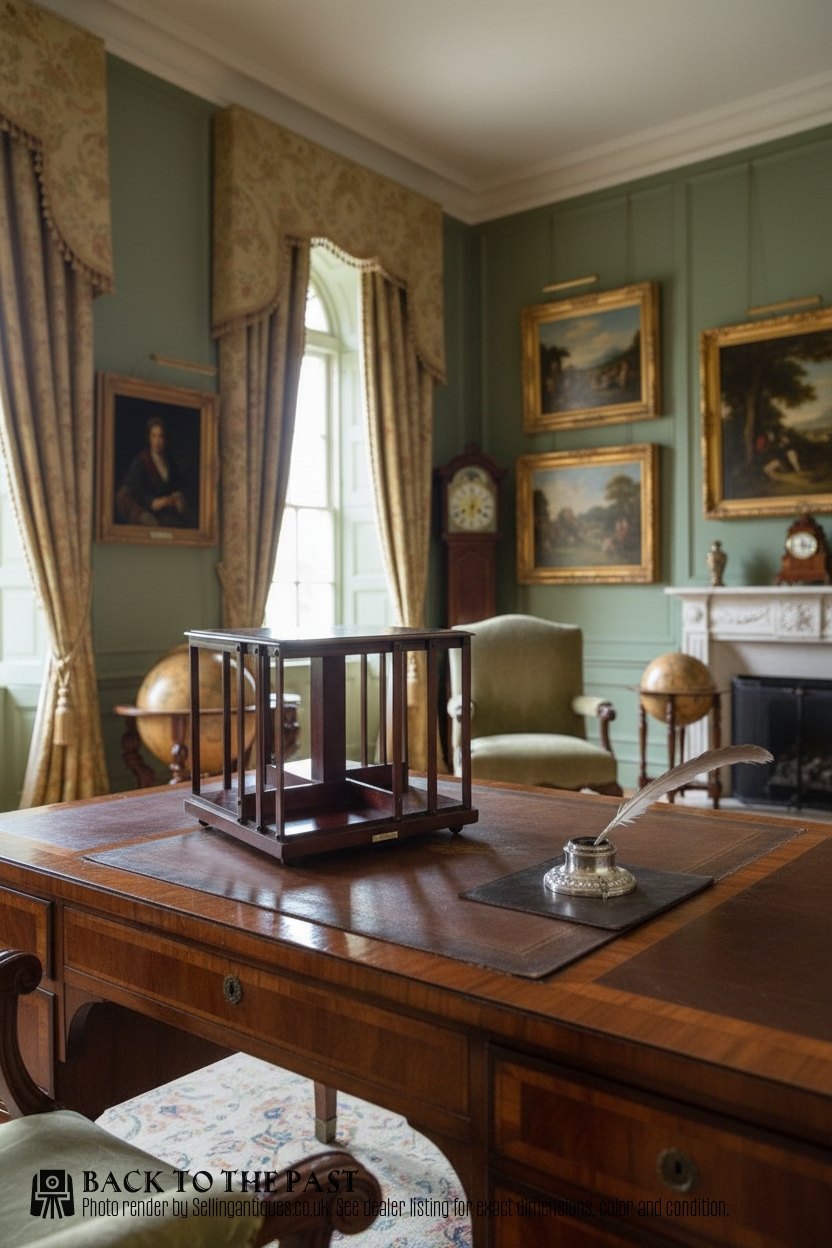
Edwardian Tabletop Bookcase
An edwardian tabletop bookcase encompasses desktop revolving bookstands, desk tidies, and small display cabinets designed for domestic workspaces. These pieces organise volumes on desks and tables while occupying minimal surface area.
Revolving revolving bookcases and book troughs dominate the selection, often featuring slatted or panelled sides that showcase timber grain. Compact dimensions allow these items to sit comfortably upon writing tables or counters.
The periods span from the nineteenth century through the edwardian era and into nineteen thirty, incorporating Victorian and Arts and Crafts influences. Mahogany and oak appear frequently alongside walnut and satinwood details.
How they were made
Cabinet makers utilised solid mahogany, oak, and walnut, often applying satinwood inlay to enrich the primary timber surfaces. Brass fittings and leather components appear on select desk accessories and book slides.
Revolving models required internal rotary mechanisms to allow smooth turning movements upon a stable base. Glazed panels were fitted to miniature display cabinets to protect contents from dust.
Listings feature oak, mahogany, walnut, and satinwood, spanning the nineteenth century, the edwardian period, and nineteen thirty.
What varies in quality
Selection of timber grain and precision of inlaid decoration distinguish finer examples from standard workshop production. Superior craftsmanship is evident in the smooth operation of revolving actions and tightly fitted joints.
The presence of secondary materials such as brass and satinwood elevates the decorative ambition of individual pieces. Robust construction of slatted partitions and book troughs indicates higher manufacturing standards.
The Edwardian Tabletop Bookcase Glossary
- Revolving bookcase
- A rotating desktop stand designed to hold volumes upright within easy reach. The rotary mechanism allows access from multiple angles.
- Book trough
- A V-shaped desktop holder that keeps books upright without vertical ends. These pieces offer quick access for working volumes.
- Desk tidy
- A compartmentalised tabletop accessory for organising stationery and small books. They keep workspaces orderly.
- Satinwood
- A pale, lustrous timber utilised for contrasting inlay work on darker woods like mahogany. It adds brightness to cabinet surfaces.
Edwardian Tabletop Bookcase: Frequently Asked Questions
What is an edwardian tabletop bookcase used for?
These compact pieces organise reference volumes and reading material directly upon desks, tables, and counters.
They provide accessible storage for everyday books while adding period character to domestic and office interiors.
How do revolving bookcases work?
Internal rotary mechanisms enable the upper wooden tier to spin freely upon a fixed base.
This allows users to browse and select volumes from all sides without repositioning the heavy stand.
What woods are typical for these bookcases?
Makers predominantly worked with mahogany and oak, often adding walnut and satinwood for contrast and inlay.
Brass hardware and leather accents complete the material palette across various styles.
How do I date an edwardian tabletop bookcase?
Dating relies on stylistic indicators such as Arts and Crafts simplicity, Art Nouveau curves, or Victorian walnut construction.
Period markers also include specific timber choices and decorative inlay techniques characteristic of the nineteenth and early twentieth centuries.