

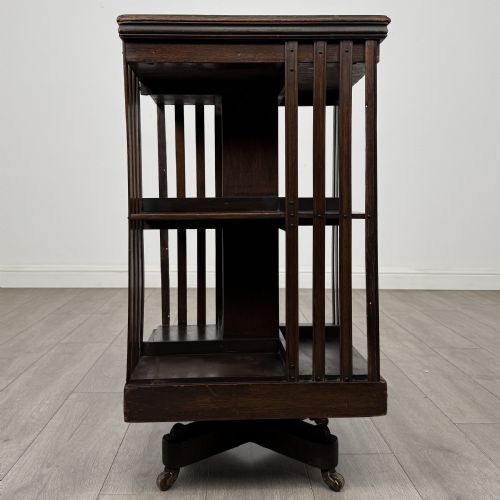
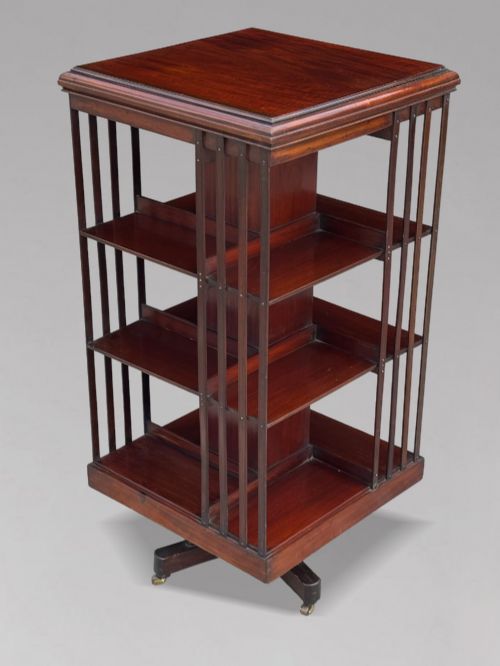
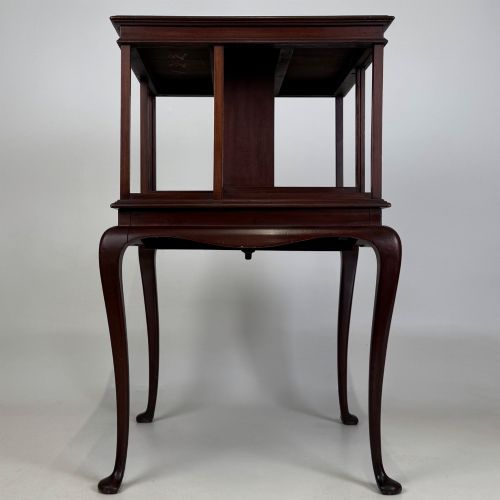
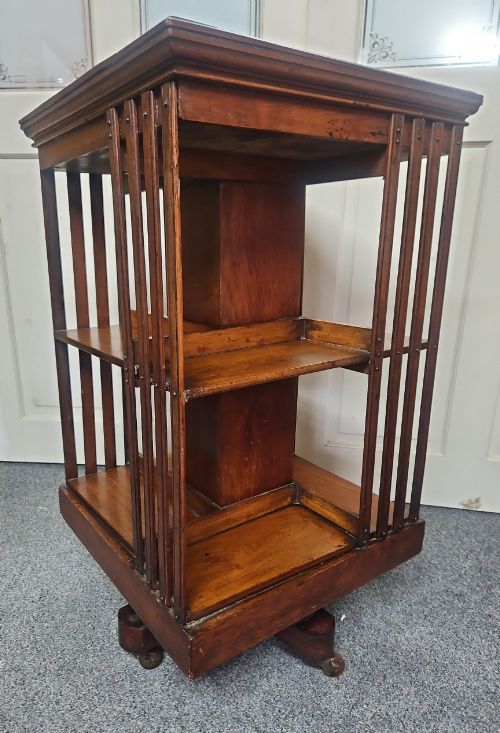
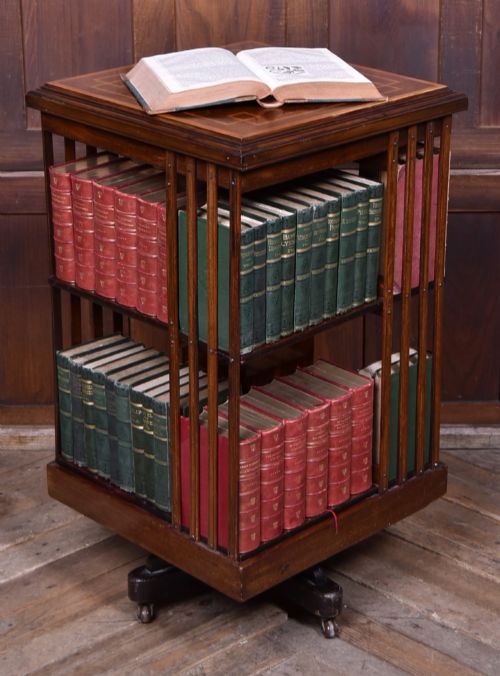
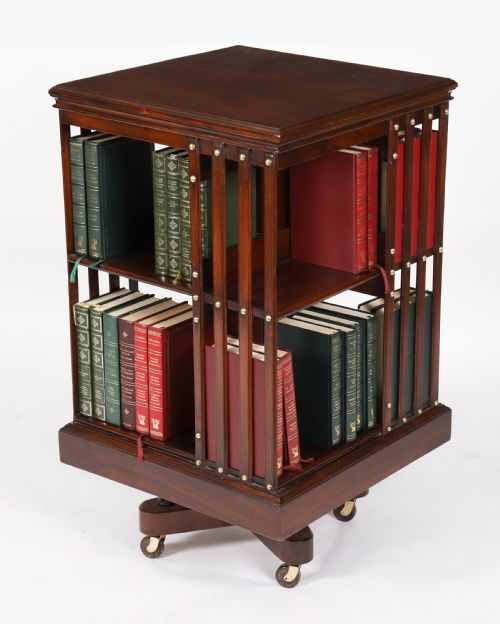


Dark Wood Revolving Bookcase
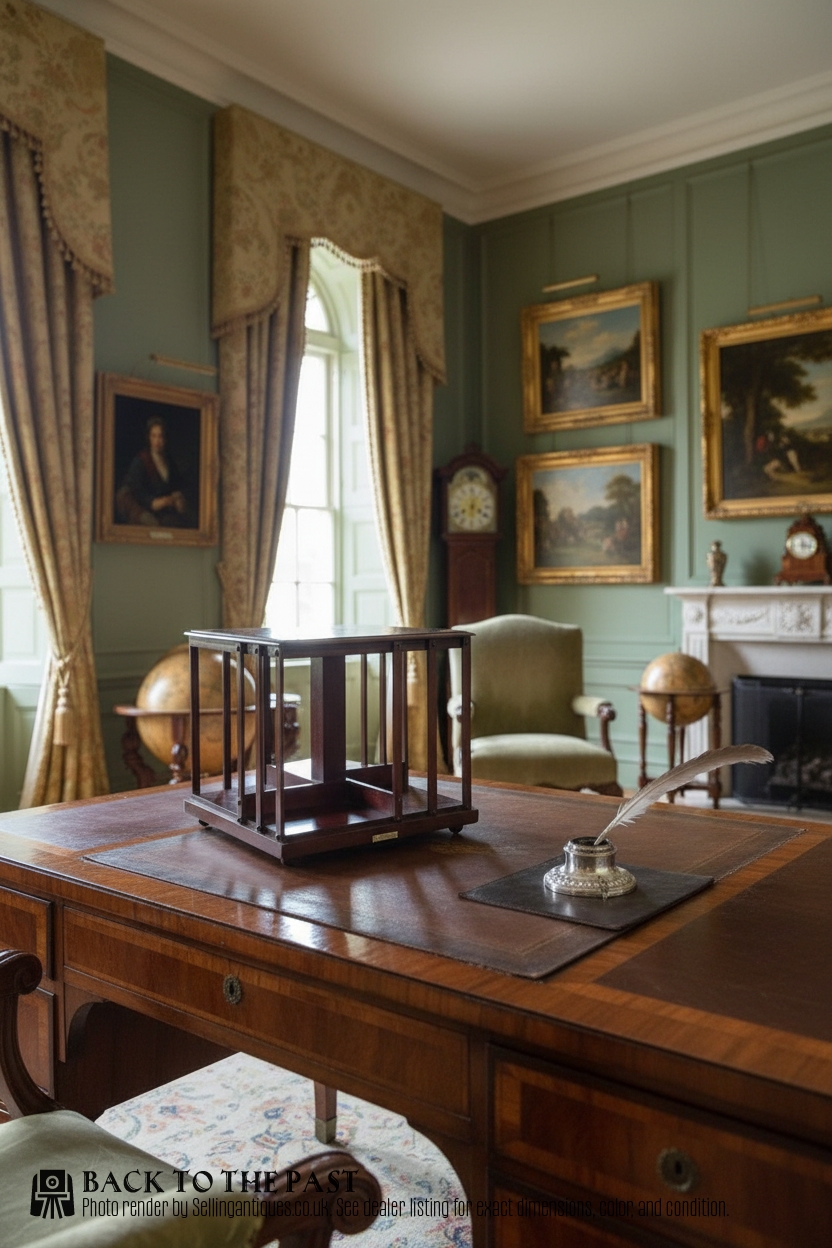
A dark wood revolving bookcase brings rotational access and rich timber grain to a study or library corner.
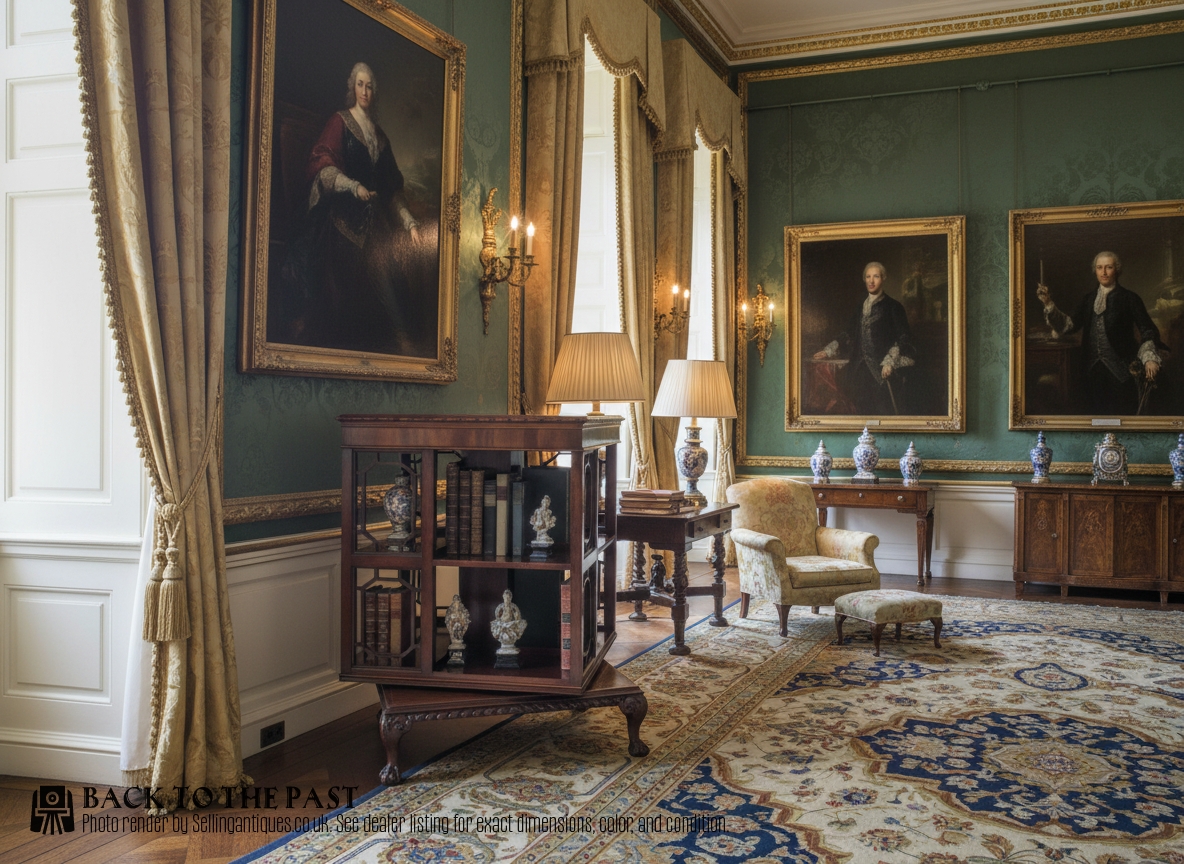
Dark Wood Revolving Bookcase
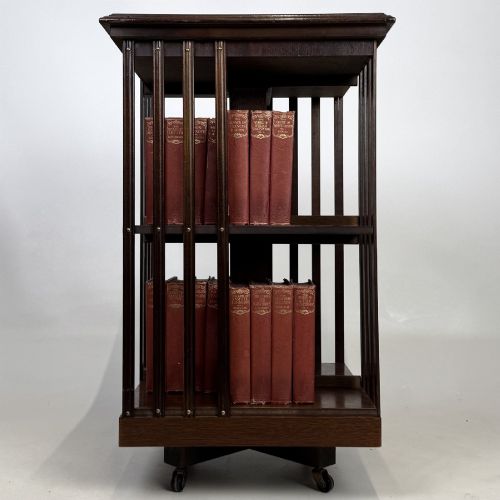
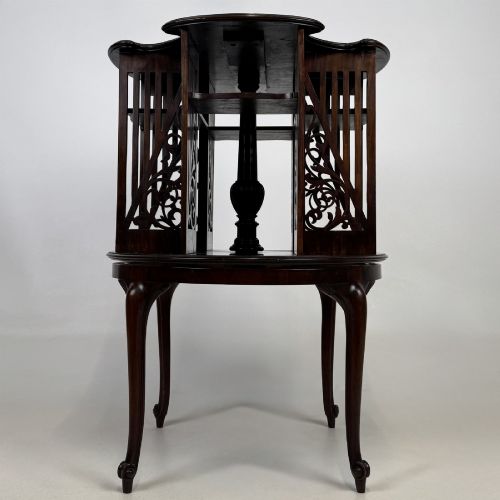
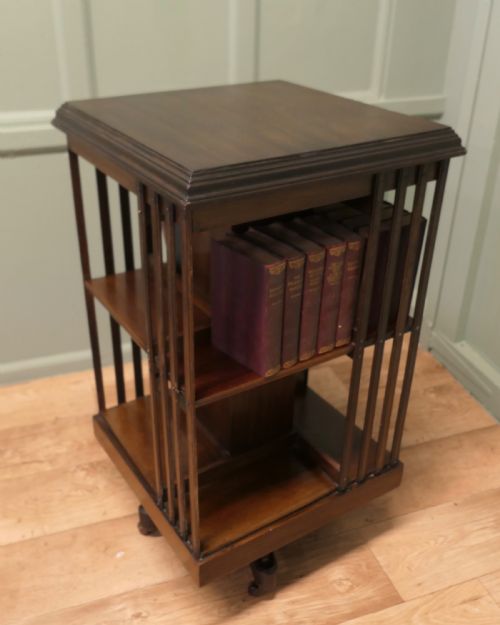
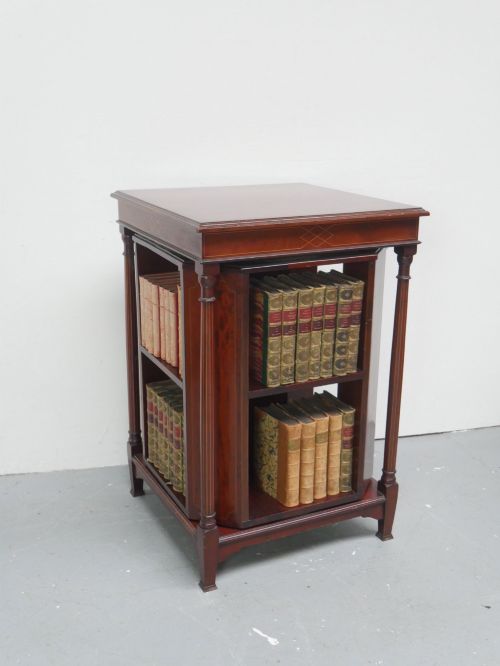
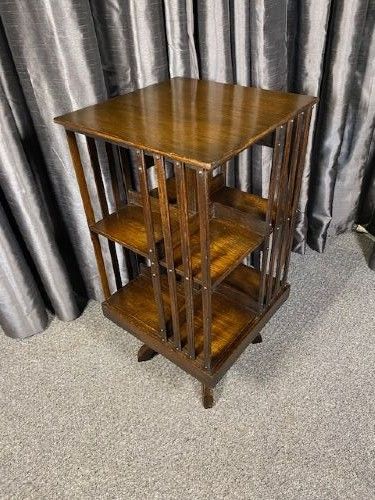
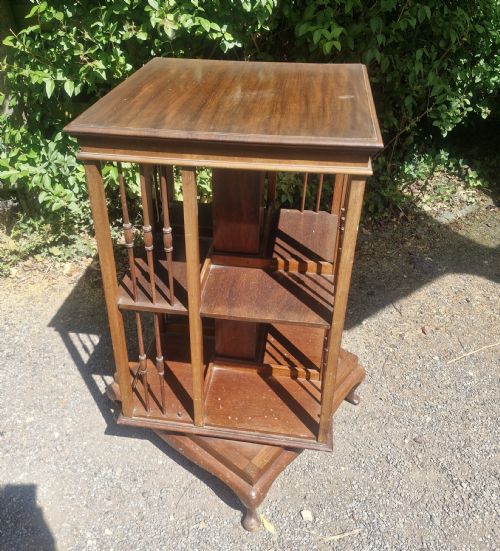
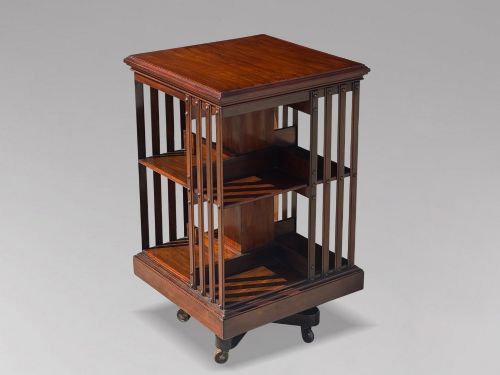
A dark wood revolving bookcase is a compact, rotating storage piece designed to hold volumes within arm's reach while sitting at a desk or armchair. The form spans several decades from the late nineteenth century through to the early twentieth century, encompassing Victorian, Edwardian, and later Art Deco examples.
Most pieces encountered on this page are constructed from mahogany or walnut, taking the form of square table-top or floor-standing revolving bookstands. Makers applied various historical revivals to the design, producing Queen Anne style, Chippendale style, and Regency style details alongside simpler Edwardian models.
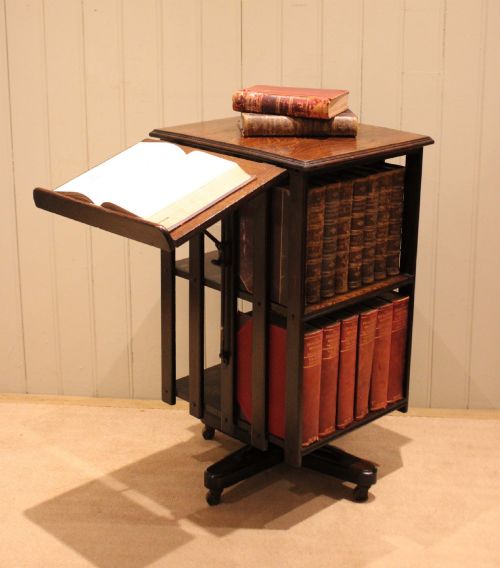
Makers also produced specialised variants such as the three tiered skyscraper revolving book table and smaller book companions intended for desktop use. These rotating units allow a collection of books to be browsed smoothly from a single stationary seating position.
What varies in quality
Quality depends upon the smoothness and balance of the internal swivel mechanism, which dictates whether the tiers turn without listing or catching. Superior examples maintain a steady, silent rotation even when fully loaded with volumes.
The refinement of the timber selection and decorative details further separates standard pieces from the best work. Finer items exhibit choice mahogany or walnut veneers, precise satinwood inlay work, and robustly constructed slatted or panelled dividers.
Dark Wood Revolving Bookcase Retail Price Guide 2026
Typical asking prices for dark wood revolving bookcase among the pieces listed under this phrase on Sellingantiques today, from the lower quarter to the upper quarter. They describe what is for sale here now, not the wider market.
Some models feature rotating tiers that let you spin your entire library with a gentle nudge while reading.
Maple & Co·Heals
The Dark Wood Revolving Bookcase Glossary
- Revolving bookcase
- A rotating piece of furniture designed to hold books on multiple accessible sides. The design sits on a concealed base mechanism that lets the user spin the entire tier.
- Mahogany
- A durable, reddish-brown tropical hardwood favoured by cabinet makers for its rich grain and stability. It forms the primary material for the majority of these revolving stands.
- Satinwood inlay
- A contrasting light-toned wood inserted into the darker primary surface to form decorative borders or motifs. This technique appears on finer Edwardian examples.
- Bookstand
- A compact version of a bookcase, often built for table tops or desktop use. These smaller stands keep a working selection of volumes close at hand.
- Skyscraper
- A tiered architectural style applied to later revolving book tables. The stepped tiers ascend in narrowing sections typical of Art Deco design.
Dark Wood Revolving Bookcase: Frequently Asked Questions
How do revolving bookcases work?
These pieces use a hidden internal mechanism, typically incorporating iron or brass components, which allows the upper wooden structure to rotate smoothly on a fixed base. This lets the user access different compartments of books from a single seated position.
The weight of the books helps stabilise the rotation when the mechanism is properly balanced. High quality examples turn with minimal friction and no listing to one side.
Where should I place one?
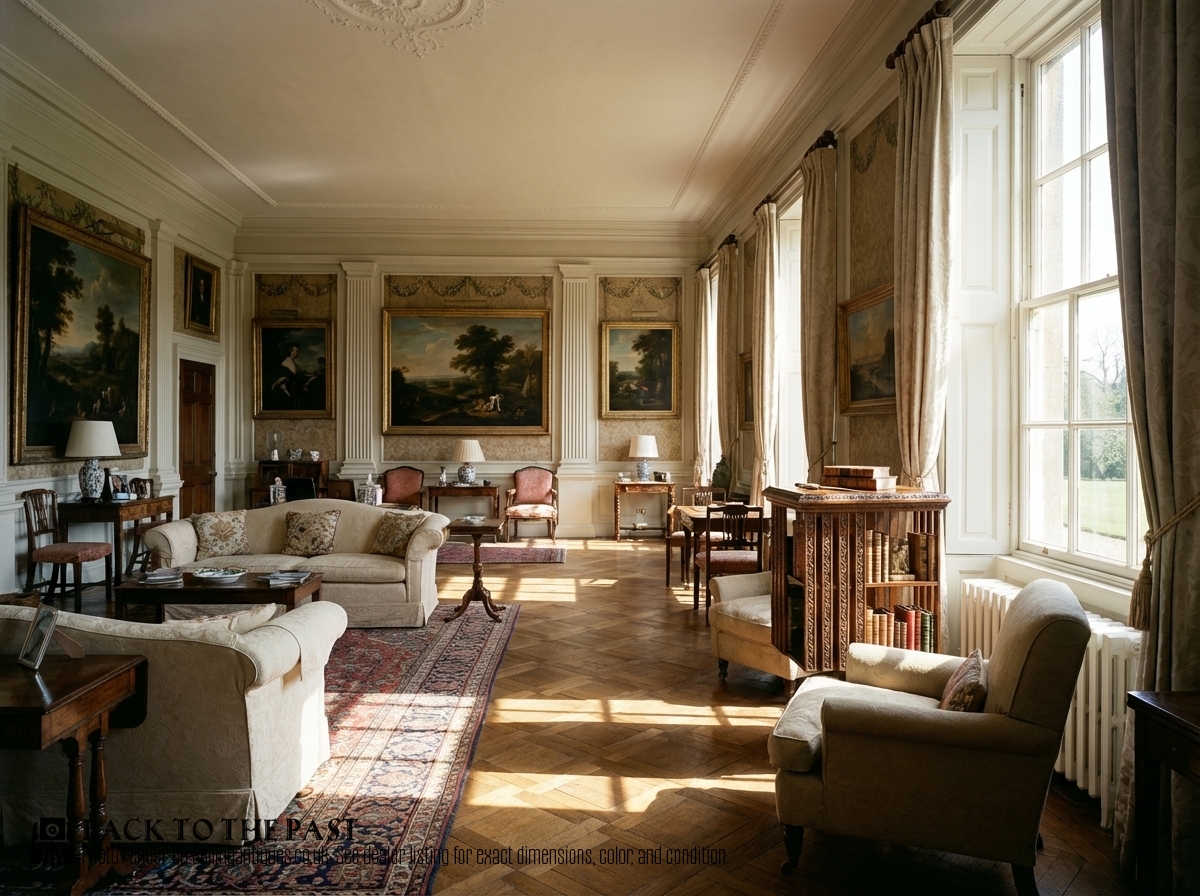
A revolving bookcase suits a corner, beside an armchair, or next to a desk where books need to be kept within arm's reach. Table top versions fit neatly on larger desks or side tables.
Because all sides are accessible, placing the piece where it can be turned freely without obstruction lets you utilise every compartment effectively.
How do I date a revolving bookcase?
Dating relies on stylistic clues, timber choice, and construction methods spanning the Victorian and Edwardian periods up to the Art Deco era. Earlier nineteenth century pieces often feature heavier proportions, while Edwardian models tend to be lighter with subtle satinwood inlay.
Later examples, such as those from the nineteen-thirties, adopt modernist skyscraper tiers and geometric forms. Maker stamps or labels, when present, also help confirm the exact era.
Are these pieces stable when loaded?
Yes, traditional revolving bookcases are engineered with weighted bases and sturdy central pivots designed to support the considerable weight of heavy volumes. The distribution of weight across multiple sides keeps the centre of gravity low.
Properly maintained internal swivel mechanisms ensure that even a fully loaded stand remains secure during rotation without tipping.