
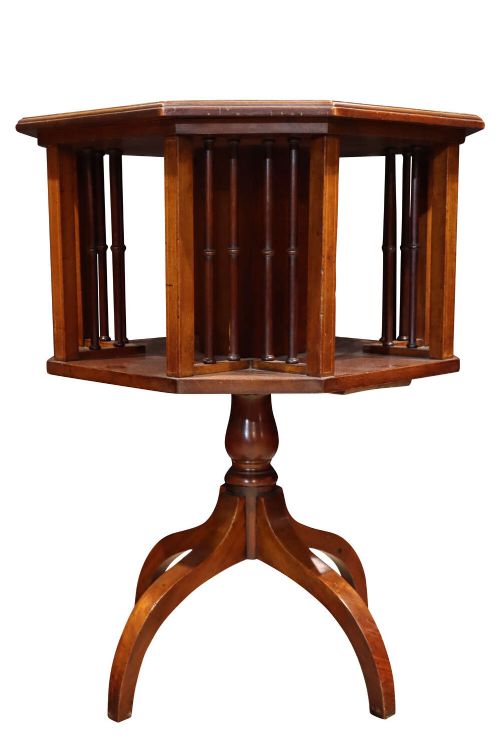
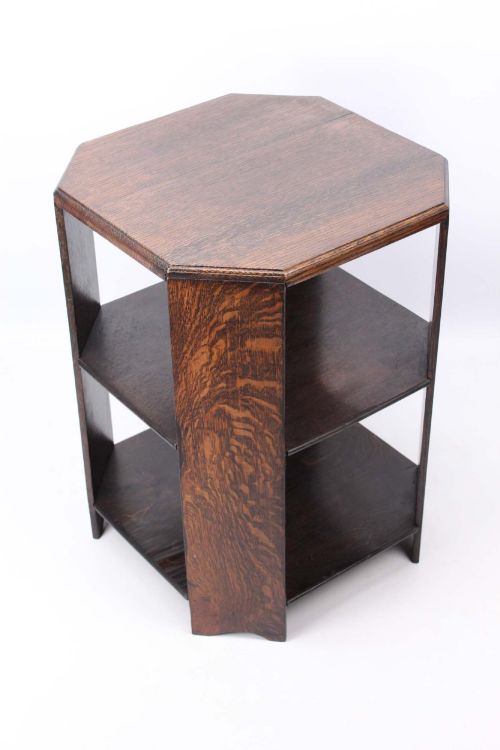
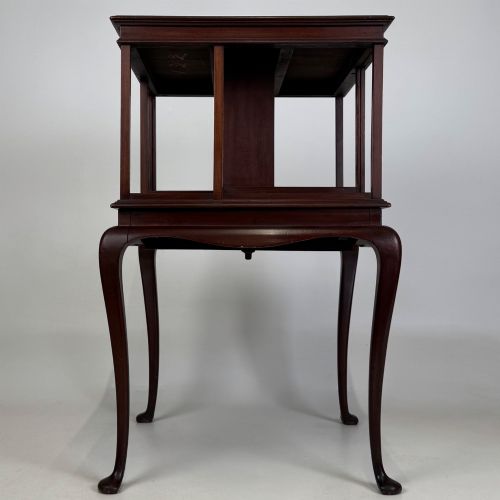
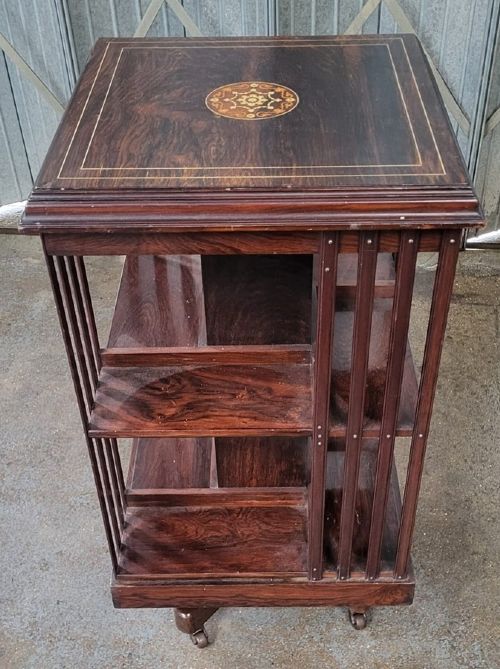
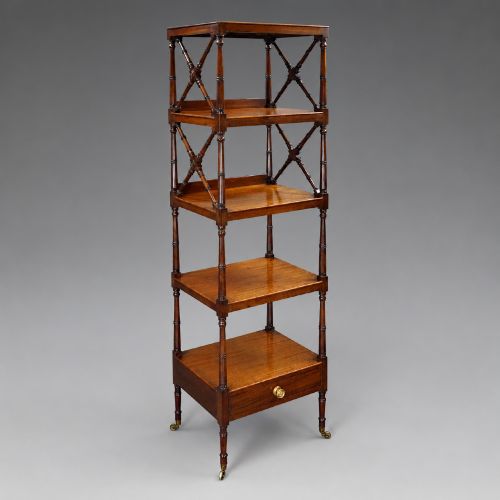
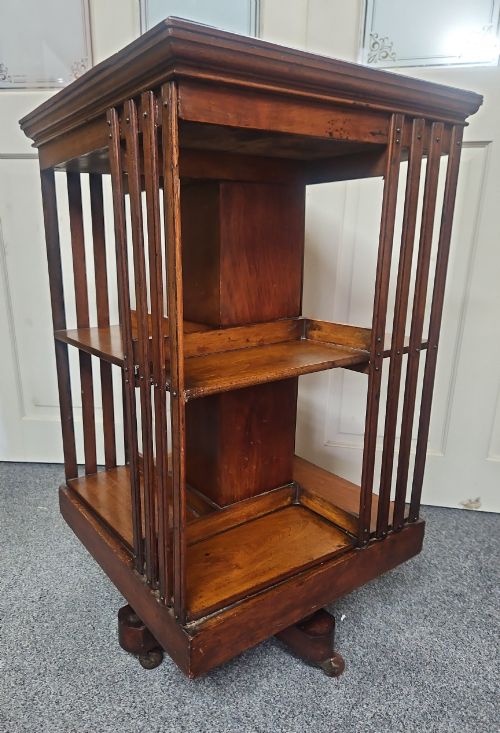
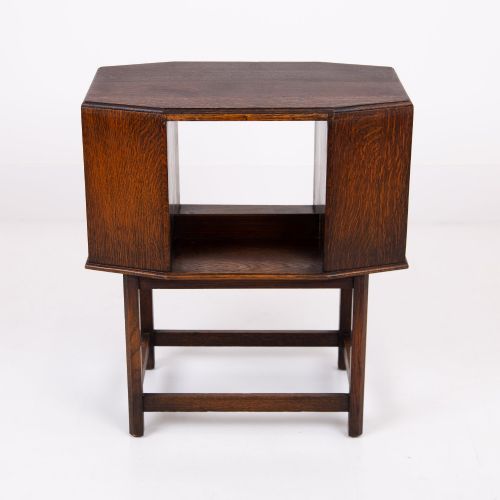
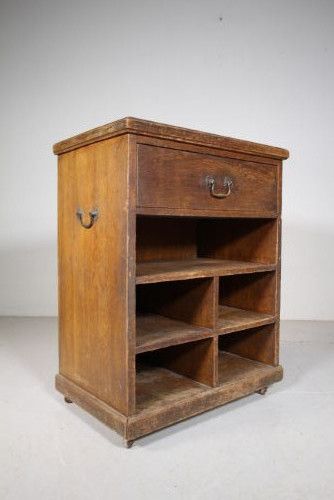
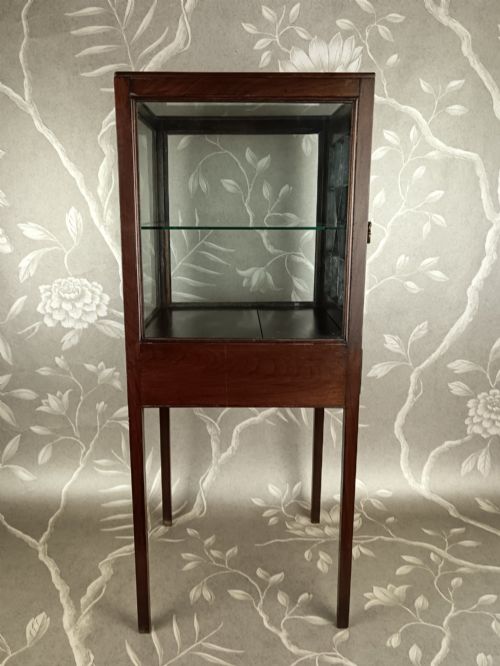
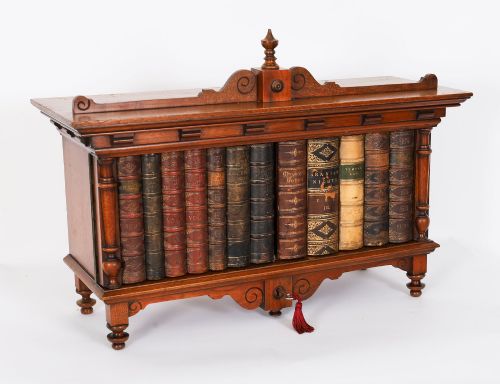
Antique Table Bookcase
When you handle an antique table bookcase, you find yourself holding a piece designed to keep working volumes close to a chair or desk.
Antique Table Bookcase
An antique table bookcase brings together compact storage for volumes and the surface utility of a small table, standing at a height suited for easy reach from a seat.
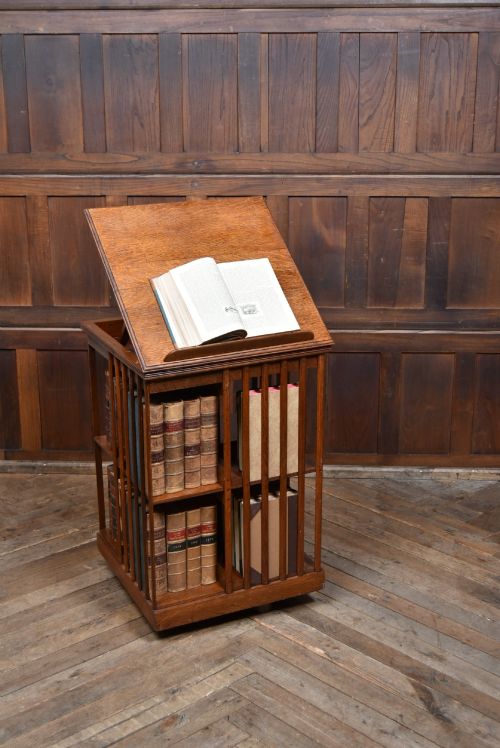
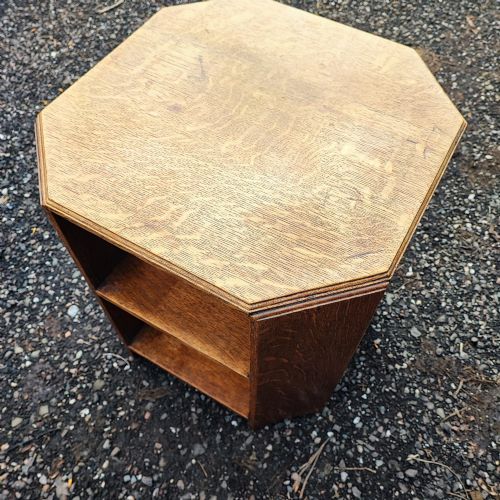
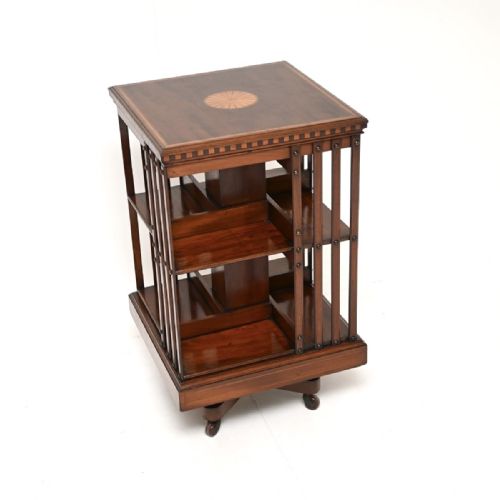
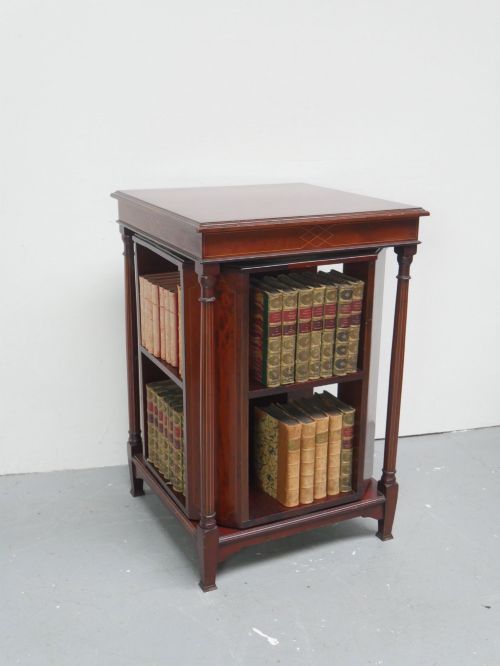
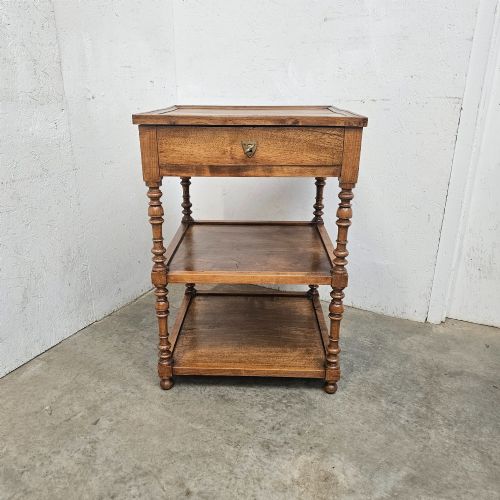
The versions you meet most frequently on this page belong to the Edwardian period and the late nineteenth century, appearing often as revolving book tables or compact tabletop stands in mahogany and walnut.
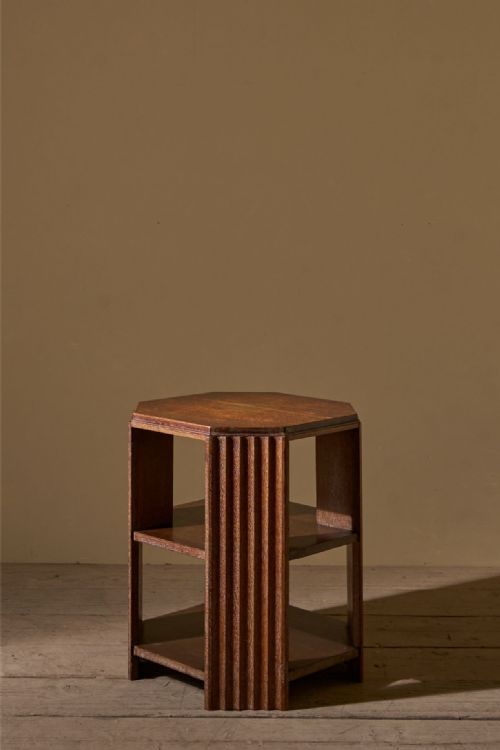
Makers designed these hybrids for libraries and studies where floor space mattered, resulting in forms that range from four-sided rotating stands to low open tables with upper shelves.
Materials and Construction
Cabinet makers relied heavily on dense timbers like mahogany and walnut, frequently selecting figured veneers or flame grains to cover the primary surfaces.
Inlaid decoration in satinwood, rosewood, and boxwood appears across Edwardian pieces, adding delicate linear contrast to the darker corpus.
Revolving mechanisms utilise internal iron or brass pivot components to ensure the loaded tier turns smoothly without binding.
Some revolving models turn so smoothly a stray cat can spin the whole library with a gentle nudge of a paw.
Evaluating Execution
Quality reveals itself in the integrity of the rotating action and the weight of the timber used for the slatted sides and dividers.
Finer examples display crisp inlay work and carefully matched veneer grains across the top surface, rather than plain boards or printed decoration.
Solid brass castors, substantial turning on the legs, and tight corner joints distinguish workshop output from mass-produced commercial items.
Maple and Co·Heals·Gillows·Edwards and Roberts·Liberty's
The Antique Table Bookcase Glossary
- Revolving bookcase
- A freestanding tiered stand fitted with a central pivot mechanism allowing the entire body to turn.
- Flame mahogany
- Timber cut from the fork of the mahogany tree to produce a striking, feather-like grain pattern.
- Marquetry
- The art of applying decorative pieces of veneer to a structure to form geometric or floral designs.
- Whatnot
- A piece of open shelving designed for displaying books or ornaments across multiple tiers.
- Satinwood
- A pale, dense hardwood native to India and Ceylon used widely for contrasting stringing and banding.
Antique Table Bookcase: Frequently Asked Questions
Where should I place an antique table bookcase?
These compact pieces sit comfortably beside an armchair or sofa where you want everyday reading material within arm's reach.
Because many models revolve, they also function effectively as freestanding centrepieces in a study or library room.
How do I care for the timber surfaces?
Apply a traditional beeswax polish sparingly and buff with a soft cloth to maintain the natural sheen of the mahogany or walnut.
Keep the furniture away from direct heat sources and strong sunlight to prevent the veneers from drying out or splitting.
How can I tell an Edwardian piece from a Victorian one?
Edwardian examples tend to feature lighter satinwood inlay and refined proportions, reflecting the tastes of the early twentieth century.
Victorian pieces generally rely on heavier timbers like solid burr walnut and darker mahogany with deeper mouldings and more robust turnings.
Did these pieces hold large folio volumes?
Standard table models and revolving stands were built for novels, octavo editions, and working reference books rather than heavy folios.
The vertical slats and compartments provide stability for standard upright book sizes without putting excessive weight on the central pivot.