


Antique Writing Caddy
An antique writing caddy sits on the desk ready for correspondence, offering polished timber and fitted compartments for ink and paper.
Antique Writing Caddy
The term antique writing caddy covers boxes, cabinets, and chests built to hold paper, quills, and ink for correspondence. These pieces belong primarily to the eighteenth and nineteenth centuries, spanning Georgian, Regency, and Victorian eras.
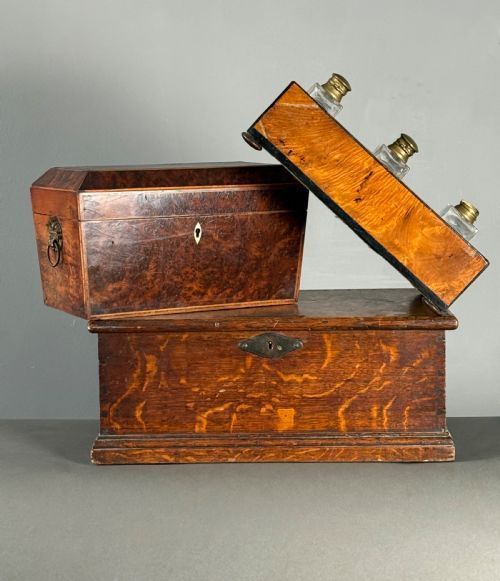
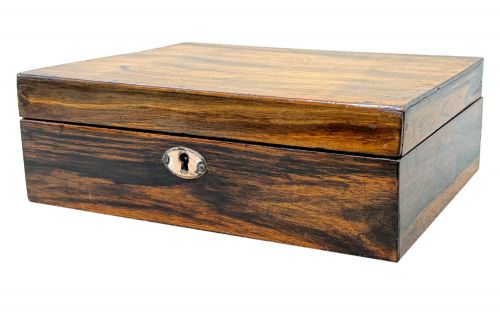
Most examples found here appear as stationery boxes, writing boxes, and desk organisers fashioned from timbers like mahogany, satinwood, burr walnut, and oak. Forms range from simple rectangular drawers to sarcophagus shapes and architectural cabinets.
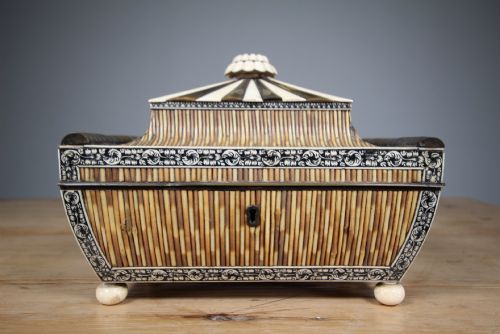
Makers adapted several formats for written correspondence, including chests with bone and mother of pearl details, brass inlay, and silver mounts. Some items began as work boxes or silver-plated desk stands before conversion for stationery.
Materials and construction
Cabinet makers built these pieces using dense hardwoods such as mahogany, walnut, and satinwood, often selecting burr veneers for decorative grain patterns. Interiors combined these timbers with secondary woods to line compartments and drawers.
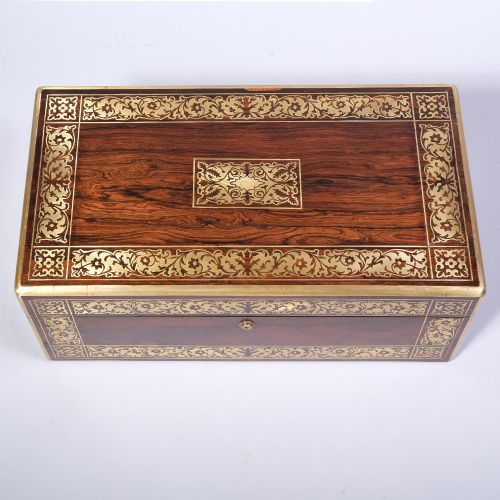
Decoration relied on brass inlay, silver mountings, and hand-painted porcelain plaques set into the timber surface. Details like bone and mother of pearl inlay added contrasting tones to eighteenth-century examples.
Joinery techniques secured rectangular and sarcophagus frames to protect paper and writing implements from moisture and wear. Hinges and locks of brass provided structural security for the compartments inside.
Listings feature items from the eighteenth and nineteenth centuries, utilising woods such as satinwood, burr walnut, mahogany, and oak.
Judging quality in writing furniture
Quality rests in the selection of timber veneers, such as figured burr walnut or fine-grained satinwood, matched across the visible surfaces. Plain or poorly matched wood indicates simpler production.
The precision of brass inlay and the finish of metal mounts distinguish finer items from standard workshop output. Integrated locks, hand-painted porcelain inserts, and intact interior fittings elevate the piece.
Proportion and form dictate the success of the design, from simple mahogany drawers to elaborate Victorian Gothic revival stationery cabinets. The integration of specialised compartments for stationery shows deliberate intent by the maker.
The Antique Writing Caddy Glossary
- Satinwood
- A pale, hard timber with a natural sheen, popular during the eighteenth-century Sheraton period for light-toned furniture and boxes.
- Burr walnut
- A decorative wood veneer taken from the growth excrescences of the walnut tree, showing swirling patterns valued by Victorian makers.
- Cheveret
- A small portable writing table or stand fitted with a shelf or drawer above, seen in late eighteenth-century pieces.
- Sarcophagus
- A box shape with a domed or sloping lid tapering towards the base, frequently used for Regency quill and writing boxes.
- Stationery box
- A cabinet or upright container designed specifically to hold folded paper, envelopes, and writing accessories on a desk.
Antique Writing Caddy: Frequently Asked Questions
What is an antique writing caddy?
An antique writing caddy is a desk accessory or box designed to hold paper, pens, and ink. These pieces date from the eighteenth and nineteenth centuries and include stationery cabinets and writing boxes.
Craftsmen built them from timbers like mahogany, satinwood, and walnut, often adding brass mounts or inlay. They served as functional items for letter writing in period homes.
How were writing boxes used?
People used writing boxes to store loose paper, quills, inkwells, and sealing wax in an organised manner. The compartments kept writing materials protected when not in use.
Many designs sat permanently on a desk, while portable versions allowed owners to transport their correspondence tools from room to room.
How do I date a writing caddy?
Dating relies on timber choices, decorative styles, and construction methods associated with specific periods like the Georgian or Victorian eras. Satinwood and brass inlay often point to the late eighteenth century.
Heavier burr walnut veneers and elaborate stationery cabinets typically signal mid to late nineteenth-century Victorian manufacturing.
Can these boxes hold modern stationery?
Many antique stationery boxes and desk organisers accommodate modern envelopes and paper notes within their historical compartments. Deeper boxes with internal dividers work well for sorting mail.
Care should be taken with antique hinges and wood linings to prevent damage from modern items that exceed original dimensions.