



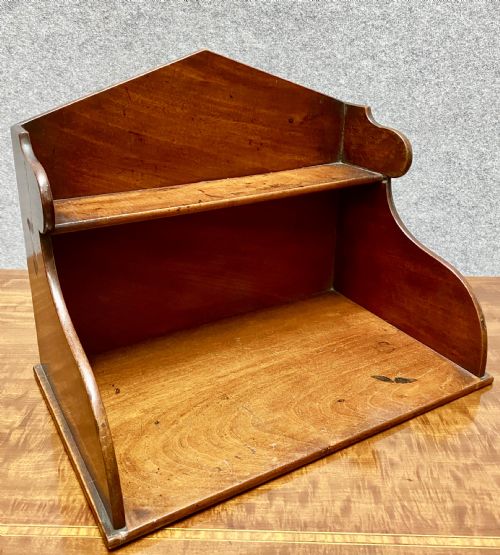


Tabletop Book Rack
These tabletop book rack pieces are compact organisers for desks and tables, combining fine timber with practical utility to keep volumes close at hand.

Tabletop Book Rack
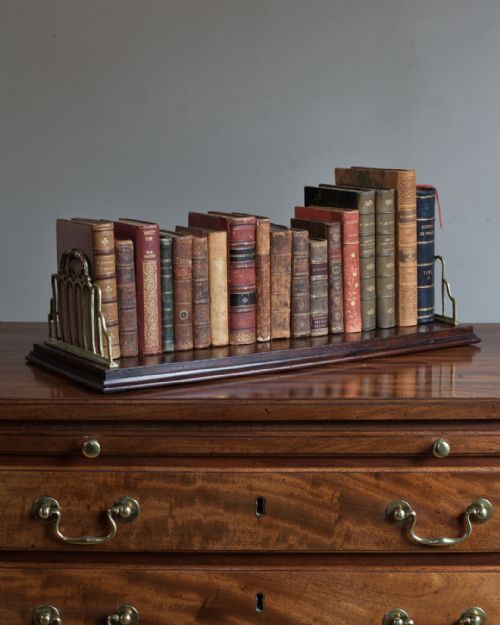
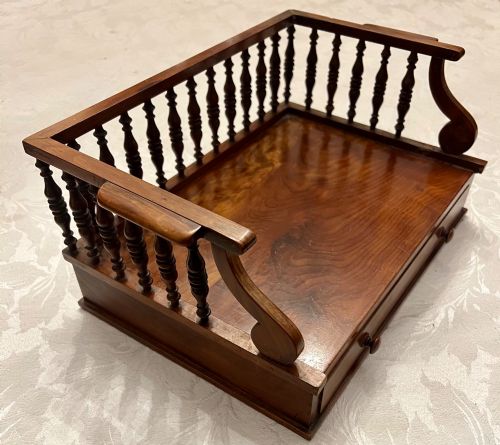
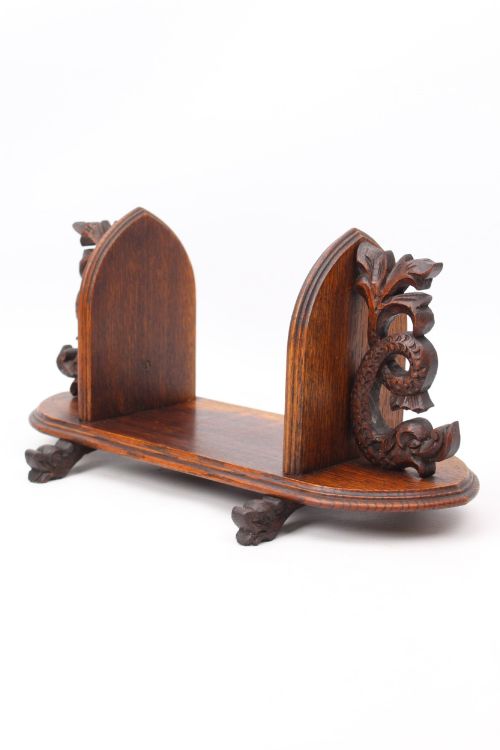
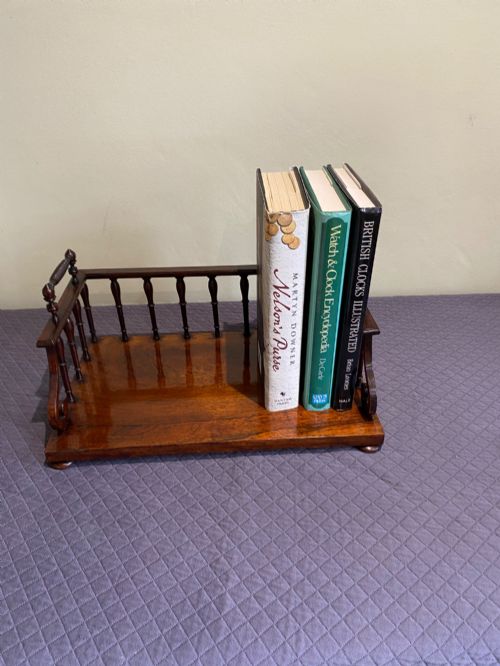
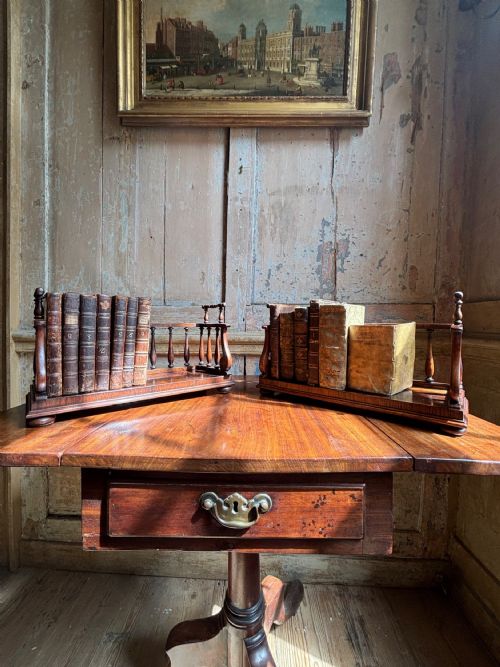
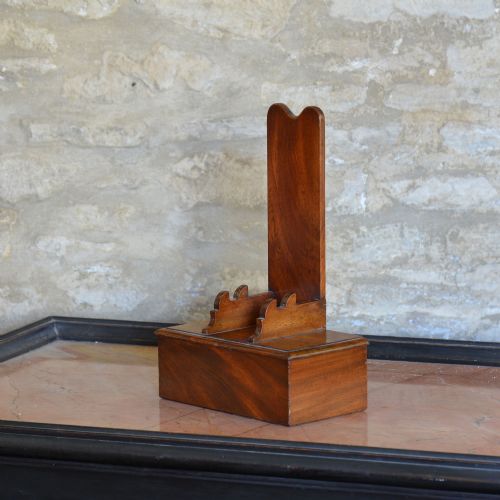
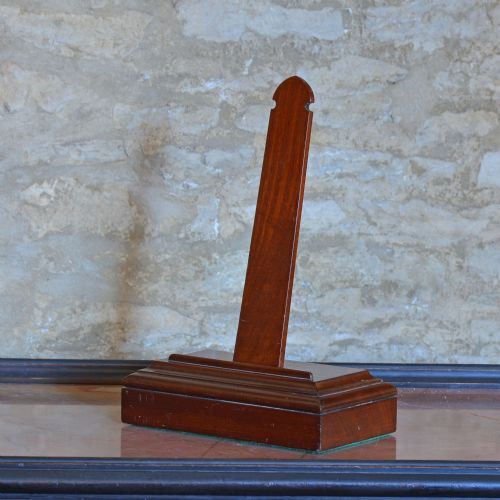
A tabletop book rack takes several forms across this selection, including extending book slides, fixed troughs, carriers, and revolving stands. These pieces emerge from periods spanning the Georgian era through the 1930s, reflecting changing domestic habits.
The materials include dense hardwoods like mahogany, rosewood, oak, and walnut, frequently enhanced by brass mounts or felt bases. Makers tailored these accessories for desks, side tables, and libraries to manage working collections of texts.
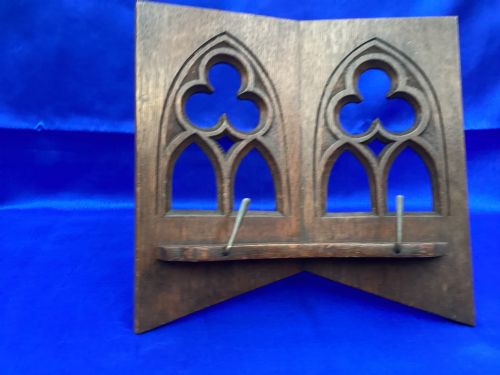
Styles range from restrained Regency and Georgian examples to ornate Victorian Gothic Revival, Arts and Crafts, and Art Deco designs. Buyers encounter everything from simple portable bookshelves to complex revolving bookcases intended for daily desk use.
Assessing quality in construction
The standard of timber selection and figuring largely determines the distinction between ordinary utility items and superior examples. Dense, well-matched mahogany, rosewood, or coromandel indicate higher workshop ambition.
Precision in moving parts, such as the slide action on expanding book racks or the rotation of a revolving bookcase, separates refined pieces from basic ones. The integration of brass mounts, fine inlays, or wood mosaic further elevates the execution.
Tabletop Book Rack Retail Price Guide 2026
Typical asking prices for tabletop book rack among the pieces listed under this phrase on Sellingantiques today, from the lower quarter to the upper quarter. They describe what is for sale here now, not the wider market.
Arthur Simpson·Gillows
The Tabletop Book Rack Glossary
- Book trough
- A fixed open container with angled sides intended to display and store books upright on a table. It keeps volumes accessible for immediate reference.
- Revolving bookcase
- A rotating tabletop stand that allows access to books from multiple angles without shifting position. It balances utility with compact desk storage.
- Tunbridge ware
- A form of British woodwork characterised by small mosaic tiles forming pictorial or geometric patterns. It appears on decorative desk pieces from the nineteenth century.
- Coromandel
- A dense, heavily figured exotic timber with dark brown and black streaks. Cabinetmakers utilised it for luxury nineteenth-century desk accessories.
Tabletop Book Rack: Frequently Asked Questions
How do extending book slides work?
Extending book slides feature interlocking wooden channels that pull apart or push together to adjust the overall length. This mechanism lets the rack expand as more volumes are added to the shelf.
Most designs rely on simple friction fits or wooden guides to hold the chosen width in place. They offer a flexible method for managing changing rows of reference books on a desk.
Where should I place a revolving bookstand?
A revolving bookstand suits the centre of a large desk, a side table, or an open shelf where it can turn freely. Its design allows access to volumes from every angle without moving the entire piece.
Ensure the surface is stable and large enough to accommodate the full turning circle of the stand. This placement keeps frequently consulted texts within arm's reach from a seated position.
What timber is most common?
Mahogany and oak appear most frequently across these listings, spanning Georgian, Victorian, and Edwardian periods. Walnut and rosewood also feature prominently in finer nineteenth-century examples.
Each timber brings a distinct colour and grain, influencing the overall character of the desk accessory. Darker hardwoods were favoured for their durability and formal appearance in studies and libraries.
How do I care for polished wood?
Maintain polished wood surfaces by dusting them regularly with a soft, dry cloth to prevent grit accumulation. Avoid placing pieces in direct sunlight or near heat sources to protect the timber and finish.
Occasional application of appropriate wax polish helps preserve the lustre of the grain. Care should be taken around brass mounts and felt bases during cleaning.
Are these pieces suitable for heavy books?
Most solid hardwood troughs and stands easily support standard octavo volumes and reference books. Robust construction in oak and mahogany provides the necessary structural strength for daily use.
Extending slides handle moderate weight, though extremely heavy folios are better suited to fixed shelving. Checking the sturdiness of the base and joints will indicate capacity.