


Regency Mahogany Magazine Stand
A regency mahogany magazine stand brings orderly elegance to a room, holding papers and folios with the grace of the period.
Regency Mahogany Magazine Stand
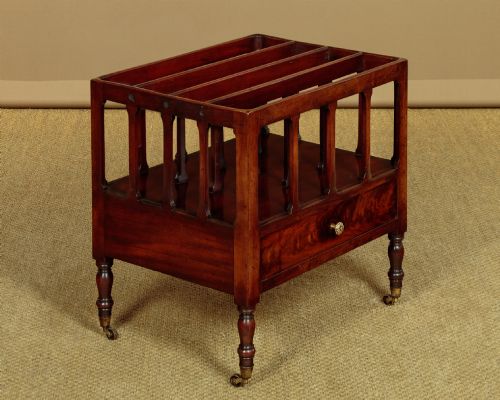
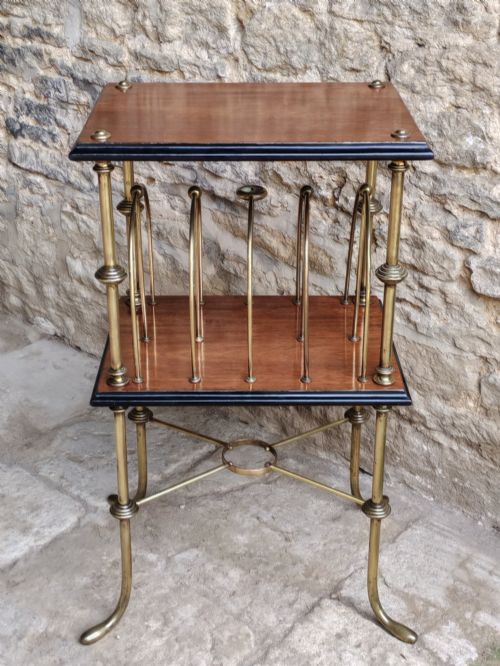
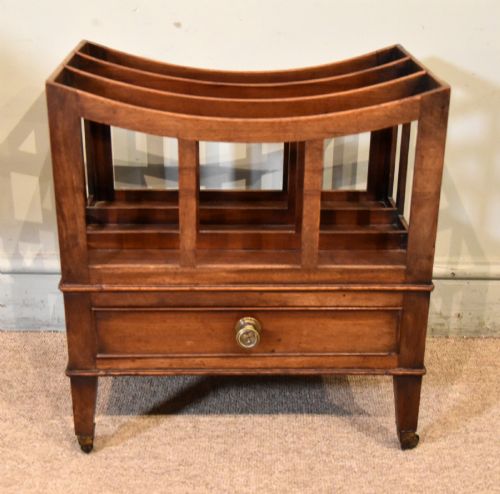
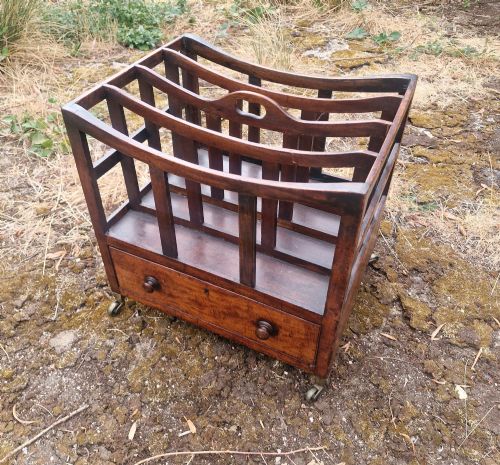
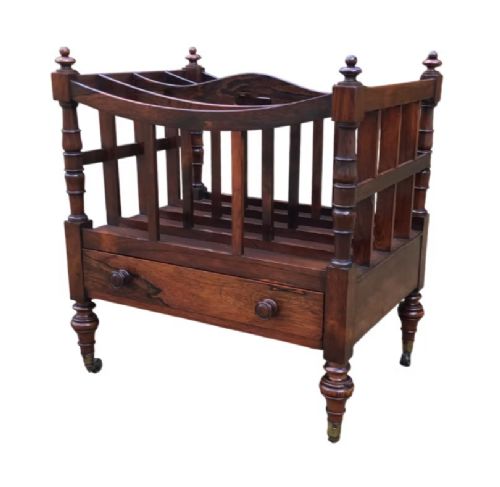
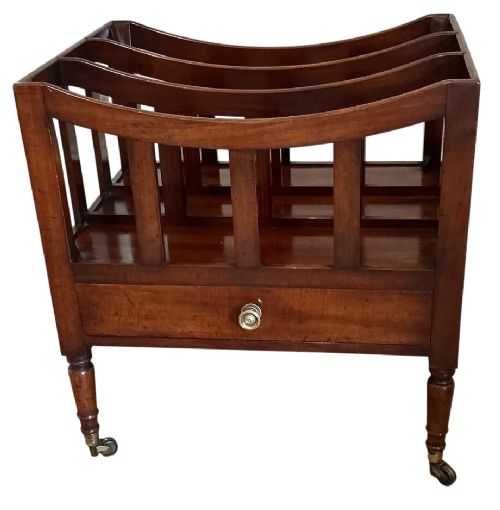
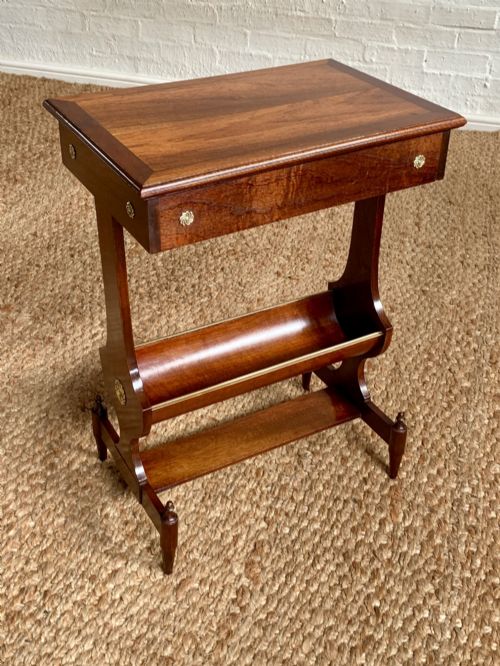
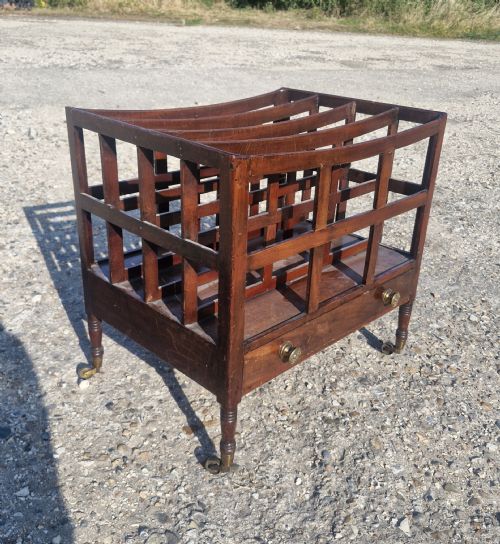
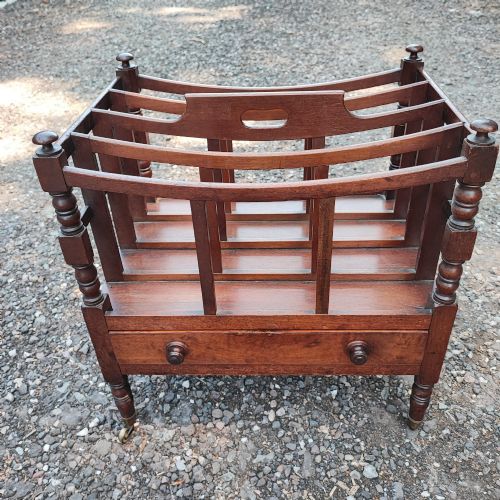
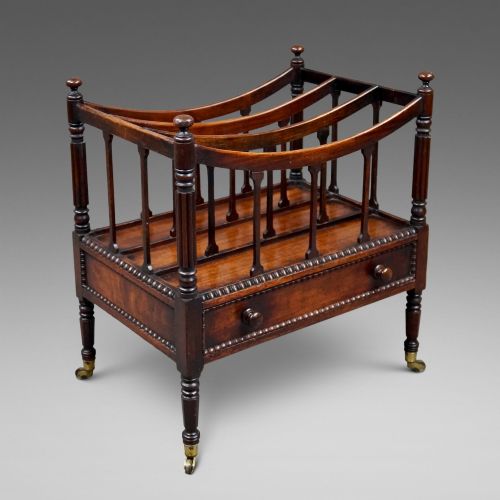
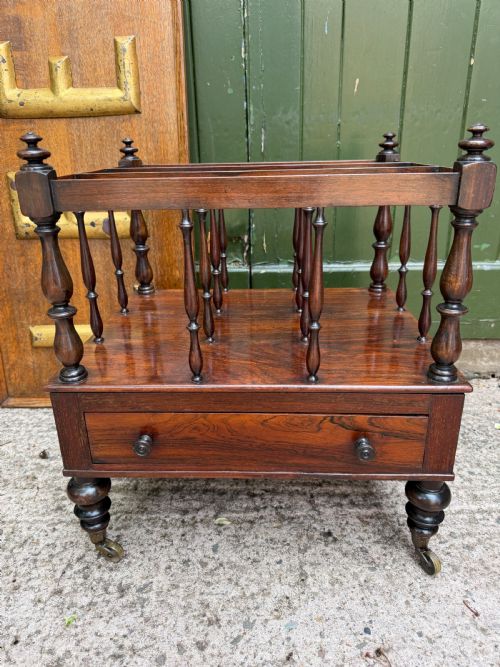
When you search for a regency mahogany magazine stand, you encounter pieces designed to hold periodicals, music sheets, and folios close to hand. These items frequently take the form of the classic Canterbury, featuring divided compartments above a low drawer, or appear as boat-shaped stands and folio racks.
The pieces appearing here span the Georgian, Regency, and William IV periods, alongside later revivals from the Victorian era up to the nineteen-thirties. You are most likely to meet authentic nineteenth-century examples and later interpretations that keep the proportions and utility of the original designs.
Assessing quality and finish
The distinction between ordinary pieces and the finest examples rests on the selection of timber and the crispness of the turning and joinery. Finer specimens display rich grain patterns in the mahogany, precise ebony or boxwood stringing, and well-cast brass elements that show no sign of cheap replacement.
Proportion and structural integrity dictate the standing of a piece, with superior items retaining their original castors, smooth-running drawers, and solid vertical slats that remain firm under use. Makers working at a high level paid careful attention to the interior corners and the thickness of the divisions.
Listings feature mahogany, rosewood, ebony, boxwood, and brass across periods spanning the eighteenth, nineteenth, and twentieth centuries.
Gillows of Lancaster
The Regency Mahogany Magazine Stand Glossary
- Canterbury
- A low stand with partitioned uprights used for holding books, music, or newspapers, often fitted with a drawer below. It took its name from the Archbishop of Canterbury, who commissioned the first such piece.
- Folio stand
- A piece designed to hold large sheets of paper, prints, or maps upright or at a slight angle. These often feature adjustable mechanisms or sturdy trestle ends.
- Cuban mahogany
- A dense, dark timber harvested in the West Indies, prized for its deep colour and durability in nineteenth-century furniture. It was frequently used for pieces intended to display high status.
- Stringing
- A narrow inlay of contrasting wood, such as boxwood or ebony, set flush into the mahogany surface to create decorative borders. This technique highlights the geometric lines of the cabinetwork.
Regency Mahogany Magazine Stand: Frequently Asked Questions
What is a Canterbury used for?
A Canterbury served primarily to hold sheet music, periodicals, and newspapers near a piano or seating area. The slatted partitions kept different publications sorted and accessible.
Over time, households used them for general reading materials and writing supplies. Their low profile allowed them to sit unobtrusively beside a desk or armchair.
How do I date a mahogany stand?
Dating relies on examining the timber species, the turning style of the legs, and the method of construction. Earlier pieces from the Georgian and Regency periods often feature hand-cut dovetails and Cuban mahogany.
Later Victorian revivals and twentieth-century interpretations show machine-sawn timber and different brass alloy compositions in the castors. Comparing the secondary woods inside drawers also helps narrow down the decade of manufacture.
Are these stands sturdy enough for daily use?
Most stands were built to handle the weight of heavy folios and newspapers without losing structural integrity. The combination of solid mahogany frames and pegged joints provides lasting strength.
Care should be taken when moving them by the partitions rather than the base, as the vertical slats experience strain if pulled. Ensuring the castors roll freely prevents stress on the legs.