
Antique Wooden Sheet Holder
An antique wooden sheet holder, found here as canterburys and music stands, keeps scores and folios orderly with timeless utility.
Antique Wooden Sheet Holder
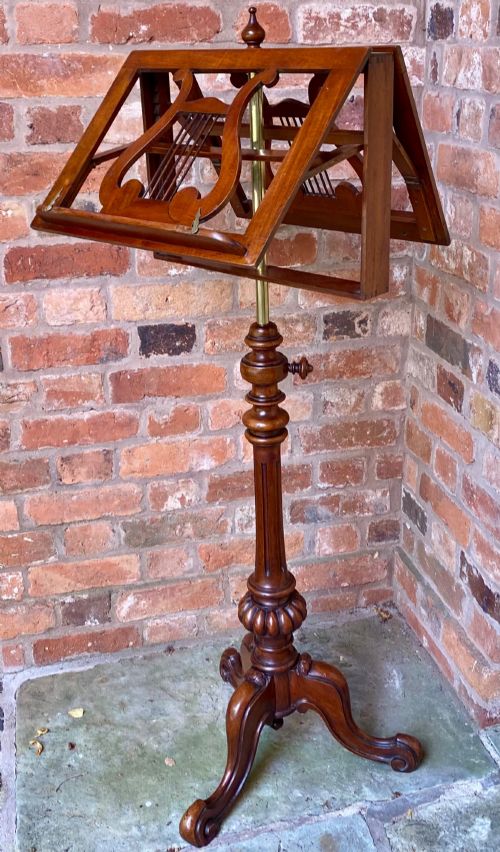
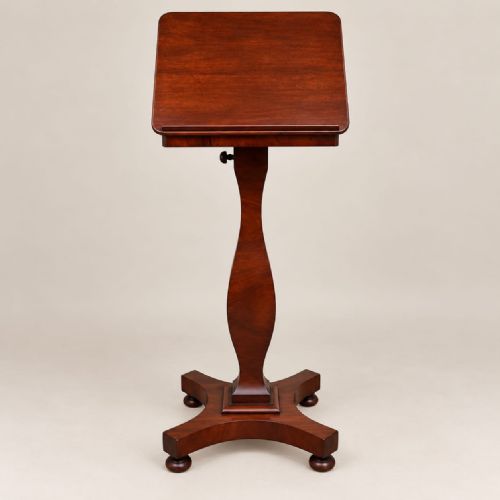
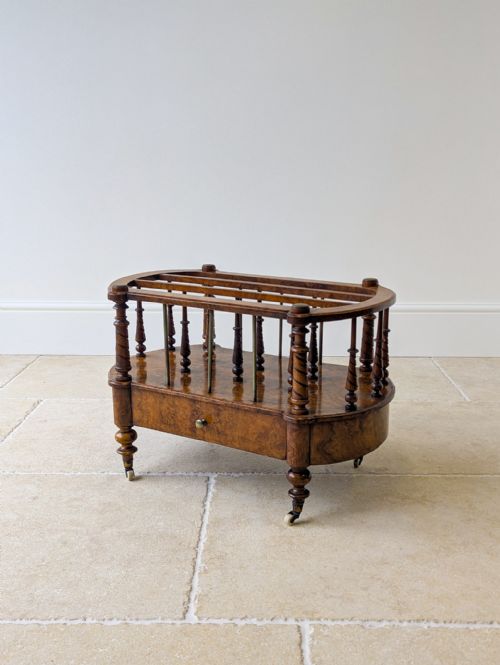
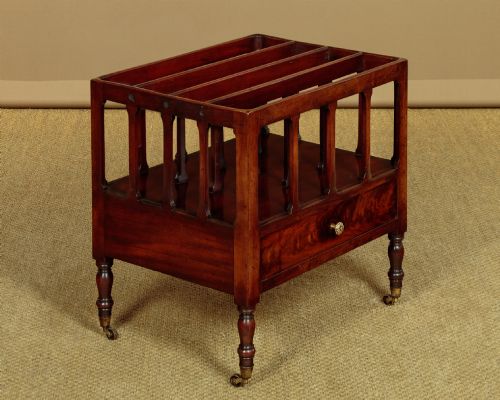
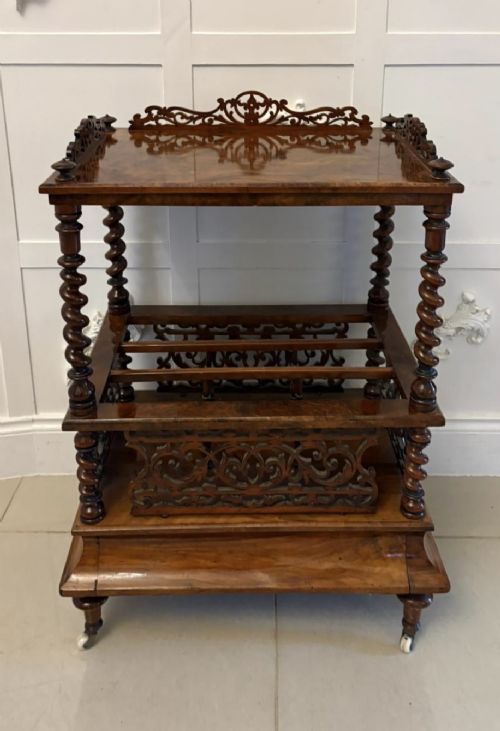
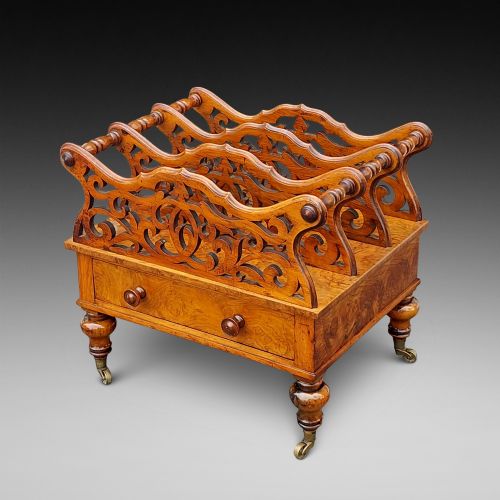
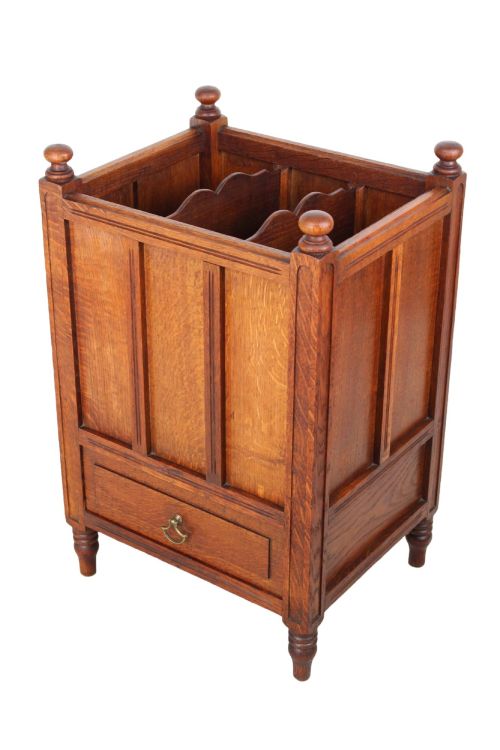
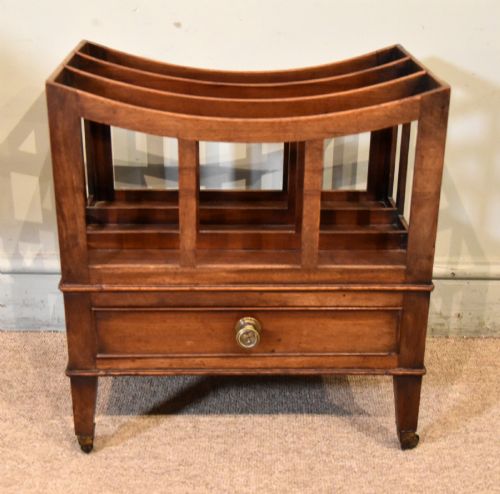
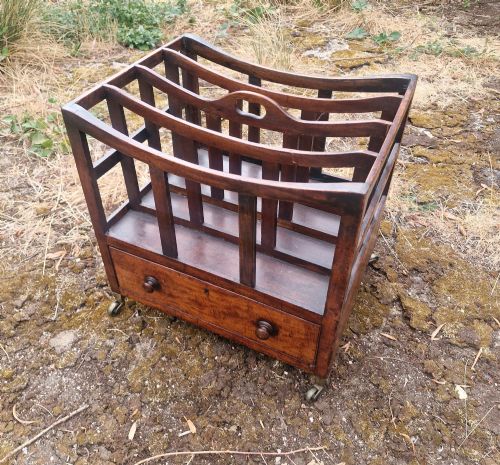
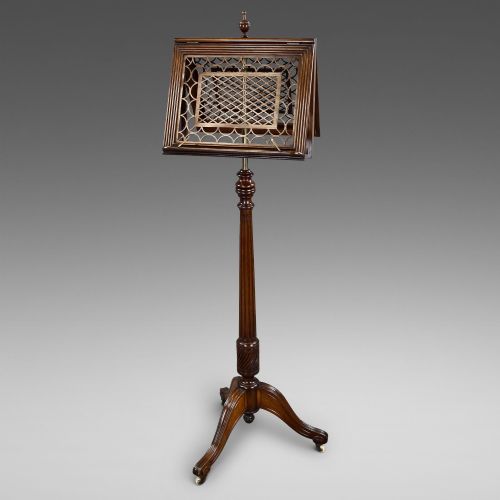
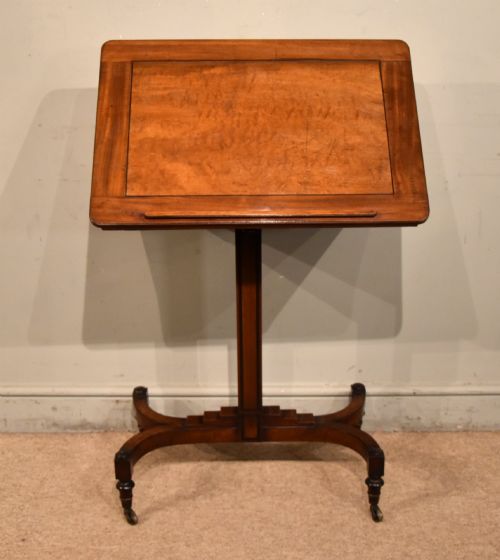
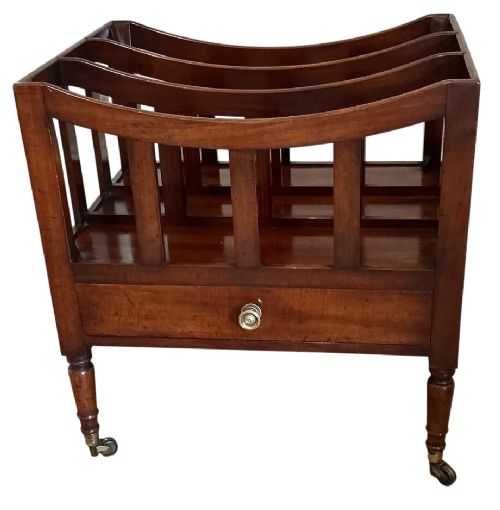
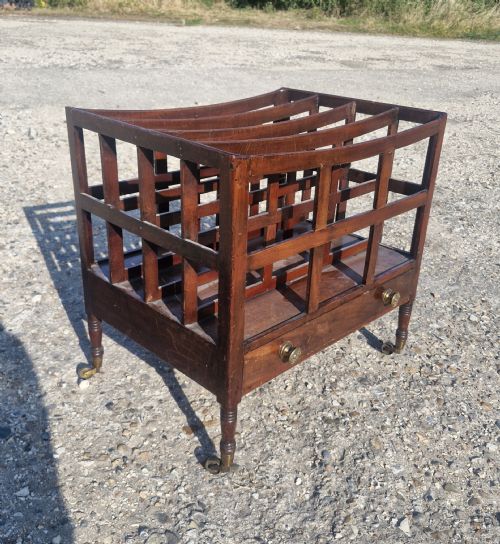
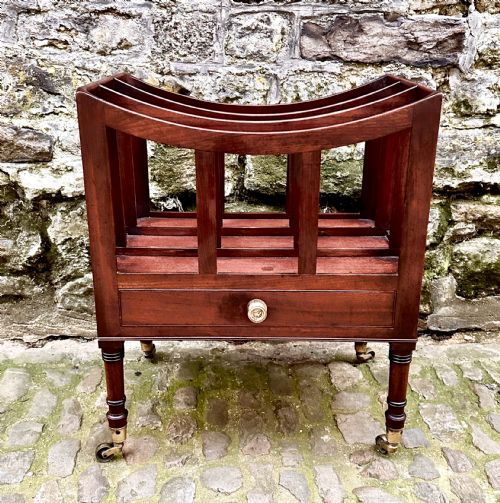
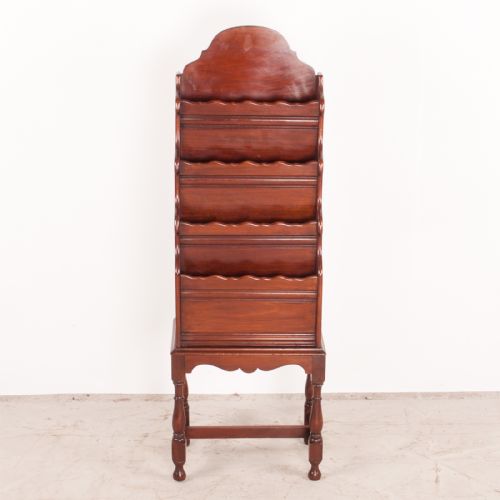
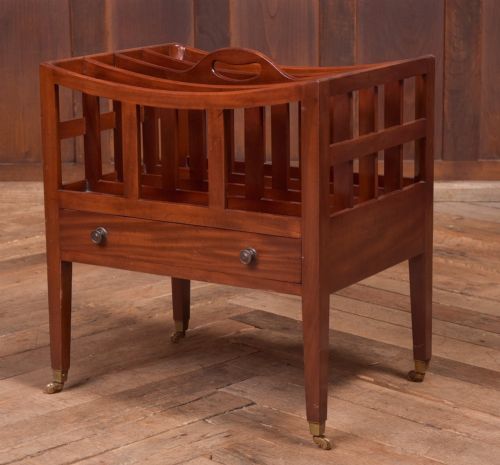
An antique wooden sheet holder primarily takes the form of a canterbury or a music stand designed to hold folios, newspapers, and scores. These pieces span the Georgian, Regency, William IV, and Victorian periods, often appearing in mahogany, walnut, or burr walnut.
The most common formats on this page are compartmentalised canterburys with slatted divisions and upright reading or music stands with adjustable ledges. Many include lower drawers or are mounted on castors for mobility around the parlour or drawing room.
Materials and construction methods
Cabinet makers utilised dense hardwoods such as mahogany, walnut, rosewood, and oak to build sturdy frames capable of supporting heavy folios and bound volumes. Burr walnut veneers and intricate inlay added decorative refinement to the main body.
Brass fittings, including adjustable ratchets, castors, and candle arms, feature prominently on music stands and reading tables. Turning and fretwork defined the uprights and supports of both canterburys and duet stands.
Assessing craftsmanship and finish
Quality rests in the selection of figured timbers, such as richly grained burr walnut or Cuban mahogany, paired with crisp carving and fine fretwork. Superior examples display thoughtful joinery that conceals structural stress in moving parts.
The refinement of brass adjusting mechanisms and the turning of legs set finer pieces apart from utilitarian workshop output. Original castors and well-fitted internal drawers elevate the desirability of a piece.
The Antique Wooden Sheet Holder Glossary
- Canterbury
- A low stand with vertical partitions designed for holding sheet music, newspapers, or periodicals. They frequently feature a single drawer below and rest on small castors.
- Duet Stand
- A music stand designed to accommodate two musicians reading from the same shared score. They often incorporate dual adjustable desks.
- Lectern
- A freestanding reading stand with an inclined top for holding books or manuscripts during lectures or recitations. They are typically built from oak or pine.
- Lyre-Form
- A decorative motif shaped like an ancient Greek lyre, commonly utilised within the central pillar or supports of music stands and canterburys.
- Gonçalo Alves
- A dense exotic hardwood sometimes utilised for cabinet making, noted for its rich figuring and durability. It appears in Regency furniture.
Antique Wooden Sheet Holder: Frequently Asked Questions
How did people use canterburys?
Canterburys were placed beside pianos or seating areas to hold sheet music, newspapers, and current periodicals. The vertical slats kept fragile papers upright and organised.
Many designs incorporated a small drawer beneath the main rack for smaller accessories like tuning forks or writing implements.
Are music stands adjustable?
Many period music stands and reading tables feature mechanical ratchets or screw mechanisms to alter the height and angle of the desk. This allowed the user to read comfortably while standing or seated.
Brass hardware was typically utilised to enable these smooth adjustments without wearing down the surrounding wood.
How do I date a wooden sheet holder?
Dating relies on observing the prevailing style, timber choices, and construction techniques characteristic of periods like Georgian, Regency, or Victorian. Regency and William IV pieces often display classical motifs like lyre supports and tuned pillars.
Later Victorian and Edwardian examples may show heavier carving, burr walnut veneers, or simpler, utilitarian frames.