
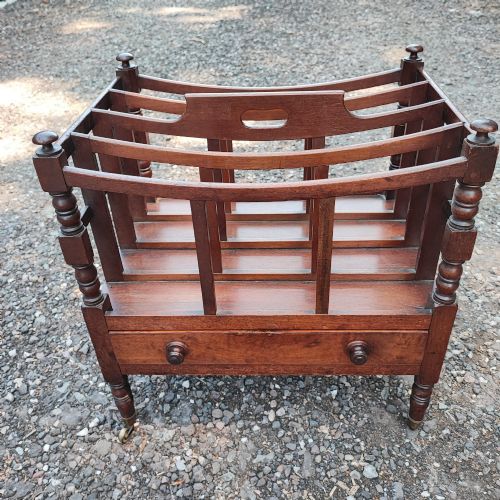


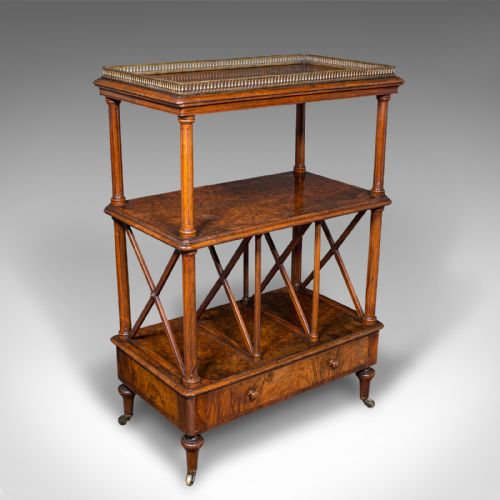


Regency Period Canterbury
These pieces of regency period canterbury bring clever division to sheet music and folios with their turned uprights and slatted partitions.
What a regency period canterbury is
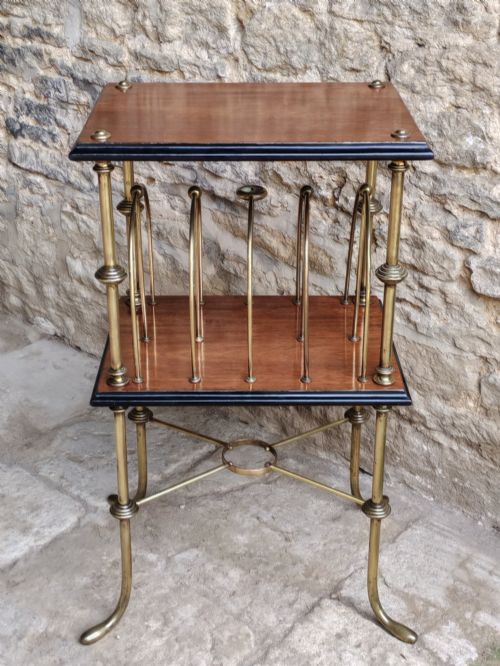
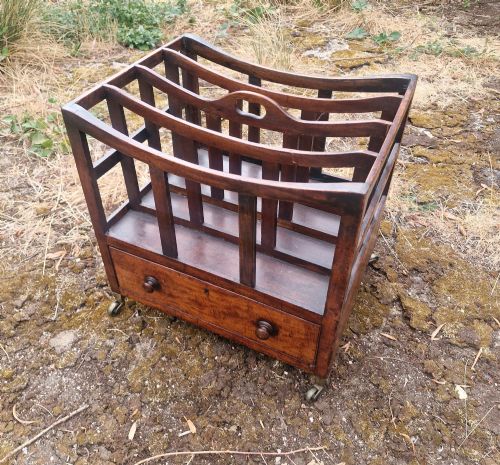
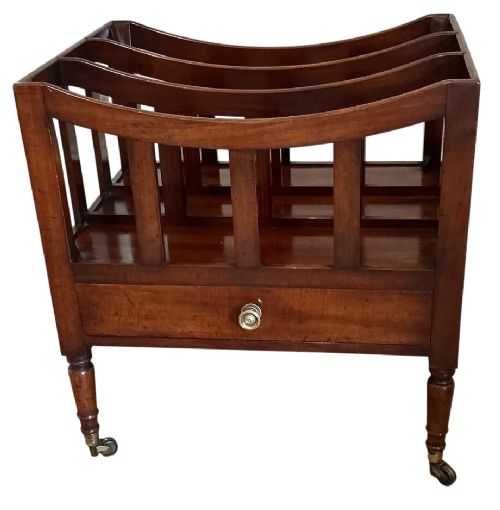
A regency period canterbury is a dedicated stand designed to hold music folios, magazines, and books within partitioned sections. These items appear in formats ranging from simple three-division and four-division frames to boat-shaped designs and complex combination pieces.
Originating during the early nineteenth century, these pieces reflect the domestic habits of regency parlours where organised storage for reading and playing materials was essential. Their characteristic low frames and carrying handles allowed them to move easily about a room.
How they were made
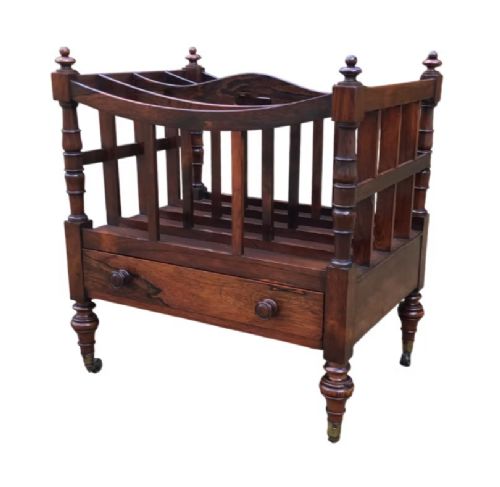
Cabinet makers constructed these stands primarily using solid and veneered timbers such as mahogany and rosewood, alongside burr walnut and painted wood. Brass details frequently appear in castors, mounts, and structural hardware that supported the mobility and assembly of the frames.
Techniques relied upon precise joinery to build the slatted divisions and uprights, with some examples incorporating carved elements. Surfaces received careful polishing to highlight the natural grain of the rosewood and mahogany, while others utilised painted finishes.
Retail Price Guide 2026
Typical UK retail prices for regency period canterbury, calculated from the Sellingantiques database of over a million retail prices indexed since 2003. This retail price guide relies exclusively on Sellingantiques data; no external sources or auction records are used, so the figures do not describe the wider market.
Listings on this site feature regency period canterburys in mahogany, rosewood, burr walnut, and painted wood, alongside associated etageres and magazine racks.
What varies in quality
The distinction between standard examples and finer pieces rests on the choice of timber figure, such as richly grained rosewood or figured mahogany, and the sophistication of the joinery. More ambitious designs combine the canterbury format with etagere shelving or incorporate intricate carving.
Proportion and handling of secondary details, including the execution of turned legs and the quality of brass castors, separate robust utility pieces from more refined drawing room furniture. Pieces retaining their original structural integrity without excessive timber replacement command greater appreciation.
Gillows of Lancaster and London
The Regency Period Canterbury Glossary
- Canterbury
- A low stand with vertical divisions used originally for holding music sheets and folios. It frequently includes a drawer beneath the partitions and small wheels for movement.
- Etagere
- A set of open shelves for displaying small objects, sometimes combined with a canterbury base. This multi-tiered furniture form became popular in the early nineteenth century.
- Boat-shaped
- A curved hull-like outline seen in the framing of certain canterburys. This profile softens the rectangular geometry typical of the period.
- X-frame
- A structural configuration employing crossed diagonal members to support the sides or partitions. It provides both visual movement and rigid bracing to the piece.
Frequently Asked Questions
What was a regency period canterbury used for?
These stands served as dedicated storage for sheet music, folios, and loose papers close to a piano or reading chair. Their partitions kept scores upright and sorted for easy selection during musical evenings.
They also functioned as mobile repositories for current magazines and books in the drawing room. Lower drawers provided extra space for smaller accessories.
Are all regency period canterburys made of mahogany?
Mahogany is the timber most commonly encountered in these listings, appearing across numerous single and multi-division formats. However, rosewood was also utilised for more decorative pieces, alongside burr walnut and painted wood.
Brass hardware frequently accompanies these different woods to form castors and structural mounts. Some examples combine the primary timber with contrasting secondary woods.
How do different variations of these pieces function?
Basic versions rely strictly on vertical slats to divide music folios into three or four sections. Other formats expand the utility by incorporating open shelves above or below the rack.
Combination pieces unite the canterbury function with occasional tables, display stands, and folio-stands. These multi-purpose designs allowed a single piece of furniture to serve several domestic needs.