


Regency Mahogany Music Canterbury
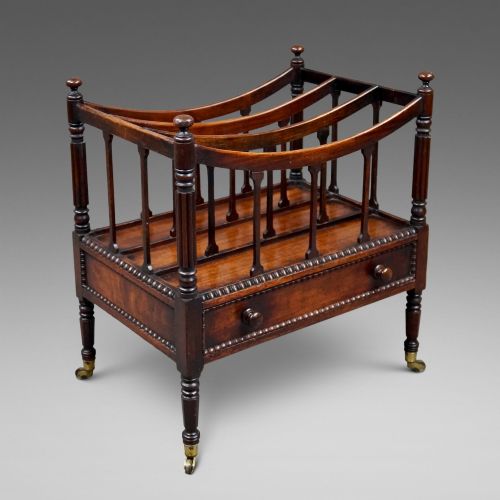
A regency mahogany music canterbury brings refined compartmentalised storage for scores and folios to a room, rooted in the early nineteenth century.
Regency Mahogany Music Canterbury
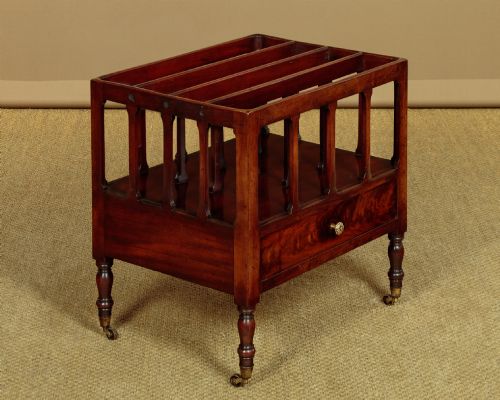
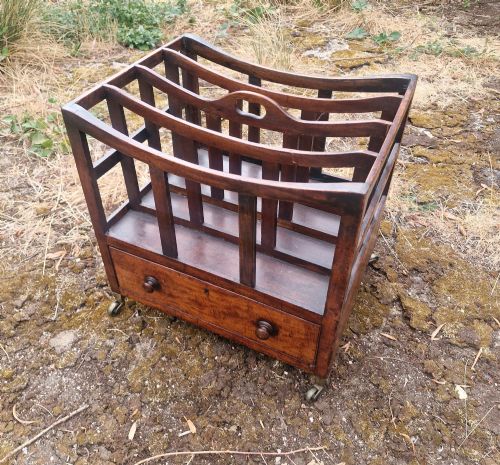
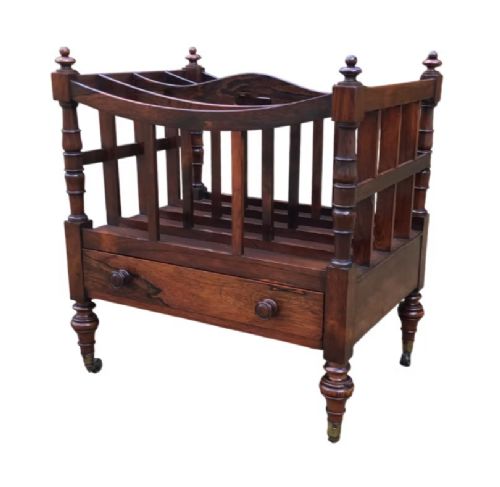
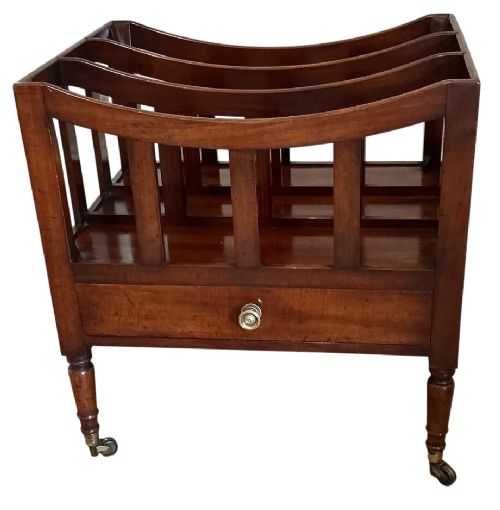
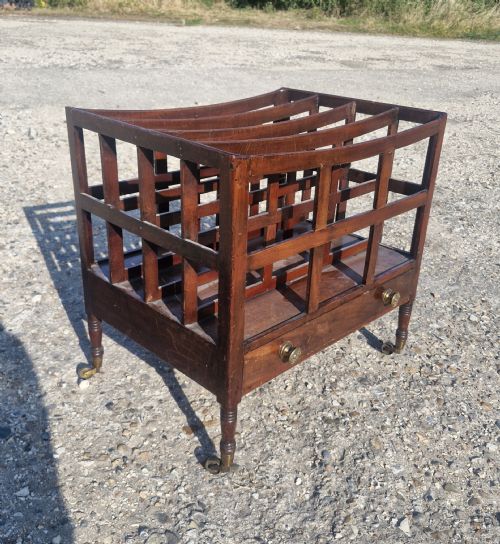
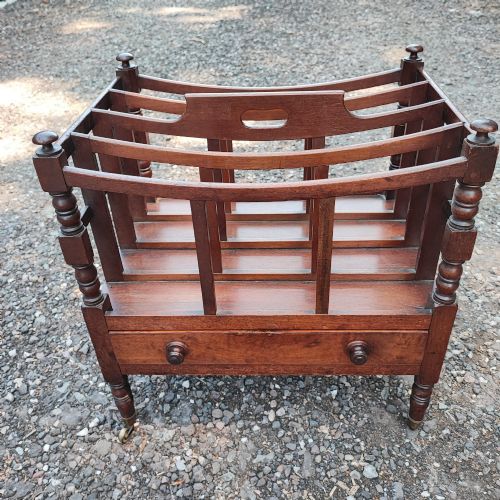
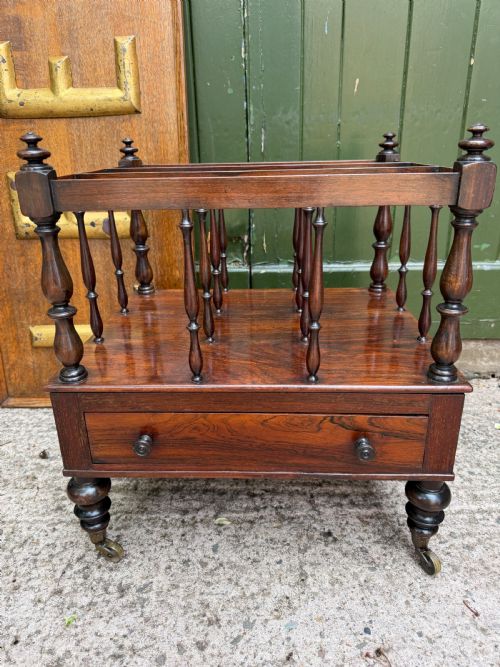
When searching for a regency mahogany music canterbury, collectors encounter pieces designed to hold sheet music, folios and periodicals within distinct vertical partitions. The form typically stands on castors with slatted or pierced divisions above a low drawer, serving as a movable stand beside a piano or seating area.
The examples found here span the Regency, Georgian, William IV and Victorian eras, alongside occasional later twentieth century interpretations. Boat shaped designs and four division formats recur frequently across these listings.
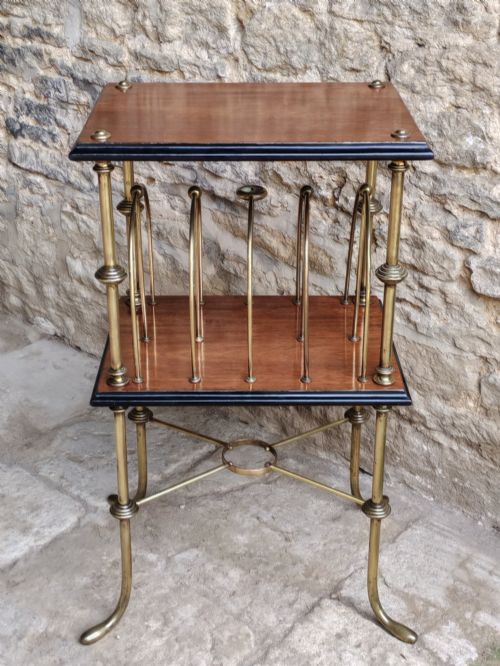
Makers and cabinetmakers of the period produced these stands in standard mahogany as well as figured Cuban mahogany and rosewood, sometimes incorporating ebony banding, boxwood inlay and brass mounts. Many items double as magazine racks, newspaper stands or occasional tables.
Materials and construction methods
Cabinetmakers constructed these pieces primarily from solid mahogany and Cuban mahogany, selected for grain figure and stability. Workshops utilised secondary timbers for internal partitions and drawer linings, assembling frames with traditional joinery.
Decorative enrichment relied on brass inlays, castors and handles, alongside fine strings of boxwood and ebony banding. Turned legs frequently carried brass wheel castors to permit smooth movement across floors.
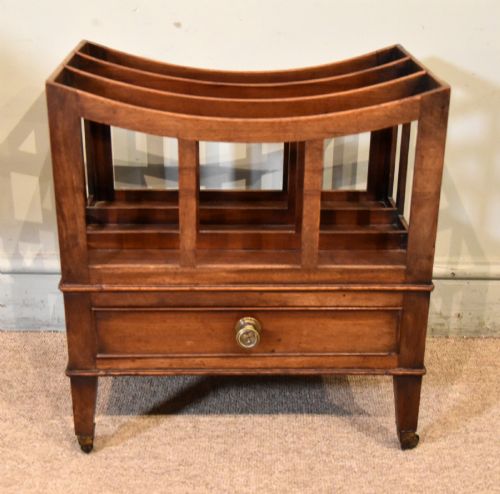
Dividers were shaped into distinctive dip top profiles or boat shaped curves, demonstrating precise woodworking in steam bending and fretwork.
Archbishops aside, the first canterbury allegedly solved the problem of sheet music sliding across parlour floors.
Distinctions in craftsmanship and form
The grade of timber dictates visual merit, with deeply figured Cuban mahogany and crisp rosewood veneers marking out superior examples. Plain straight grained mahogany represents standard output.
Refinement of detail separates utilitarian items from distinguished specimens, visible in the turning of the legs, the precision of the joinery at the divisions, and the presence of original brass castors. Subtleties in pierced hand grips and shaped rails reflect the ambition of the original workshop.
Gillows of Lancaster
The Regency Mahogany Music Canterbury Glossary
- Canterbury
- A low stand with vertical partitions designed for holding music sheets, books or newspapers. The name derives from the Archbishop of Canterbury, who is said to have commissioned the first such piece.
- Cuban mahogany
- A dense, richly figured timber imported from the Caribbean used extensively in high quality eighteenth and nineteenth century furniture. Its deep reddish brown tone patinates richly over time.
- Dip top
- A specific profile for the upper edge of partition rails, shaped with a downward curve toward the centre. This contour allows scores and folios to be lifted out with ease.
- Folio stand
- A related storage piece intended for large paper sheets, prints or bound volumes. These share construction traits with music canterburys.
- Bandings
- Thin strips of contrasting wood, such as ebony or boxwood, inlaid into the primary mahogany surface to create decorative borders.
Regency Mahogany Music Canterbury: Frequently Asked Questions
What is a music canterbury used for?
These stands were originally built to hold sheet music, scores and bound musical folios near a piano or music room seating. They kept working scores organised and accessible during practice or performance.
Today, they serve equally well beside a reading chair for newspapers, magazines and books while retaining their period character.
How do I date a mahogany canterbury?
Dating relies on stylistic markers, timber choice and construction details such as drawer dovetails and leg turning. Regency and Georgian examples display slender turned legs, brass castors and often delicate boxwood stringing.
Later Victorian and twentieth century pieces typically show heavier proportions or simplified partitions lacking the crisp shaping of earlier workshops.
Why are some called boat shaped?
Boat shaped canterburys feature outwardly curved or swelling ends on their upper rails, resembling the hull of a vessel. This silhouette gained popularity during the Regency period.
The profile adds visual fluidity to an otherwise rectilinear piece of furniture.
Did these pieces always have drawers?
Not all canterburys include a drawer beneath the slatted divisions. Simpler open front versions rely entirely on the vertical dividers for storage.
When present, the single drawer beneath the rack provided secure storage for smaller items like tuning keys, manuscript papers or loose leaves.