
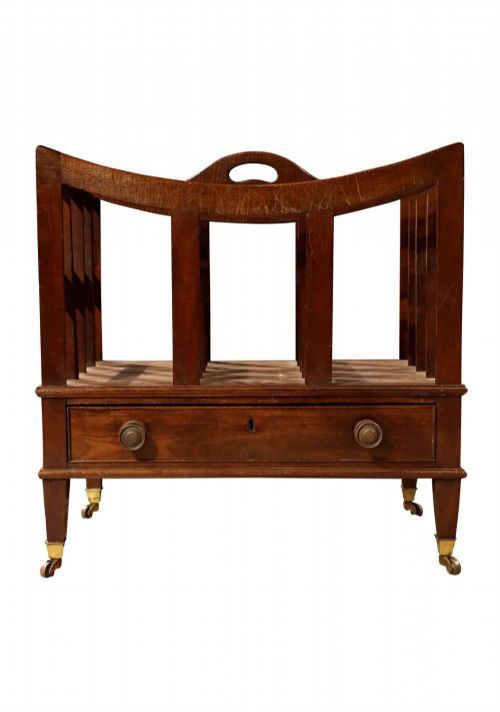

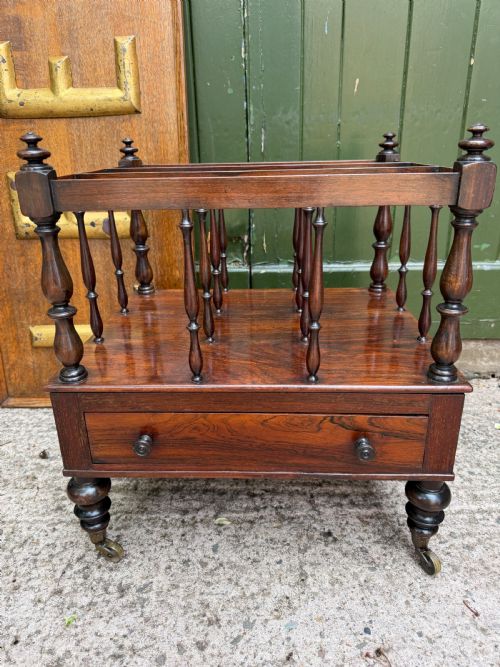

Mahogany Magazine Holder
Mahogany magazine holder designs combine practical storage with classical cabinet-making, offering a refined way to keep periodicals organised.
Mahogany Magazine Holder
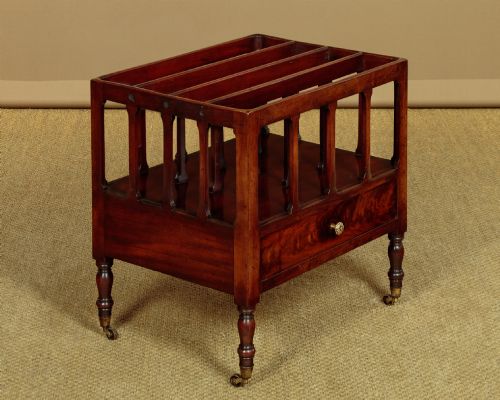
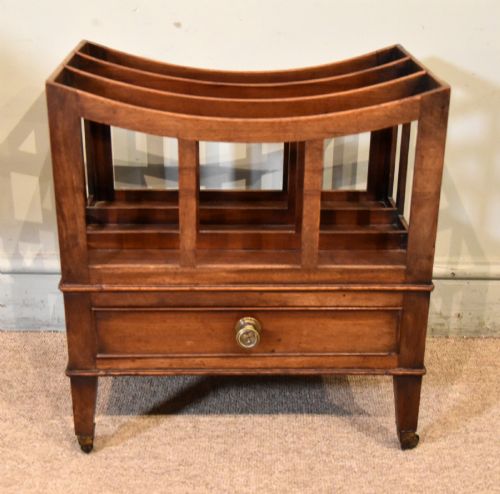
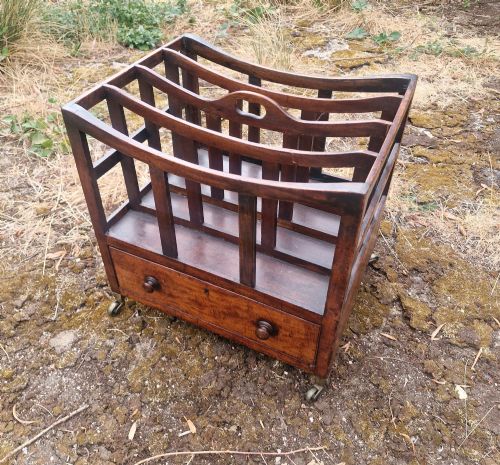
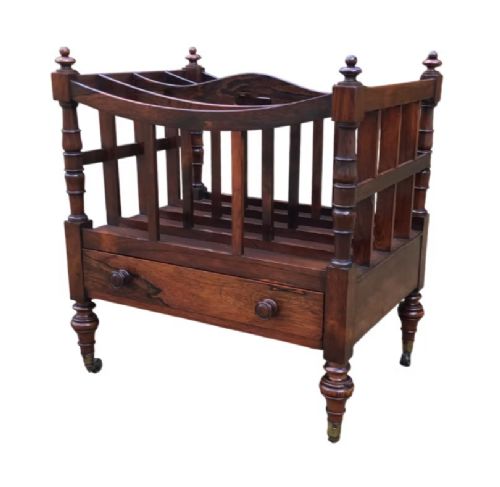
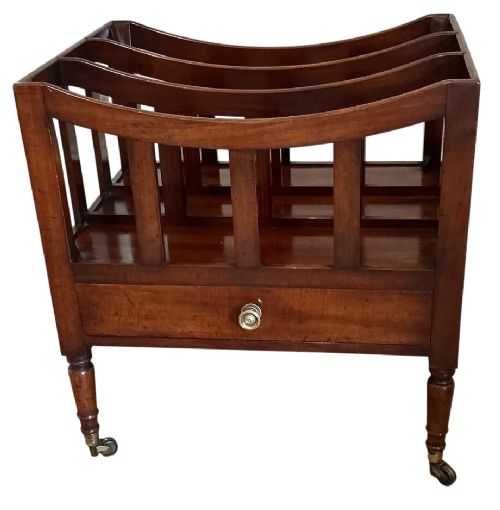
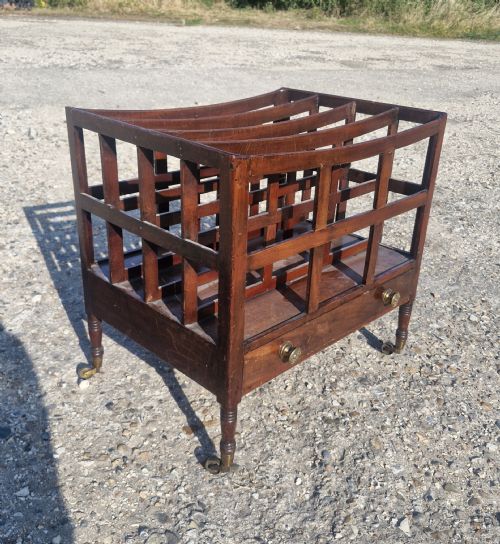
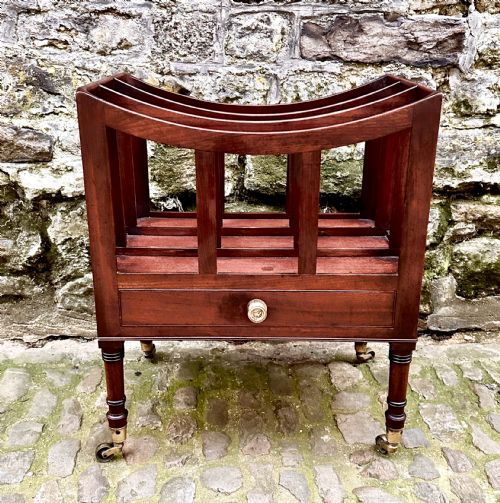
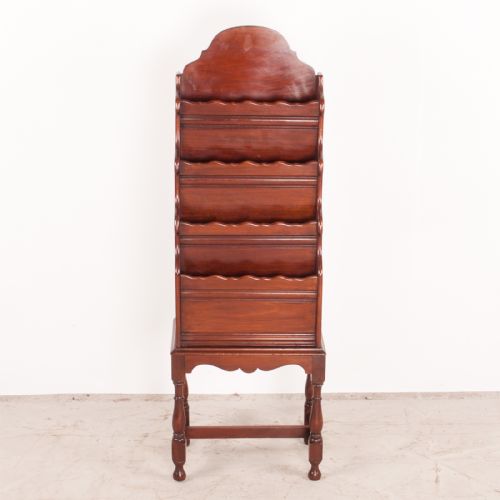
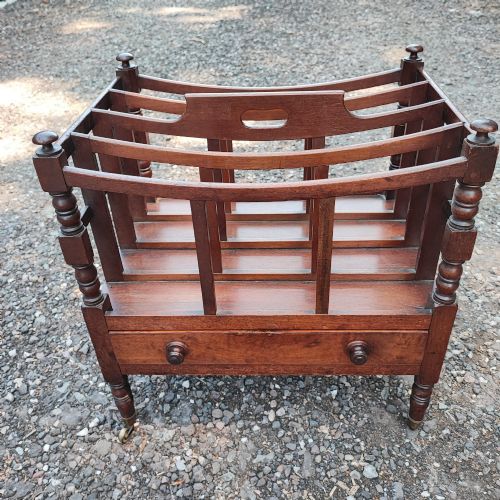
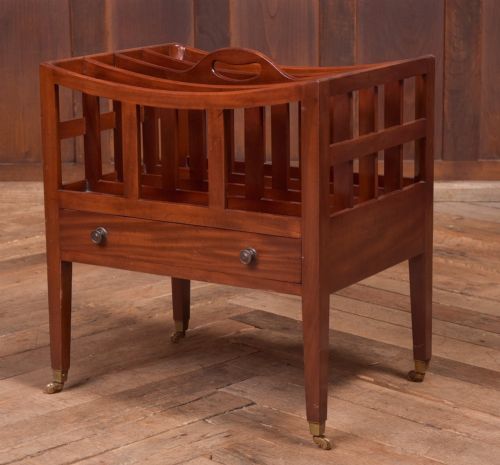
A mahogany magazine holder most commonly takes the form of a traditional Canterbury, a low stand originally designed for sheet music or loose folios and later used for newspapers and periodicals. These pieces appear across several historical periods, with Regency, Georgian and Edwardian examples forming the core of what you will encounter here.
How they were made
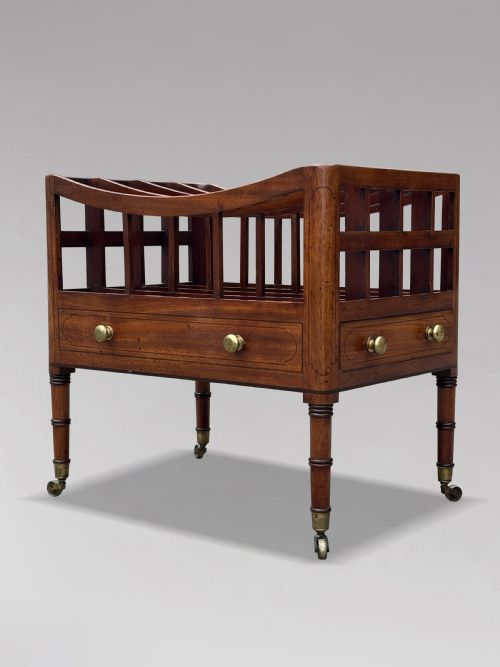
Cabinet-makers relied heavily on solid mahogany and figured Cuban mahogany, occasionally accentuating the grain with satinwood inlay, ebony banding or brass fittings. Structural support came from turned wooden legs, often mounted on castors to allow the stand to move easily across a parlour floor.
Dividers and slatted partitions were joined with precise woodworking techniques to maintain rigidity while supporting the weight of heavy paper volumes. Metal wire also appears in certain variations, providing a lighter frame for later iterations.
Listings span from the 18th century through to the 1920s, dominated by 19th-century and Regency examples.
What varies in quality
The distinction between standard utility items and superior pieces rests on the selection of the timber and the crispness of the joinery. Highly figured Cuban mahogany and finely executed satinwood inlay elevate a piece from a simple domestic accessory to a notable example of period design.
Proportion and structural harmony also dictate distinction, where balanced turned legs, well-fitted drawers and original brass castors demonstrate the maker's underlying skill.
The Mahogany Magazine Holder Glossary
- Canterbury
- A low, freestanding stand with partitioned sections, originally built for sheet music and later utilised for magazines and newspapers. They typically feature slatted sides and frequently incorporate a small drawer at the base.
- Folio stand
- An adjustable or fixed upright rack designed to hold large books, prints or unbound sheets of paper. These are usually larger in scale than a standard Canterbury.
- Cuban mahogany
- A dense, dark variety of mahogany prized for its rich grain patterns and durability in 18th and 19th-century furniture. It is frequently seen in high-status pieces of the period.
- Bandings
- Thin strips of contrasting timber, such as ebony or satinwood, inlaid around the edges of panels or tabletops to create a decorative border.
Mahogany Magazine Holder: Frequently Asked Questions
What is the difference between a Canterbury and a magazine rack?
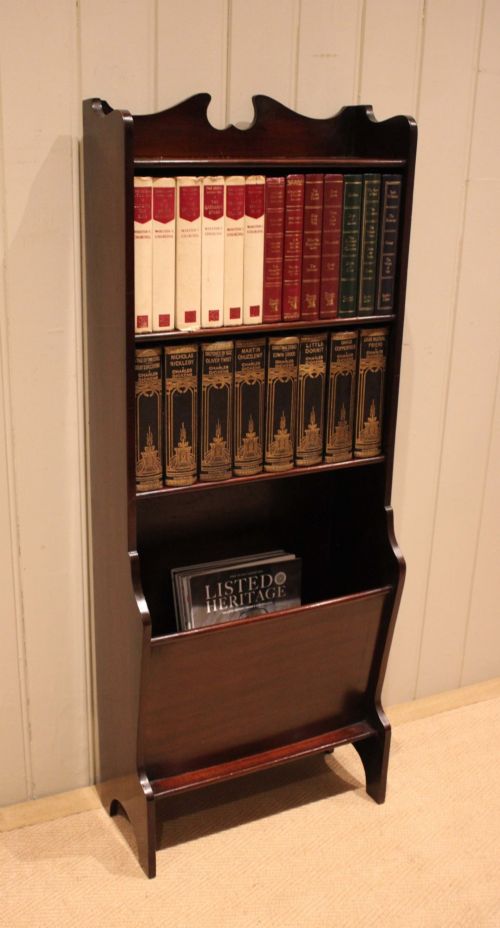
A Canterbury is a traditional multi-tiered stand featuring wooden divisions and usually a low drawer, dating from the Georgian and Regency periods. Magazine racks can encompass these earlier forms as well as lighter Edwardian and later 20th-century designs that use wood or metal wire.
While both serve the same ultimate function of holding periodicals, a Canterbury generally exhibits more complex cabinet-making and classical styling.
How were these pieces used historically?
These stands were placed beside seating areas in drawing rooms and libraries to keep sheet music, folios and newspapers tidy yet immediately accessible. The addition of castors allowed them to be repositioned easily across carpets during evening gatherings.
In contemporary spaces, they serve much the same purpose, keeping current journals and books neatly contained.
How can I tell a Georgian piece from an Edwardian one?
Georgian and Regency examples tend to feature dense Cuban mahogany, hand-turned legs and subtle details like ebony banding or brass castors. They often possess a heavier, architectural presence.
Edwardian pieces, built around the turn of the 20th century, frequently show lighter construction, simpler satinwood inlay and sometimes the integration of metal wire components.
Do these stands require special care?
Maintenance involves keeping the timber away from direct heat sources and sudden humidity changes to prevent the mahogany from splitting. Regular dusting with a soft cloth preserves the polish.
Waxing occasionally helps nourish the grain without building up heavy residue.