




Edwardian Mahogany Canterbury
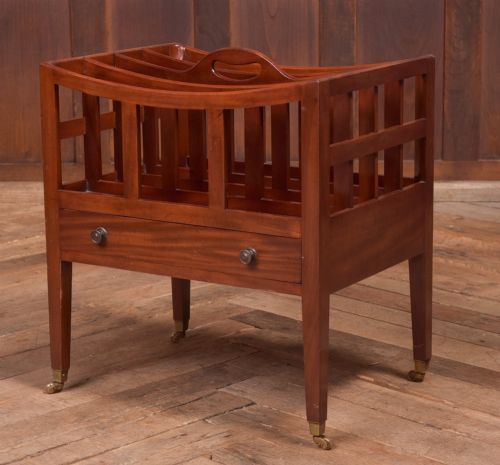
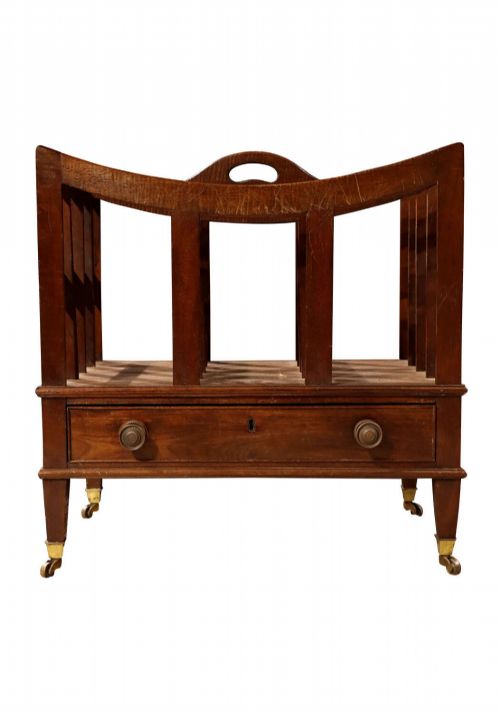
An Edwardian mahogany canterbury organises sheets, volumes and papers with deep timber partitions and upright frames.
Edwardian Mahogany Canterbury
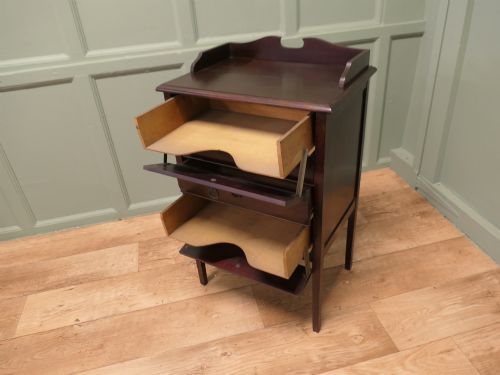
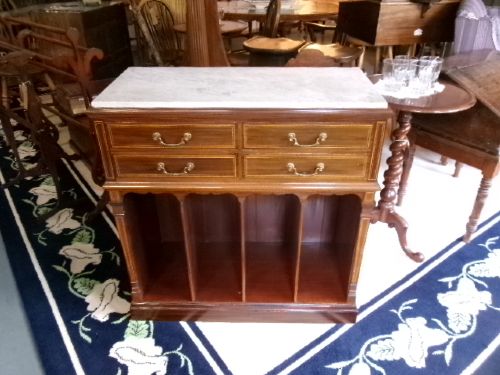
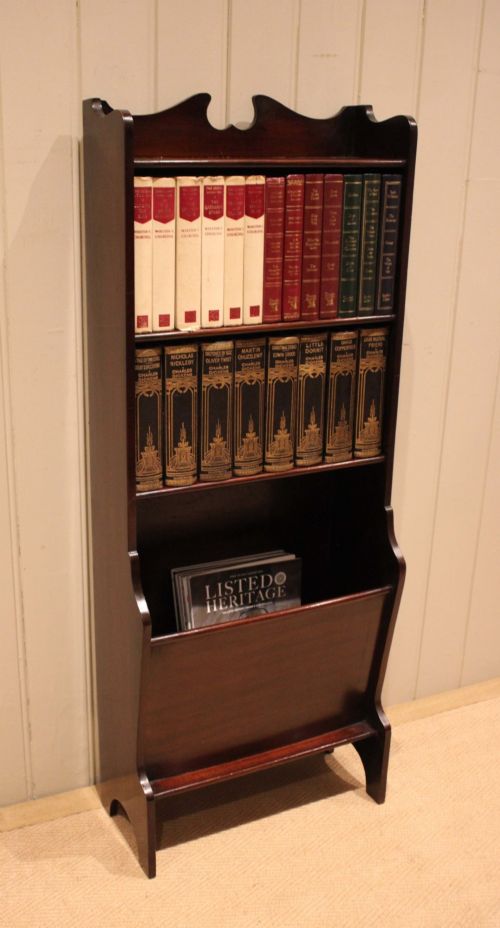
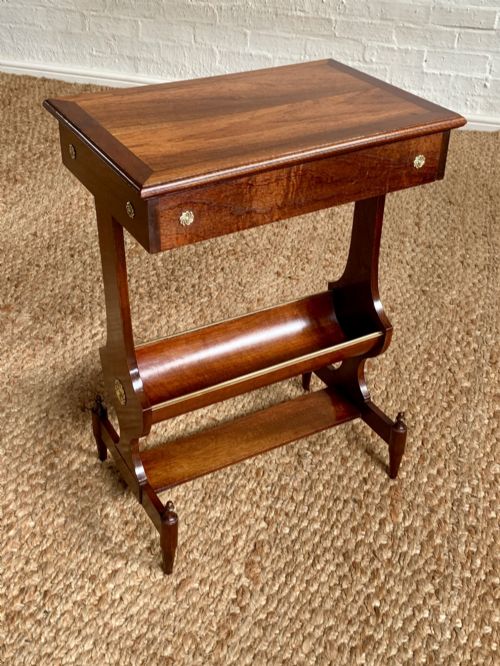
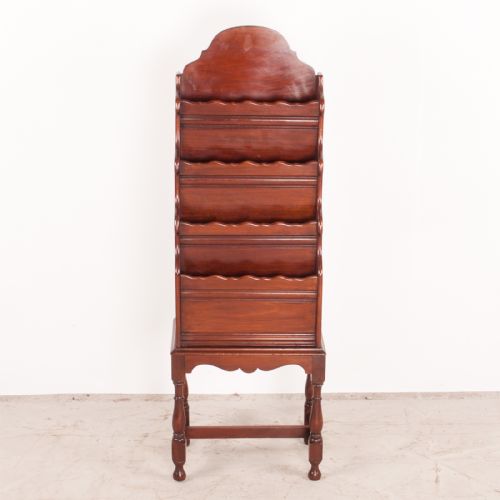
When you search for an edwardian mahogany canterbury, you look at partitioned pieces designed to hold folios, magazines, books and sheet music within domestic parlours and drawing rooms. The pieces here include traditional slatted racks, side tables fitted with storage, music cabinets with drop fronts, and revolving stands.
The version you are most likely to meet on this page is the Edwardian incarnation, typically constructed from mahogany and often finished with satinwood inlay or brass details. Alongside these, the selection draws on Victorian, Regency and George III examples, reflecting how cabinetmakers returned to these forms across the nineteenth and early twentieth centuries.
Forms range from simple tiered magazine racks and book troughs to complex music cabinets combining drawers with upright dividers. Many sit upon castors or turned legs, built for mobility around the hearth or reading chair.
Materials and construction
Timber selection governs these builds, utilising solid mahogany alongside flame mahogany veneer to achieve rich surface figures. Cabinetmakers incorporated secondary woods and applied boxwood or satinwood inlay to linear panels and friezes.
Metal fittings provide both structure and movement, employing brass castors, handles and stands to support revolving bookcases and standard lamps. Structural joints rely on traditional carpentry techniques, securing slatted divisions and drawers beneath the main tier.
Edwardian Mahogany Canterbury Retail Price Guide 2026
Typical asking prices for edwardian mahogany canterbury among the pieces listed under this phrase on Sellingantiques today, from the lower quarter to the upper quarter. They describe what is for sale here now, not the wider market.
The archive includes hybrid forms combining music cabinets, standard lamps, and book troughs with traditional canterbury partitions.
Judging quality
Quality rests in the crispness of the joinery and the restraint of the decoration, where inlaid stringing and pierced carving enhance the timber rather than clutter it. Superior pieces maintain rigid partitions that withstand the weight of heavy volumes without sagging.
The choice of mahogany grain dictates visual depth, with well-figured flame veneers and solid stock separating finer workshop output from simpler utility pieces. Original brass castors and intact turning on the legs further distinguish better examples.
Howard and Sons of London·Liberty
The Edwardian Mahogany Canterbury Glossary
- Canterbury
- A low stand with upright partitions designed originally for holding sheet music and folios, later adopted for periodicals and books. The form appeared during the eighteenth century and persisted through the Edwardian period.
- Inlay
- A decorative technique where contrasting woods such as satinwood or boxwood are set flush into the mahogany surface. This method frequently delineates borders and central medallions on Edwardian pieces.
- Castor
- A small wheel mounted on a swivel attached to the base of furniture legs. They allowed heavy stands and music cabinets to be repositioned easily across carpets.
- Flame mahogany
- A veneer cut from the fork of the mahogany tree where the branch joins the trunk. It produces a distinctive flickering flame pattern highly prized by cabinetmakers.
- Music cabinet
- A specialised storage piece featuring internal shelves or drop fronts to organise sheet music. These often share floor space and design vocabulary with standard canterburys.
Edwardian Mahogany Canterbury: Frequently Asked Questions
What is an edwardian mahogany canterbury used for?
These stands hold periodicals, books and sheet music within easy reach of a seating area. The vertical partitions keep volumes upright and sorted.
Historically, they served the music room and drawing room for organising evening scores and daily newspapers.
How do I tell an Edwardian canterbury from a Victorian one?
Edwardian versions tend to display lighter framing, subtle satinwood stringing and cleaner lines influenced by revival styles. They often date from around nineteen hundred to nineteen twenty.
Victorian examples frequently present heavier proportions, deeper mouldings, and sometimes bolder brass mounts or darker finishes.
Are all these pieces from the Edwardian period?
While the search targets the Edwardian era, the selection includes pieces spanning from the George III period through the nineteenth century and into the nineteen thirties. Regency and Victorian revivals also appear among the listings.
Each piece reflects the prevailing taste of its specific manufacturing date, even when adopting earlier design motifs.
Where should I place a canterbury in my home?
They fit naturally beside a sofa, armchair or desk where reading materials accumulate. The low profile allows them to sit neatly without blocking views or walkways.
Revolving versions work well beside a reading chair to offer access to books from any angle.