



Dark Wood Magazine Holder
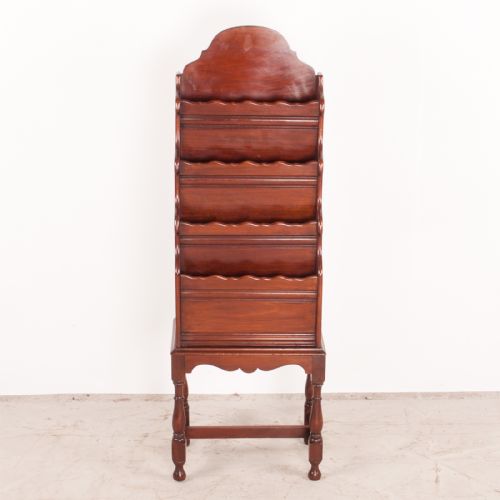
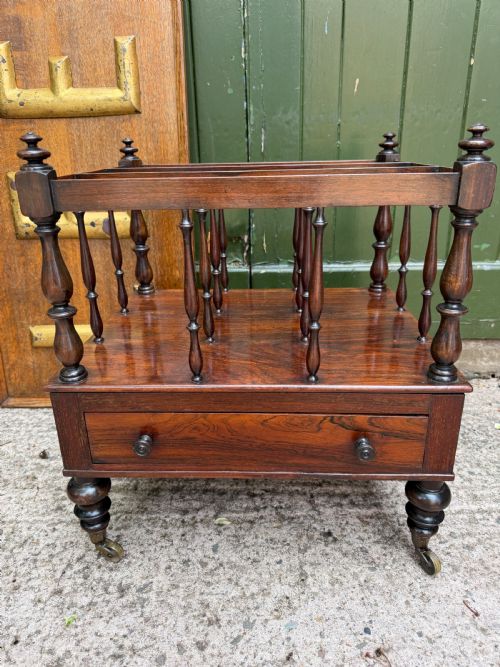
A dark wood magazine holder brings functional refinement to a room, offering a structured place for periodicals through classic forms like the Canterbury.
Dark Wood Magazine Holder
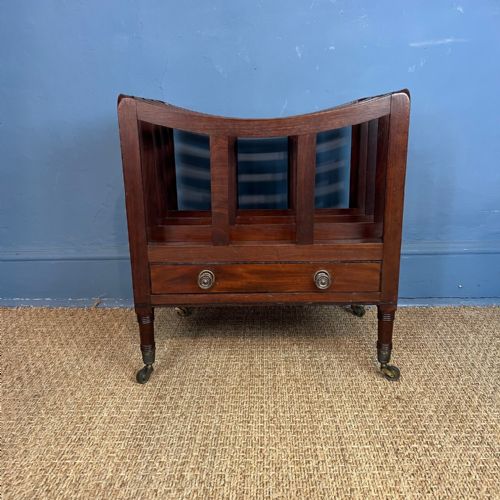
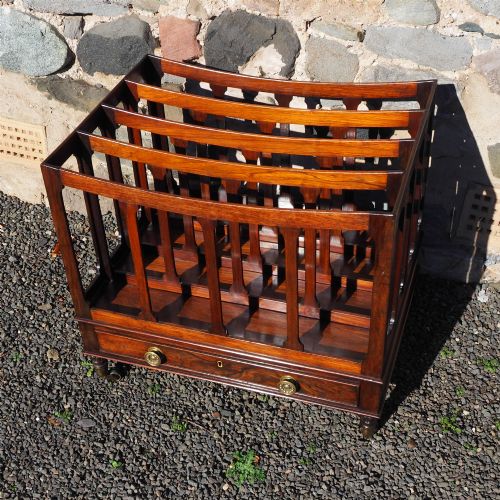
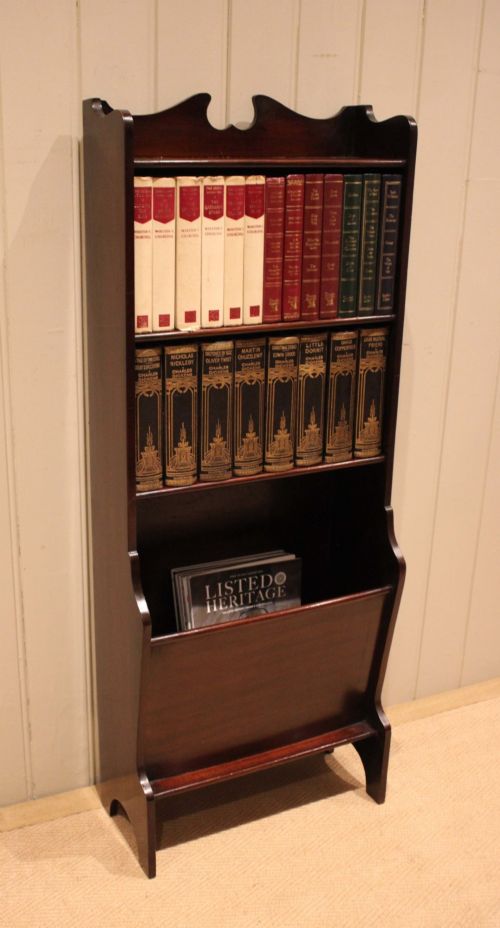
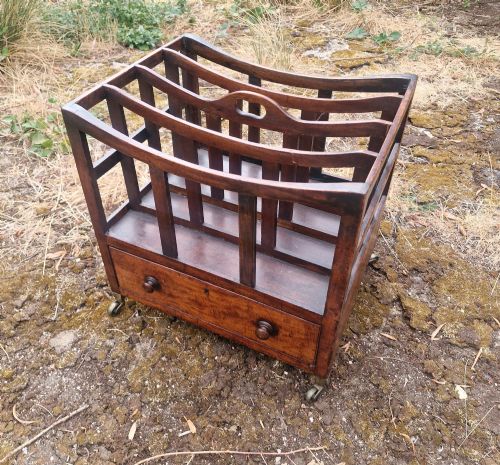
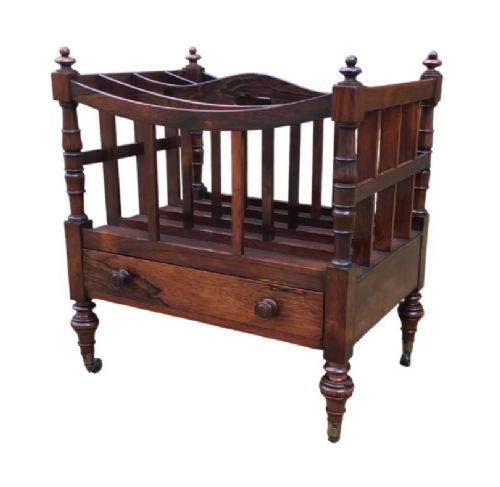
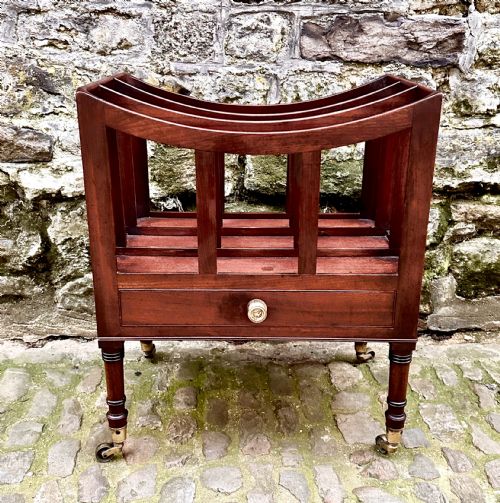
When searching for a dark wood magazine holder, buyers encounter several distinct iterations of storage pieces designed to hold papers, folios, and periodicals. The most frequent form on this page is the traditional Canterbury, alongside dedicated magazine racks, folio stands, and music stands originating from various periods.
These pieces primarily date from the Georgian, Regency, and Victorian eras, carrying deep wood tones and sectioned compartments. They serve both utilitarian and decorative purposes in domestic interiors, maintaining papers in upright partitions.
The assortment spans traditional freestanding stands with slatted dividers to more elaborate designs incorporating drawers or tray tops. Buyers find examples reflecting specific historic aesthetics such as Sheraton styling or designs after J. C. Loudon.
Materials and construction
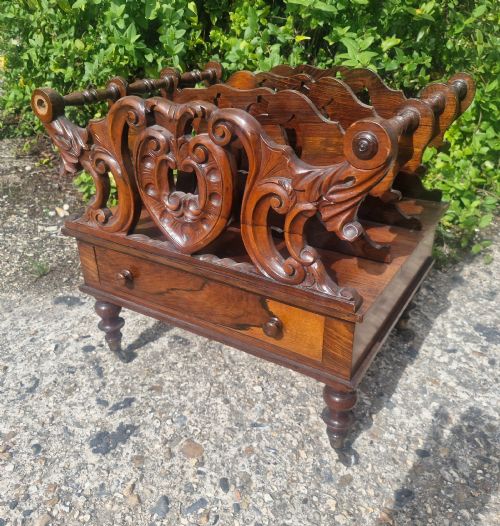
Cabinetmakers utilised dense timbers such as mahogany, rosewood, dark walnut, and oak to construct these stands, frequently pairing them with brass castors and fittings. Ebony banding and carved details sometimes accent the primary dark woods.
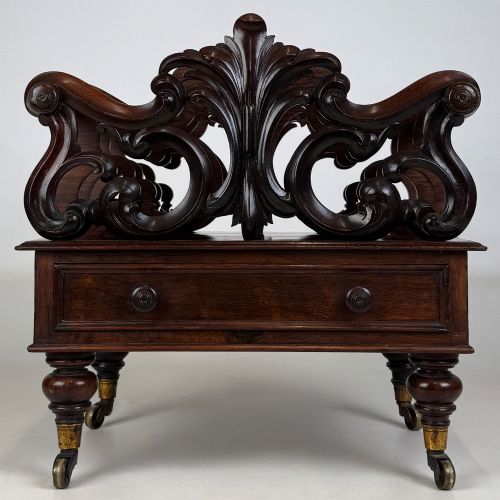
Joinery techniques ranged from turned corner supports and spindle dividers to finely carved fretwork and pierced slats. Certain items incorporate fitted drawers beneath the main tier, utilising dovetailed construction and small turned wooden knobs.
Dark Wood Magazine Holder Retail Price Guide 2026
Typical asking prices for dark wood magazine holder among the pieces listed under this phrase on Sellingantiques today, from the lower quarter to the upper quarter. They describe what is for sale here now, not the wider market.
Some nineteenth-century examples feature carved Prince of Wales feathers, showing that even humble newspaper holders enjoyed a brush with royalty.
Assessing quality in dark wood holders
Quality reveals itself through the selection of timber figures, such as rich grain patterns in rosewood or ribbon mahogany, and the crispness of any carved detailing like Prince of Wales feathers or turned spindles. Superior pieces demonstrate thoughtful proportion in their division of space and secure joinery at the frame junctions.
The presence of integrated drawers, original brass castors, and refined design lineage - such as pieces influenced by known makers or pattern books - elevates an example above standard utility items. Finer specimens maintain structural integrity across their slatted divisions while displaying deep, polished patination on the dark wood surfaces.
The Dark Wood Magazine Holder Glossary
- Canterbury
- A low, freestanding stand featuring partitioned sections for holding sheet music, newspapers, or periodicals. It frequently includes a low drawer and carries small wheels for mobility.
- Folio stand
- An adjustable or fixed stand designed to hold large books, prints, or folios of paper. These pieces often feature hinged trestle supports.
- Bandings
- Thin strips of contrasting timber inlaid around the edges of a surface to create a decorative border. This technique often employs ebony on mahogany grounds.
- Division
- An internal partition or vertical slat that separates the main storage area into individual bays for organising papers.
Dark Wood Magazine Holder: Frequently Asked Questions
What is a Canterbury used for?
Originally designed to hold sheet music and dining room portfolios, these stands later adapted well to storing newspapers, periodicals, and magazines.
The partitioned sections keep papers upright and separated for easy selection.
How do I date a rosewood Canterbury?
Dating relies on observing stylistic markers such as Regency curves, Victorian turning, or Georgian proportions, alongside construction methods.
Hardware like brass castors and the presence of secondary timbers also help establish the era of manufacture.
Where should I place a folio stand?
These stands suit sitting rooms, studies, or libraries where large books or current reading material require accessible storage.
Freestanding models look best positioned near seating areas or alongside bookshelves.
Did these pieces always have drawers?
Not all versions include storage beneath the main rack, though many Regency and Victorian iterations incorporate a shallow drawer for smaller items.
Open-frame variants rely entirely on the upper slatted compartments for function.