

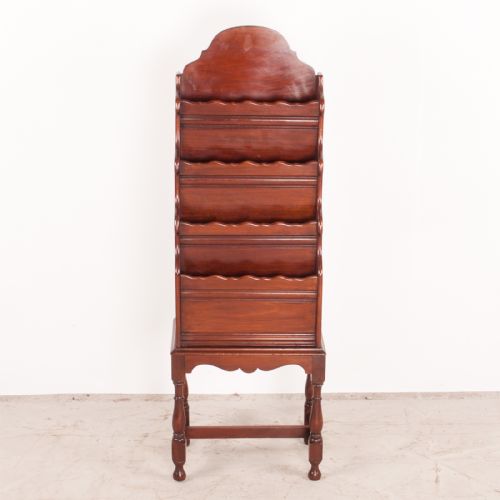
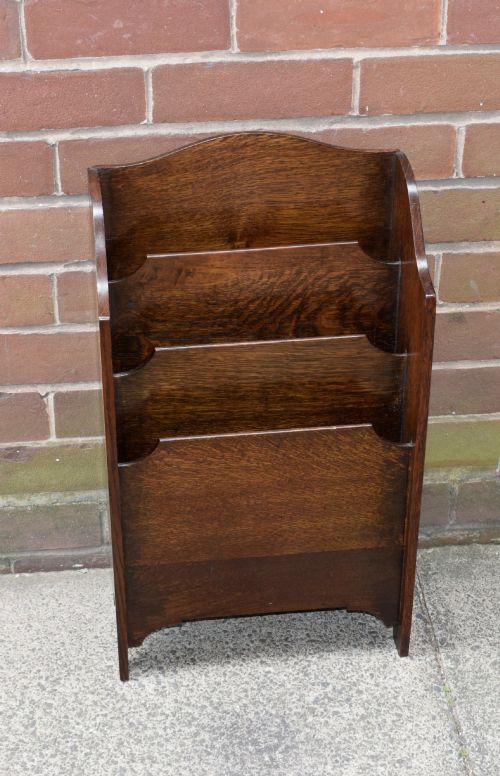


Freestanding Magazine Rack
A freestanding magazine rack holds periodicals upright in a room, offering practical storage with distinct period character.

Freestanding Magazine Rack
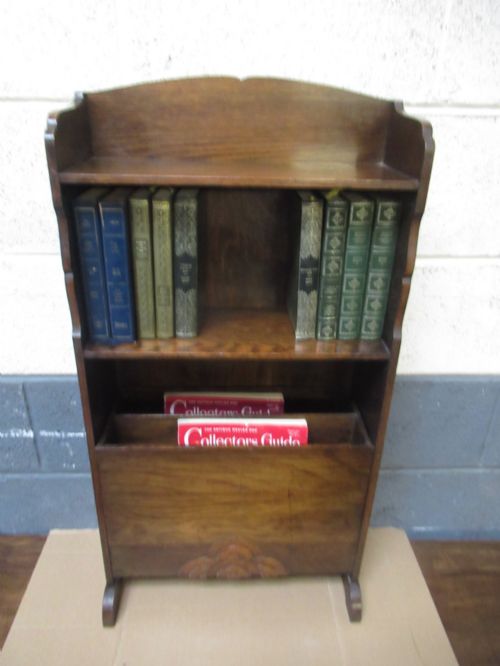
A freestanding magazine rack is designed to keep periodicals tidy and accessible within a living space. The selection spans the nineteenth century through the 1930s, encompassing styles such as Victorian, Edwardian, and Arts and Crafts.
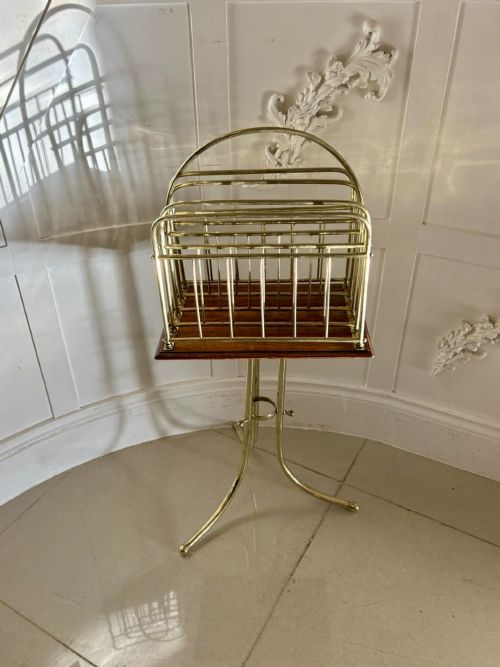
Forms include standard standing racks, tiered designs, and pieces with dual functions like brass music and magazine combinations. Materials range from traditional timbers to bamboo and metal frameworks.
Buyers frequently encounter oak and mahogany examples alongside metal variations in copper and brass. These objects reflect domestic organisation habits of past decades while serving contemporary interiors.
How they were made
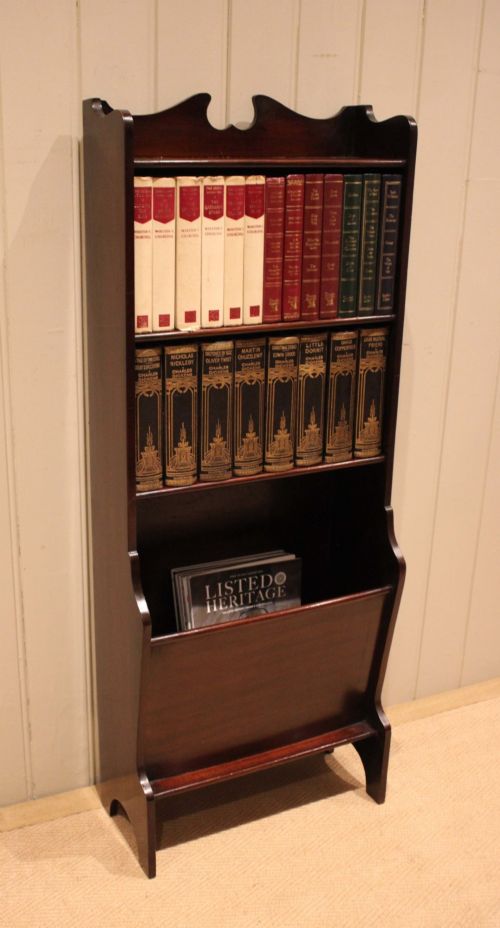
Constructed using solid timbers like oak and mahogany, these pieces sometimes incorporate satinwood inlay for decorative contrast. Bamboo and rattan appear in nineteenth-century examples, utilising natural materials for lightweight frames.
Metal versions employ hammered copper and brass, often associated with the Arts and Crafts movement. Joinery and assembly methods match the prevailing standards of each respective period.
Makers shaped timber into standing frames and multi-tiered structures, combining utility with material craftsmanship.
Freestanding Magazine Rack Retail Price Guide 2026
Typical asking prices for freestanding magazine rack among the pieces listed under this phrase on Sellingantiques today, from the lower quarter to the upper quarter. They describe what is for sale here now, not the wider market.
Listings span from the nineteenth century to 1930, featuring mahogany, oak, bamboo, copper, and brass.
What varies in quality
The distinction between standard items and superior examples lies in the selection of materials and the finesse of construction. Solid hardwood frames and refined inlay work indicate a higher grade of manufacture than utilitarian metal or basic softwood pieces.
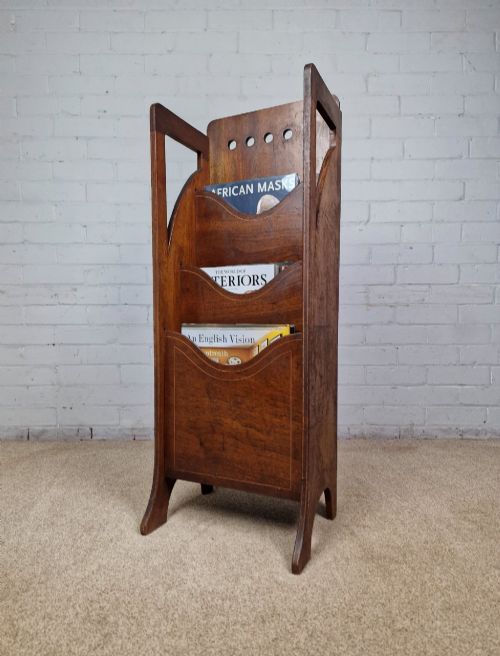
Design complexity also sets examples apart, as seen in multi-tiered structures versus simple single-section racks. The integration of decorative metalwork and balanced proportions separates basic storage from finer decorative objects.
The Freestanding Magazine Rack Glossary
- Canterbury
- A low, freestanding stand traditionally used for holding sheet music or portfolios, which shares similarities with magazine racks. Victorian examples often utilise bamboo.
- Satinwood inlay
- A decorative technique where lighter wood is fitted into recesses on a darker timber surface such as mahogany. This adds visual contrast to the piece.
- Arts and Crafts
- A design movement emphasising handcraftsmanship and simple forms. Copper and brass pieces frequently reflect this aesthetic.
- Tiered
- A structure featuring multiple levels or shelves for storage. Three-tier magazine racks provide vertical organisation.
Freestanding Magazine Rack: Frequently Asked Questions
Where should I place a freestanding magazine rack?
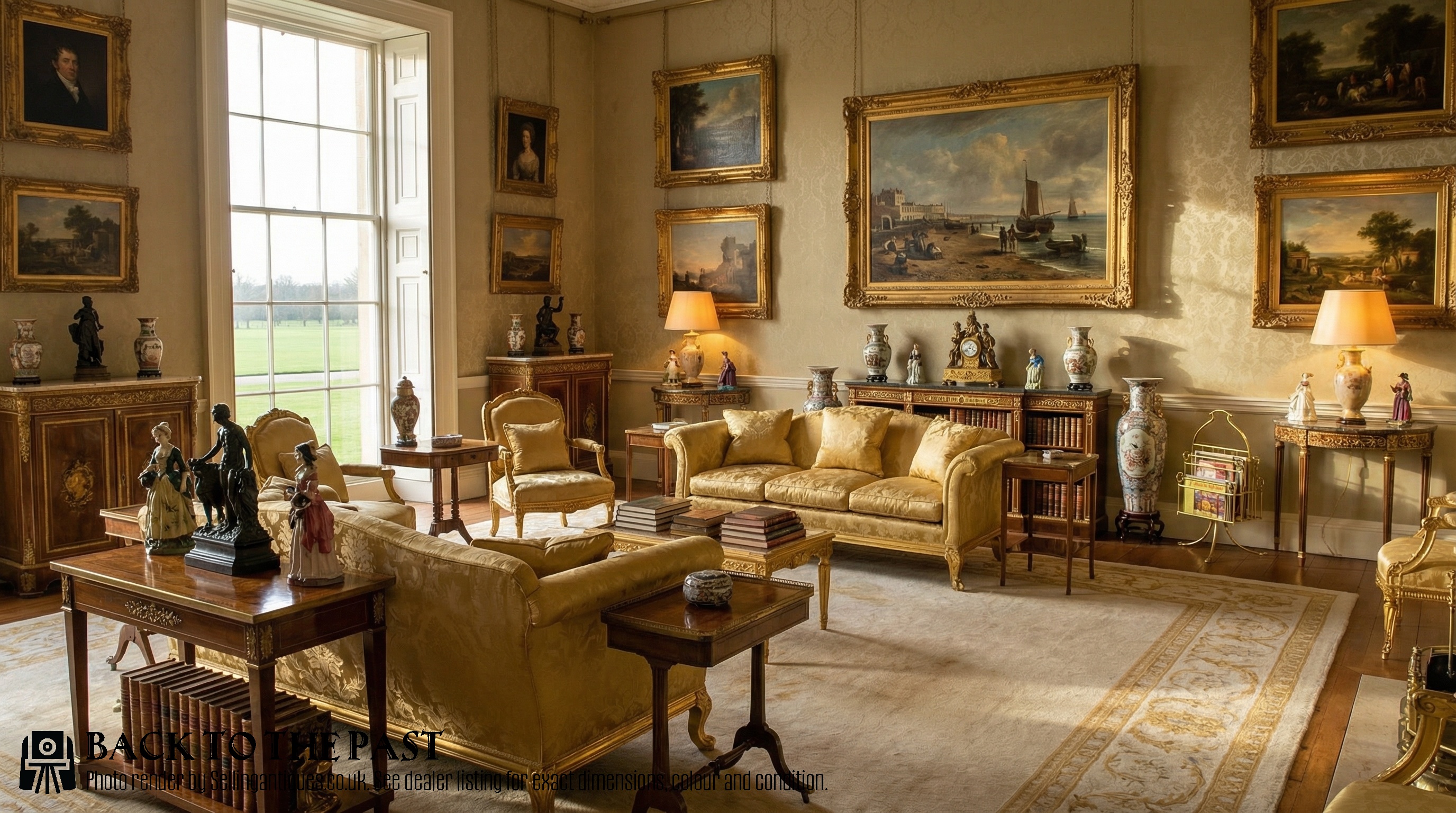
These racks sit easily beside armchairs, sofas, or within studies to keep reading material close at hand.
Their compact footprints allow them to fit into narrow spaces between furniture without cluttering the room.
How do I clean a bamboo magazine rack?
Dust bamboo and rattan gently with a soft dry cloth to prevent dirt accumulation in the natural joints.
Avoid excessive moisture to protect the structural integrity of organic materials.
Can these racks hold heavy books?
Most pieces are built for weekly periodicals and daily newspapers rather than heavy hardcover volumes.
Timbers like oak and mahogany offer sturdy support, but metal and bamboo versions suit lighter reading materials.
What defines an Edwardian magazine rack?
Edwardian pieces often feature lighter woods and refined proportions compared to heavier Victorian predecessors.
They reflect the domestic tastes of the early twentieth century, focusing on practical elegance.