

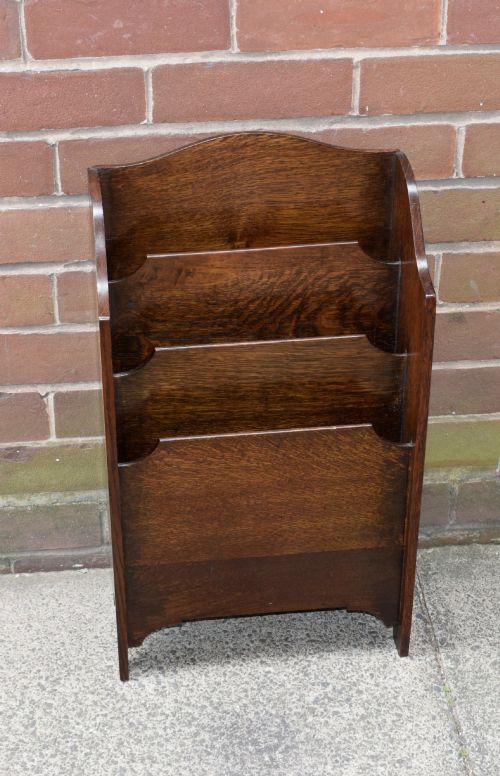


Oak Newspaper Stand
These oak newspaper stand pieces bring tidy, period function to a room, offering sturdy timber framing built to hold daily journals.
Oak Newspaper Stand
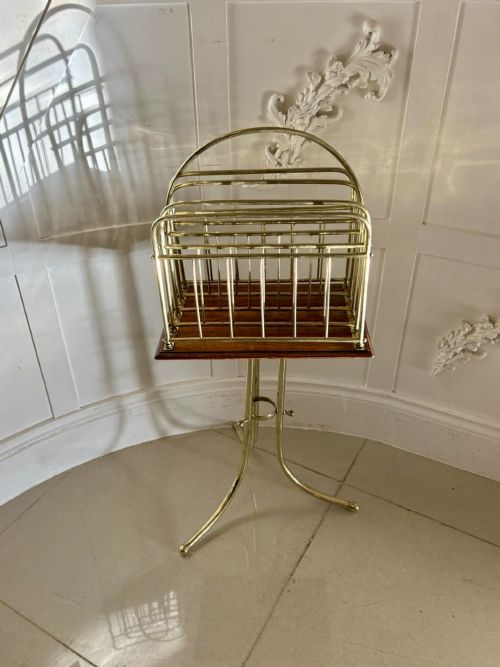
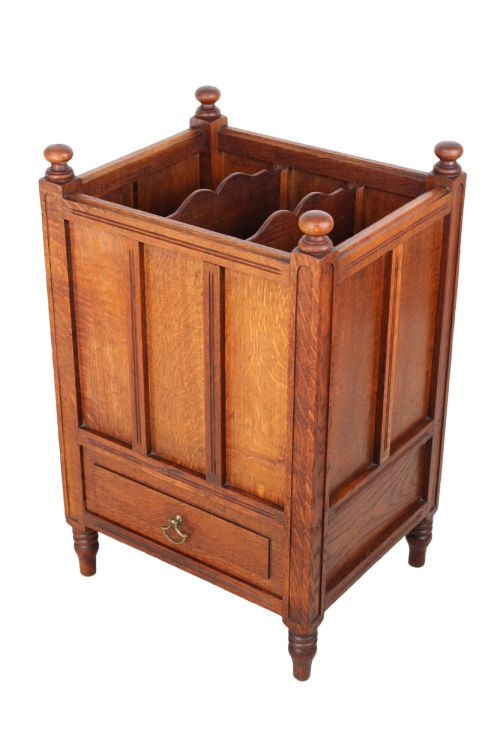
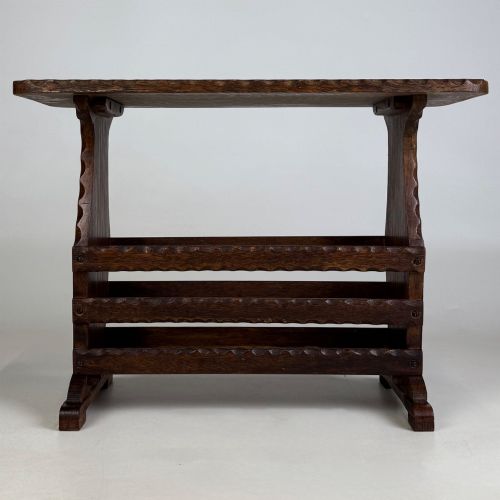
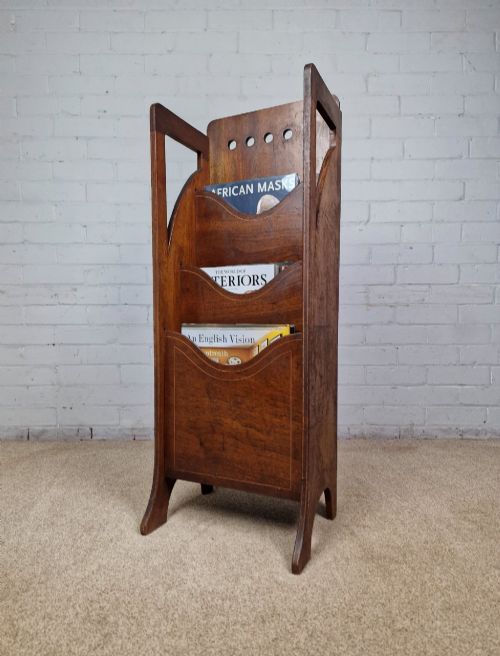
An oak newspaper stand serves as a dedicated holder for periodicals and journals, keeping living spaces orderly. Buyers searching for an oak newspaper stand encounter standing racks, side table combinations, and revolving designs.
The pieces on offer span the Edwardian era, the nineteen-twenties, and the nineteen-thirties, showing domestic forms rooted in British and continental manufacture. Makers utilised solid oak alongside brass fittings to construct durable items for the home.
Side table formats integrate surface space with storage troughs, whilst standing racks prioritise vertical capacity. These domestic furnishings reflect the changing reading habits of the early twentieth century.
How they were made
Craftsmen built these items primarily from solid oak, sometimes combining the timber with brass rods, handles, or revolving mechanisms. Joinery methods relied on sturdy tongue-and-groove or pegged construction to support the weight of stacked paper.
Metal components such as brass carrying handles and corner brackets were screwed directly to the timber frames. Surface finishes ranged from polished patinated wood to wax-treated grains that highlighted the natural medullary rays of the oak.
Oak Newspaper Stand Retail Price Guide 2026
Typical asking prices for oak newspaper stand among the pieces listed under this phrase on Sellingantiques today, from the lower quarter to the upper quarter. They describe what is for sale here now, not the wider market.
What varies in quality
The distinction between standard domestic pieces and finer examples lies in the integration of secondary materials like cast brass and the complexity of the frame design. Revolving mechanisms and fitted letter racks require precision engineering that elevates the standing of the piece.
The choice of timber grain and the crispness of any applied carving dictate visual appeal. Pieces exhibiting thoughtful proportions and robust, integrated metalwork sit firmly at the upper end of the range.
William Tonks and Sons
The Oak Newspaper Stand Glossary
- Oak
- A hard, heavy timber with prominent grain patterns, utilised extensively for durable furniture. It forms the primary material for the items found in this category.
- Brass
- A yellow alloy of copper and zinc used for handles, rods, and rotating pivots. It provides a bright contrast to the dark timber.
- Canterbury
- A low stand with partitions designed for holding sheet music, books, or newspapers. The term originates from the late eighteenth century.
- Revolving
- A rotating mechanism that allows a stand to turn on a central axis for easy access from multiple seating positions. This feature often incorporates brass hardware.
Oak Newspaper Stand: Frequently Asked Questions
Where were these stands used?
These items found their place beside armchairs and sofas in domestic drawing rooms and studies. They kept daily broadsheets and periodicals close at hand.
Their compact footprints allowed them to fit neatly into domestic interiors without obstructing pathways.
How do I care for the oak?
Maintain the timber by applying a traditional beeswax polish occasionally to preserve the finish. Avoid placing the items near direct heat sources to prevent the wood from splitting.
Dust the brass components gently with a dry cloth to prevent tarnishing over time.
What periods do these pieces span?
The selection covers Edwardian examples alongside pieces from the nineteen-twenties and nineteen-thirties. Earlier Victorian items also appear in archive records.
Stylistic shifts move from ornate bracketed designs toward simpler, functional forms.
Can these hold modern magazines?
Most standard standing racks and troughs accommodate contemporary periodicals alongside newspapers comfortably. The fixed widths and depths suit standard print formats.
Revolving versions offer multiple compartments of varying sizes for diverse reading materials.