
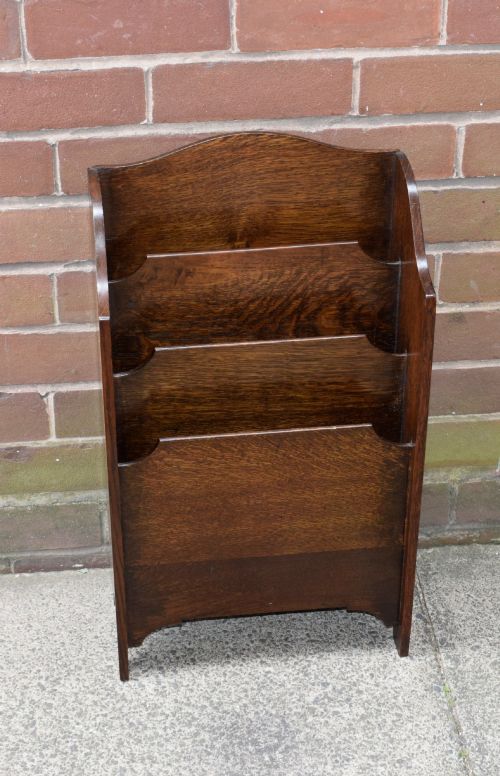
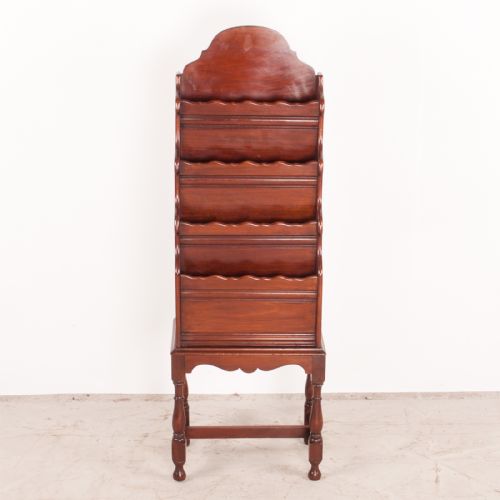
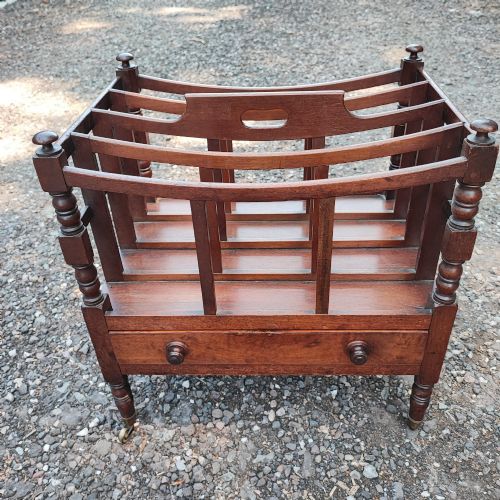
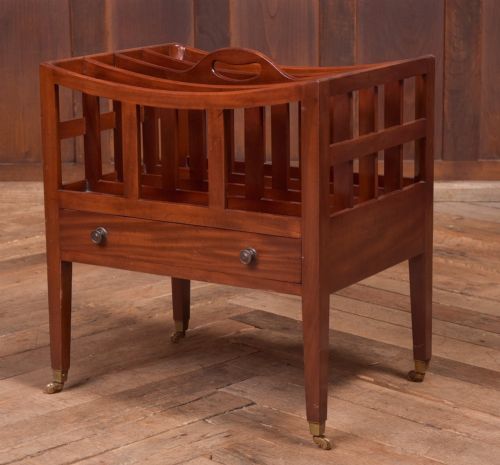



Vintage Newspaper Holder
A vintage newspaper holder keeps journals and sheets neat, taking the form of traditional canterburys and modern racks.
Vintage Newspaper Holder
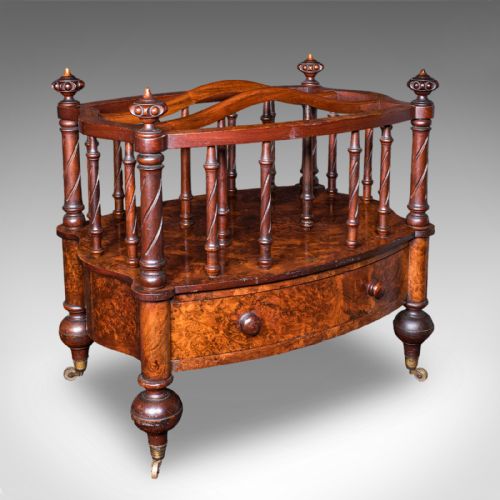
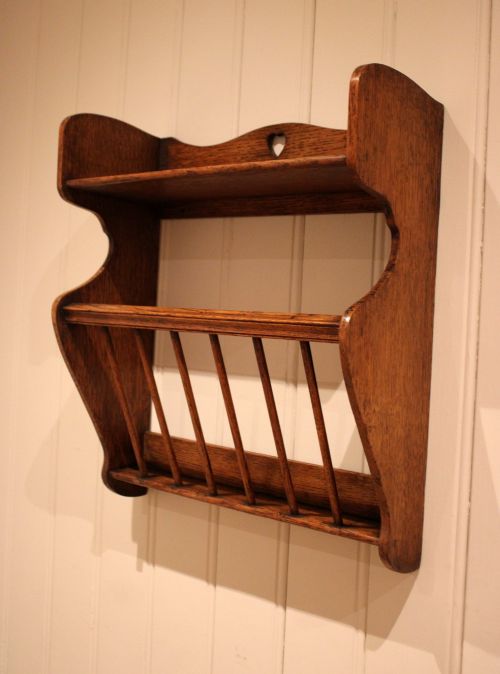
A vintage newspaper holder encompasses low compartmented stands and wall-mounted receptacles designed to corral periodicals, papers, and sheet music. These pieces span from the Georgian and Regency periods through Victorian, Edwardian, and later twentieth-century idioms.
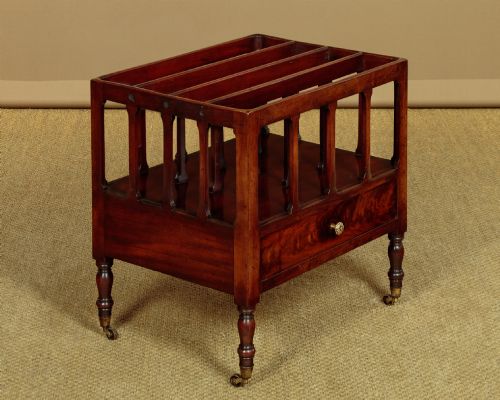
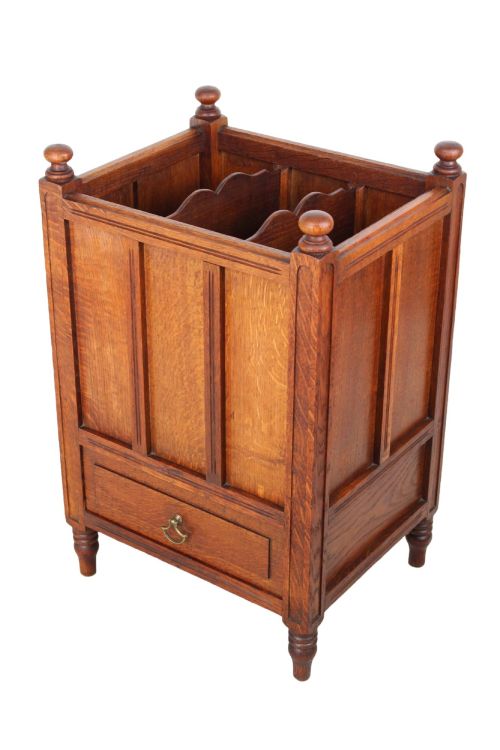
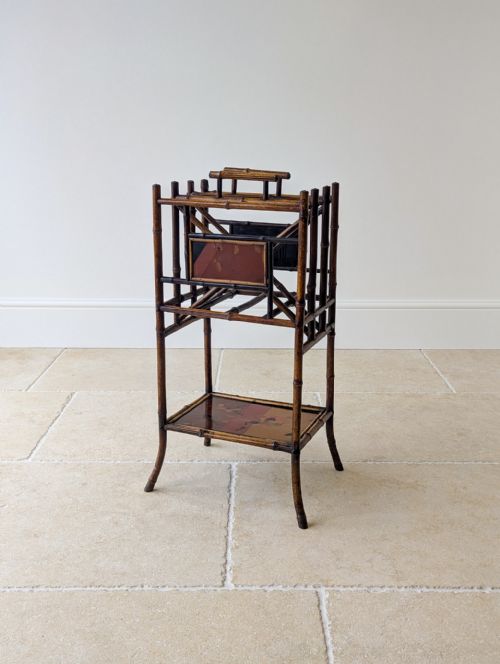
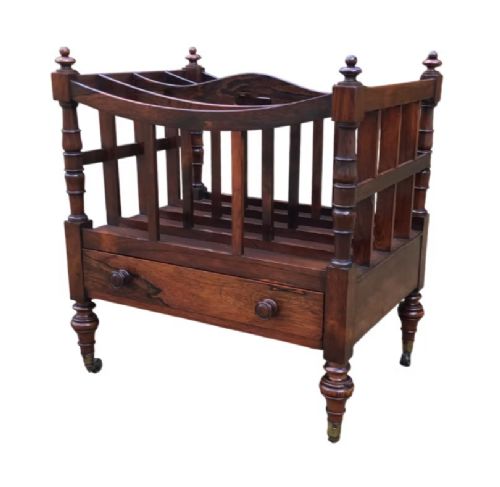
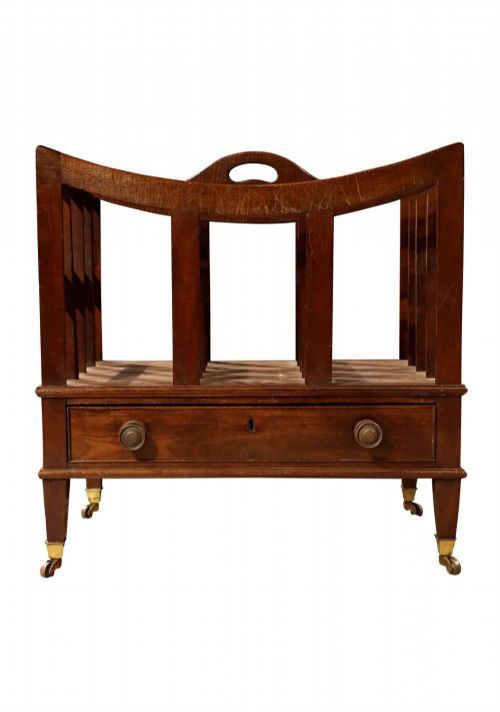
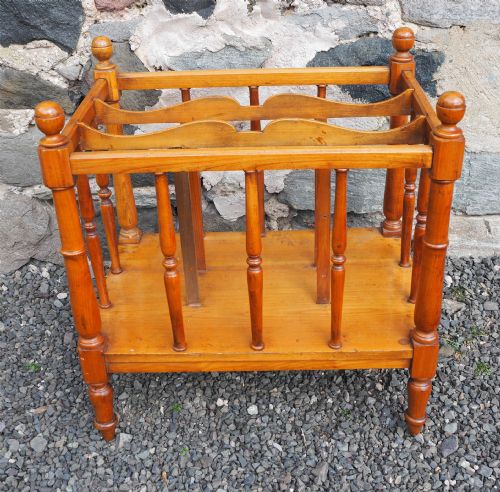
Mahogany canterburys with distinct divisions dominate the selection, often featuring slatted or spindled sides and low castor wheels. Alongside timber stands, variations include bamboo frames, brass newspaper stands, and oak wall shelves intended for domestic sitting rooms.
Materials and construction methods
Cabinetmakers constructed these stands primarily in timbers such as mahogany, oak, rosewood, walnut, fruitwood, and bamboo. Grain selection mattered greatly, with burr walnut and figured mahogany chosen for prominent surfaces on finer pieces.
Metal versions utilise brass and copper, sometimes combined with oak or walnut to form revolving or floor-standing newspaper stands. Joinery methods range from pegged joints in earlier timber models to turned supports, applied mouldings, and metal fixings in later examples.
Listings span from the Georgian era through Victorian, Regency, Edwardian, and the 1920s, utilising mahogany, oak, bamboo, brass, and rosewood.
Markers of distinction in design and build
Quality rests upon timber selection, structural proportion, and the crispness of turned legs, castors, and division rails. Finer examples display carefully matched veneers, sturdy slatted dividers, and integrated drawers with dovetail joints.
Simpler versions rely on plain plank construction or basic metal fabrication without decorative mouldings or turned details. The presence of specialised forms, such as boat-shaped bodies or metamorphic functions, separates standard utility items from more ambitious cabinet work.
The Vintage Newspaper Holder Glossary
- Canterbury
- A low, freestanding stand with vertical partitions designed to hold newspapers, magazines, and sheet music. It often includes a small drawer beneath the divisions.
- Metamorphic
- Descriptive of furniture designed to transform or fold for alternative functions. These stands adapt their configuration to suit changing storage needs.
- Aesthetic Movement
- A late nineteenth-century design style emphasising simplicity, artistic expression, and oriental influence. Bamboo and ebonised woods frequently appear in this context.
- Boat-shaped
- A curved hull-like contour found on the upper rails of certain Regency stands. This profile adds visual grace to the rectangular compartment frame.
Vintage Newspaper Holder: Frequently Asked Questions
What is a canterbury?
A canterbury is a compartmented stand traditionally used for holding loose papers, books, and music sheets.
Most designs feature vertical slats dividing the interior space into multiple sections for easy sorting.
How were these stands used?
They sat beside reading chairs or tables to keep daily newspapers and weekly periodicals close at hand.
Some variations also accommodated sheet music near pianos and music cabinets.
How do I identify a Regency piece?
Regency stands typically feature rich mahogany timbers, elegant turned legs, and brass castors.
Boat-shaped top rails and four-division layouts are also characteristic of this era.
Are metal holders antique?
Metal models include Victorian brass and copper stands alongside later twentieth-century brass newspaper racks.
Revolving designs in brass date back to the late nineteenth century.