


Antique Music Storage Box
An antique music storage box keeps scores orderly beside the instrument, bringing period timber and brass into the room.
Antique Music Storage Box
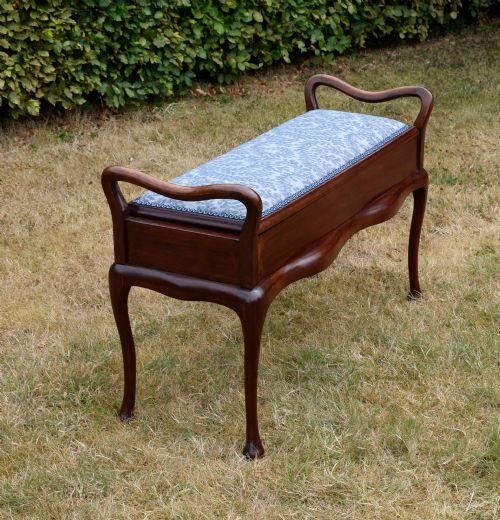
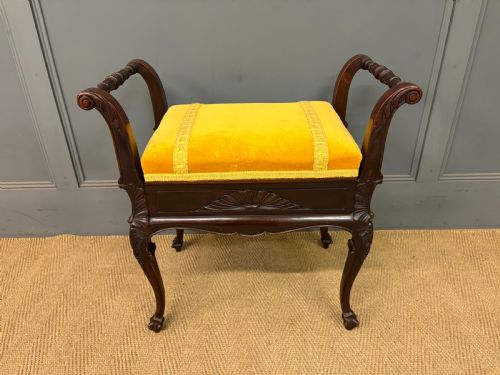
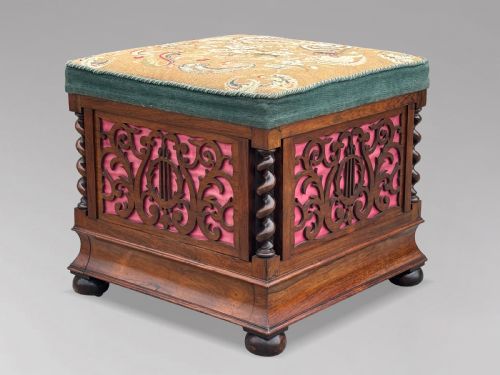
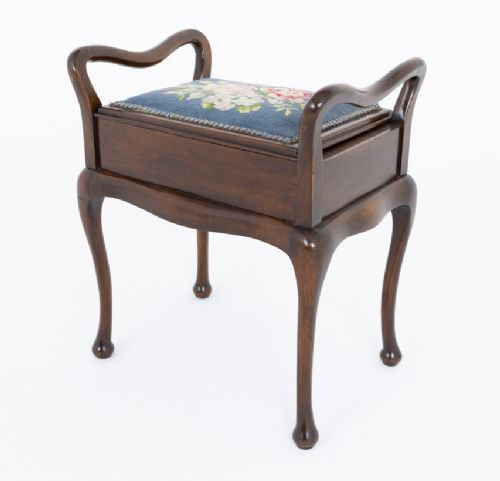
An antique music storage box is designed to hold sheet music neatly near a piano or cabinet. The selections here include piano stools, music cabinets, ottomans, footstools, and music canterburys.
Most examples date from the Victorian and Edwardian eras, spanning the late nineteenth and early twentieth centuries. Makers from these periods utilised standard forms like fall-front seats and shelved cabinets to keep sheets flat.
Buyers meet variations ranging from simple mahogany piano stools to inlaid rosewood canterburys with carrying handles. Each form serves the practical purpose of keeping domestic scores close to hand.
How they were made
Carpenters constructed these pieces using dense hardwoods such as mahogany, walnut, and rosewood. Surface decoration often incorporates marquetry inlay alongside brass fittings and handles.
Upholstered items feature padded seats covered in fabric, velvet, or tapestry. Glass panels occasionally front the cabinetry to display the contents within.
What varies in quality
The refinement of the timber work and the precision of any marquetry inlay set the better examples apart. Finer pieces display careful selection of wood grain, particularly in burr walnut and rosewood surfaces.
Structural integrity depends on the joinery of the divisions and the durability of the upholstery fabric. Superior hardware, such as solid brass handles and sturdy carrying bars, elevates the overall execution.
The Antique Music Storage Box Glossary
- Canterbury
- A low stand fitted with vertical divisions for holding music sheets or folios. These often include a carrying handle at the top.
- Fall-front
- A hinged panel that drops forward to reveal interior storage space. This mechanism is frequently found on piano stools designed to hold scores.
- Marquetry
- Decorative patterns formed by fitting contrasting pieces of veneer into a timber ground. Edwardian pieces often employ this technique on cabinet doors.
- Gonçalo Alves
- A dense exotic hardwood with striking figuring, sometimes utilised for distinctive cabinet construction during the nineteenth century.
Antique Music Storage Box: Frequently Asked Questions
What is a music canterbury?
A music canterbury is a small compartmentalised stand designed specifically for holding sheet music upright. They usually feature several vertical divisions and sometimes incorporate a drawer below.
Many examples include a carrying handle to allow the stand to be moved easily around a music room. They date predominantly from the nineteenth century.
How do piano stools store music?
Piano stools often feature hinged seats or fall-front panels that conceal internal compartments. These spaces keep sheet music flat and protected from dust.
Duet stools generally offer wider storage capacity to accommodate larger collections shared by two players. Upholstered tops provide a comfortable seat while concealing the storage beneath.
What woods were commonly used?
Cabinetmakers relied heavily on mahogany and walnut for their strength and rich grain patterns. Rosewood also appears on finer nineteenth-century pieces.
Exotic timbers like Gonçalo Alves were occasionally selected for decorative effect. Brass hardware and glass panels completed the construction of more elaborate cabinets.
How do I date an Edwardian cabinet?
Edwardian pieces typically date from the years surrounding the turn of the twentieth century. They frequently display lighter mahogany timbers and delicate marquetry inlay.
Construction methods during this period shifted towards slightly more standardised factory production while retaining traditional joinery. Stylistic hints often echo earlier Georgian or revival designs.