


Antique Canterbury with Drawer
An antique canterbury with drawer offers classic division for papers and sheet music while anchoring a room with period timber.
Antique Canterbury with Drawer
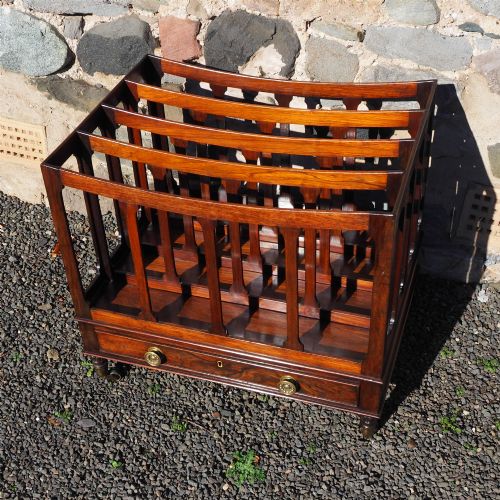
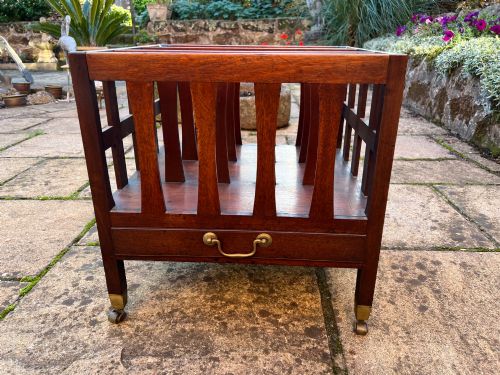
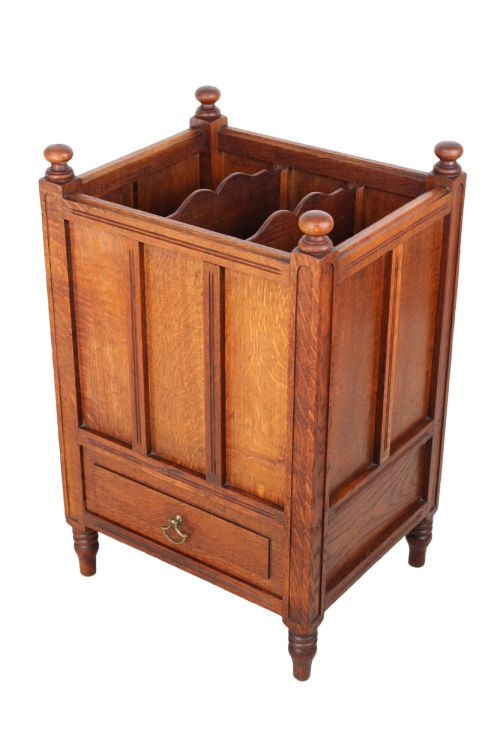
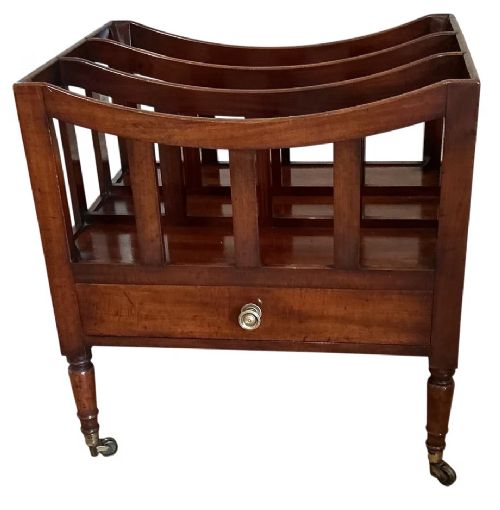
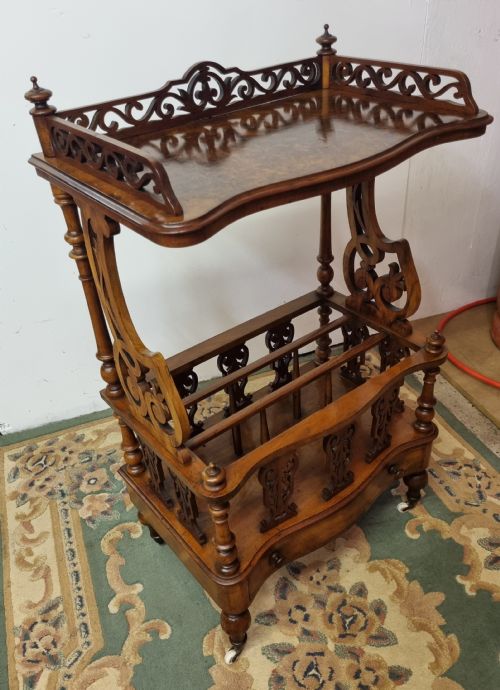
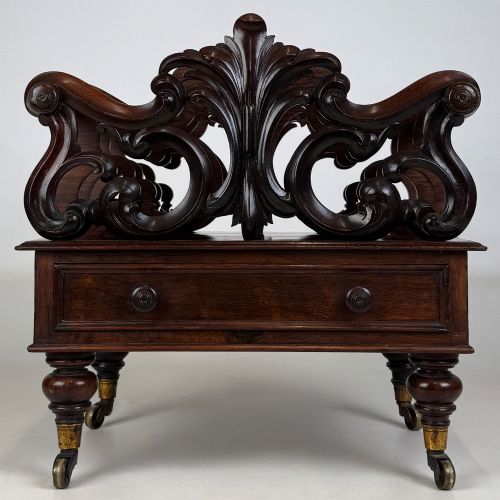
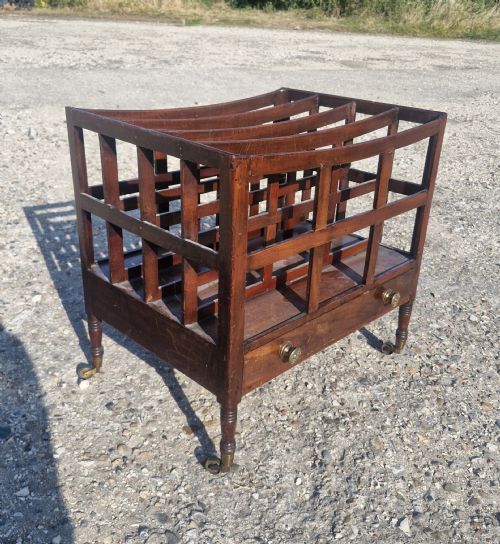
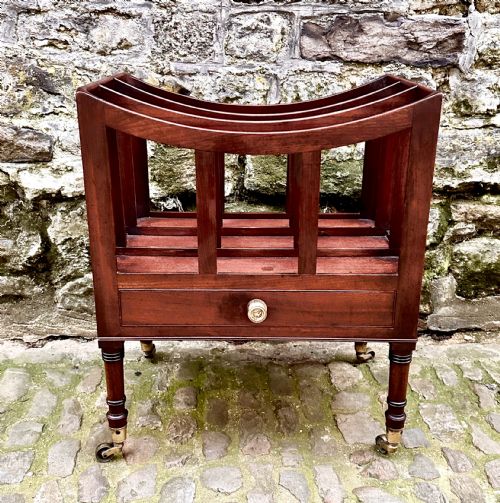
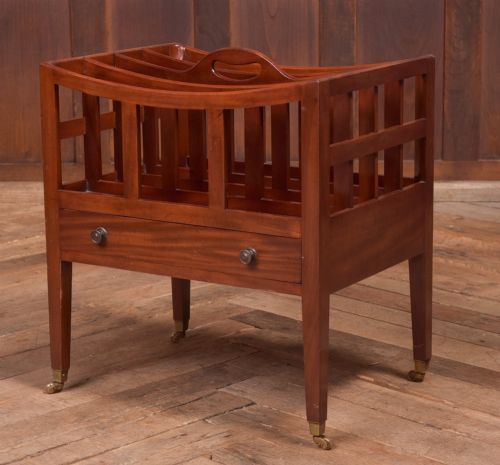
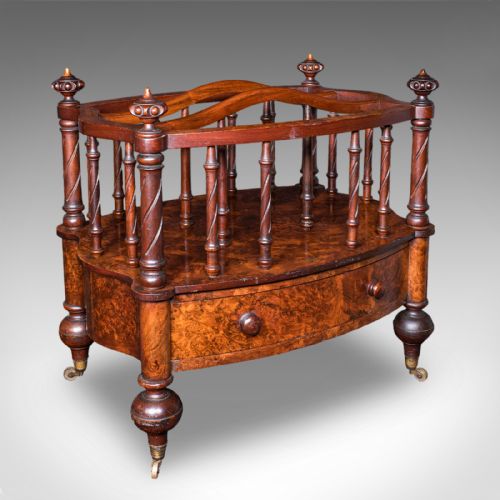
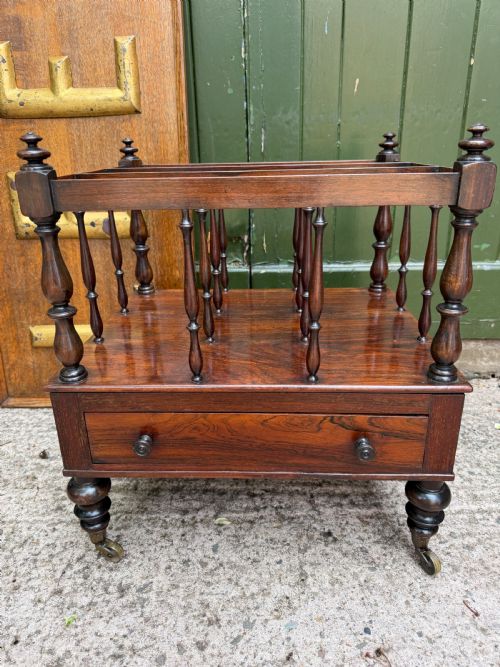
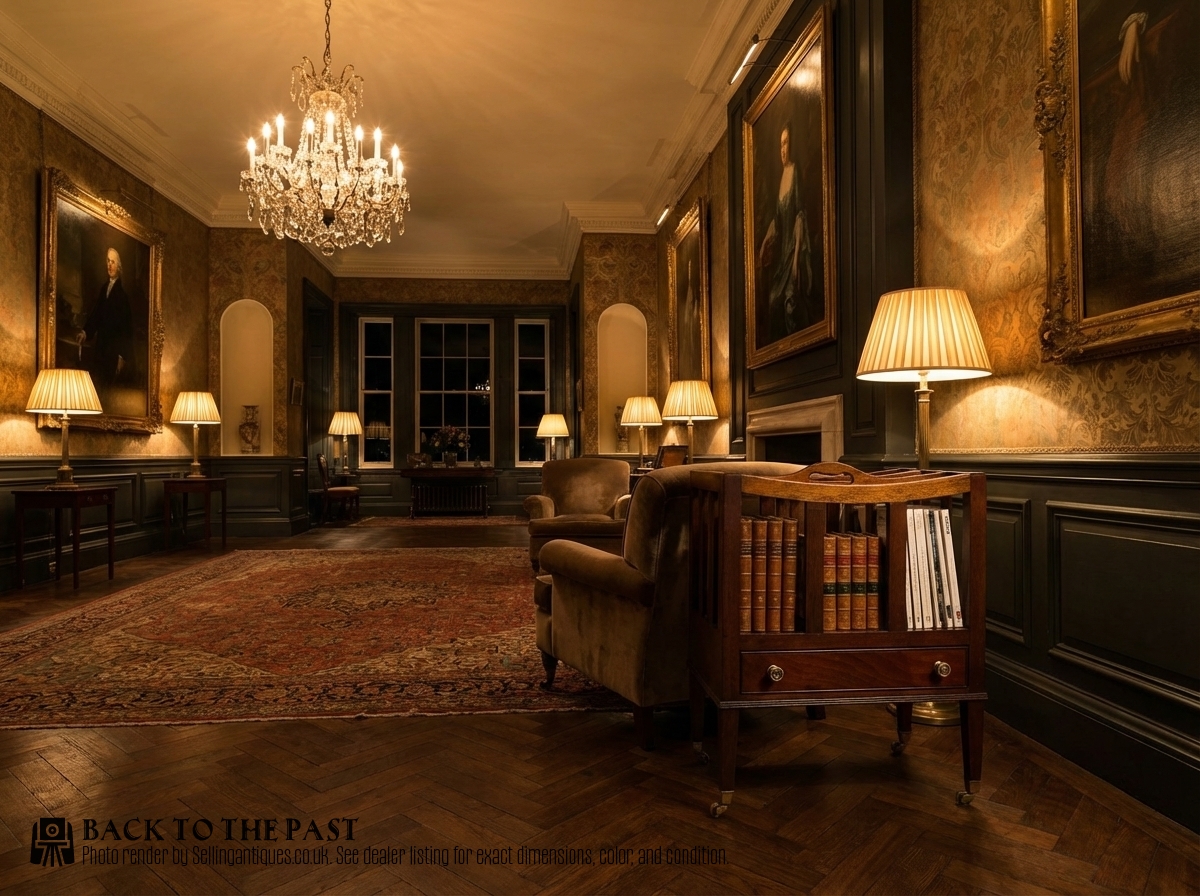
An antique canterbury with drawer combines partitioned vertical racks for holding magazines, newspapers or music sheets with a lower storage compartment fitted into the base. These pieces originate primarily from the nineteenth century, encompassing Regency, Victorian and Edwardian iterations.
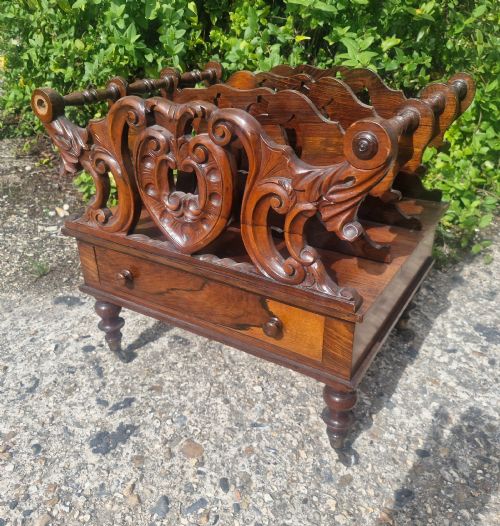
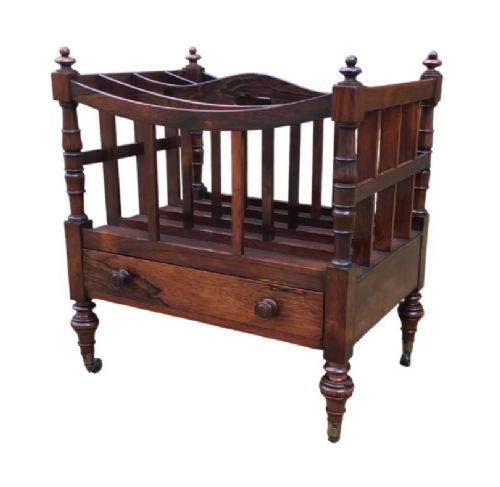
The most common formats on this page feature mahogany, rosewood or walnut structures divided into three or four vertical compartments. A single drawer sits beneath the slatted dividers, running on traditional wooden runners.
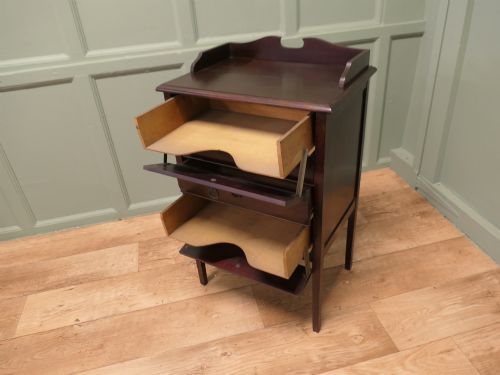
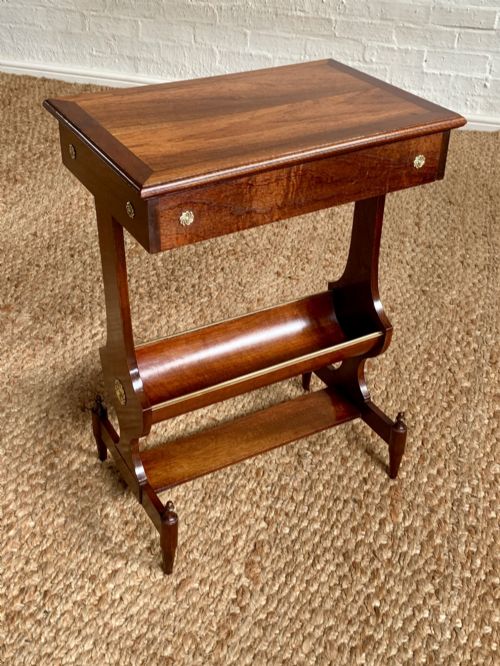
Design variations include standing magazine racks, music canterburys with carrying handles, and inlaid burr walnut library tidies. Each piece reflects the domestic storage needs of polite nineteenth-century parlours and drawing rooms.
How they were made
Cabinet makers constructed these pieces using solid timbers and veneers of mahogany, rosewood, walnut and burr walnut. Wood selection dictated the primary finish of the frame, from deep red mahogany tones to richly figured rosewood grains.
Joining techniques combined traditional mortise and tenon joints for the main uprights with turned spindle supports and brass castors. Internal drawer boxes utilised hand-cut dovetail joints, housing papers and small accessories securely.
Decorative elements included turned wooden carrying handles, ceramic or brass castors, and occasionally delicate marquetry inlay across walnut surfaces. Metal accents in brass provided structural reinforcement and movement via small wheel mounts.
Antique Canterbury with Drawer Retail Price Guide 2026
Typical asking prices for canterbury with drawer among the pieces listed under this phrase on Sellingantiques today, from the lower quarter to the upper quarter. They describe what is for sale here now, not the wider market.
Named after the Archbishop of Canterbury, the first music stand of this type supposedly satisfied a clerical request for tidier sheet music.
What varies in quality
The choice of timber underpins the hierarchy of these pieces, separating plain utility items from grander parlour examples. Solid rosewood and figured burr walnut demand finer cabinet work than standard mahogany builds.
Refinements such as turned carrying handles, intricate spindle galleries, and inlaid marquetry distinguish higher-tier examples from utilitarian racks. The integration of the drawer housing demonstrates the maker's precision in fitting moving parts into compact frames.
The Antique Canterbury with Drawer Glossary
- Canterbury
- A low stand with partitions for holding sheet music, newspapers or magazines. It typically incorporates a low drawer at the base.
- Regency
- A British design period spanning the early nineteenth century. Furniture from this era often shows classical restraint and clean architectural lines.
- Victorian
- A period of design covering the reign of Queen Victoria. Pieces from this era display diverse revivals of earlier styles alongside heavy timber construction.
- Edwardian
- The period of British design spanning the early twentieth century. Items from this time tend to be lighter in proportion and scale.
- Burr walnut
- A highly figured wood veneer taken from the growth excrescences of walnut trees. It creates intricate, swirling patterns across table tops and drawer fronts.
Antique Canterbury with Drawer: Frequently Asked Questions
What was a canterbury used for originally?
Originally designed in the eighteenth century, these stands held sheet music near piano stools in drawing rooms. Over the Victorian period, their use expanded to store newspapers, books and magazines.
The lower drawer provided enclosed storage for smaller musical scores, writing materials or reading accessories out of sight.
How do I identify a Regency canterbury?
Regency pieces date from the early nineteenth century and typically feature crisper architectural lines and classical elements. They frequently utilise dense mahogany with restrained brass mounts.
Later Victorian versions often introduce heavier turned spindles, rosewood veneers, and more ornate inlay work across the frame.
Are these stands sturdy enough for daily use?
Most examples are constructed from solid hardwoods like mahogany and walnut, making them durable for everyday storage of magazines and papers. The inclusion of castors allows them to be moved across carpets easily.
Care should be taken not to overload the vertical partitions with excessively heavy modern books beyond their original paper capacity.
What is the purpose of the carrying handle?
Music canterburys frequently include an upright central carrying handle to allow servants or family members to transport scores between rooms. This structural element doubles as the central divider for the upper compartments.
Not all models feature handles, as stationary magazine racks designed to sit permanently beside a chair omitted this transport feature.