
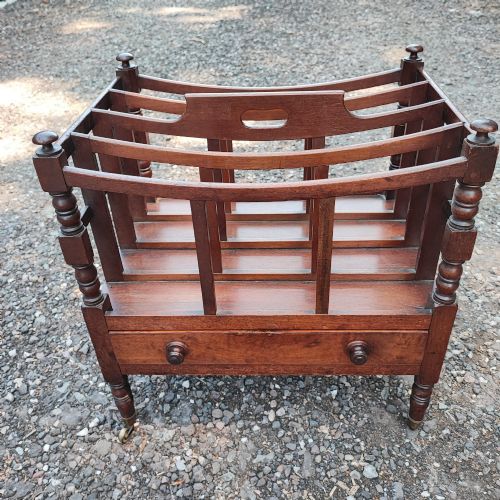
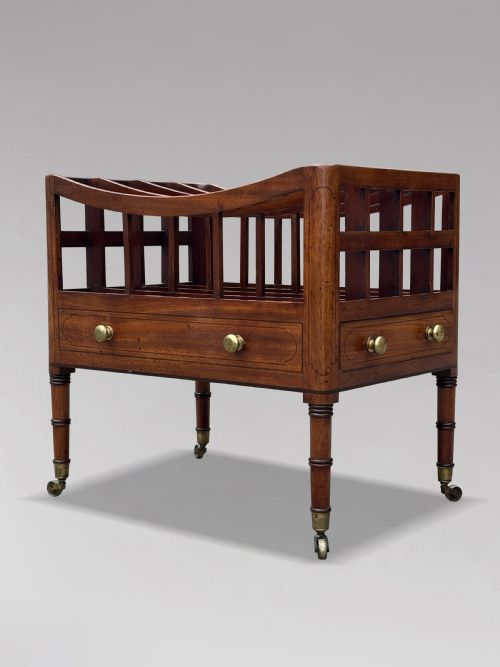
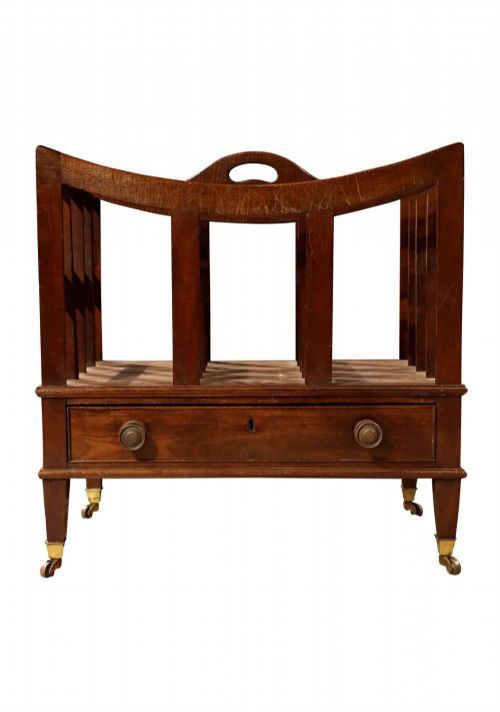


Georgian Magazine Rack
A georgian magazine rack, often encountered as a freestanding canterbury, organises periodicals and sheet music with traditional compartmentalised design.
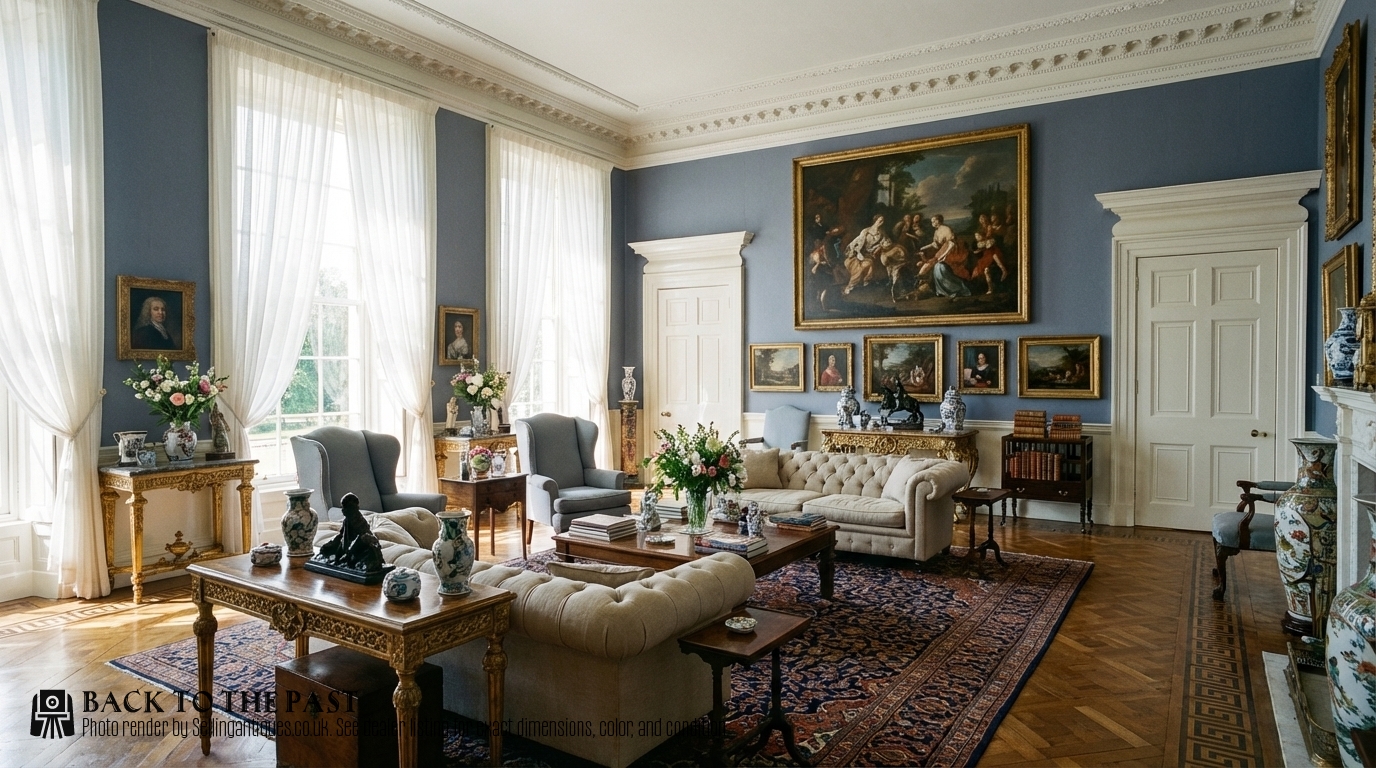
Georgian Magazine Rack
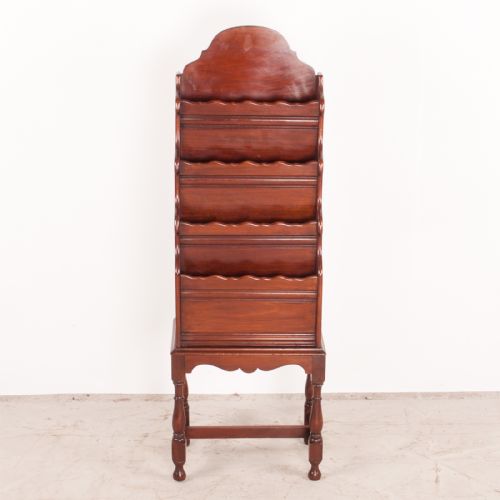
When searching for a georgian magazine rack, a buyer looks at pieces primarily identified in the trade as canterburys, music stands, and folio stands. These items function as freestanding furniture designed to hold newspapers, magazines, sheet music, and papers in divided wooden sections.
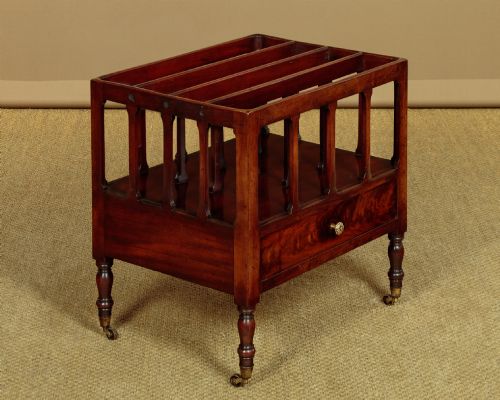
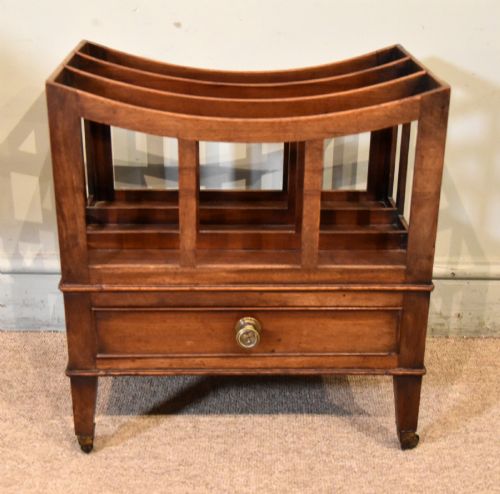
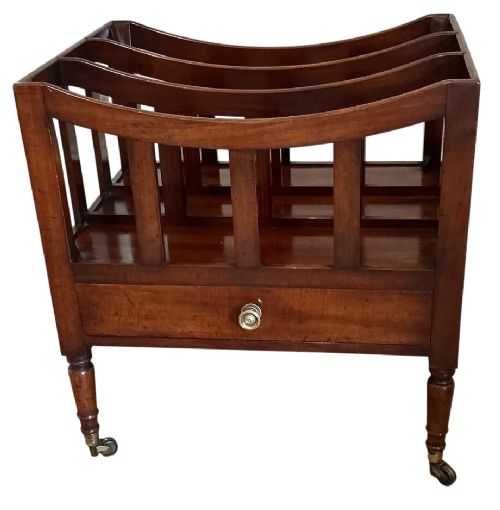
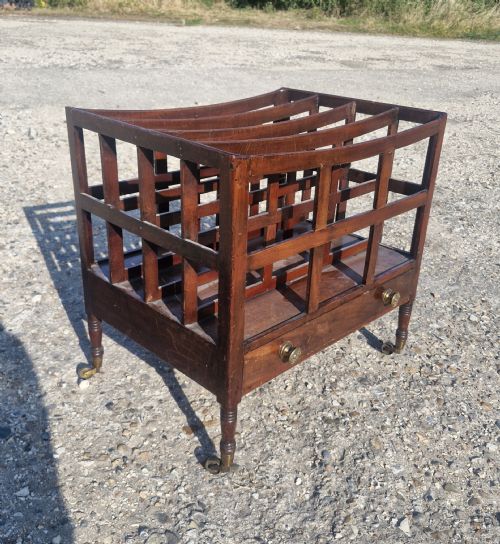
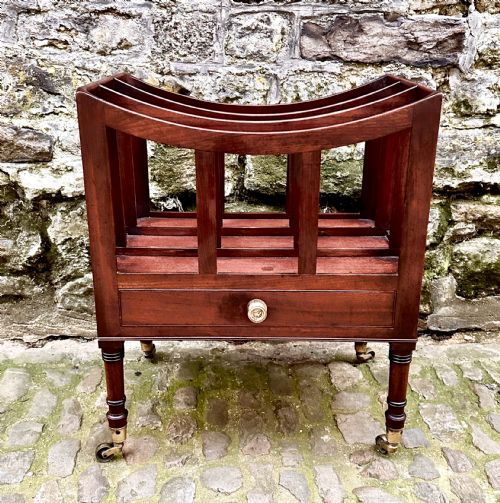
The version most commonly met on this page is the mahogany canterbury originating from the Georgian and Regency periods. Pieces often feature open slatted dividers above a low base, occasionally incorporating a single drawer or turned legs fitted with castors.
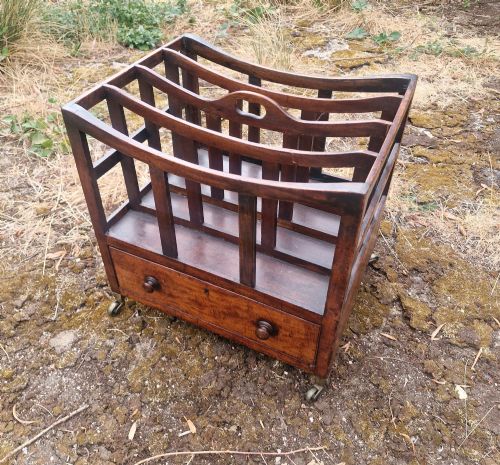
Makers and designers of the period produced these racks in varying configurations, including boat-shaped bodies and multi-division layouts. Surviving examples connect directly to the domestic library and drawing room use of the eighteenth and nineteenth centuries.
Materials and construction
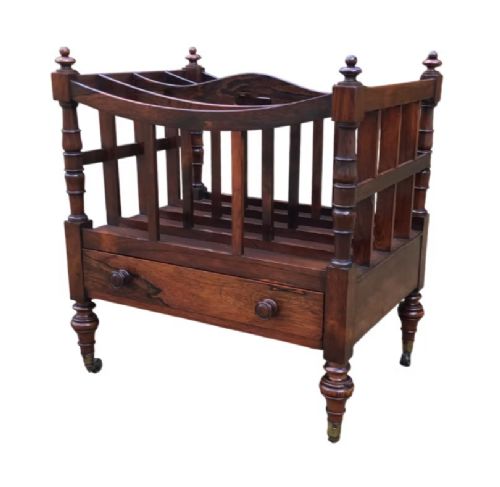
Timbers dominate the construction of these pieces, with solid and veneered mahogany forming the majority of examples. Cabinetmakers also utilised rosewood and Cuban mahogany, sometimes applying contrasting ebony banding or inlay.
Joinery techniques combine turned wooden legs, often mounted on castors for mobility, with carefully pegged or jointed vertical slats that create the interior divisions. Decorative details such as carved Prince of Wales feathers or painted wood finishes appear on selected high-status pieces.
Some nineteenth-century makers styled the partitions into boat shapes, ensuring your newspapers travel through the room in imaginary maritime luxury.
Distinctions in quality
Quality in a georgian magazine rack rests upon the selection of timber and the crispness of the cabinetwork. Dense Cuban mahogany or finely figured rosewood denotes a superior grade of construction compared to plain secondary woods.
The Georgian Magazine Rack Glossary
- Canterbury
- A low, freestanding rack with upright divisions used for holding loose papers, sheet music, magazines, and newspapers. The form typically includes multiple vertical compartments and often stands on castors.
- Folio stand
- A piece of furniture designed to hold large sheets of paper, prints, or folios. These stands provide an open rack surface rather than compartmentalised vertical slots.
- Cuban mahogany
- A dense, highly figured dark timber imported from the Caribbean. Cabinetmakers utilised this material for high-quality furniture during the Georgian and Regency eras.
- Inlay
- A decorative technique where contrasting materials such as ebony are inserted into recessed cavities on the wood surface. This creates linear borders or geometric patterns across the frame.
Georgian Magazine Rack: Frequently Asked Questions
What is a canterbury?
A canterbury is a compartmentalised freestanding rack designed to hold sheet music, newspapers, and periodicals. Most examples feature vertical wooden divisions above a low frame.
Cabinetmakers built these pieces to sit beside seating areas in drawing rooms and libraries for easy access to daily reading material.
How were these racks used?
These pieces served to store unbound papers, folios, and music sheets upright and organised in domestic interiors. The integrated divisions kept publications tidy while remaining portable.
Many examples include lower drawers specifically intended for smaller accessories, writing materials, or additional pamphlets.
How do I date a piece?
Dating relies on timber selection, structural design, and stylistic markers associated with specific eras like the Regency or George III periods. Rosewood frames and boat-shaped profiles often point toward the early nineteenth century.
Later revival pieces replicate these earlier forms but generally display modern secondary timbers and construction methods underneath.
Where should I place one?
These racks suit living rooms, studies, and libraries where contemporary magazines or records require accessible storage. Their compact footprint allows them to sit beside desks or armchairs.
Keeping the wood away from direct heat sources prevents timber movement and preserves the polished finish.