


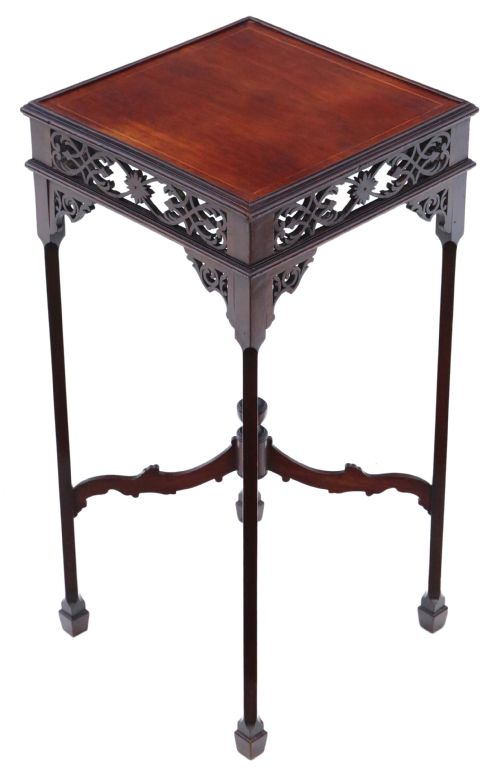
Pierced Mahogany Stand
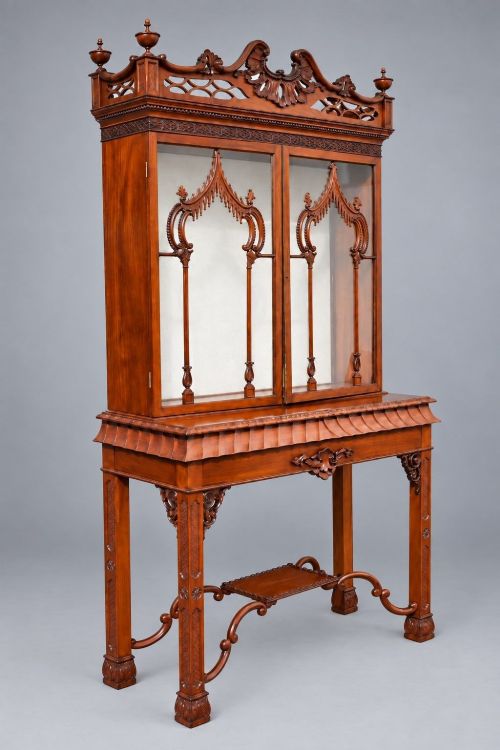
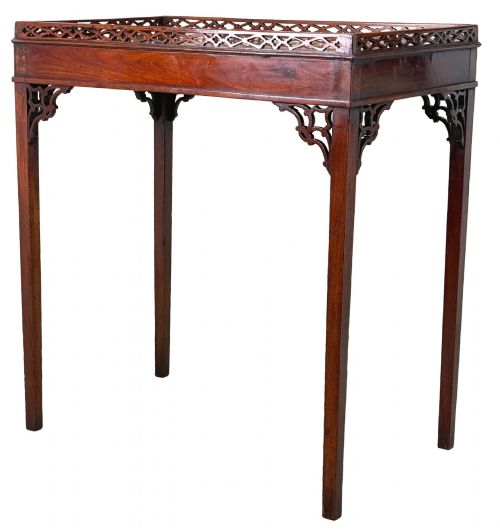
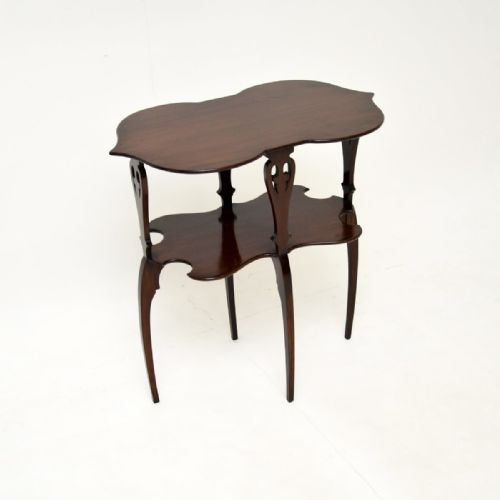
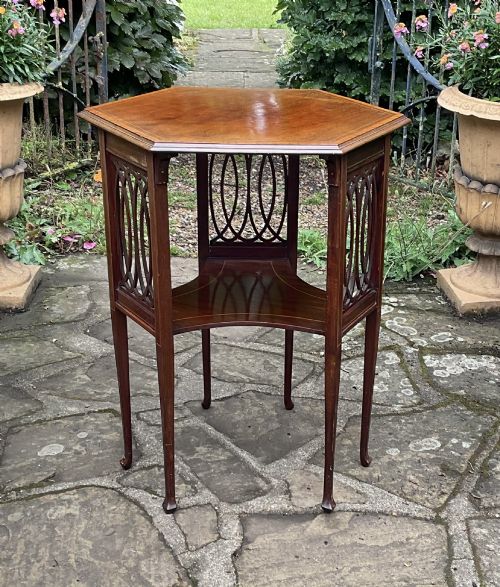
These pieces known as a pierced mahogany stand range from occasional side tables with fretwork galleries to revolving bookcases and display furniture.
Pierced Mahogany Stand
A pierced mahogany stand covers a varied group of occasional furniture spanning the eighteenth century through to the early twentieth century. Buyers searching this phrase encounter tripod tables with pierced galleries, display cabinets, wine tables, and book stands.
The material focus centres on mahogany, often enriched with boxwood inlay, brass mounts, and glass panels. Craftsmanship reflects periods from George II through to Edwardian interpretations of Chinese Chippendale and revival styles.
How they were made
Construction relies upon solid mahogany and selected veneers, shaped and joined to form tripods, side tables, and desktop accessories. Pierced elements such as fretwork galleries and scroll divisions involve meticulous hand-sawing and carving.
Detailing incorporates boxwood inlay for linear contrast alongside cast brass hardware and silver-plated or ormolu accents. Surfaces receive polished finishes that accentuate the natural grain of the timber.
Listings span from the 18th Century through the Edwardian period, uniting mahogany with brass, glass, and boxwood inlay.
What varies in quality
Quality rests upon the crispness of the pierced fretwork and the depth of the carved mahogany details. Early examples from the eighteenth century demonstrate hand-cut precision that differs from later revival machine production.
The choice of timber grain, the integration of boxwood inlay, and the structural integrity of joints determine the grade of each piece. Superior items maintain original surfaces and balanced proportions across tripod bases and display stands.
The Pierced Mahogany Stand Glossary
- Pierced gallery
- A low decorative fence or railing around the edge of a table top, often pierced with fretwork patterns to secure items from sliding. This detail appears frequently on eighteenth-century birdcage tables.
- Chippendale revival
- A style popular in the nineteenth and early twentieth centuries copying the mid-eighteenth-century designs of Thomas Chippendale. Pieces in this style often feature intricate fretwork and Chinese-inspired motifs.
- Birdcage
- A timber mechanism beneath a table top allowing it to tilt and rotate simultaneously. It consists of four turned posts connecting two rotating disks.
- Canterbury
- A low stand fitted with partitions for holding sheet music, books, or magazines. Examples in mahogany frequently incorporate pierced scroll divisions.
Pierced Mahogany Stand: Frequently Asked Questions
How do I date a mahogany stand?
Dating relies upon examining construction methods, timber patination, and stylistic markers. Eighteenth-century pieces exhibit hand-tool marks and traditional joinery, whereas Edwardian or later revival items reflect industrial precision.
Secondary materials such as boxwood inlay, brass fittings, and glass also provide chronological context matching the era of manufacture.
Where should I place a wine table?
A wine table or occasional stand works well beside seating areas or in corners where a small surface is useful. Their compact tripod bases allow them to fit easily into various domestic layouts.
Keep these tables away from direct heat sources and strong sunlight to protect the polished mahogany finish and any inlaid details.
What styles influence these stands?
The listings show strong influences from Georgian, Regency, and Louis XV designs alongside extensive Edwardian interpretations. Chinese Chippendale revival styles appear frequently through fretwork and lattice patterns.
These varied aesthetic revivals mean pieces often combine historical forms with the manufacturing techniques of their actual production era.