


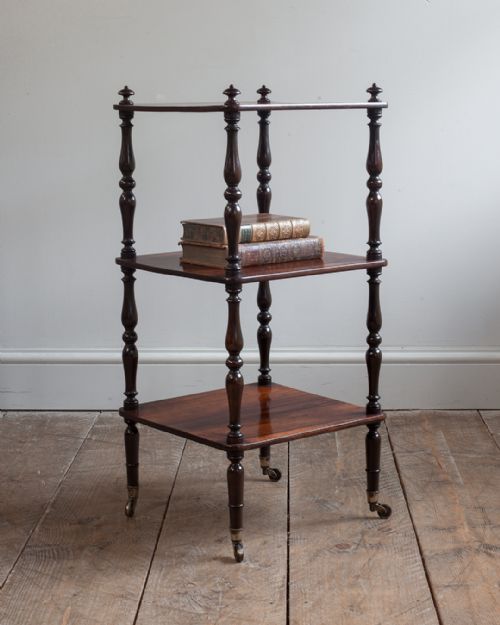
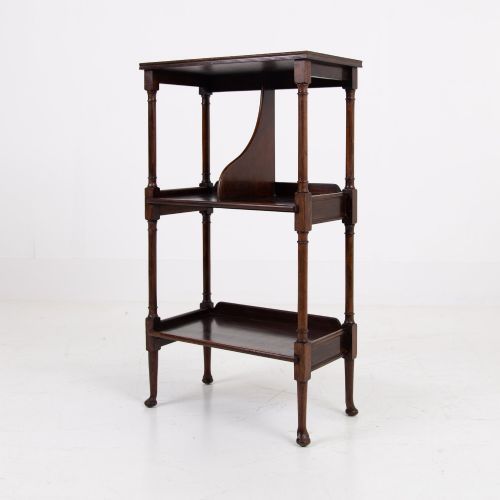
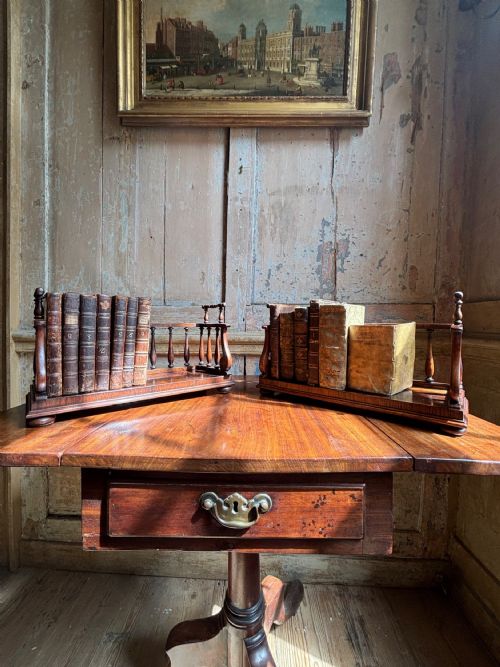
Regency Book Stand
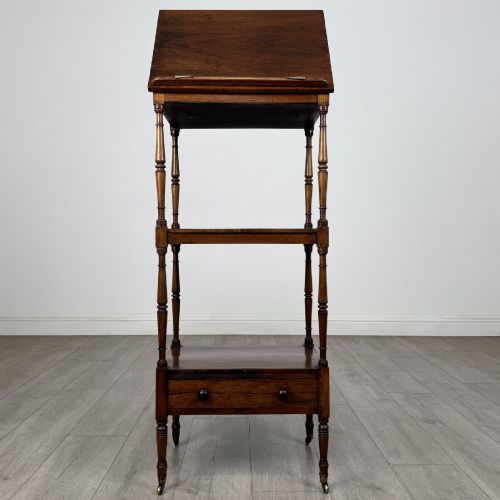
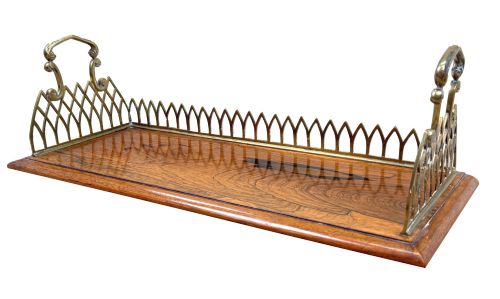
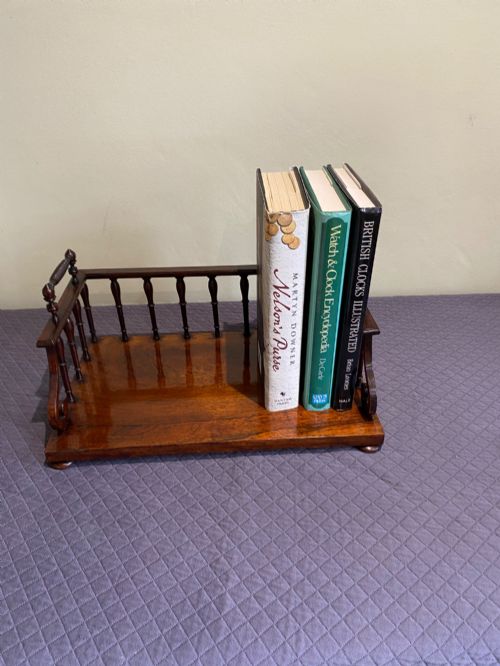
When you search for a regency book stand, you are looking at portable table-top carriers, music desks, and small floor-standing libraries designed to keep volumes close at hand.
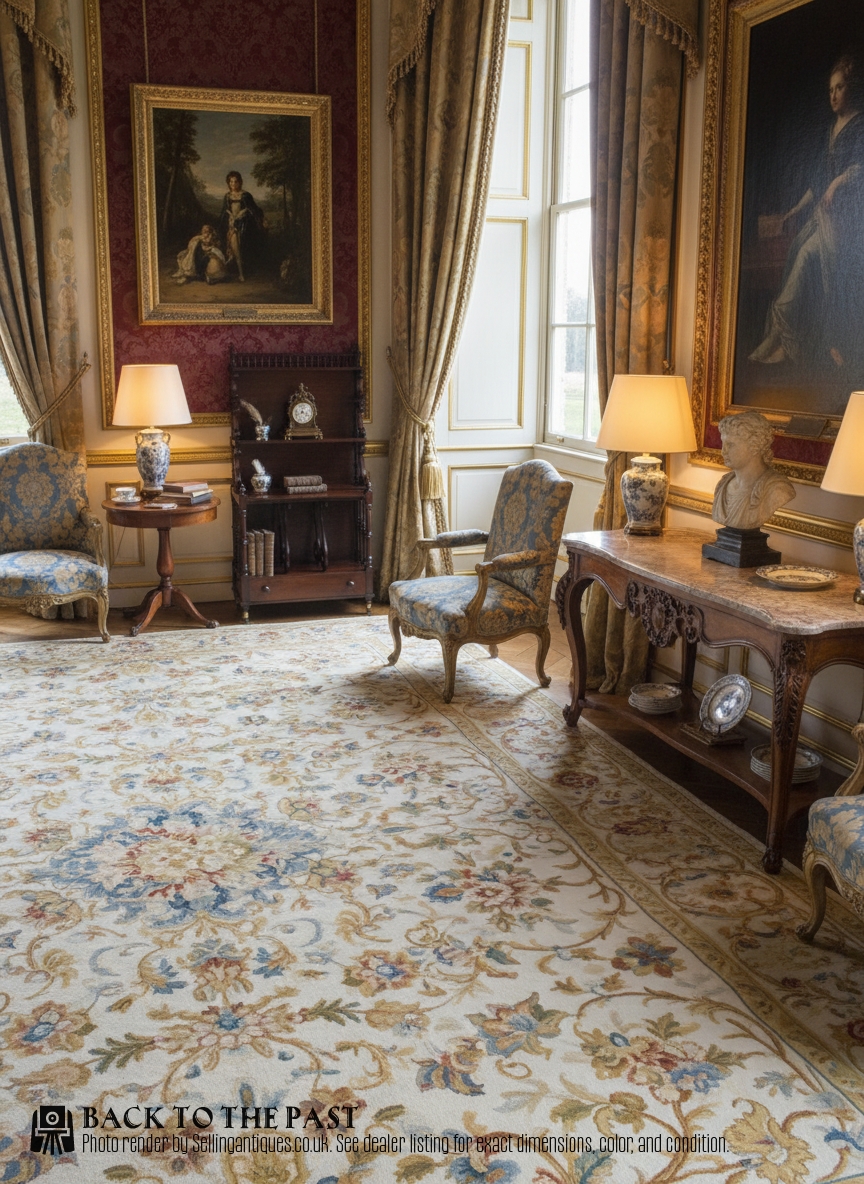
Regency Book Stand
A regency book stand encompasses portable book troughs, adjustable reading tables, and small multi-tiered shelving units designed during the early nineteenth century. These pieces served practical domestic needs in libraries, drawing rooms, and parlours, providing accessible storage for portable libraries and writing materials.
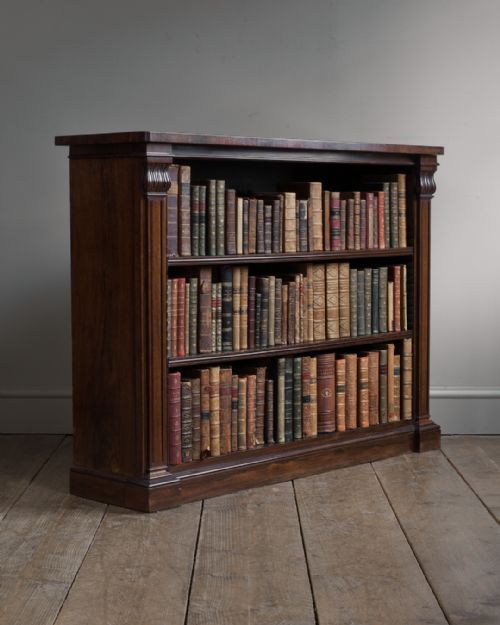
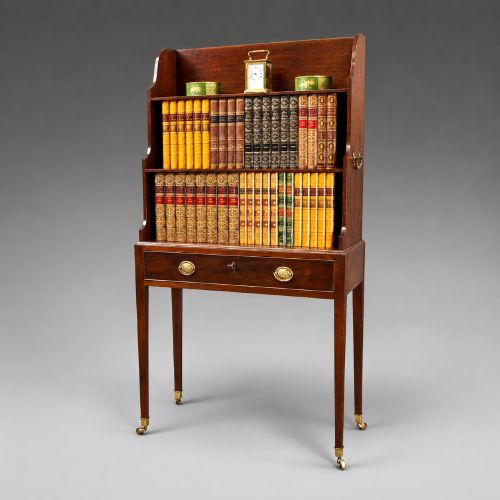
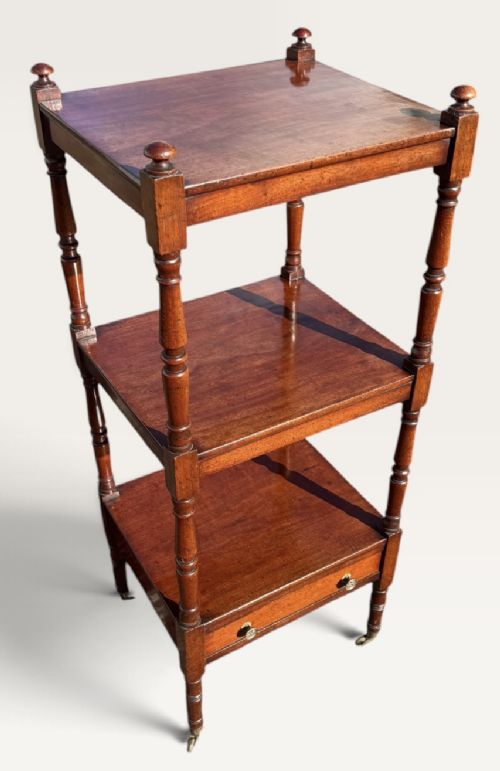
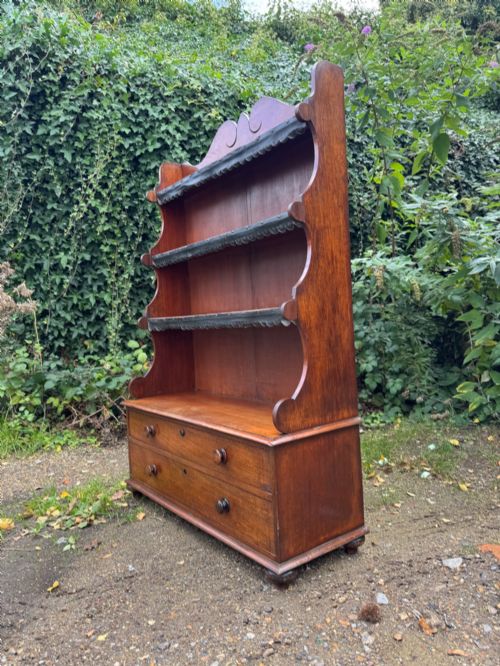
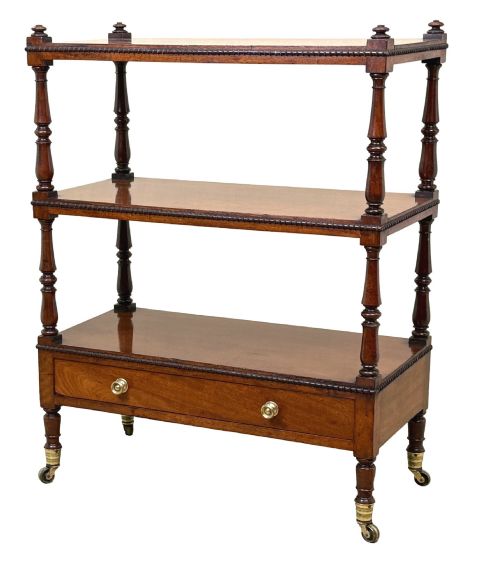
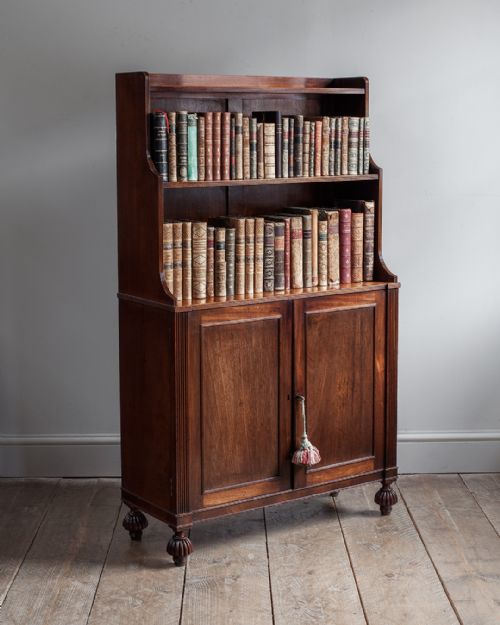
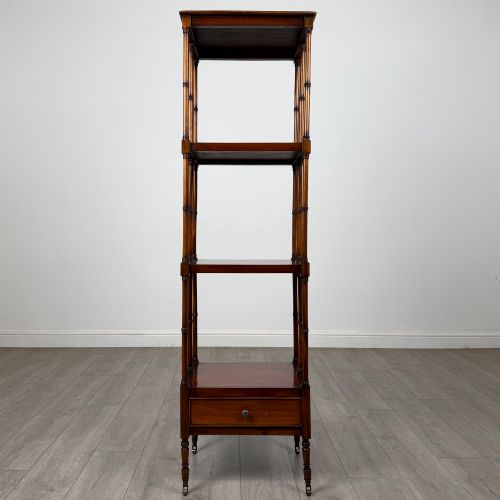
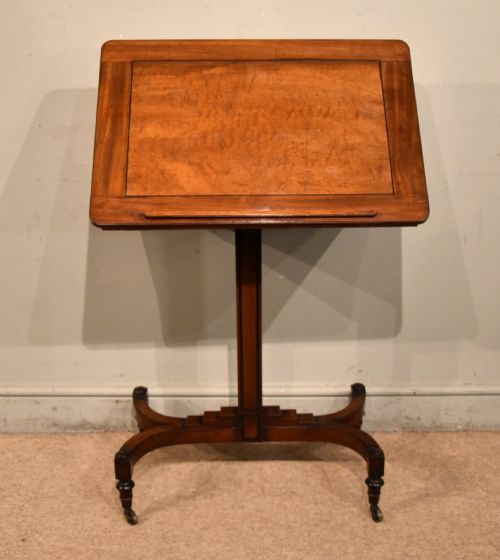
The pieces appearing on this page range from compact desk-top book-carriers to larger open bookcases, whatnots, and music stands. Mahogany and rosewood form the core of the selection, reflecting the preference for rich dark timbers during the Regency and William IV periods.
Buyers will most frequently encounter mahogany and rosewood open bookcases, small tiered whatnots, and adjustable reading tables dating from the nineteenth century. Later revivals from the Edwardian era and the early twentieth century also appear, offering similar utility in period styles.
How they were made
Cabinetmakers utilised solid mahogany, rosewood, and oak for structural stability, often applying finely figured veneers to visible surfaces like shelves and table tops. Brass fittings such as adjustable ratchets, castors, and inlaid stringing provided functional movement and decorative contrast against the dark timber.
Construction methods relied on traditional joinery, including dovetail joints for drawers and sturdy peg or screw assemblies for multi-tiered whatnots and revolving stands. Turned and reeded columns supported the tiers, while pivoting mechanisms on reading tables utilised robust iron or brass screws.
Regency Book Stand Retail Price Guide 2026
Typical asking prices for regency book stand among the pieces listed under this phrase on Sellingantiques today, from the lower quarter to the upper quarter. They describe what is for sale here now, not the wider market.
Portable book carriers let Regency readers pack up their library to follow the sun around the house.
What varies in quality
The refinement of the timber figure and the crispness of turned wood details separate standard utility pieces from exceptional workshop productions. Superior examples display carefully matched grain patterns across every shelf and tier, alongside precise brass inlay or finely carved mounts.
Mechanical complexity and structural integrity also define the upper tier of the range. Tables with smoothly operating adjustable book rests or heavy brass-mounted revolving mechanisms demonstrate a higher standard of original craftsmanship than fixed counterparts.
The Regency Book Stand Glossary
- Whatnot
- An open shelving unit with multiple tiers supported by slender uprights, used for displaying books and ornaments.
- Waterfall bookcase
- A tiered shelving unit where each successive shelf is deeper than the one above it, creating a cascading profile.
- Etagere
- A French term for a piece of furniture with open shelves for displaying small objects, often synonymous with a whatnot.
- Revolving bookcase
- A freestanding book stand engineered to spin on a central pivot base, allowing access to volumes from all sides.
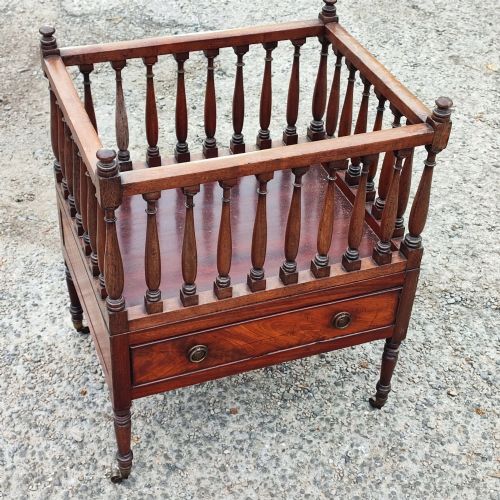
- Canterbury
- A low stand with slatted partitions, originally designed to hold sheet music, folios, or books.
Regency Book Stand: Frequently Asked Questions
What is the difference between a book stand and a whatnot?
A book stand is specifically built to hold volumes upright on a desk or floor, often featuring adjustable rests or sides. A whatnot is a multi-tiered open shelving unit designed for general display and storage.
While both appear in mahogany and rosewood from the nineteenth century, the latter offers broader tiers suited to decorative objects alongside books.
How were adjustable reading stands used?
Adjustable reading stands were placed on tables or floor pedestals to hold books, folios, or sheet music at a comfortable angle for the reader. The mechanism typically used a wooden or brass ratchet to alter the slope.
This design allowed individuals to read heavy volumes without holding them, making them popular in libraries and music rooms.
Are revolving book stands stable?
Revolving book stands rely on a heavy weighted base and a central pivot mechanism to remain stable while turning. Most examples from the period use a spider foot tripod or a robust cross-base to prevent tipping when loaded with books.
They were designed for floor placement beside a chair or desk for easy access to reference materials.
How do I identify a Regency period piece?
Regency pieces are generally identified by timber choice, particularly dark figured mahogany and rosewood, alongside classical decorative motifs like reeded legs and brass inlay. Construction details such as hand-cut dovetails and secondary pine or oak timbers also assist in dating.
Pieces attributed to workshops like Gillows often exhibit superior carving and documentation.