


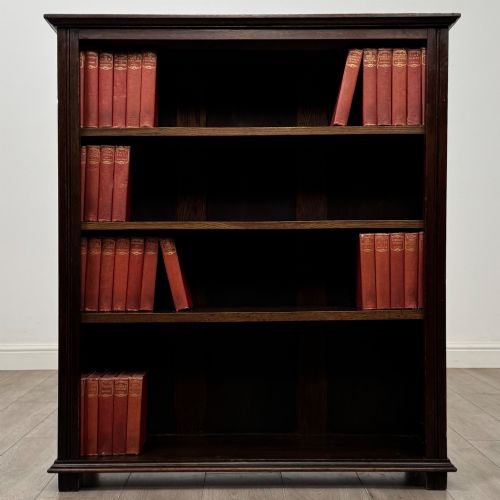
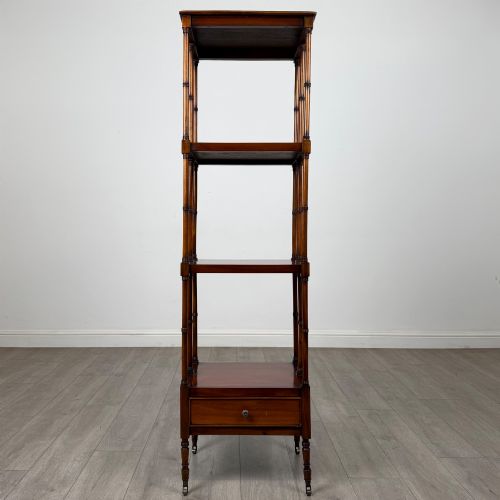
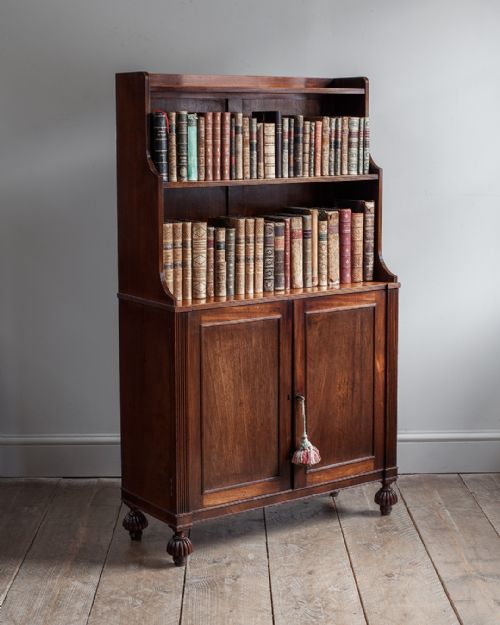
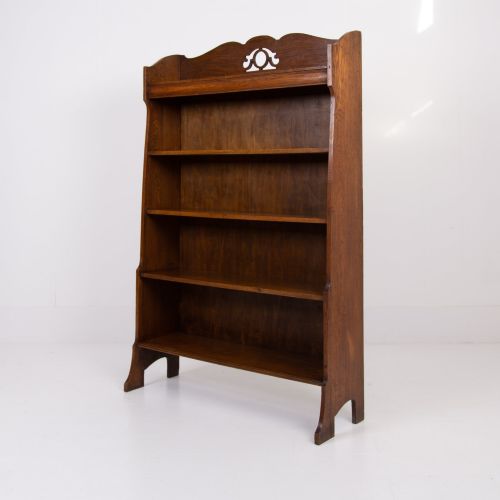
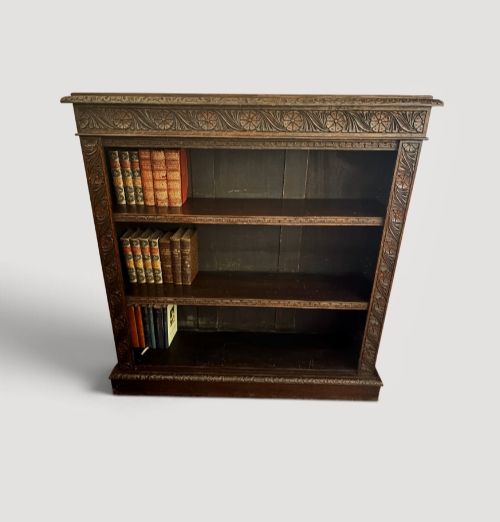
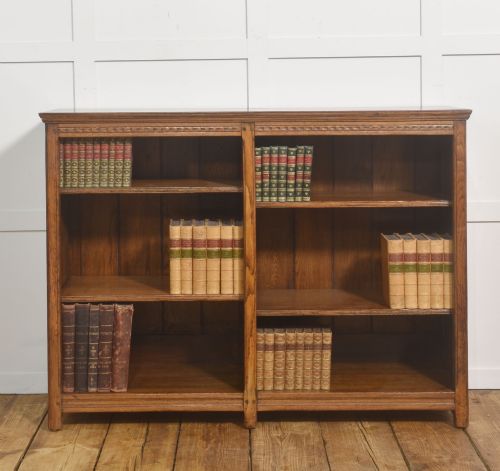
Standing Open Bookcase
A standing open bookcase brings immediate utility and classic timber character to a room, offering ready access to volumes without doors in the way.
What standing open bookcases are
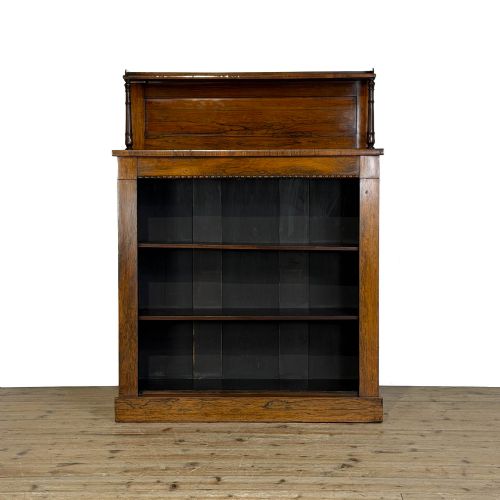
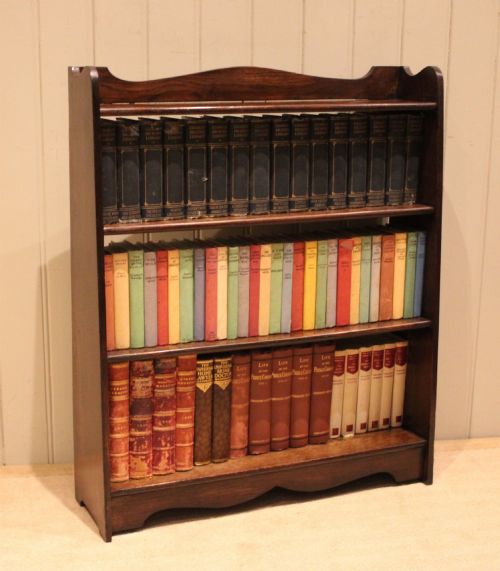
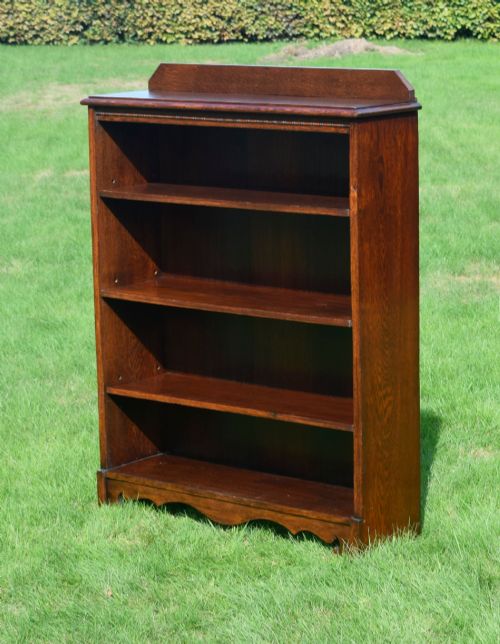
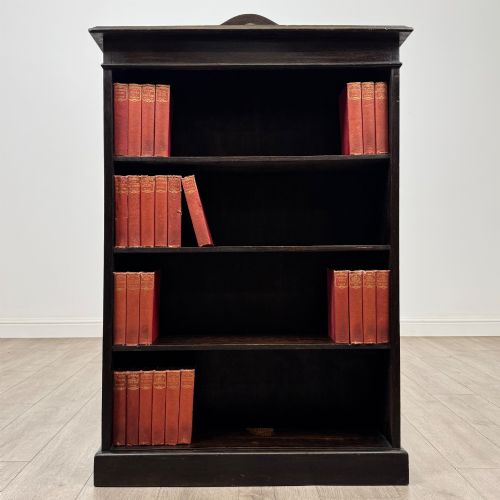
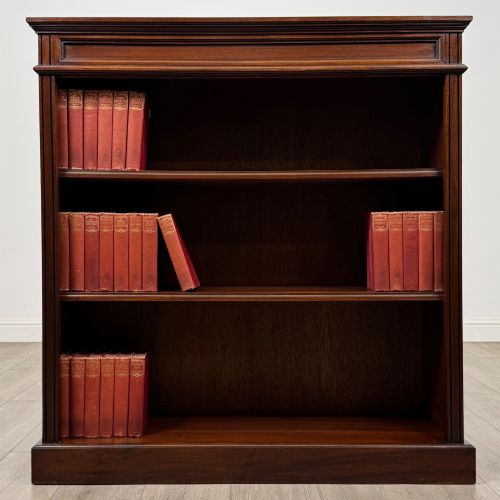
A standing open bookcase is a floor-standing piece designed for accessible book storage, appearing frequently in oak and mahogany across this selection. These items range from compact low dwarf variants to taller library editions, often incorporating adjustable shelving for practical versatility.
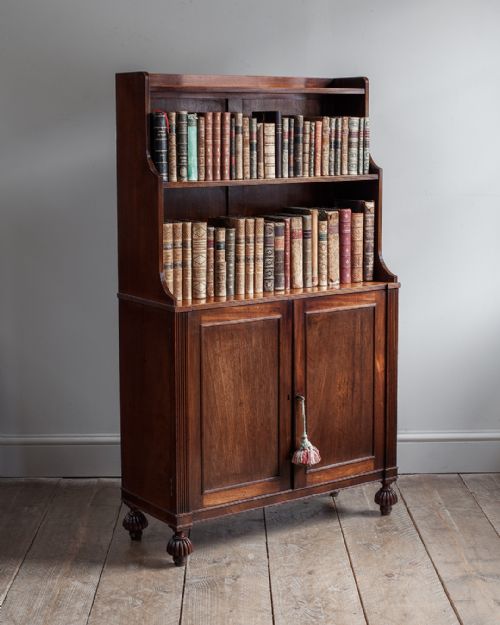
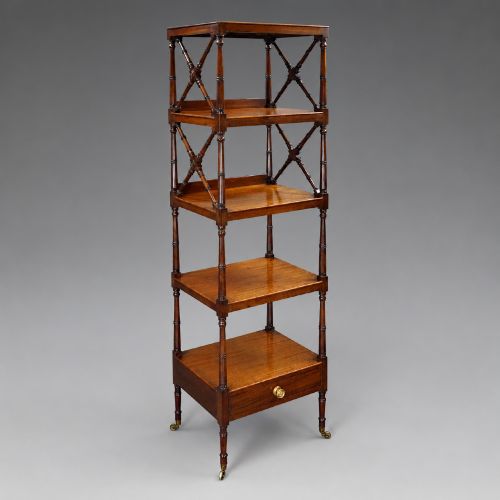
The archive and current listings show strong representation from the nineteenth century alongside Regency, Arts and Crafts, and Edwardian periods. Architectural forms vary from straightforward rectangular units to waterfall designs and breakfront configurations.
Buyers encounter freestanding pieces suited to central room placement as well as traditional wall-adjacent models. The simpler oak editions contrast with finer rosewood and walnut examples boasting inlaid details.
What varies in quality
Timber selection drives much of the distinction, moving from utilitarian utility grades of oak to highly figured rosewood, burr walnut, and rich mahogany veneers. Superior examples display careful book-matching and depth of grain.
Refinement of detail marks the upper tier, including fine string inlay, carved architectural motifs like Green Man masks, and sophisticated breakfront proportions. The presence of functional, well-engineered adjustable shelving systems also elevates a piece.
Retail Price Guide 2026
Typical UK retail prices for standing open bookcase, calculated from the Sellingantiques database of over a million retail prices indexed since 2003. This retail price guide relies exclusively on Sellingantiques data; no external sources or auction records are used, so the figures do not describe the wider market.
Listings feature pieces spanning the nineteenth century, 1900, 1920, and the Regency period, constructed primarily from oak, rosewood, mahogany, and brass.
The Standing Open Bookcase Glossary
- Waterfall bookcase
- A tiered shelving unit where each successive shelf steps back from the one below, creating a cascading profile. This style gained popularity during the Regency period.
- Breakfront
- A cabinet or bookcase design where the central section projects forward from the flanking wings. It adds architectural depth to larger library pieces.
- Dwarf bookcase
- A low-standing open bookcase designed to sit beneath dado height. These pieces often feature wide proportions suitable for display surfaces on top.
- Peg sided
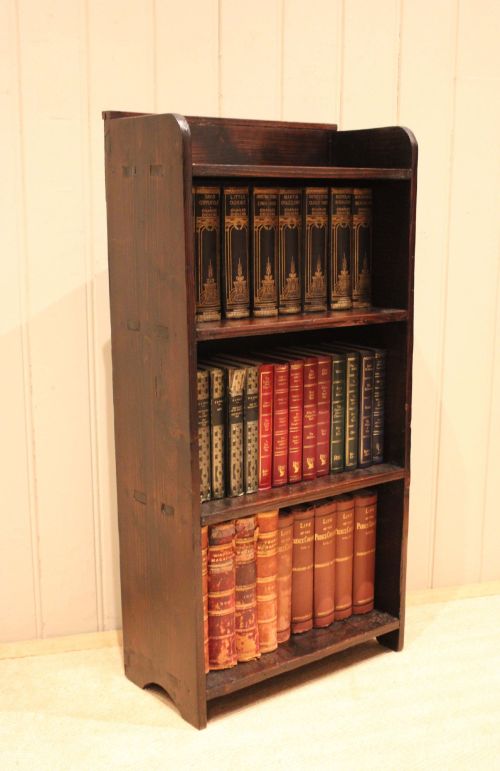
- A construction method utilising visible wooden pegs to secure the uprights and shelves. It is commonly found in sturdy oak vernacular furniture.
- Inlay
- The technique of inserting contrasting pieces of wood or metal into recesses to form decorative patterns. Finer Victorian examples frequently use fine mahogany stringing.
Frequently Asked Questions
Where should I place a standing open bookcase?
These units suit studies, living rooms, and hallways where quick access to books is desired. Freestanding models can also act as low room dividers.
Ensure placement avoids direct sunlight to protect antique timber finishes and veneers from fading over time.
How do I adjust the shelves?
Many period library bookcases utilise wooden ratchets, brass pegs, or sliding brackets to allow vertical movement. These systems let you customise shelf heights for varying book sizes.
Care should be taken when relocating wooden shelves to avoid damaging the interior veneered surfaces.
Are these bookcases sturdy enough for heavy books?
Solid oak and mahogany library pieces are built to bear substantial weight, particularly those featuring fixed or pegged construction. Adjustable shelf versions depend on the integrity of their support brackets.
Distributing heavier volumes evenly across lower shelves helps maintain structural balance.
How do I distinguish a Regency piece from a Victorian one?
Regency items often lean towards clean architectural lines, rosewood timbers, and waterfall tiering. Victorian examples frequently showcase heavier carved oak, mahogany, and inlaid detailing.
Examining the underlying construction and secondary woods helps confirm the likely period of manufacture.