





Arts and Crafts Bookshelf
An arts and crafts bookshelf brings honest joinery and utility together, offering straightforward timber storage for everyday volumes.
Arts and Crafts Bookshelf
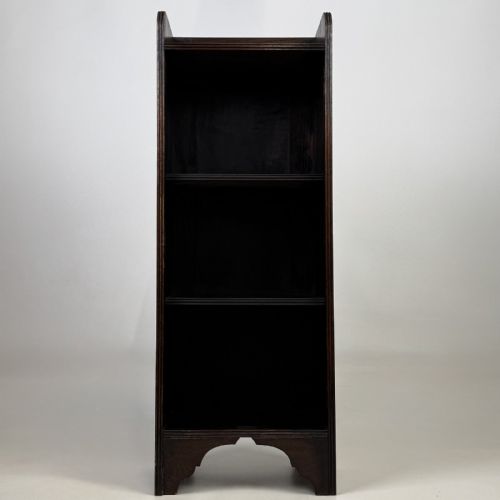
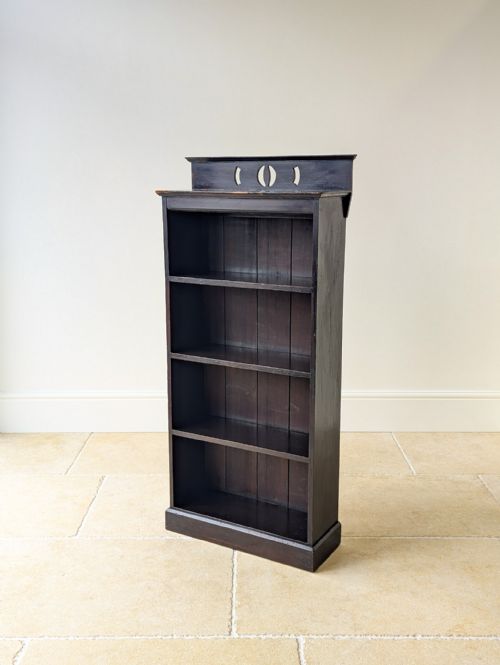
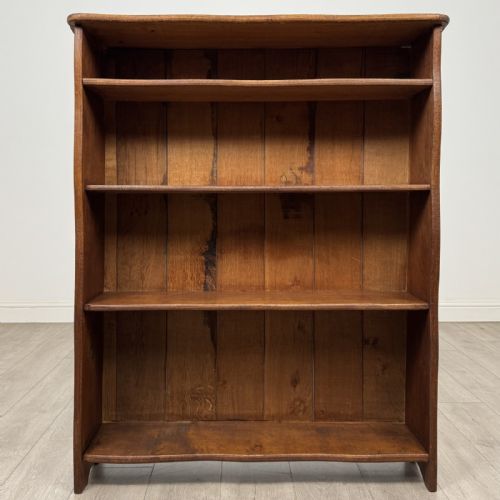
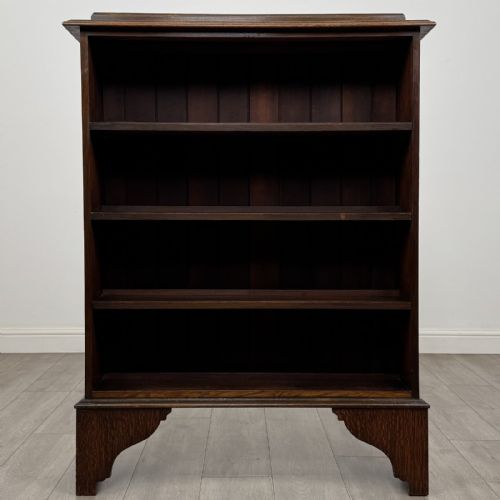
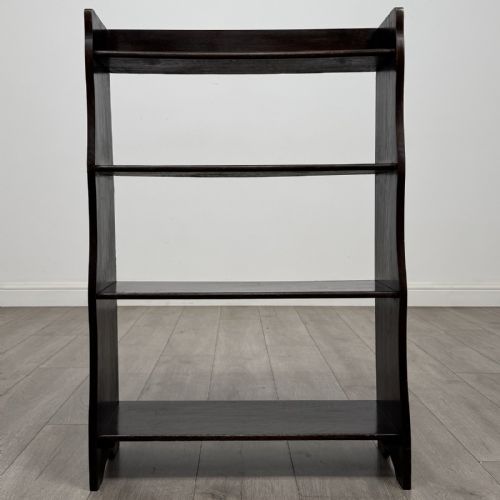
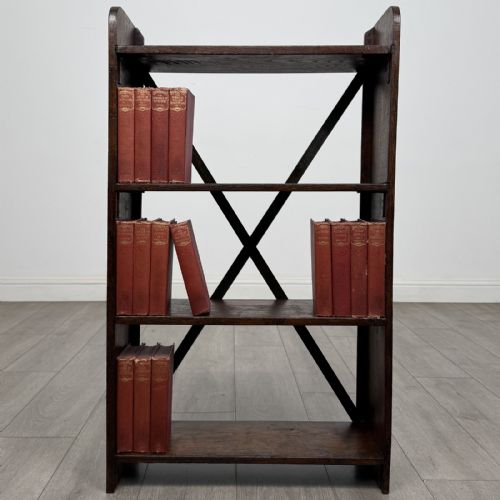
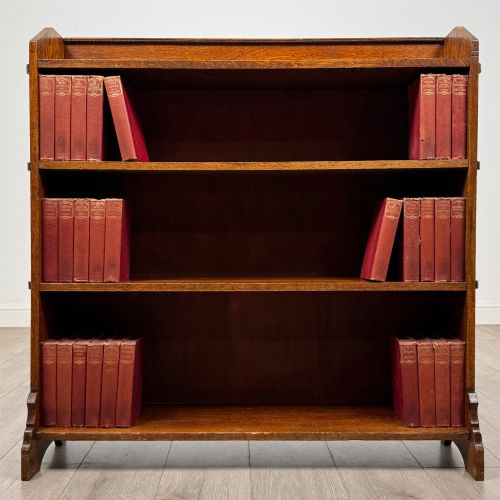
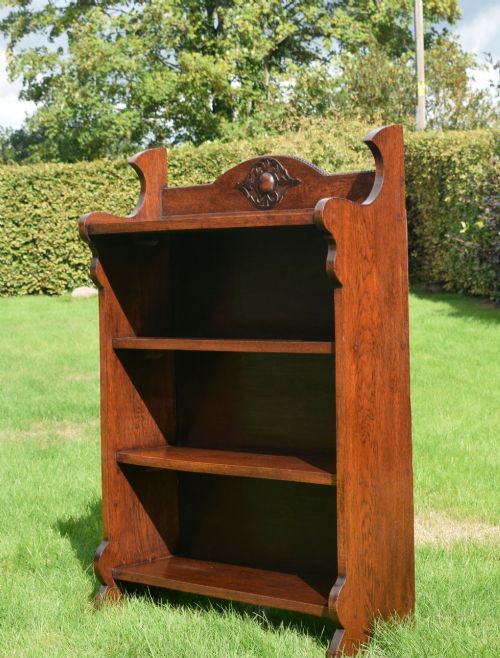
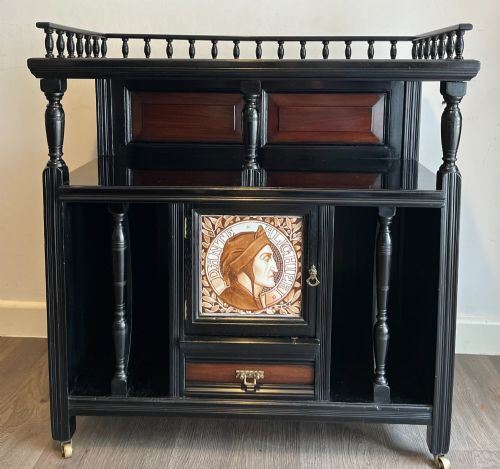
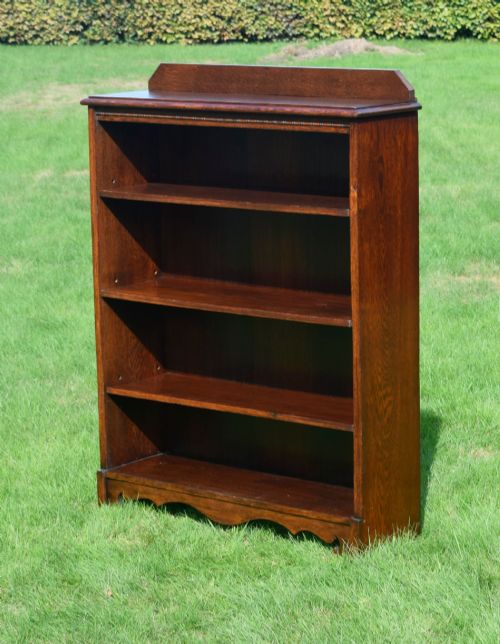
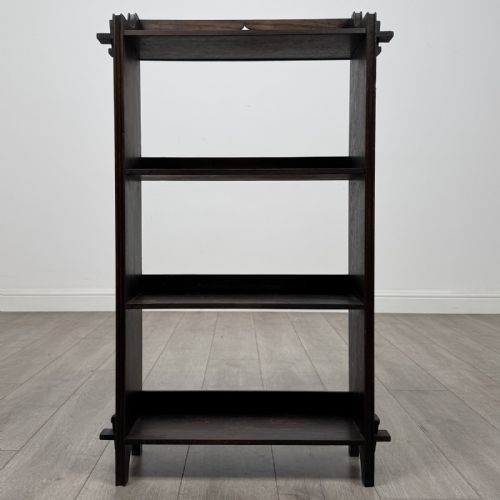
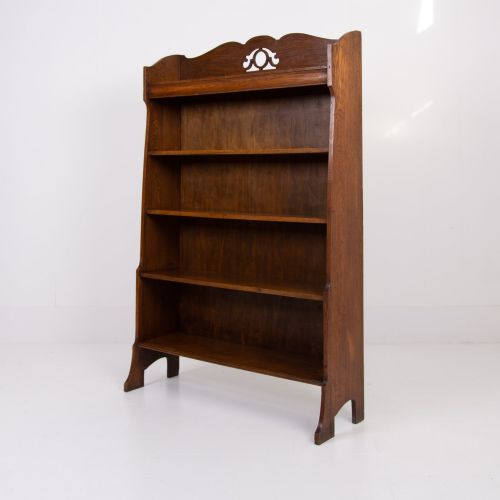
An arts and crafts bookshelf focuses on functional open storage, with solid timber construction dominating the available forms. Buyers encounter open bookcases, adjustable shelving units, and smaller book stands originating from the late nineteenth century through to the 1930s. Edwardian examples and pieces from the nineteen-tens appear frequently alongside earlier nineteenth-century items.
The aesthetic prioritises utility through open fronts, beaded edges, and occasional decorative cut-outs. Wall shelves, display cabinets, and revolving table top versions provide alternative formats for domestic spaces. Solid timber forms remain the standard choice across the selection.
Materials and construction
Oak serves as the primary material, appearing in standard, dark, golden, and solid variants across the inventory. Cabinetmakers also utilised mahogany, walnut, satinwood, beech, and general wood alongside brass fittings.
Arts and Crafts Bookshelf Retail Price Guide 2026
Typical asking prices for arts and crafts bookshelf among the pieces listed under this phrase on Sellingantiques today, from the lower quarter to the upper quarter. They describe what is for sale here now, not the wider market.
Listings feature oak, mahogany, walnut, satinwood, and brass across pieces spanning from the nineteenth century to the nineteen-thirties.
Indicators of standard
The standard of timber selection and the presence of documented workshop attributions distinguish individual pieces. Items associated with specific makers or notable retail houses demonstrate finer execution in joinery and detailing.
Proportion and the integration of decorative elements, such as cut-outs or brass hardware, influence the overall character. Simpler utilitarian items contrast with more elaborate Gothic revival or Aesthetic movement variants.
Heals·Wylie Lochhead of Glasgow·E.A. Taylor·John Moyr Smith·Shapland and Petter
The Arts and Crafts Bookshelf Glossary
- Open bookcase
- A piece of furniture designed for book storage featuring unobstructed front shelves without doors. This form predominates in the selection.
- Adjustable shelves
- Shelving supported by mechanisms that allow the vertical spacing to be altered. This feature provides flexibility for varying book heights.
- Aesthetic movement
- A nineteenth-century design current focusing on art for art's sake and decorative refinement. Pieces from this movement often display distinctive stylistic motifs.
- Golden oak
- A bright, warm timber tone popular during the Edwardian period and early twentieth century. It highlights the natural grain of the wood.
- Beaded edge
- A narrow semicircular moulding running along the border of a shelf or frame. This detail adds subtle architectural definition to plain timber surfaces.
Arts and Crafts Bookshelf: Frequently Asked Questions
What defines an arts and crafts bookshelf?
These pieces rely on simple, robust timber construction with an emphasis on utility rather than heavy ornamentation. Open shelving and straightforward joinery characterise the form.
Oak is the most common material used by makers of this period. The design prioritises practical book storage for domestic interiors.
How do I adjust the shelves?
Many examples include adjustable shelf mechanisms that allow you to change the height intervals between boards. This accommodates volumes of different sizes.
Check the interior uprights for supporting brackets or slots. These systems were designed for simple manual adjustment without tools.
Where should I place a wall shelf?
Wall-mounted versions require solid fixings into wall studs or masonry to support the weight of timber and books safely. Position them at a comfortable height for everyday access.
Ensure the surrounding wall space complements the proportions of the wooden structure. These units work well above side tables or desks.
How do I care for oak timber?
Dust the wood regularly with a dry, soft cloth to prevent particle accumulation. Avoid placing the furniture in direct sunlight or near heat sources to prevent drying.
Apply a coat of natural wax periodically to nourish the grain and protect the finish. This maintains the natural lustre of the oak over time.
What is a revolving book stand?
A revolving book stand is a compact, table top piece designed to rotate on a central pivot for easy title selection. It holds a small curated selection of reference volumes.
These pieces combine functional desk storage with mechanical movement. They suit studies and libraries where desk space is limited.