
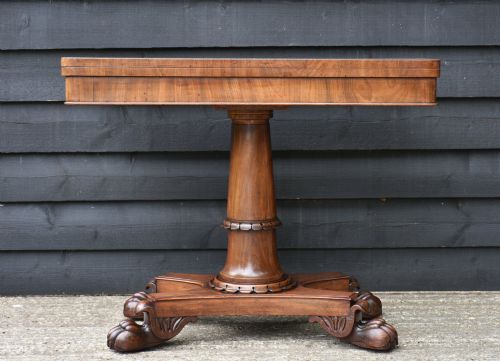
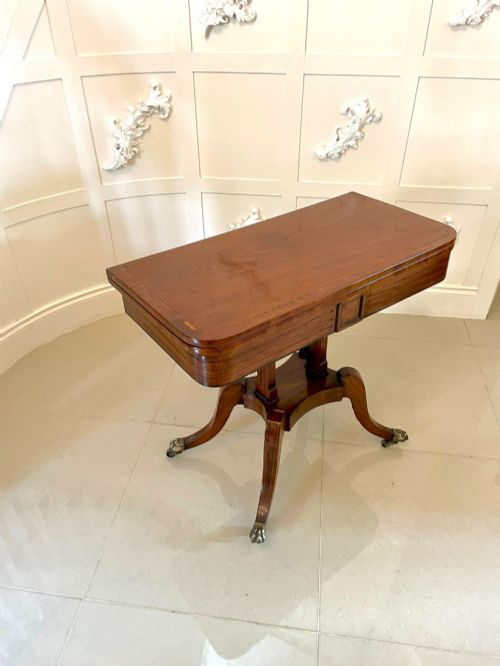
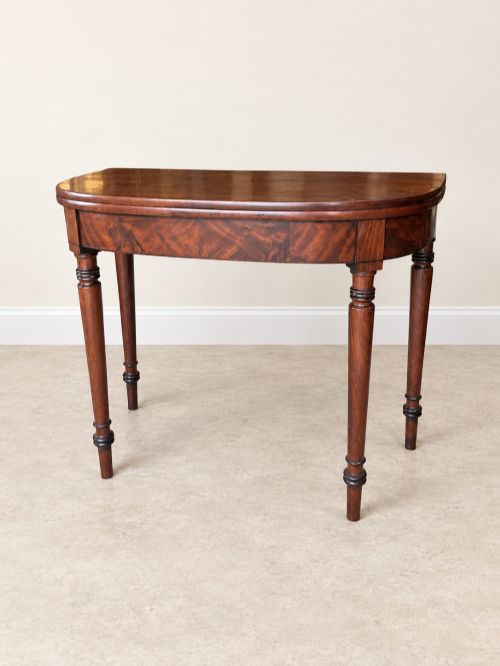
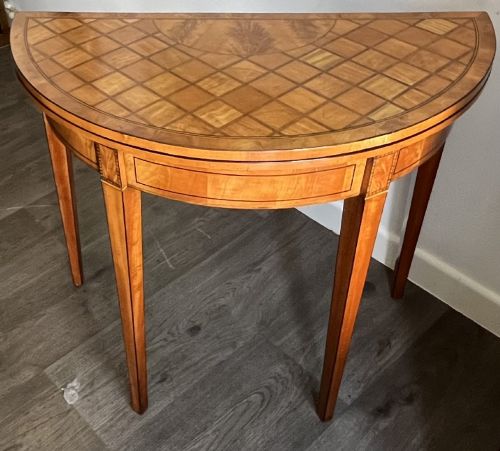

Georgian Folding Games Table
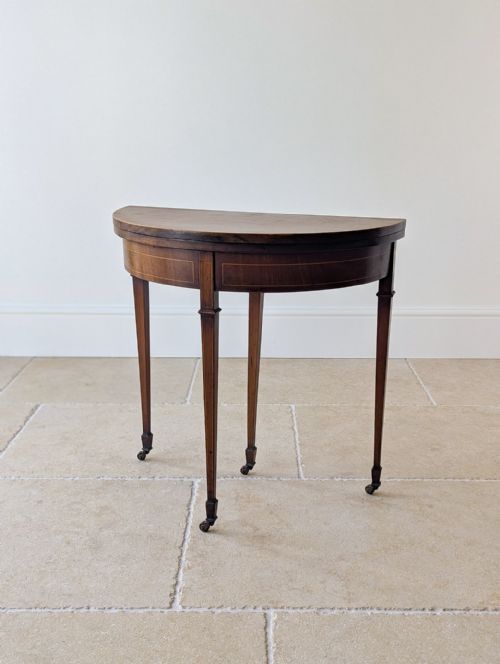
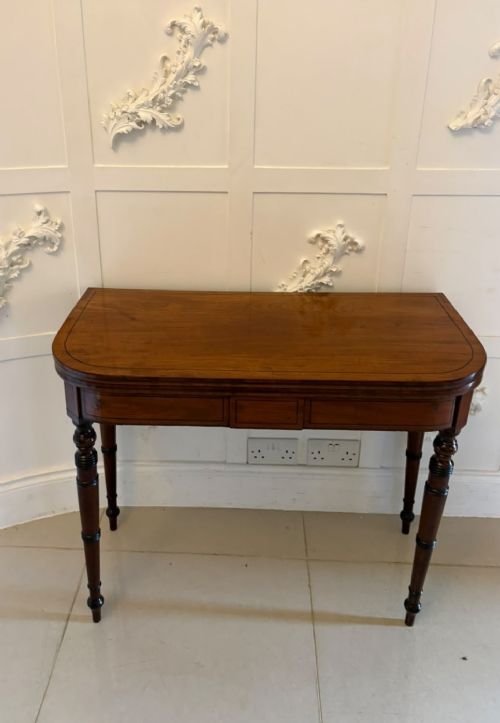
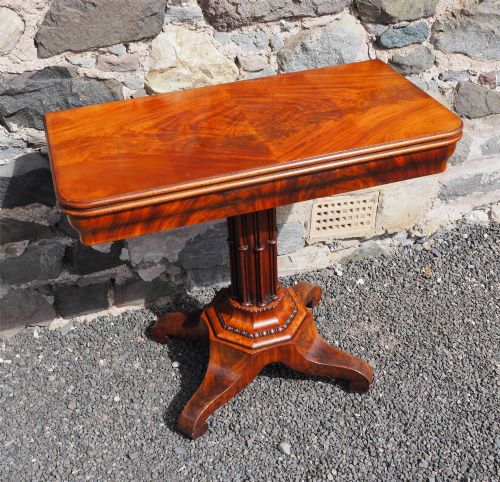
These georgian folding games table pieces are versatile furniture designed for card playing, dining, and display in period interiors.
Georgian Folding Games Table
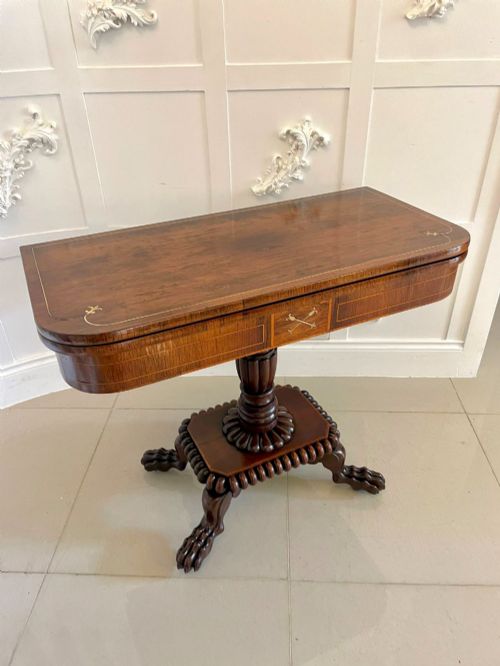
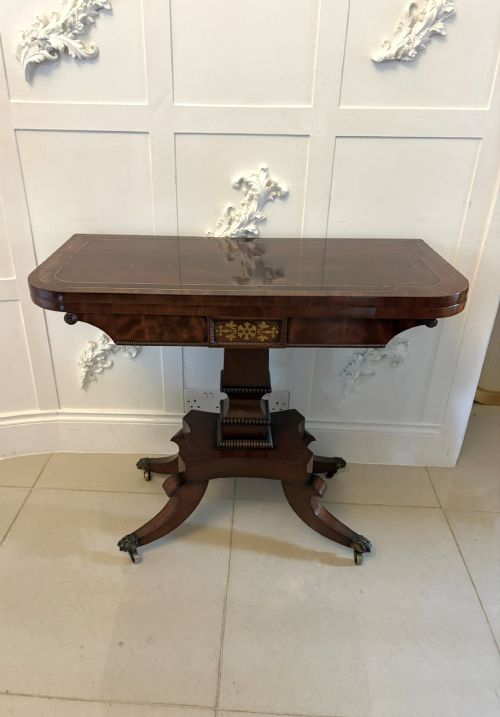
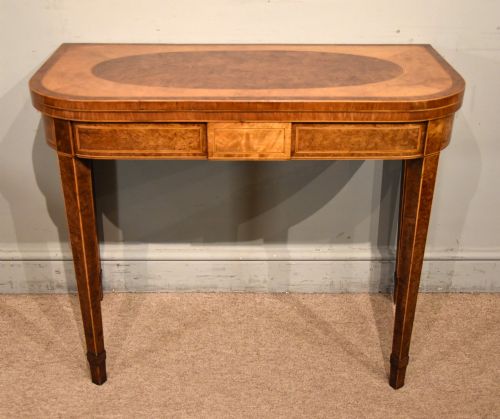
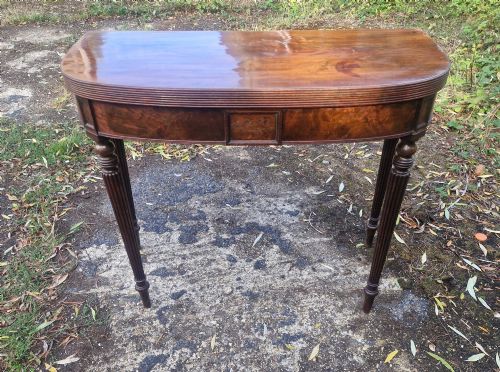
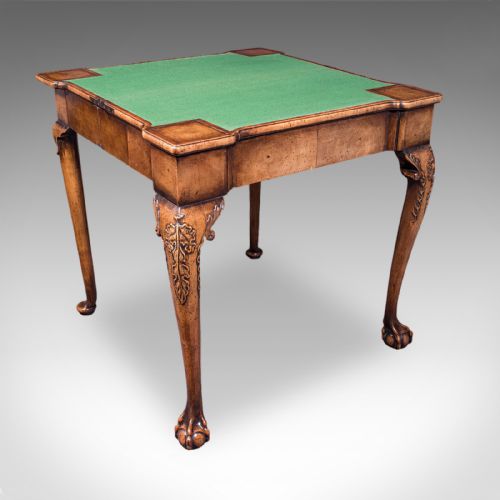
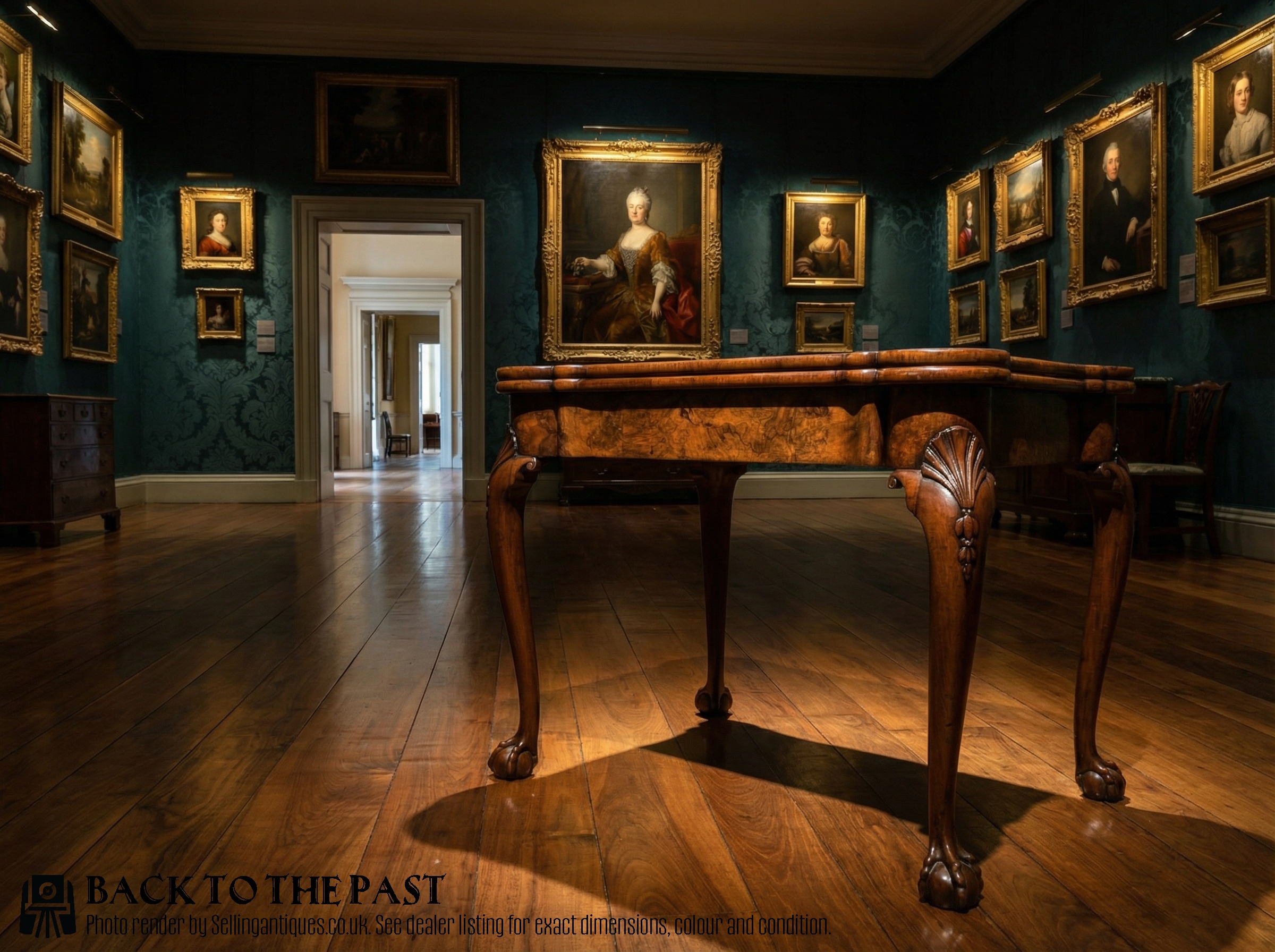
A georgian folding games table is primarily found as a card table, tea table, or console table featuring a hinged top that folds open to reveal a baize-lined surface. The pieces listed span the eighteenth century, nineteenth century, Regency period, and Edwardian eras, reflecting enduring domestic utility.
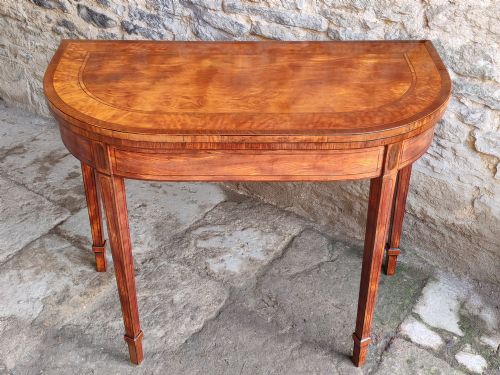
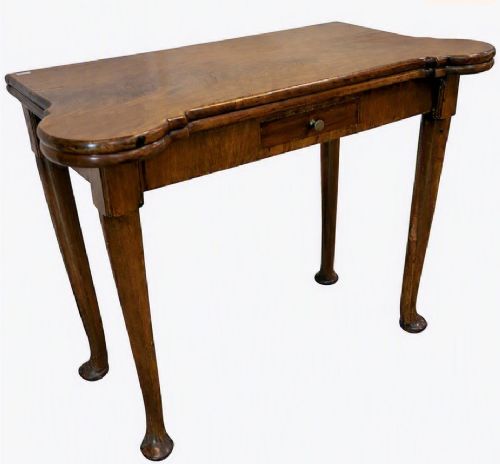
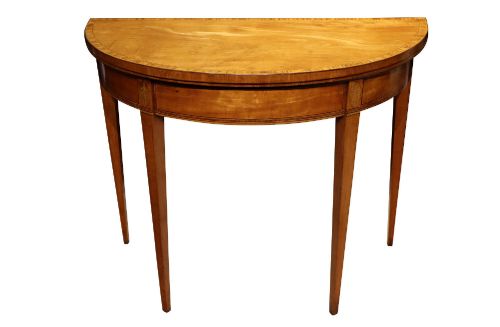
Most examples appear in rectangular, demi-lune, or serpentine shapes designed to sit flat against a wall when closed. These versatile items double as side tables or occasional tables when not in use for gaming.
Makers adapted these forms across George II, George III, Regency, and William IV styles, alongside later twentieth-century interpretations. Walnut, satinwood, and mahogany dominate the construction materials seen across the inventory.
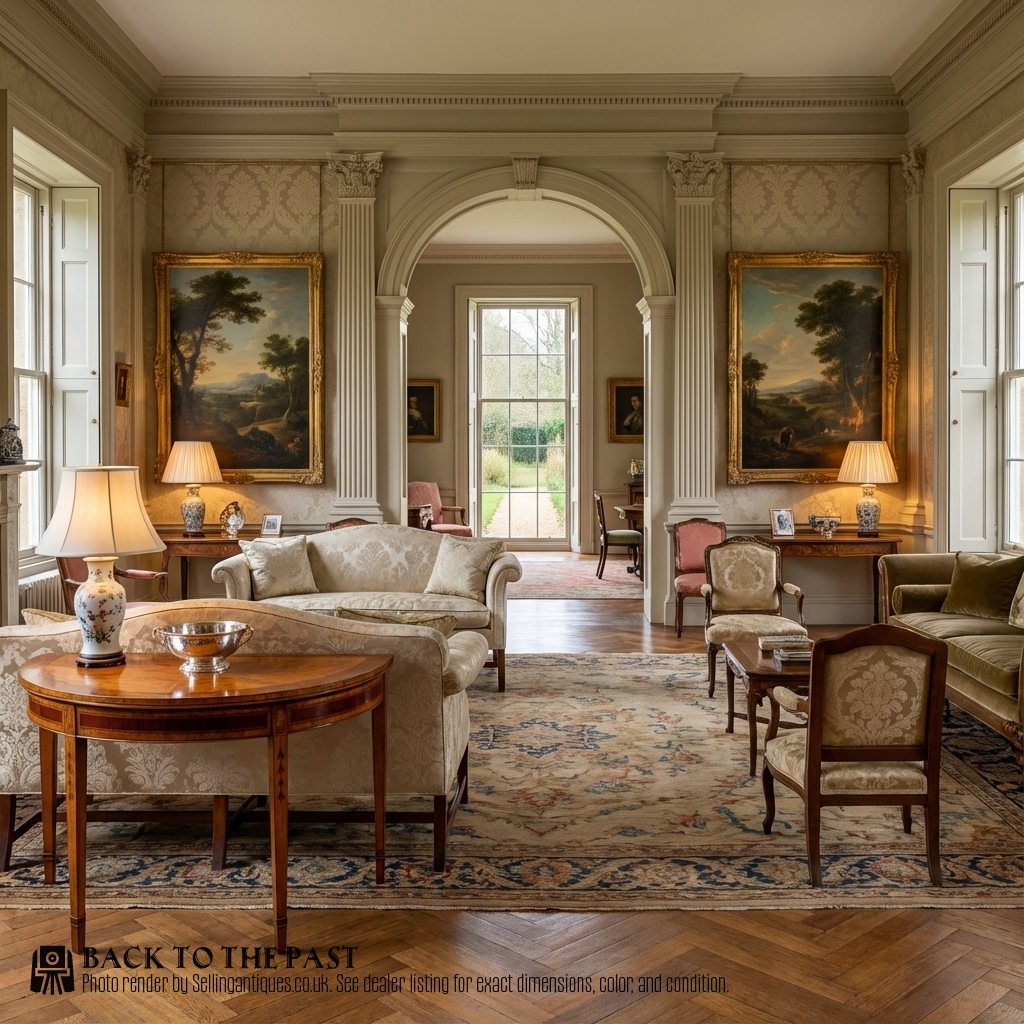
Materials and construction
Makers utilised solid mahogany, rosewood, and walnut as primary framing woods, frequently applying flame mahogany veneer, satinwood, kingwood, and burr yew crossbanding to the top surfaces. Brass inlay and stringing provided contrasting decorative borders on Regency and Georgian pieces.
Concertina actions and fold-over hinges allowed the double-leaf tops to open smoothly while supporting the weight of the extended leaf. Skilled cabinet makers shaped serpentine and demi-lune timber panels to fit tightly when closed.
The inventory includes tables spanning from the mid-eighteenth century through the Edwardian era, constructed in mahogany, rosewood, walnut, and satinwood.
Assessing craftsmanship
Quality rests in the choice of timber and the precision of the veneering, particularly where flame mahogany or burr yew crossbanding meets along the fold. Superior execution shows crisp carving on the legs and smooth operation in concertina folding mechanisms.
Original surface patination and depth of colour separate standard pieces from finer examples. Timber selection in secondary woods and the neatness of brass stringing further distinguish regional workshop output.
Gillows·Giles Grendey·Chippendale
The Georgian Folding Games Table Glossary
- Demi-lune
- A half-moon shape used for table tops and frames designed to stand flush against a wall. This profile became popular during the late eighteenth century for card and tea tables.
- Baize
- A coarse woollen fabric, traditionally green, used to line the playing surface of card tables. It provides a soft, non-slip area for dealing cards.
- Concertina action
- A table frame construction that expands outward on hinged rails when the top unfolds. This mechanical design distributes weight evenly across four legs without requiring a swing leg.
- Crossbanding
- A strip of veneer applied across the grain of the main surface to form a contrasting border. Cabinet makers utilised satinwood and kingwood for this decorative framing.
- Serpentine
- A curved line that waves inward and outward in a continuous flowing movement. This shape appears on the front edges of superior Georgian tables.
Georgian Folding Games Table: Frequently Asked Questions
What is a georgian folding games table used for?
These tables served primarily as multi-purpose furniture for card games, social gatherings, and tea service in domestic rooms. When folded shut, they functioned as side tables or console tables against the wall.
Opening the hinged top revealed a baize-lined playing surface designed for card evenings. This dual function saved space in historic interiors while providing a formal appearance when closed.
How do I tell a card table from a tea table?
Card tables generally feature a lined interior surface, occasionally with small corner wells for counters or candlesticks. Tea tables often display plain wood surfaces or raised edges designed to hold porcelain.
Many examples listed serve multiple functions, combining card playing and tea service within a single folding top design.
What woods were used for these tables?
Mahogany served as the primary structural timber throughout the eighteenth and nineteenth centuries. Cabinet makers enhanced the visual appeal using flame mahogany veneers, satinwood, rosewood, and walnut.
Decorative borders frequently incorporated contrasting timbers such as boxwood, kingwood, and burr yew crossbanding alongside brass inlay.
How do I care for a baize-lined table?
Keep the woollen baize surface clean by gently brushing with a soft brush to remove dust. Protect the fabric from direct sunlight to prevent fading of the traditional green colour.
Maintain the polished wooden exterior using appropriate furniture wax applied sparingly. Avoid placing hot or damp items directly on the polished timber top.
How do I distinguish Regency from Georgian pieces?
Georgian pieces often display carved cabriole legs, straight Marlborough legs, or fine geometric inlay reflecting earlier classical revivals. Regency examples introduce bolder brass inlay, rosewood veneers, and classical motifs influenced by the nineteenth-century taste.
Construction details and secondary wood choices also shift between the mid-eighteenth century and the Regency period.