


Georgian Marquetry Console Table
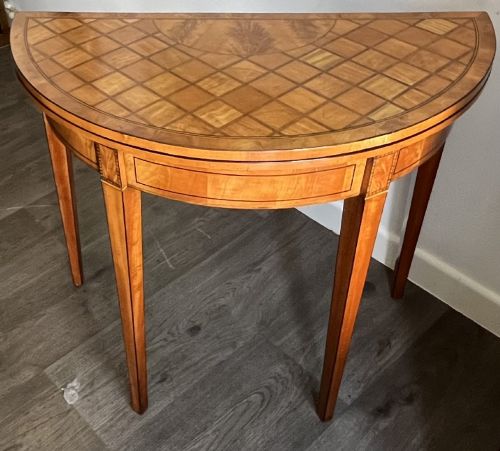
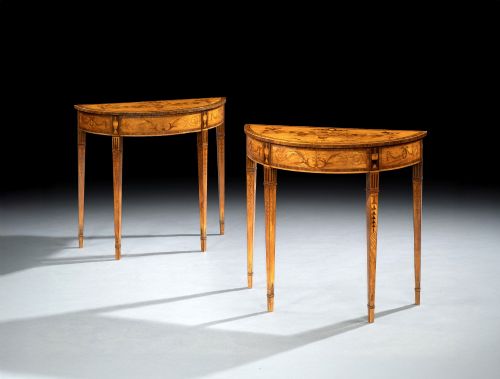
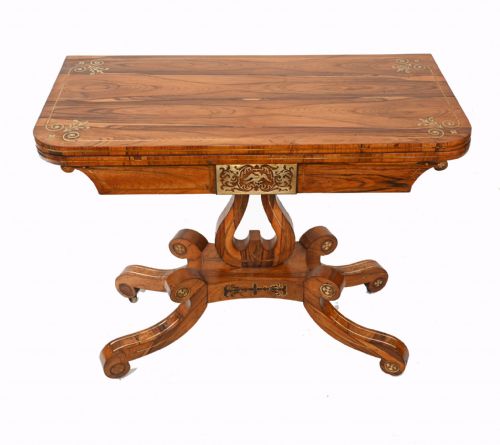
A georgian marquetry console table brings intricate wood inlay and refined proportion into a room, serving as a striking focal point for display or card games.
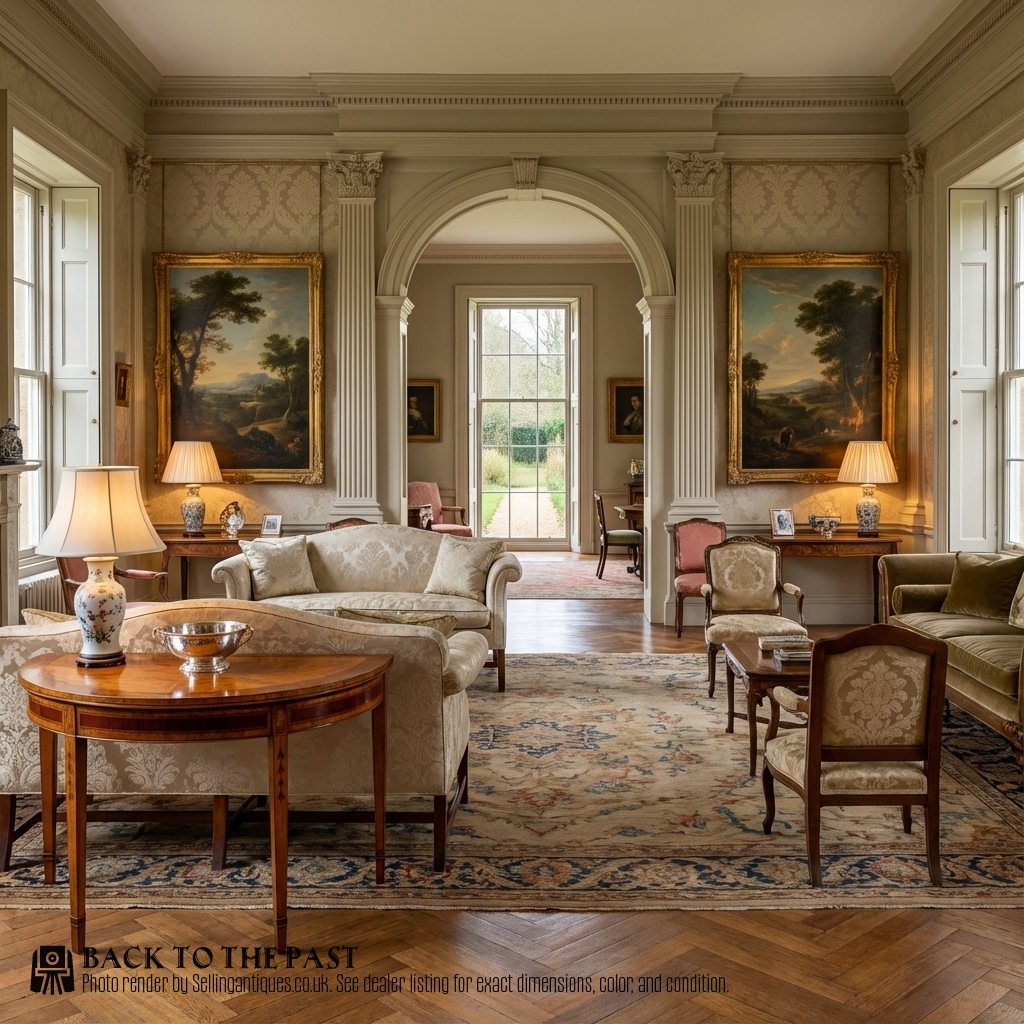
Georgian Marquetry Console Table
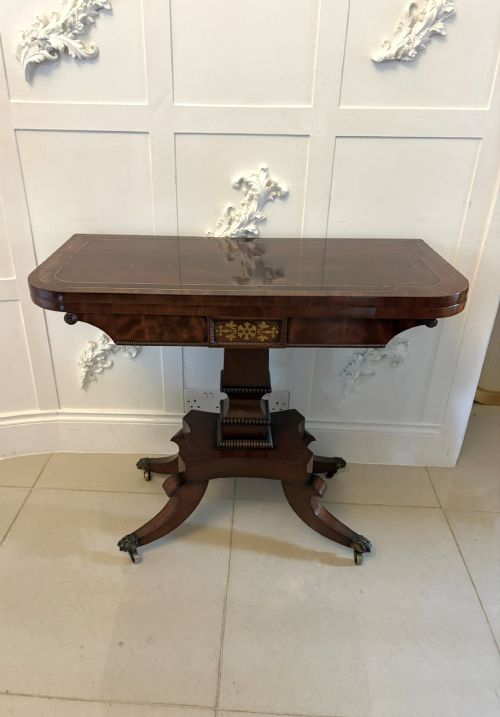
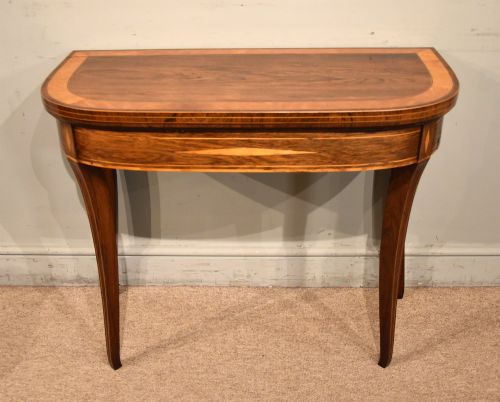
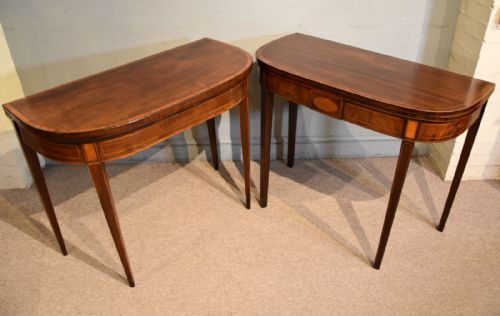
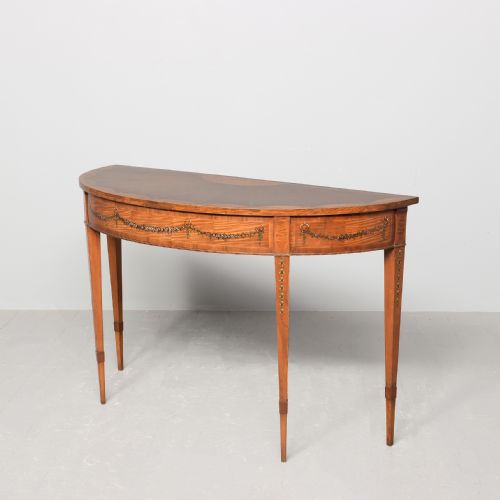
A georgian marquetry console table typically appears in forms such as demi-lune card tables, side tables, and foldover tea tables dating from the eighteenth century. These pieces reflect the tastes of the Georgian and Regency eras, alongside later nineteenth-century revivals and Dutch interpretations.
The buyer most frequently encounters satinwood and mahogany structures enhanced by detailed marquetry inlay or brass detailing. Many examples utilise the semi-circular demi-lune shape designed to sit flush against a wall when closed.
Quality and Craftsmanship
The quality of a piece rests upon the precision of the marquetry cutting and the choice of timber veneers, where finer examples display seamless integration of contrasting woods without noticeable gaps or lifting. The crispness of the carving on the frame and the stability of the folding mechanisms further separate superior work from simpler productions.
Proportion and the handling of the timber grain dictate the visual success of the table, distinguishing restrained eighteenth-century execution from heavier later adaptations.
The Georgian Marquetry Console Table Glossary
- Marquetry
- Decorative veneer work forming pictures or patterns by assembling small pieces of different coloured wood. This technique requires immense skill to fit each timber segment flush into the ground veneer.
- Demi-lune
- Half-moon shape, describing tables built with a flat back to stand against a wall and a curved front. This form became particularly popular for card and side tables during the eighteenth century.
- Satinwood
- A durable, lustrous timber with a yellowish sheen, frequently used for veneering fine cabinet furniture. It provides a bright ground that contrasts sharply with darker inlay woods.
- Foldover
- A table top hinged to open out double its closed size, often revealing a baize-lined surface for playing games or taking tea. The pivoting action requires precise joinery to remain level when open.
Georgian Marquetry Console Table: Frequently Asked Questions
How were these tables used originally?
These tables served primarily as decorative side furniture against drawing room walls, often doubling as functional surfaces for card games or tea service when opened.
The hinged foldover tops allowed households to adapt the furniture for entertaining guests before folding them flat to save space.
How do I distinguish eighteenth-century pieces from later revivals?
Examination of the timber shrinkage, hand-cut dovetails, and the depth of the veneer reveals the age of the construction.
Later nineteenth-century and Edwardian interpretations often display more uniform machine-sawn components and different finishing methods compared to Georgian originals.
How do I care for antique marquetry surfaces?
Keep these tables away from direct sunlight and heat sources to prevent the delicate wood veneers from drying, shrinking, or lifting.
Apply a traditional wax polish sparingly to nourish the timber and maintain the natural lustre of the marquetry without sealing the grain.
What is the difference between a console and a side table?
A console table traditionally relies on the wall for structural support or stands against it with specific bracket fittings, though many surviving examples function independently.
Side tables stand freely on four or more legs, designed to sit against a wall but possessing complete structural independence.