


Neoclassical Satinwood Card Table
A neoclassical satinwood card table offers the refined geometry of the late eighteenth century, built for parlour entertainment.
Neoclassical Satinwood Card Table
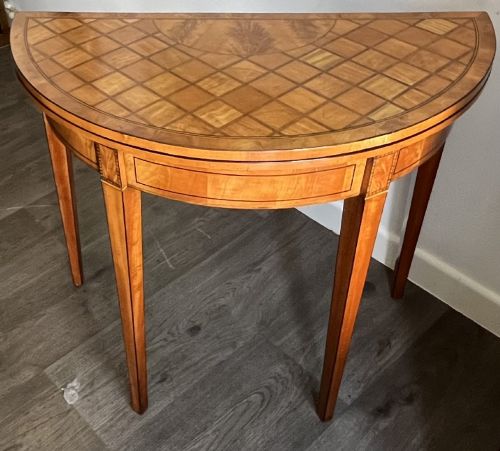
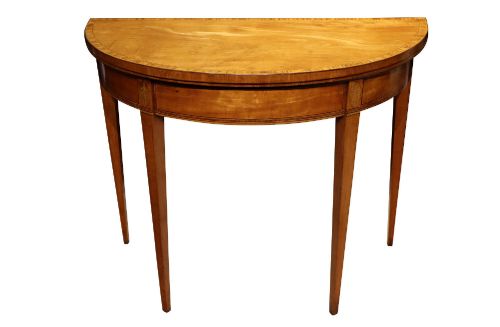
A neoclassical satinwood card table combines geometric folding surfaces with the pale, figured grain characteristic of the period. These items appear primarily in demi-lune or console shapes designed to sit flat against a drawing room wall when not in use.
The pieces on this page span the Georgian era, the nineteenth century, and later revivals such as Sheraton Revival examples. Buyers will frequently encounter demi-lune forms alongside fold-over tops intended for card and games playing.
How they were made
Cabinet makers constructed these tables using solid and veneered timbers, pairing satinwood with contrasting woods like mahogany, rosewood, kingwood, and boxwood. Crossbanding and delicate inlay define the outer edges and borders of the folding tops.
Selected examples incorporate painted decoration directly onto the satinwood surface, adding floral motifs or classical details to the timber.
Listings feature satinwood combined with mahogany, rosewood, kingwood, and boxwood across Georgian, nineteenth-century, and Sheraton Revival periods.
What varies in quality
The refinement of the crossbanding and the precision of the inlay set superior examples apart from simpler work. Gradations in quality depend on the crispness of the painted ornament and the complexity of timber selection across the demi-lune top.
Tables featuring rich combinations of kingwood, rosewood, and finely figured satinwood represent the upper tier of cabinet making within this style.
The Neoclassical Satinwood Card Table Glossary
- Demi-lune
- A half-moon shape used for table tops and commodes, allowing the piece to stand flush against a wall. This profile is especially common among card tables from the Georgian period.
- Crossbanding
- A strip of veneer applied perpendicularly to the grain of the main surface around the border. It frames the central satinwood panel.
- Satinwood
- A hard, durable timber with a natural golden sheen and smooth grain, prized in cabinet making for its reflective quality. It serves as the primary surface material for these neoclassical tables.
- Inlay
- The technique of embedding contrasting woods or other materials into a recess on the timber surface to create decorative patterns. Boxwood and mahogany frequently provide this contrast.
Neoclassical Satinwood Card Table: Frequently Asked Questions
How were these tables used?
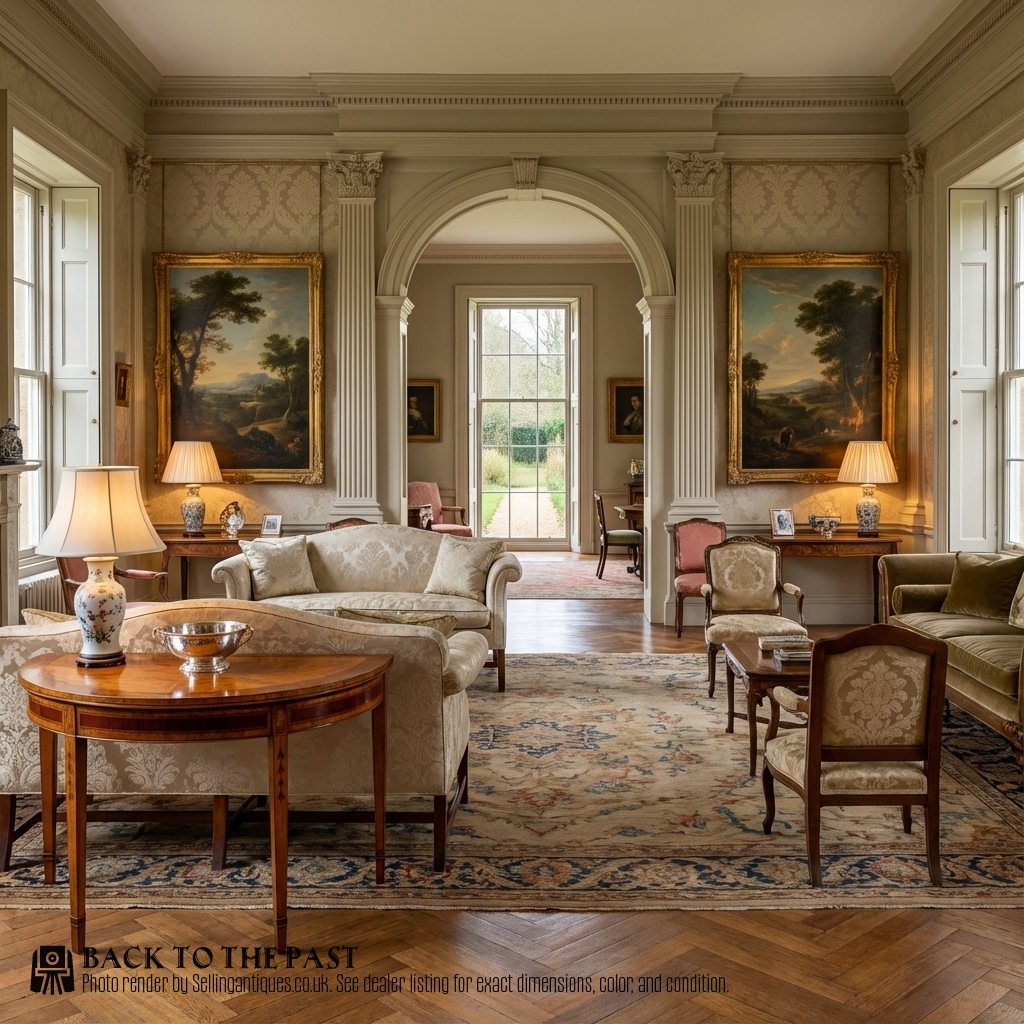
These pieces functioned primarily as pier or console tables against drawing room walls during the day. When evening arrived, owners unfolded the top to reveal a surface for card games and social gatherings.
The hinged leaf typically rested on a swing leg or a pivoting rear support to bear the weight of play. Many interiors utilised pairs of these tables to balance the room's proportions.
What periods do these tables represent?
The examples on this page date from the Georgian era and the late eighteenth century, alongside nineteenth-century pieces and later Sheraton Revival interpretations. George III and Hepplewhite styles dominate the earlier periods.
Nineteenth-century makers and twentieth-century workshops continued to produce tables that mirrored these classical proportions and material choices.
Which woods appear most often?
Satinwood forms the principal surface material, valued for its light colour and distinct grain. Cabinet makers paired it with mahogany, rosewood, and kingwood for framing and contrast.
Boxwood strips frequently appear within the inlay work, adding fine linear detail to the borders of the folding tops.
How do painted tables differ?
Painted examples feature decorative artwork applied directly onto the satinwood surface rather than relying solely on timber veneers and inlay. These motifs often include classical or floral designs typical of the neoclassical taste.
Such decoration alters the visual texture of the piece, shifting focus from the natural grain of the wood to the artist's brushwork.