




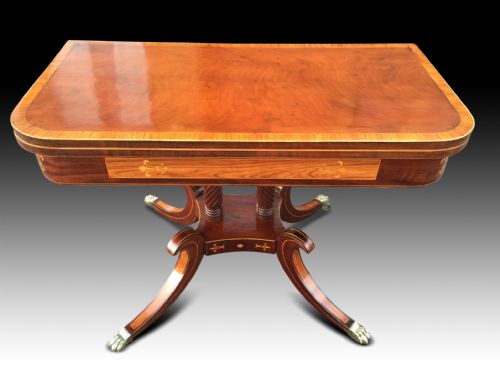
Mahogany Crossbanded Card Table
A mahogany crossbanded card table brings the crisp geometry of Georgian and Regency timberwork straight into the drawing room.
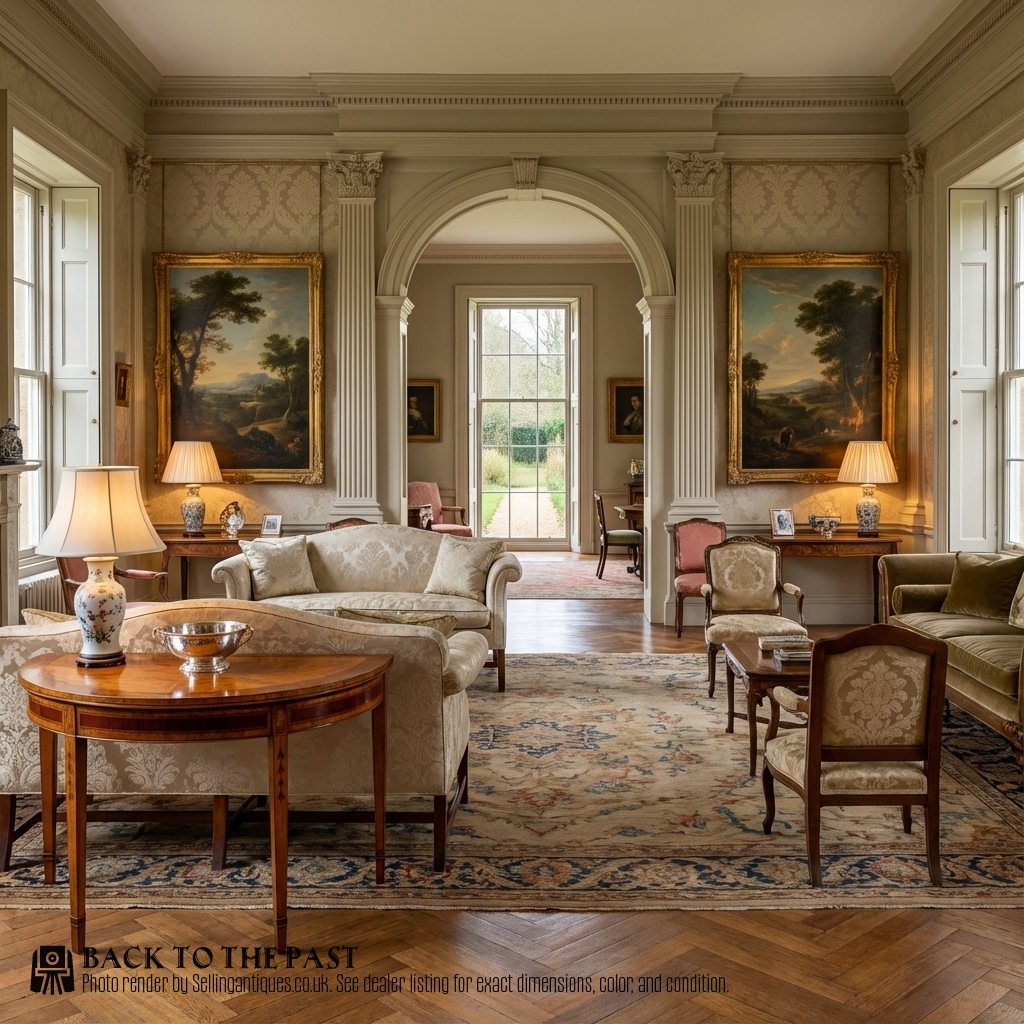
Mahogany Crossbanded Card Table
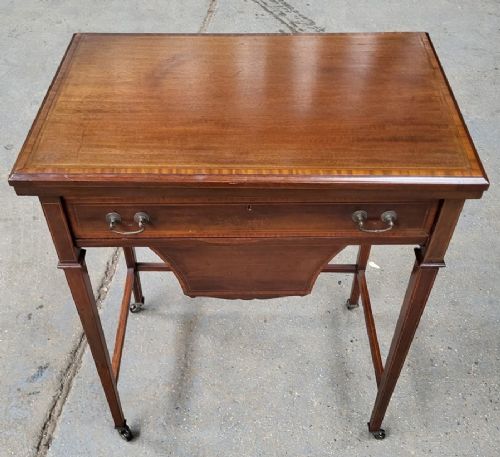
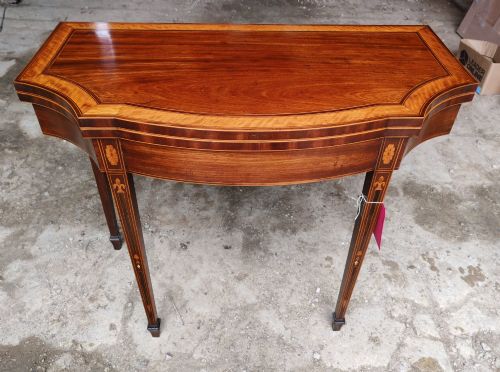
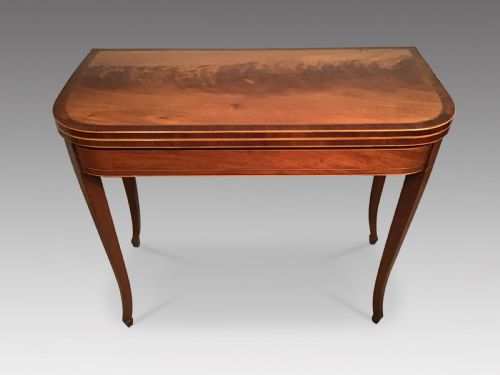
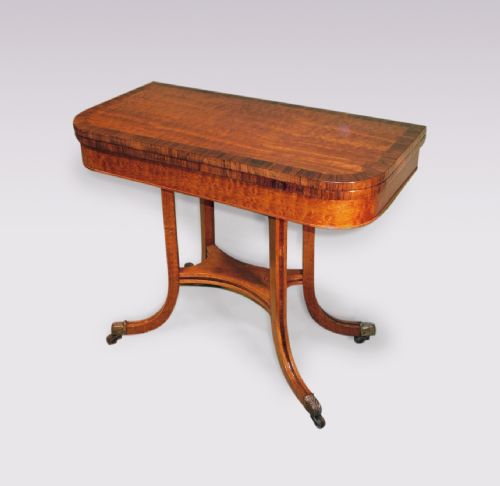
A mahogany crossbanded card table combines a folding top with the rich contrasting borders characteristic of elite eighteenth and nineteenth-century cabinet work. These surfaces were designed for evening entertainment, doubling as decorative console furniture when folded shut against a wall.
The versions most commonly met on this page span the Georgian, Regency, and Edwardian eras, appearing in rectangular, serpentine, and demi-lune forms. Makers utilised rich timber grains to create striking visual borders that frame the main writing or playing surface.
Materials and construction
Cabinet makers constructed these pieces primarily from solid mahogany and carefully sliced veneer, applying contrasting timbers like satinwood and rosewood around the perimeters. Boxwood stringing often provides fine linear separation between the dark field and the lighter border.
The folding mechanisms rely on clever pivoting or pivoting-and-swing leg arrangements to support the heavy hinged top when opened for play. Oak frequently appears in the internal framing and secondary drawer linings, maintaining structural stability through centuries of use.
Many folding tops conceal secret wells designed to swallow up stray playing counters before the vicar called.
Judging the quality
Quality rests heavily on the crispness of the crossbanding and the thoughtful selection of timber figures. Finer examples display continuous grain matching across the fold and immaculate inlay work that remains completely flush with the surrounding surface.
The refinement of the leg turning, the tightness of the knuckle joints on the folding top, and the weight of the brass fittings all separate standard workshop production from the work of premier cabinet makers.
William Trotter of Edinburgh
The Mahogany Crossbanded Card Table Glossary
- Crossbanding
- A border veneer applied perpendicularly to the grain of the main surface. This technique creates a neat framing effect around the table top.
- Demi-lune
- Having a half-moon shape with a flat back edge for placement against a wall. These tables often feature folding tops that reveal a baize-lined interior.
- Stringing
- A thin inlay of contrasting wood inserted into channels cut into the surface. It adds delicate linear detail to the edges and legs.
Mahogany Crossbanded Card Table: Frequently Asked Questions
What is a card table used for?
These pieces served primarily for evening parlor games like whist, quadrille, and chess during the Georgian and Regency periods. When not in use for gaming, the hinged top folded closed to form a slim console or side table.
Today, they function brilliantly as entrance hall pieces, sofa tables, or occasional desks in living spaces. Their dual nature makes them exceptionally adaptable for modern homes with limited floor area.
How do I date a mahogany card table?
Dating relies on observing the overall silhouette, leg design, and secondary timber choices alongside primary veneers. Georgian pieces often display straight tapered legs or serpentine fronts, while Regency examples lean toward heavier pillar-and-claw pedestals or sabre legs.
Edwardian Sheraton Revival pieces generally exhibit lighter proportions and machine-cut veneers compared to their handmade eighteenth-century predecessors. Comparing the internal oak framing provides further clues regarding the era of manufacture.
How do I care for a veneered table top?
Maintain the finish by keeping the timber away from direct sunlight and steady heat sources that can dry out old veneer. Regular dusting with a soft, dry cloth prevents particulate accumulation without risking moisture damage.
Apply high-grade beeswax sparingly to nourish the polish and protect the grain from everyday humidity shifts. Avoid placing damp items directly onto the surface to prevent staining the delicate mahogany and satinwood.
What does crossbanded mean?
Crossbanding involves laying narrow strips of veneer around the perimeter of a table top so that the grain runs at a right angle to the central field. This creates a distinct visual border that catches the light differently than the main panel.
Cabinet makers used this technique to frame the primary timber and demonstrate superior craftsmanship. The contrasting tones of satinwood against dark mahogany made the geometric borders stand out sharply.