
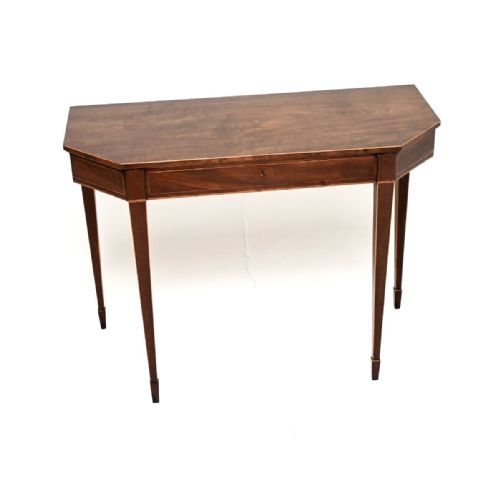
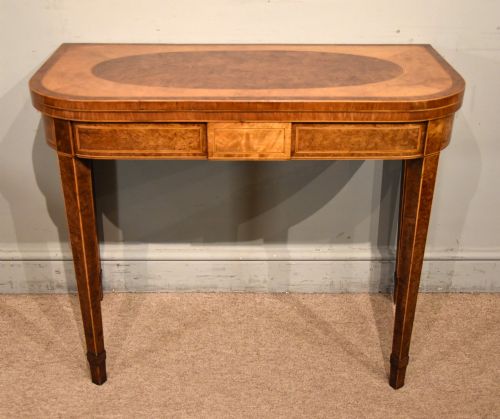
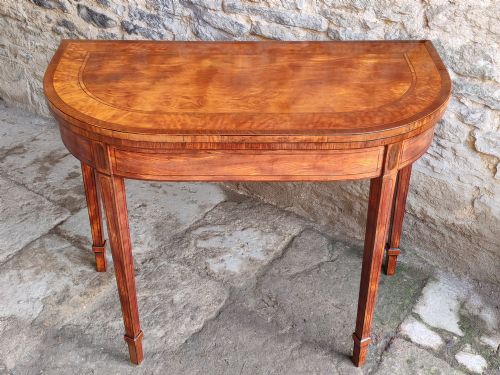
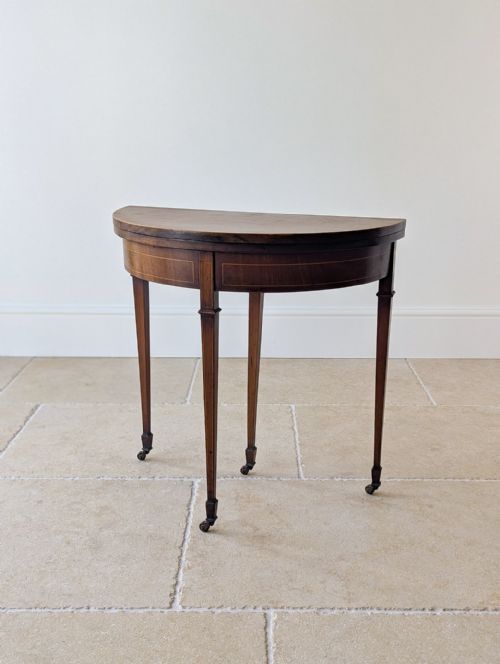
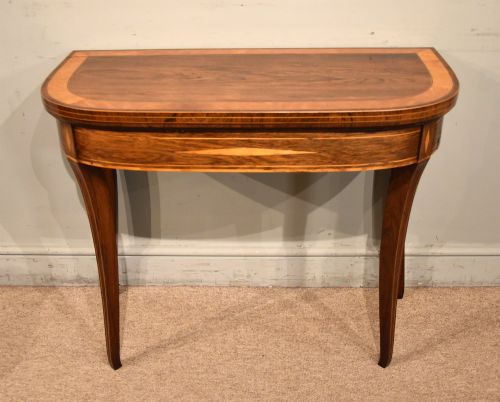
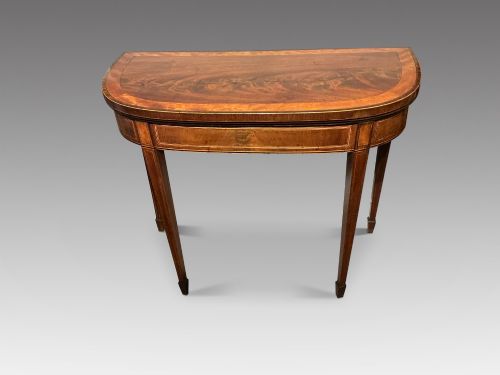


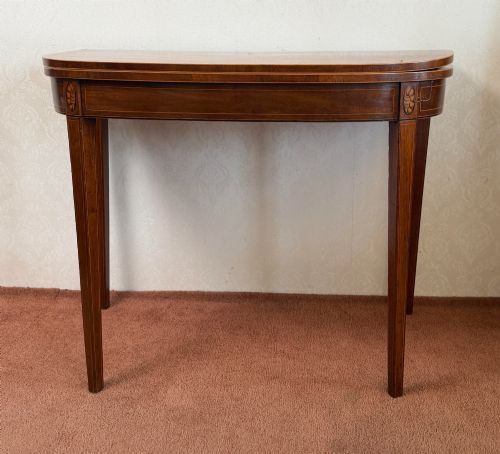
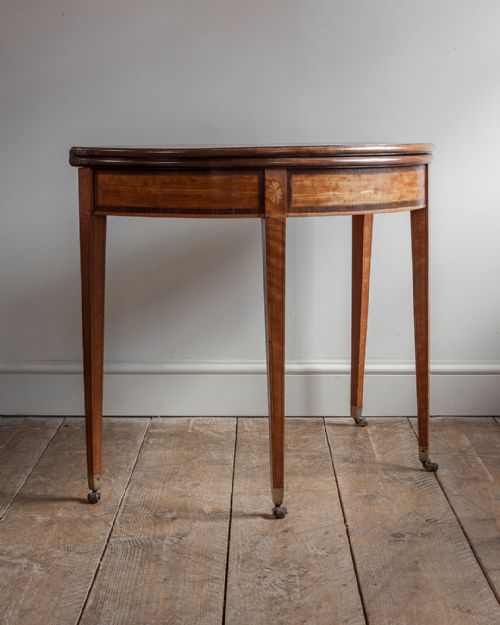
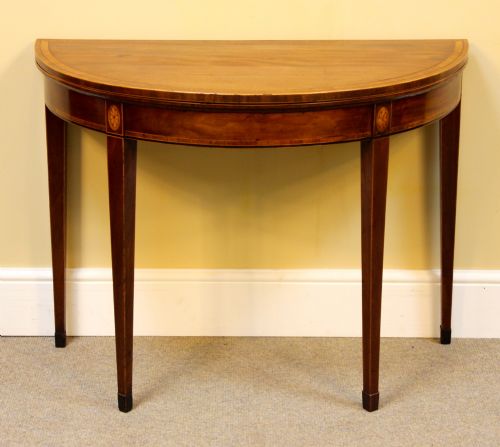
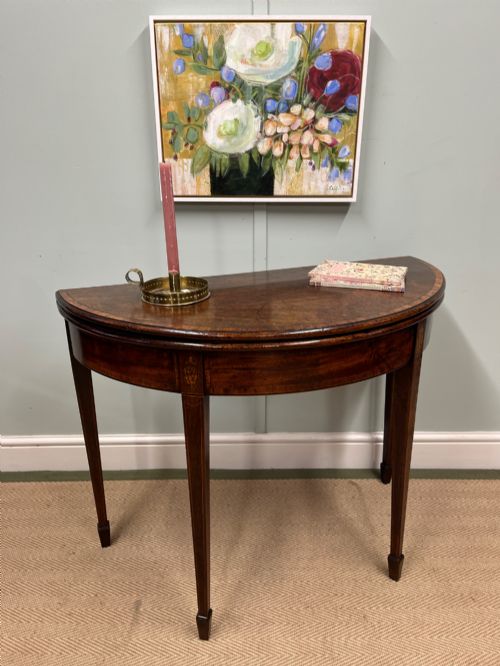
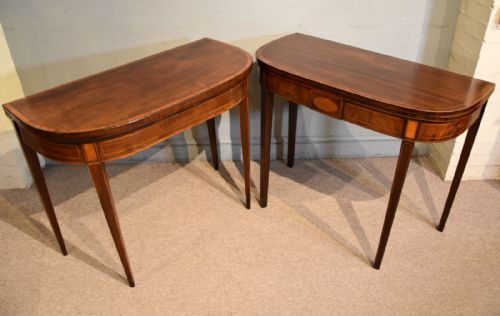


Georgian Inlaid Demilune Table
A georgian inlaid demilune table brings architectural elegance to a hallway, combining a graceful semicircular top with fine cabinetmaker inlay.
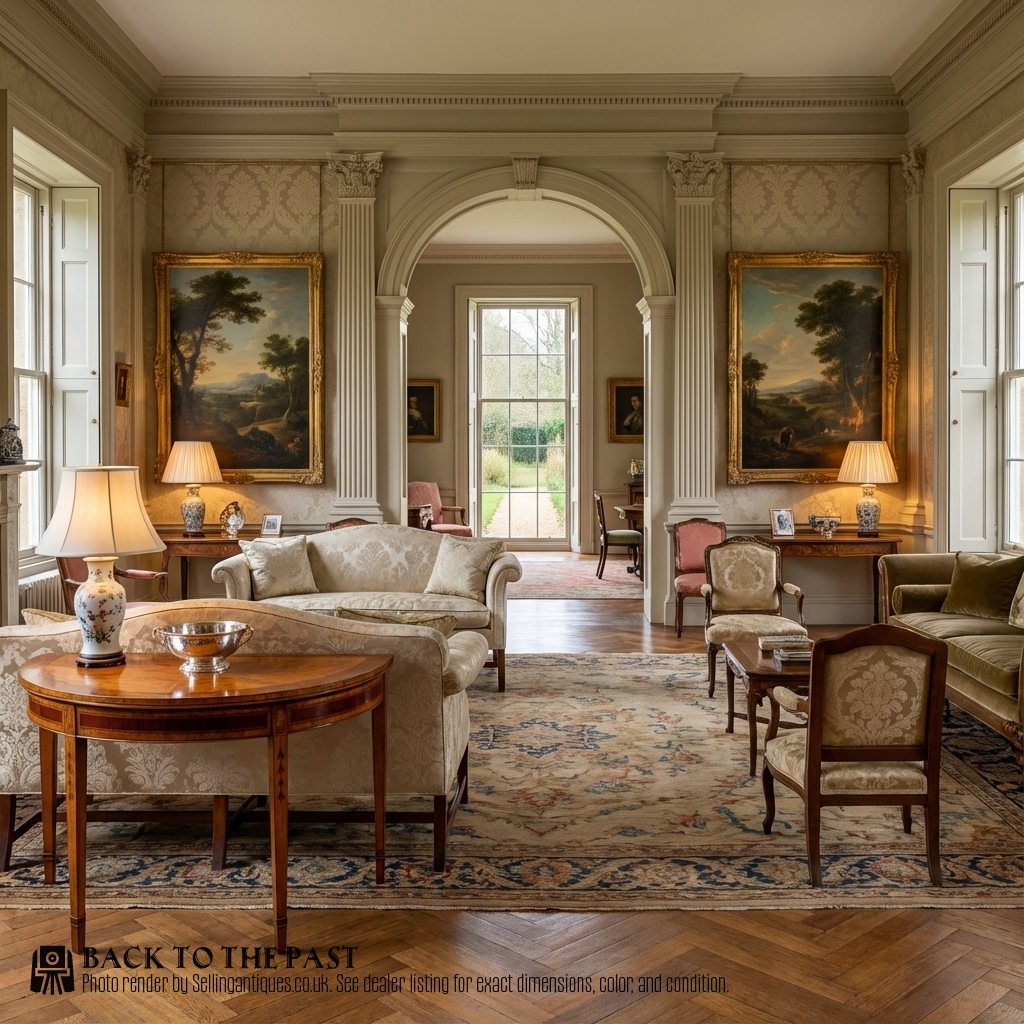
Georgian Inlaid Demilune Table
A georgian inlaid demilune table is a semicircular piece of furniture designed to stand flush against a wall, frequently taking the form of a fold-over card table, tea table, or console table. These items appear across the Georgian, George III, and Regency periods, alongside later Edwardian and revival interpretations.
The form relies on a hinged top that opens to reveal a baize-lined playing surface or a polished timber top, supported by gateleg actions or pivoting frames. Examples range from compact side tables to matched pairs suited for formal rooms.
Materials and Construction
Makers constructed the primary carcase and legs from timbers such as mahogany and Honduras mahogany, applying fine veneers of satinwood, burr yew wood, padoukwood, and rosewood to the top surfaces. Artisans incorporated boxwood inlay, satinwood inlay, and marquetry to create geometric borders and decorative centrepieces.
Joinery techniques united solid framework timbers with delicate face veneers, secured with brass hinges and structural pivots to handle the weight of fold-over leaves.
Card tables hide their gaming secrets inside double-layered tops, waiting quietly in the hallway until someone calls for a round of whist.
Distinguishing Quality
Quality rests upon the selection of figured timbers and the crispness of the inlay work, where tight botanical lines and balanced crossbanding separate superior pieces from simpler utilitarian items. The integrity of the folding mechanism and the proportion of the tapered legs dictate the overall refinement of the construction.
Bruce and Burns of Edinburgh
The Georgian Inlaid Demilune Table Glossary
- Demilune
- A half-moon or semicircular shape utilised for tables designed to stand against walls. This profile saves floor space while offering a decorative surface.
- Crossbanding
- A strip of veneer applied to the border of a table top running perpendicular to the grain of the centre panel. It frames the main timber with a contrasting border.
- Marquetry
- The art of forming decorative patterns using fitted pieces of different coloured wood veneers. These pictorial or geometric designs adorn tabletops and friezes.
- Fold-over
- A hinged tabletop design that doubles the surface area when opened. This mechanism allows a compact console or side table to function as a card or tea table.
Georgian Inlaid Demilune Table: Frequently Asked Questions
How were demilune tables used in period homes?
These pieces served multiple functions in Georgian interiors, acting as sideboards or console tables against drawing room walls. When fitted with hinged tops, they opened into card or tea tables for evening entertainment.
Their shallow depth allowed them to sit in hallways and narrow reception rooms without blocking pathways, combining daily decorative utility with hosting versatility.
What is the difference between a tea table and a card table?
Tea tables generally featured fixed or folding wooden tops designed to hold porcelain services during afternoon tea rituals. Card tables commonly concealed a baize-lined playing surface inside their folded leaves for gaming.
Both utilised the same semicircular demilune format, but their internal linings and structural depths reflected their specific social purposes.
How do I identify a George III table?
George III pieces typically display precise mahogany framing, subtle boxwood or satinwood inlay, and tapered legs characteristic of late eighteenth-century design. Cabinetmakers of this era focused on figured grain selection and balanced proportions.
Later Edwardian revivals often replicate these characteristics, making timber patination and construction methods key indicators of age.
Can I use a demilune table as a desk?
The curved front and shallow depth of a demilune table make writing awkward due to limited legroom under the apron. They function best as console surfaces for lamps, mirrors, and decorative objects.
Opening a fold-over leaf creates a temporary flat space, but the lack of internal storage distinguishes them from dedicated writing desks.