

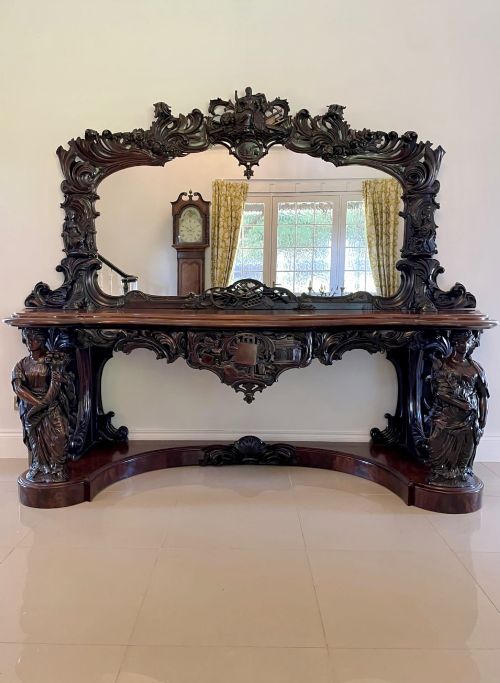
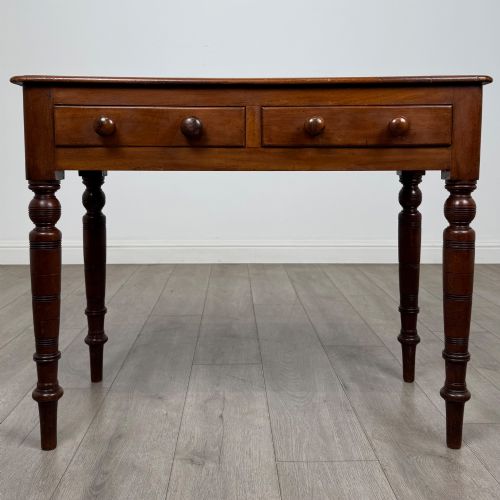
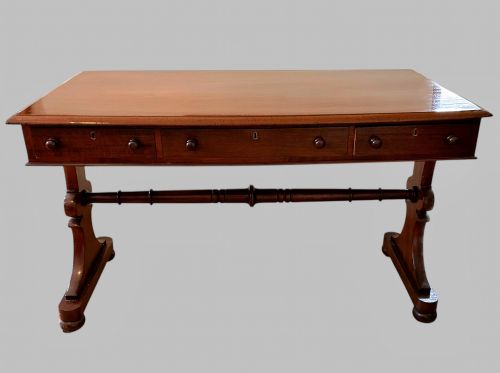
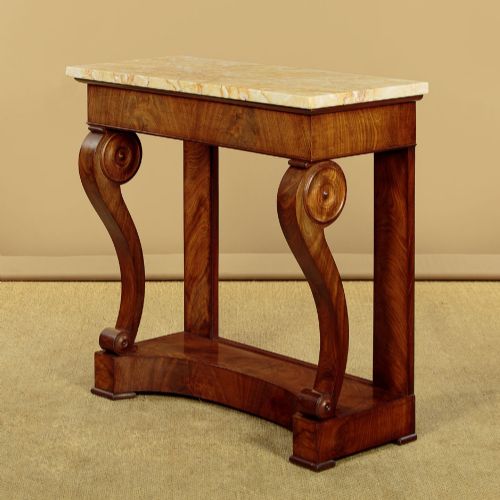
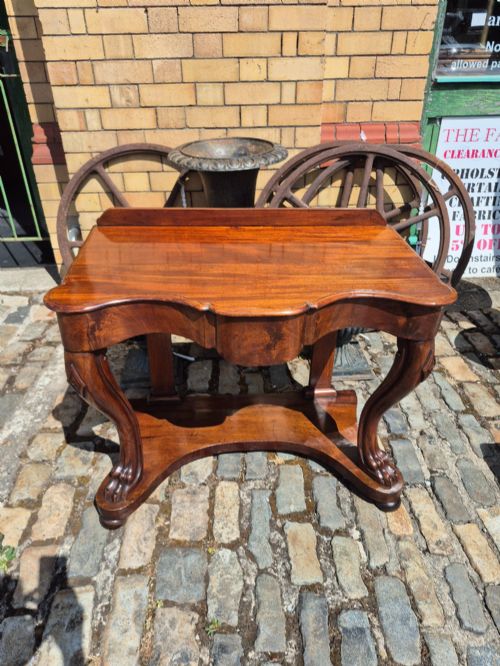
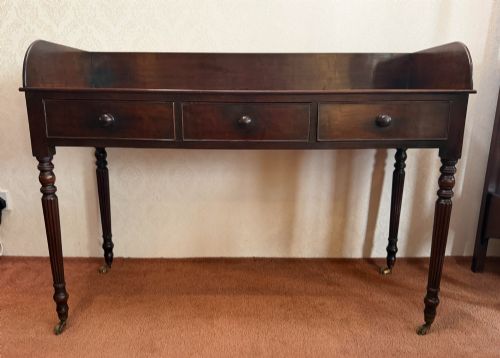
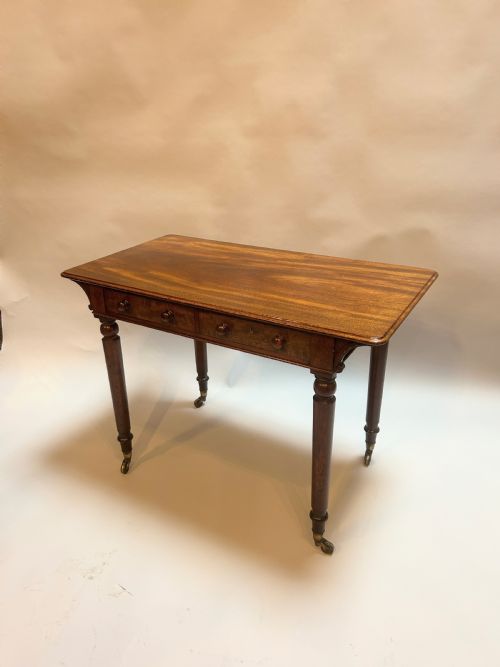
Victorian Mahogany Console Table
These Victorian mahogany console tables bring solid timber presence and architectural form to any hall.
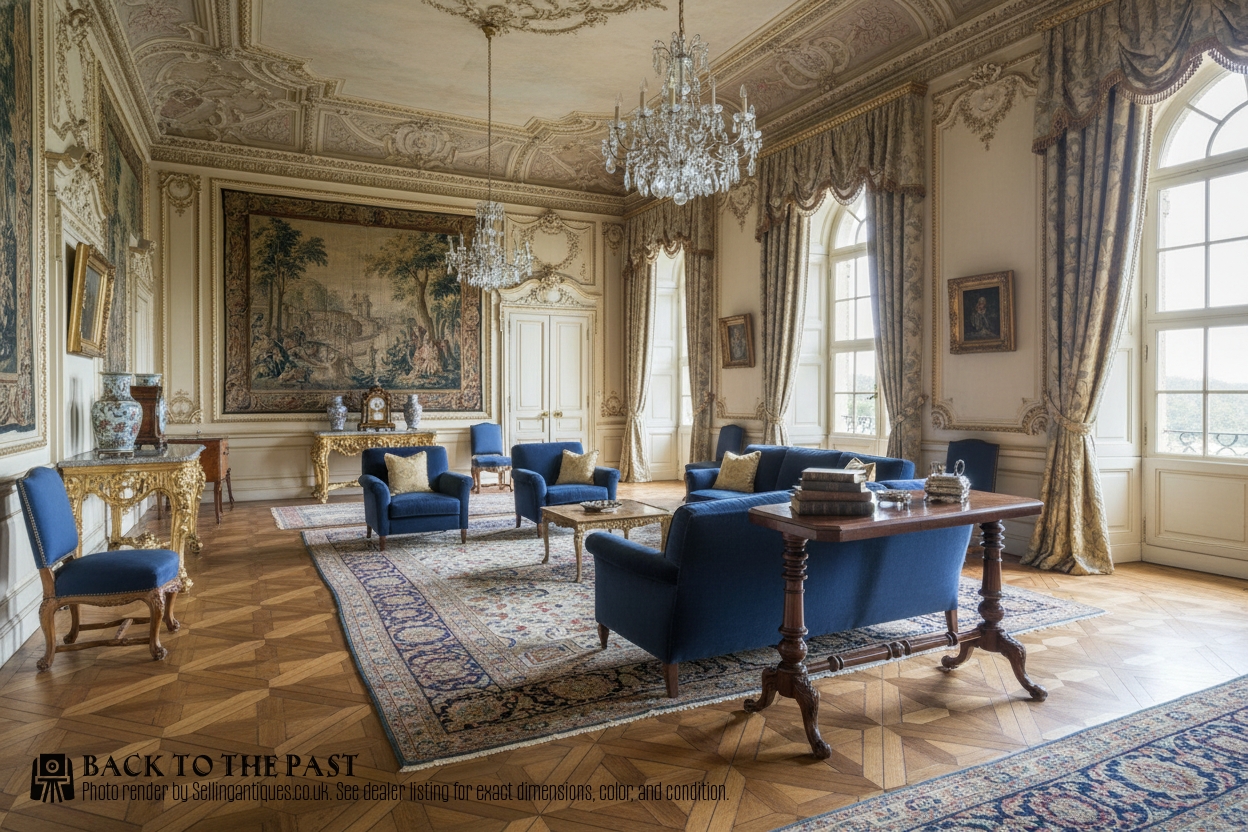
What They Are
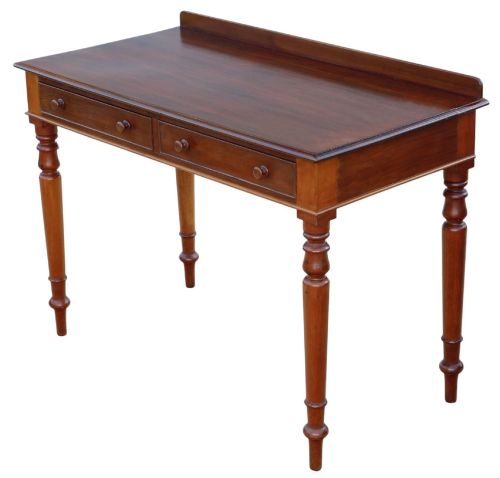
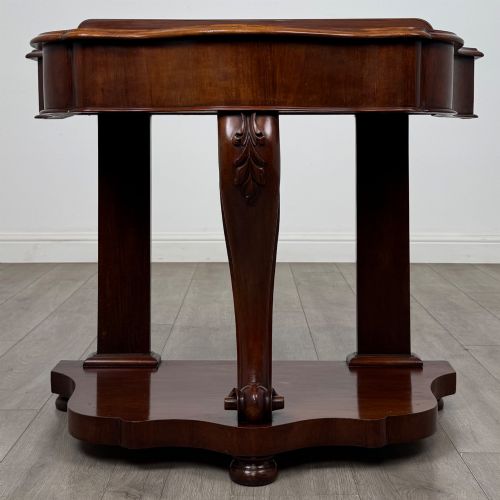
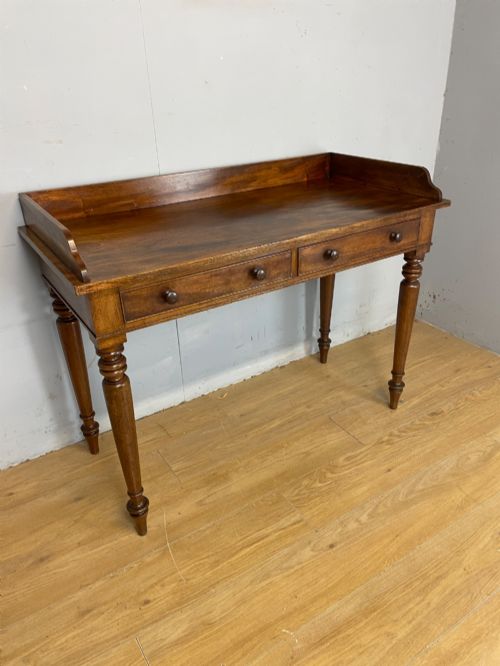
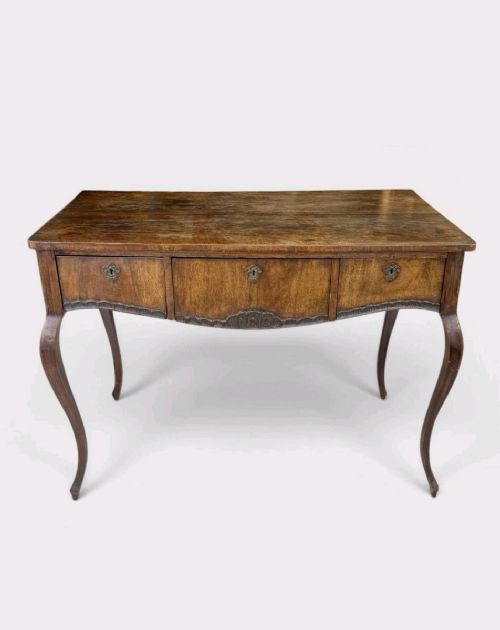
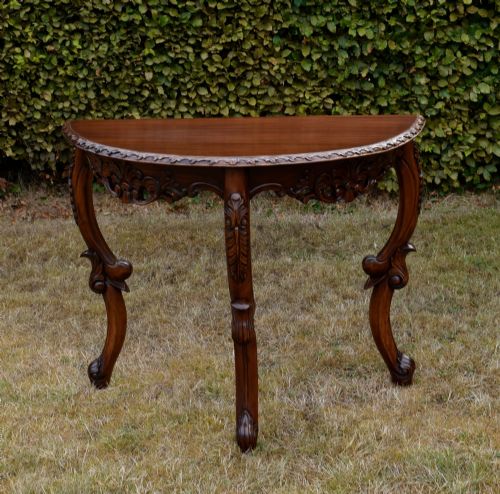
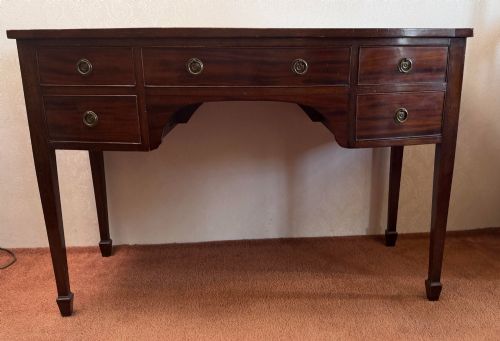
A victorian mahogany console table is a substantial timber piece designed to anchor a hallway, drawing room or library wall. You will frequently encounter demilune shapes, rectangular side formats and pieces fitted with drawers.
The evidence shows these tables span from the early part of the nineteenth century through to the eighteen-eighties. Pieces range from simple writing tables and side tables to large carved serving formats and twin pillar designs.
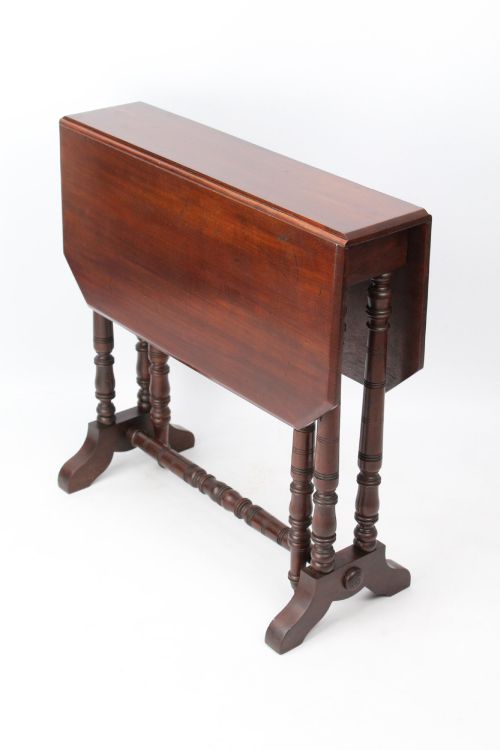
Many examples double as hall tables or library surfaces, while others incorporate marble tops or satinwood inlay. The variety includes freestanding centre tables alongside console tables intended to stand against a wall.
How They Were Made
Cabinet makers utilised dense mahogany, often selected for figured grain patterns, combined with secondary timbers for internal drawer construction. Brass fittings, ceramic castors and marble tops appear alongside painted elements.
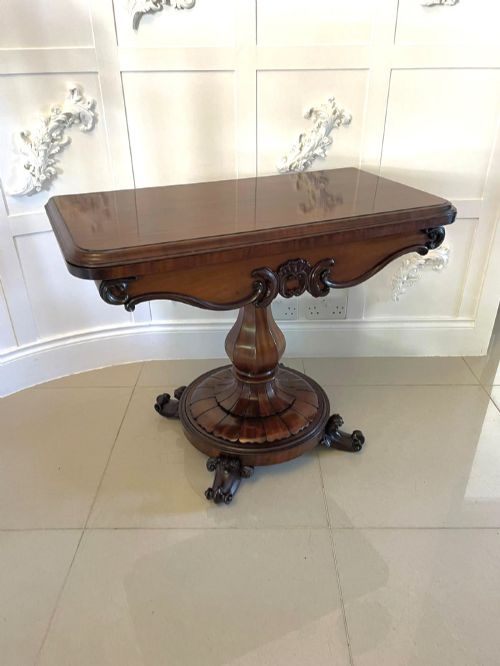
Carving forms a major part of the decorative technique on many pieces, sitting alongside satinwood inlay work and sign-written details. Construction methods include extending mechanisms, twin pillar supports and demilune framing.
Retail Price Guide 2026
Typical UK retail prices for victorian mahogany console table, calculated from the Sellingantiques database of over a million retail prices indexed since 2003. This retail price guide relies exclusively on Sellingantiques data; no external sources or auction records are used, so the figures do not describe the wider market.
One side table carries a later sign-writing history from the Midland Grand Hotel.
What Varies in Quality
The distinction between standard examples and the finest works rests on the choice of figured timber and the depth of carved detail. Superior pieces display intricate carving, high-grade mahogany and thoughtful additions such as marble tops or satinwood inlay.
Proportion and scale also separate the ordinary from the exceptional, particularly in large pairs of demilune console tables or serpentine formats. The execution of structural elements like drawers and twin pillars dictates the overall integrity of the piece.
The Victorian Mahogany Console Table Glossary
- Demilune
- Having the shape of a half-moon or semicircle. These tables fit flush against walls in narrower spaces like hallways.
- Console table
- A table supported by wall brackets or console legs. They are designed to stand against a wall rather than float in the middle of a room.
- Figured mahogany
- Timber showing distinctive natural grain patterns such as flame or fiddleback. Cabinet makers selected these boards for prominent surfaces.
- Serpentine
- Having a curving outline that bends inward and outward. This undulating shape requires advanced woodworking skill.
- Satinwood inlay
- Contrasting light-coloured timber inserted into the mahogany surface. It creates geometric or floral decorative patterns.
Frequently Asked Questions
Where should I place a console table?
These tables suit hallways, entrance passages and living rooms where surface space is required against a wall. Their shallow depth allows them to sit comfortably in circulation areas without obstructing movement.
Demilune and wall-fixed versions work particularly well in narrow spaces, while larger carved or twin pillar formats anchor bigger reception rooms.
How do I care for mahogany timber?
Keep the wood away from direct heat sources and strong sunlight to prevent the timber from drying out or fading. Regular dusting with a soft, dry cloth preserves the polished finish.
Avoid using silicone-based polishes or excessive moisture, which can damage the traditional polish and grain over time.
Can I use a console table as a desk?
Many Victorian examples feature drawers and suitable writing heights, functioning well for occasional correspondence. Extending writing tables and standard side formats provide adequate knee clearance and surface area.
Ensure the height matches your seating if you plan to use it for writing regularly.
How do I identify early Victorian pieces?
Early pieces often feature simpler architectural lines and rich, dense mahogany timber before later Victorian revival styles introduced heavier carving. Construction details like hand-dovetailed drawer boxes offer clues to the period.
Comparing the proportions and secondary woods helps distinguish nineteenth-century examples from later reproductions.