
Regency Mahogany Server
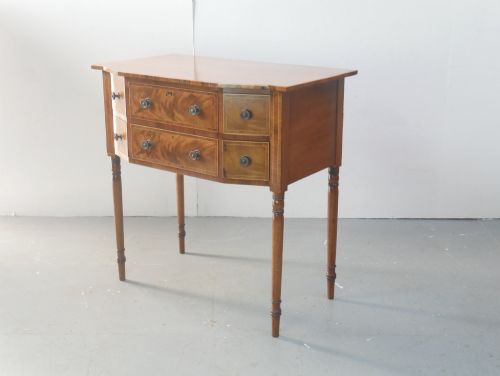
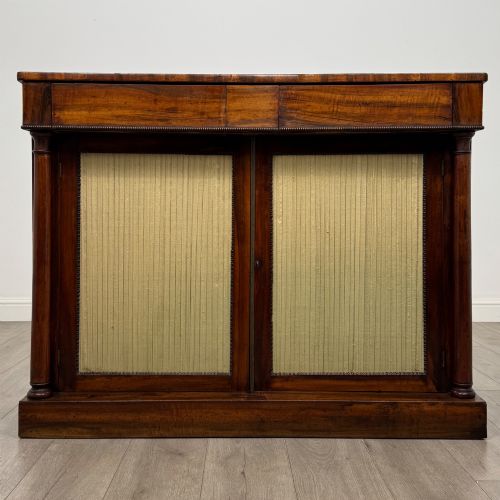
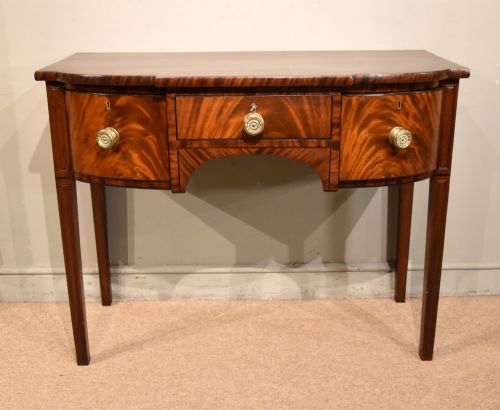
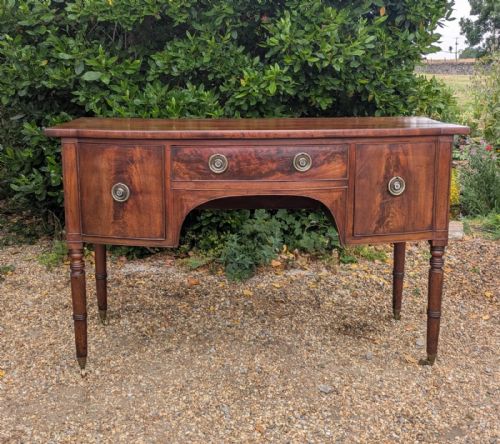
A regency mahogany server brings architectural balance and deep timber grain to a dining room, designed for service and display.
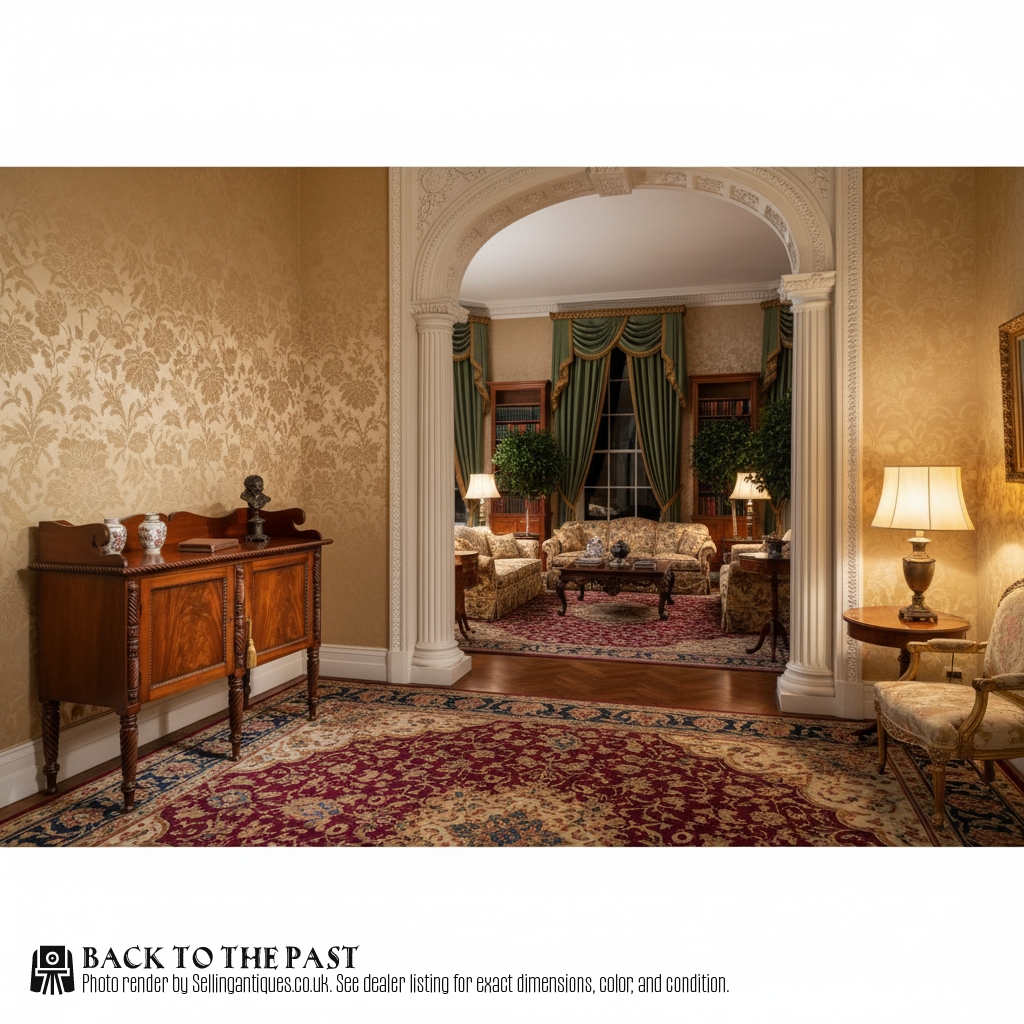
Regency Mahogany Server
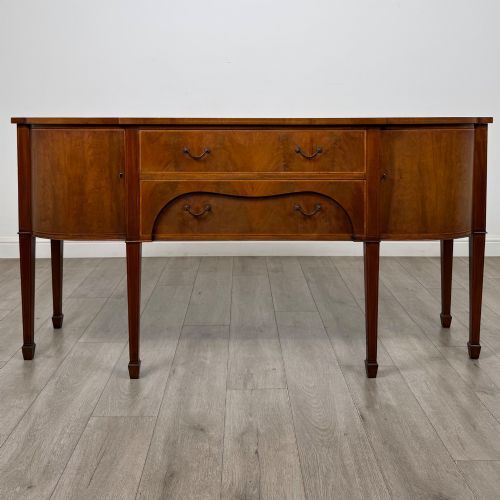
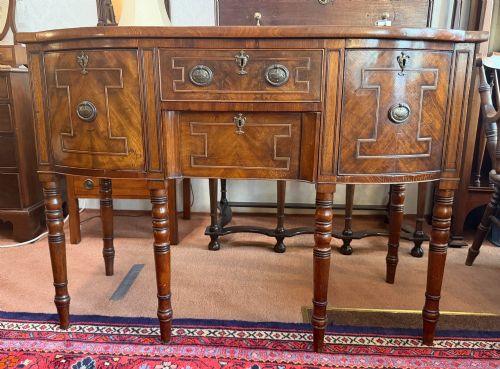
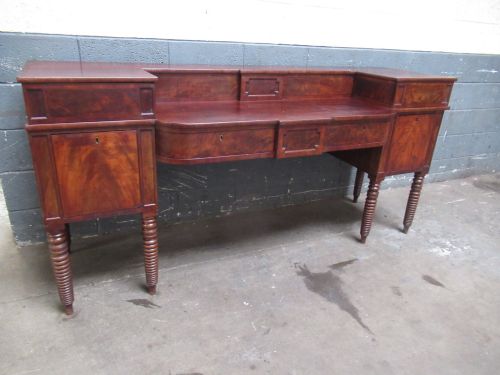
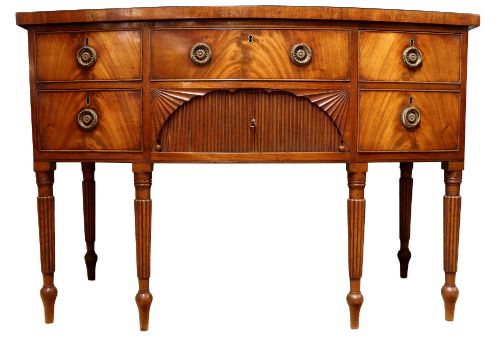
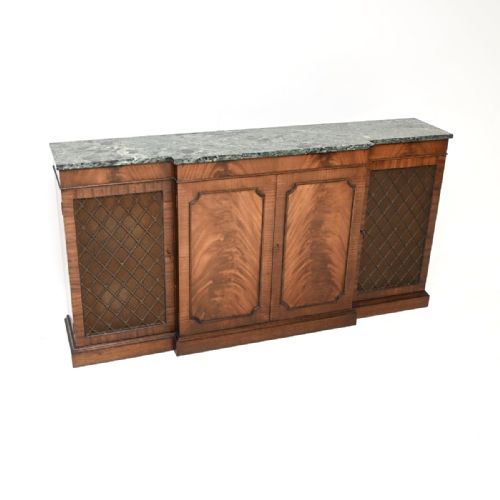
A regency mahogany server encompasses robust sideboards, serving tables, and breakfront servers dating principally from the early nineteenth century. These pieces emerge from periods spanning Georgian, Regency, and William IV eras, though later revival iterations also appear.
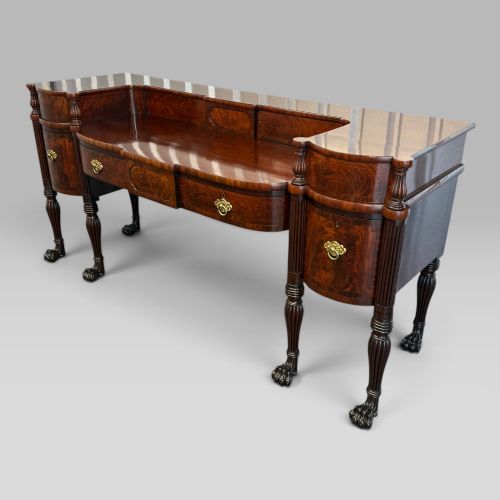
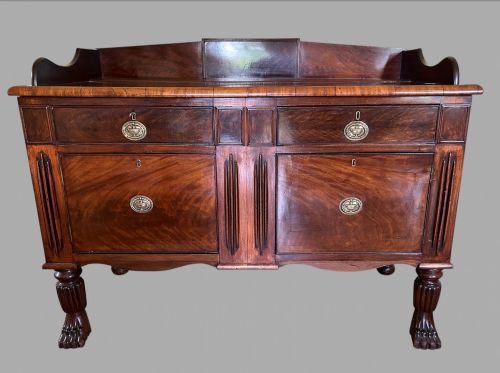
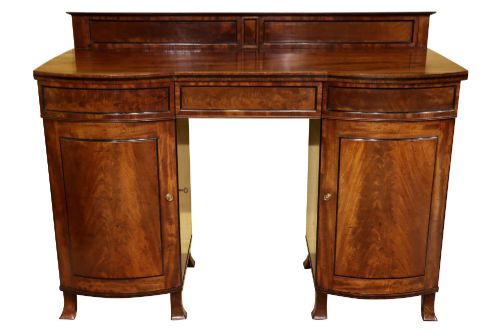
The bow-front sideboard remains the most common format met on this page, often featuring pedestals, lion paw feet, or inlaid boxwood details. Buyers encounter everything from compact small sideboards to large Scottish and Irish variants of imposing scale.
Makers and craftsmen shaped these forms to anchor dining spaces, utilising deep drawer arrangements and tiered surfaces for practical utility. The survival of these servers demonstrates the enduring demand for substantial timber dining furniture.
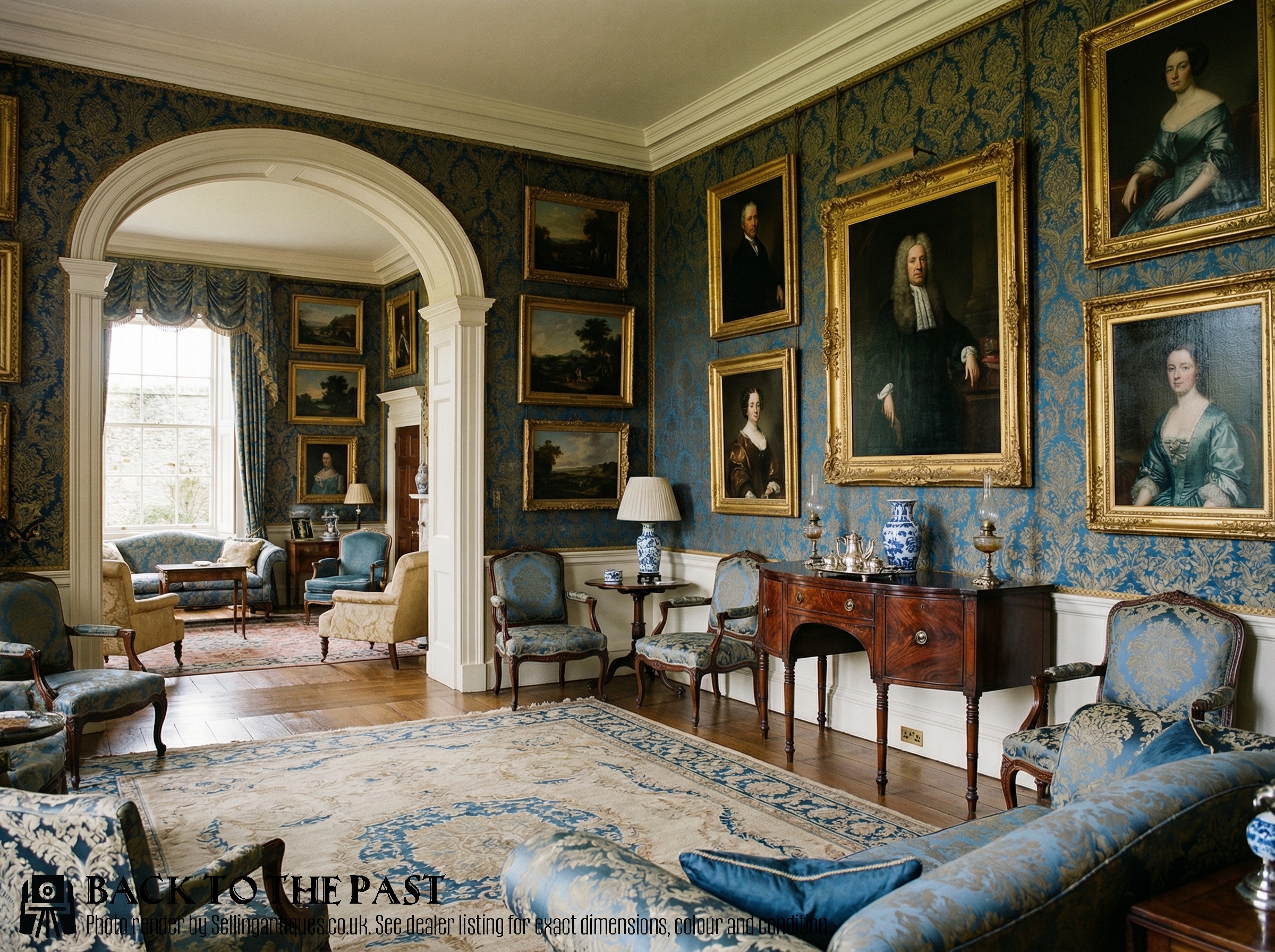
Materials and Construction
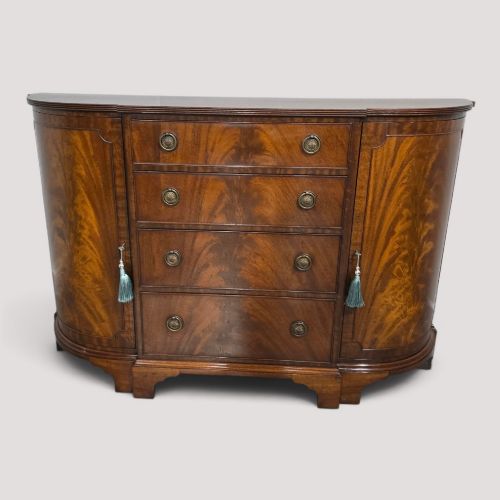
Construction relies heavily upon solid mahogany and flame mahogany veneer, which provides striking ripple patterns across drawer fronts and doors. Cabinetmakers selected timber for rich grain movement, occasionally enhancing facades with contrasting boxwood and ebony stringing.
Regency Mahogany Server Retail Price Guide 2026
Typical asking prices for regency mahogany server among the pieces listed under this phrase on Sellingantiques today, from the lower quarter to the upper quarter. They describe what is for sale here now, not the wider market.
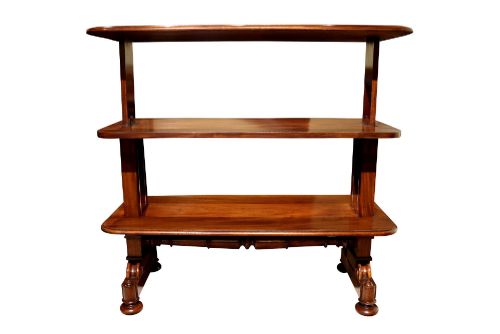
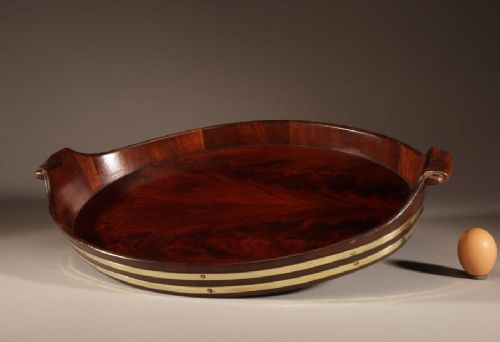
Listings feature mahogany, brass, boxwood, and ebony, shaped into sideboards, buffets, chiffoniers, and dumb waiters.
Judging Quality
Quality rests upon the selection of the mahogany veneer and the crispness of any carved details, such as lion paw feet or brass mounts. Finer examples display symmetrical flame grain patterns across the full width of the facade rather than disjointed timber sections.
Proportion and scale distinguish superior servers from heavier or clumsier pieces. Well-executed pieces integrate drawers and pedestals harmoniously, whereas lesser items rely on plain surfaces without considered inlay or structural elegance.
The Regency Mahogany Server Glossary
- Flame mahogany
- A veneer cut from timber fork where branches meet trunk, producing a dramatic feather-like grain pattern. This highly decorative surface defines the aesthetic of many formal dining pieces.
- Bow-front
- A curved cabinet front that swells outward in the centre. This configuration softens the room and maximises internal storage capacity.
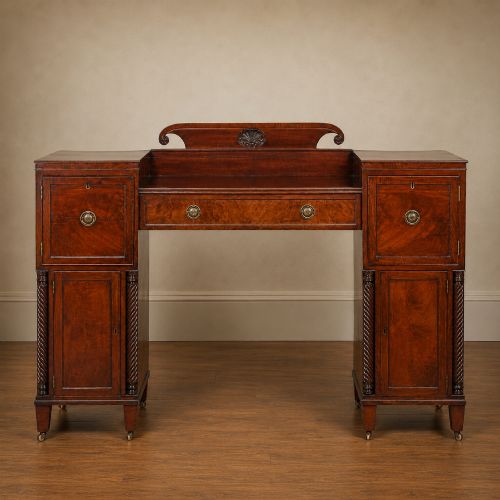
- Pedestal sideboard
- A sideboard comprising two distinct end cabinets joined by a recessed central section or serving surface. They often stand upon carved feet.
- Breakfront
- A piece of furniture whose central section projects forward from the flanking wings. This architectural layout creates depth and shadow across the facade.
- Chiffonier
- A compact low cabinet with doors enclosing shelves, frequently topped with a raised tier or small shelf. They served auxiliary storage functions in dining and drawing rooms.
Regency Mahogany Server: Frequently Asked Questions
How do I use a server in a modern home?
These pieces function naturally in dining rooms or hallways as side tables for serving food or displaying objects. Their deep drawers provide practical storage for linen and tableware.
Position a server against a clear wall where its timber grain and brass mounts can command attention without crowding the room.
How do I tell an original piece from a revival?
Examine the secondary woods inside drawers and the consistency of the timber ageing across the carcass. Original pieces show period construction methods and wear appropriate to two centuries of use.
Revival pieces often display uniform mechanical finishes and lack the hand-planed irregularities found on early nineteenth-century work.
What distinguishes Irish and Scottish regional pieces?
Scottish servers often demonstrate larger proportions and particularly bold, heavy timber scantlings. Irish variants frequently incorporate distinctive carving or robust pedestal forms of imposing scale.
Both regional styles reflect local interpretations of the broader Regency aesthetic seen across Britain.
How should I care for mahogany furniture?
Keep timber surfaces away from direct sunlight and steady heat sources to prevent the mahogany veneer from drying out or splitting. Dust regularly with a soft cloth rather than utilising harsh modern polishes.
Feed the wood periodically with traditional wax to maintain the depth and warmth of the flame grain.