
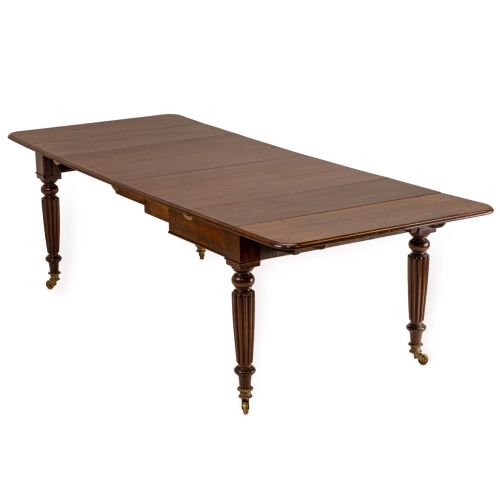
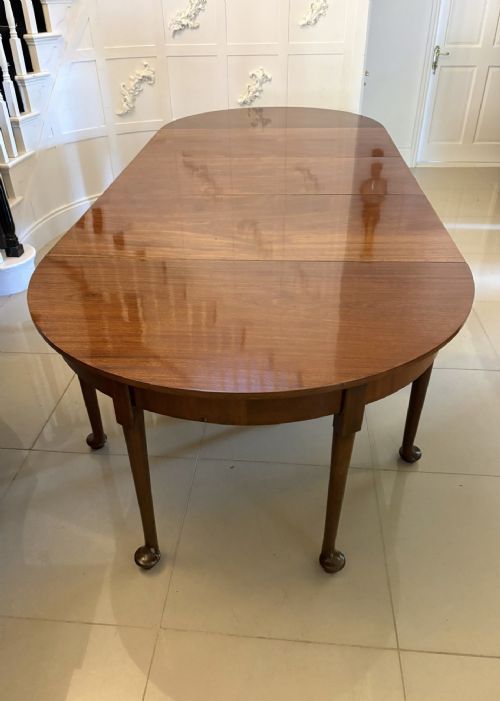


Metamorphic Dining Table
A metamorphic dining table transforms seamlessly from a compact console or hall piece into a grand dining surface, offering dual functionality for modern interiors.
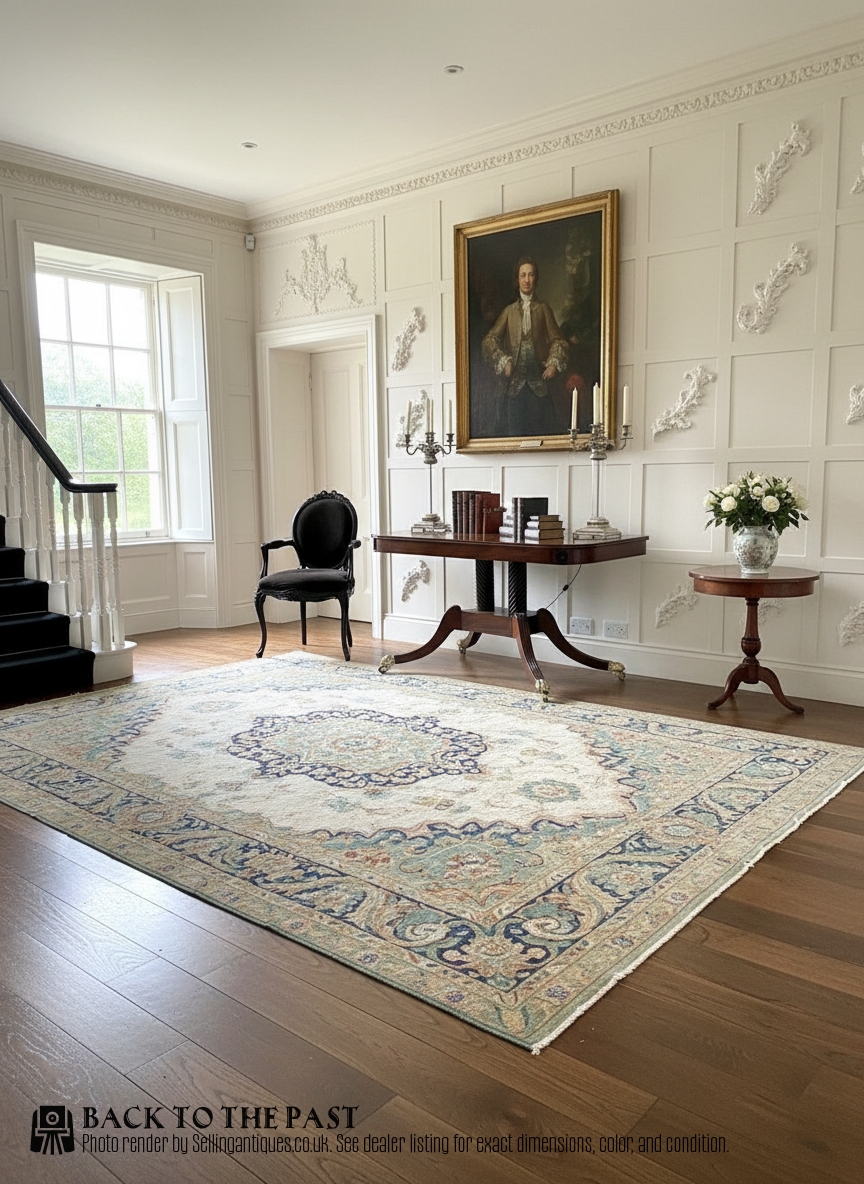
Metamorphic Dining Table
A metamorphic dining table serves the dual purpose of a space-saving console, hall, or gaming table when closed and a full-scale dining surface when expanded. The most common iteration met on this page is the large extending mahogany table originating from the Georgian and Regency periods.
Makers designed these pieces to adapt to interior spaces by shifting from slender wall furniture to accommodate up to twelve or fourteen diners. Examples span from George III console pairs to Edwardian oak pieces and Victorian multi-pillar formats.
The form relies on clever hidden mechanisms rather than mere folding leaves, allowing console pairs or D-ended tables to transform without losing stability. Buyers select these tables to manage dining capacity efficiently in period and contemporary rooms alike.
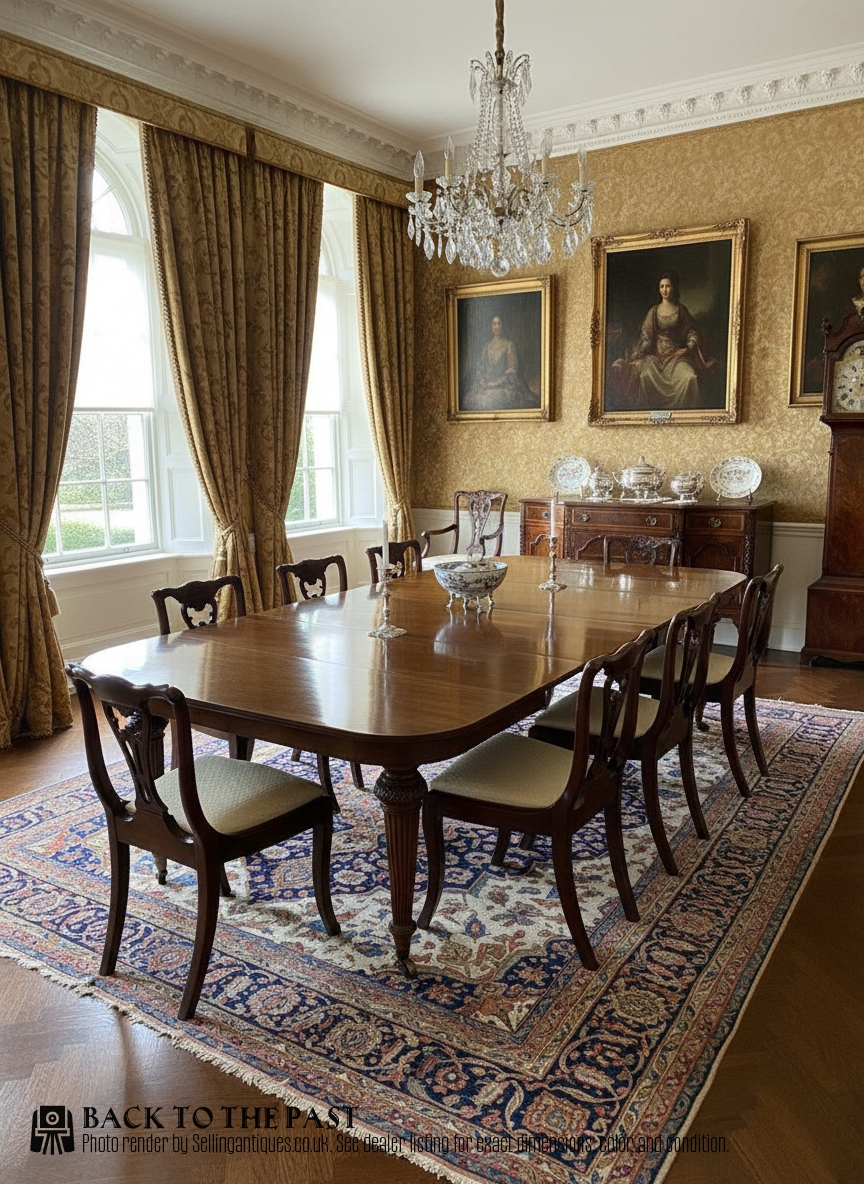
Materials and Construction
Cabinet makers utilised dense timber stocks, predominantly mahogany and figured mahogany, alongside oak for utilitarian or later pieces. Brass fittings and components support the internal sliding mechanisms and pillar supports that govern the transformation.
The construction requires precise joinery to ensure the sliding frames, drop leaves, and pillar alignments operate smoothly during the metamorphosis. Timber selection often focused on highly figured grains for the table tops to create a striking visual impact when fully extended.
Retail Price Guide 2026
Typical UK retail prices for metamorphic dining table, calculated from the Sellingantiques database of over a million retail prices indexed since 2003. This retail price guide relies exclusively on Sellingantiques data; no external sources or auction records are used, so the figures do not describe the wider market.
Assessing Quality
The distinction between tiers rests on the precision of the hidden mechanisms and the weight of the timber utilised. Superior pieces operate smoothly without sticking, whereas lesser examples suffer from worn tracks or misaligned leaves.
Surface figuring and timber selection dictate the upper echelon of these tables, particularly in Regency and Georgian examples. The integration of brass and the crispness of the carving on the pillars and pedestals further separate standard workshop output from exceptional cabinet work.
The Metamorphic Dining Table Glossary
- Metamorphic
- Furniture designed to change form and function through clever mechanical actions. This allows a single piece to serve as a console, desk, or dining table.
- Console Table
- A side table designed to stand against a wall, frequently forming part of a metamorphic pair. These units pull apart or unfold to create the main dining surface.
- Figured Mahogany
- Mahogany timber selected for its decorative, rippled grain patterns. Cabinet makers prized this wood for table tops to showcase natural figuring.
- D-End
- A table end shaped in the semi-circular outline of the letter D. These sections often combine with centre leaves to form extended dining tables.
- Pillar
- A vertical support column, often found in multiple numbers beneath larger tables. These support the weight of extended dining leaves.
Frequently Asked Questions
How do metamorphic dining tables work?
These tables utilise concealed tracks, folding leaves, and pillar mechanisms to expand from narrow console depths into full-sized dining surfaces.
The clever engineering allows the furniture to shift its footprint dramatically while maintaining structural support for numerous diners.
What periods do these tables date from?
The examples span the eighteenth and nineteenth centuries, with strong representation from the Georgian, Regency, and Victorian eras.
Later Edwardian versions also appear, demonstrating the enduring appeal of transforming furniture designs.
How many people can sit at them?
Capacities vary widely depending on the original design and whether extra leaves are inserted into the frame.
Smaller console formats seat four, while grander multi-pillar variations comfortably accommodate twelve to fourteen diners.
Where were they typically placed?
When closed in their compact form, they functioned as serving tables, hall furniture, or console pairs against a room perimeter.
Owners moved them into the centre of the space only when the transformation into a dining surface was required.