
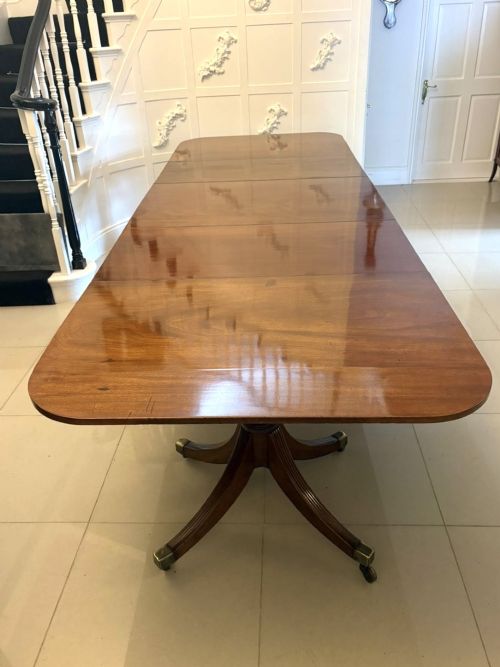
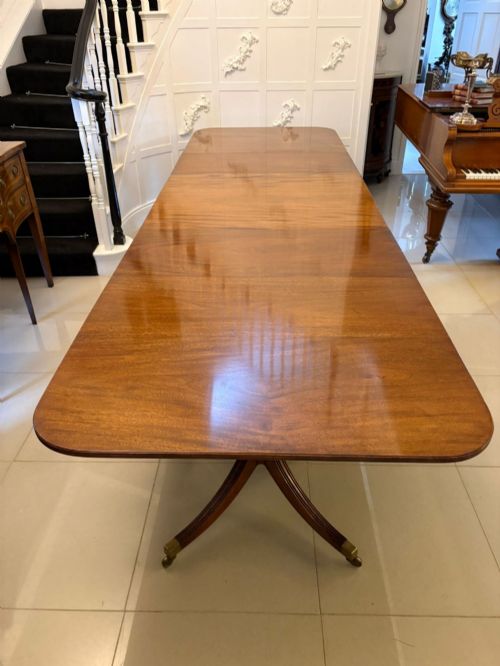
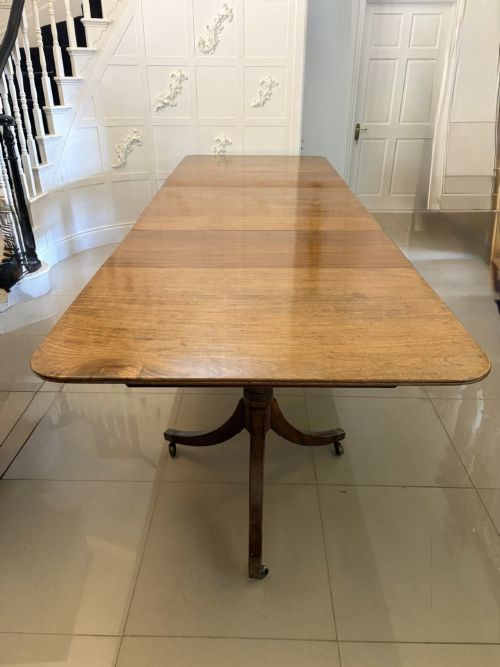

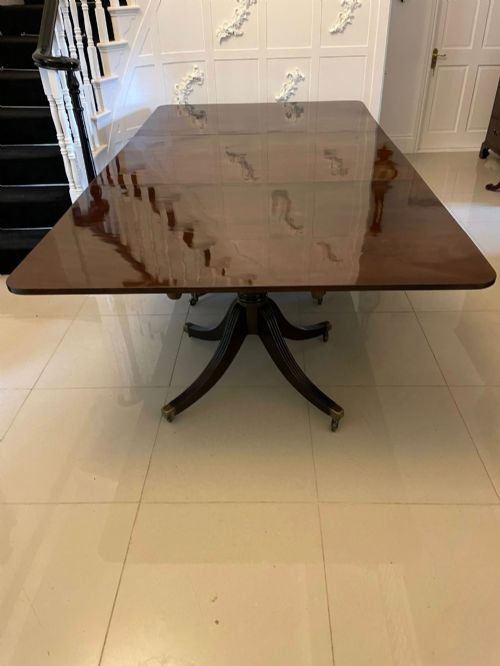
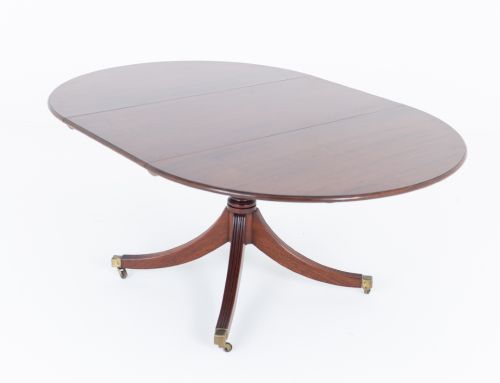
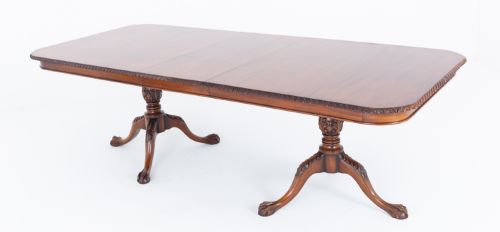
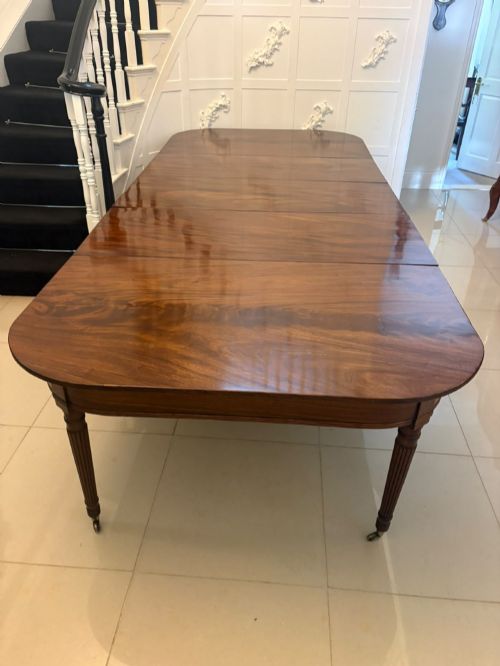
Georgian Extending Table
When you search for a georgian extending table, you encounter versatile dining furniture designed to accommodate large gatherings through clever leaves and pedestals.
Georgian Extending Table
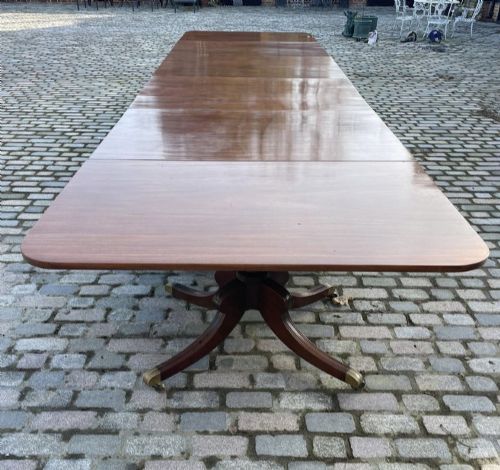
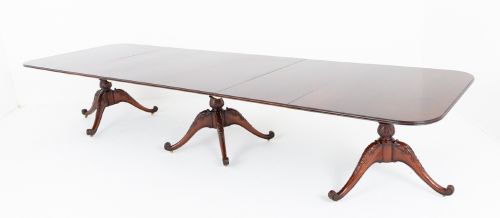
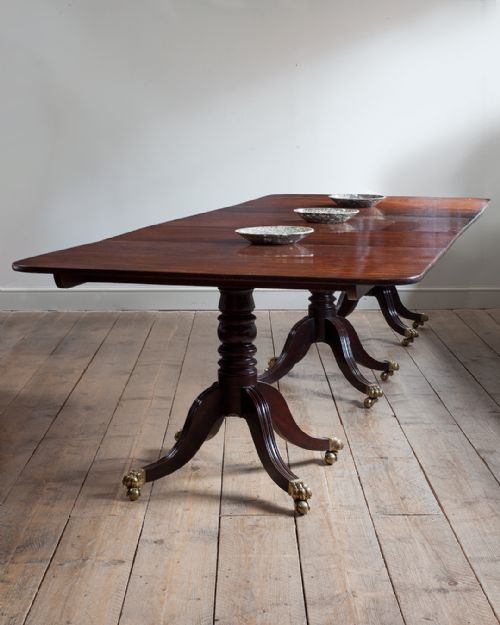
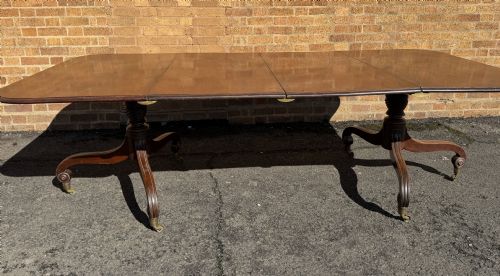
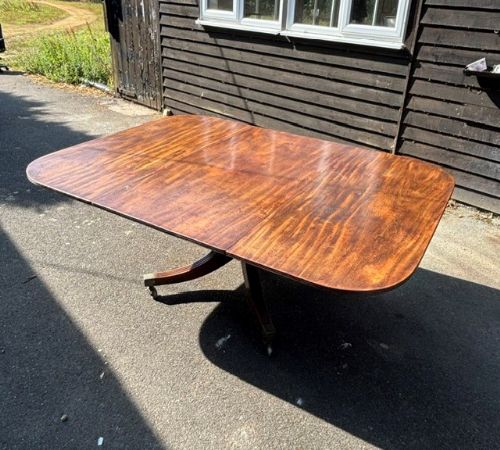
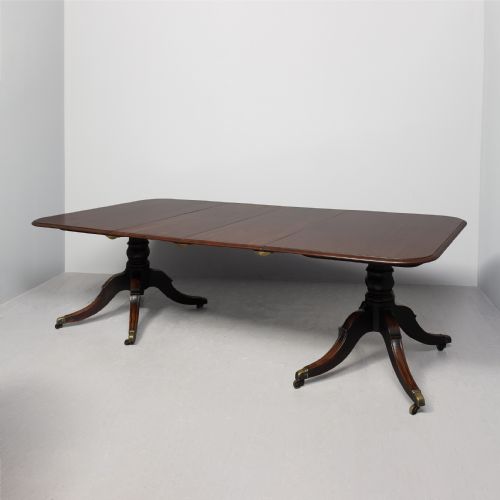
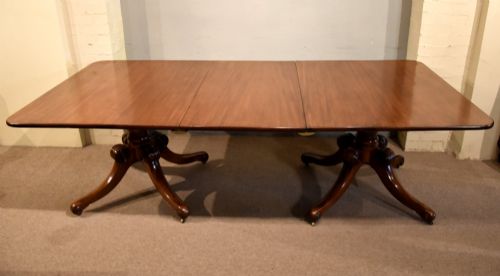
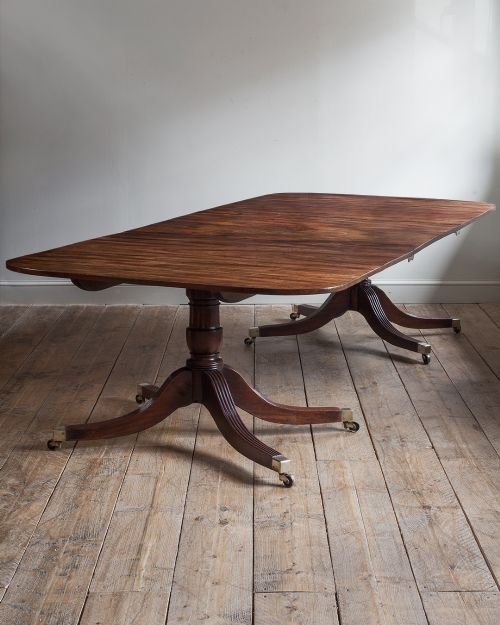
A georgian extending table encompasses multi-part dining furniture built during the late 18th and early 19th centuries, designed to alter its length through removable leaves, drop leaves, or pull-out actions. Buyers frequently encounter twin-pillar and triple-pedestal formats alongside D-end console pairs that transform into substantial banqueting surfaces.
The surviving pieces bridge the late Georgian, George III, George IV, and Regency periods, stretching into later 20th-century revivals. Formats range from intimate eight-seaters to grand 28-seater configurations supported by multiple pillars or gateleg frames.
Originating primarily from British workshops, these tables served domestic dining rooms, libraries, and large country houses. Their adaptability remains the primary draw for modern interiors needing flexible seating capacities.
How They Were Made
Cabinet makers utilised dense timbers, predominantly mahogany, figured mahogany, Cuban mahogany, and occasionally rosewood or walnut, selected for structural strength and rich grain patterns. Accents of satinwood inlay and brass hardware provided functional detail and visual contrast.
Construction relied on heavy central pedestals or sturdy console supports, incorporating pull-out runners and drop-leaf mechanisms to manage extra leaves safely. Joinery emphasised stability to bear the weight of extended tops without sagging.
The documented periods span the 18th century, George III, George IV, Regency, and 1920 to 1930 revival eras.
What Varies in Quality
The distinction between tiers rests upon the choice of timber and the complexity of the pedestal configuration, where highly figured flame mahogany and multi-pillar systems command greater presence. Cabinet-making finesse shows in the seamless alignment of removable leaves and the integrity of the extending mechanism.
Proportion and scale dictate the visual success of the piece, with well-balanced pedestals and restrained reeded legs offering superior harmony compared to heavier, unrefined proportions.
Thomas Butler of London·Gillows·Wilkinson and Wilkinson of London·Robert Adam
The Georgian Extending Table Glossary
- Pedestal
- A central column support resting on splayed legs, often fitted with brass castors to allow smooth movement. Multiple pedestals distribute weight evenly across longer extending dining formats.
- D-End
- A table end shaped in a semi-circle resembling the letter D, often used in pairs as console tables that pull apart to accept central leaves. This form defines many traditional dining layouts.
- Removable Leaf
- A separate board inserted into the centre of the table to increase seating capacity during large meals. These leaves are stored separately when the table is closed.
- Reeded Legs
- Legs carved with parallel convex mouldings that add linear texture and elegance. This decorative treatment appears frequently on Regency furniture.
- Gateleg
- A hinged table leg that swings outward to support a drop leaf or extending surface. It provides sturdy support without permanent bulk.
Georgian Extending Table: Frequently Asked Questions
How do you extend these tables?
Many examples utilise a pull-out action on wooden runners, allowing extra leaves to drop into the centre space. Others separate entirely into console sections or raise via drop leaves.
Heavier multi-pillar versions require pulling the pedestals apart manually before securing the loose leaves with brass clips or wooden pegs.
How many people do they seat?
Seating capacity varies widely depending on the number of original or added leaves. Smaller formats comfortably seat eight to ten guests.
Grand multi-pillar versions extend to accommodate twelve, sixteen, or even twenty-eight diners for large banqueting occasions.
Can you use them daily?
These tables function reliably for everyday use provided the extending mechanisms and runners are handled with care. Their robust timber construction withstands regular family meals.
Using heat mats and protective covers helps preserve the polished mahogany surface against daily wear.
How do you tell periods apart?
Late 18th-century pieces often display cleaner George III lines with straight tapered legs or delicate D-ends. Regency and George IV examples frequently introduce heavier pedestals, reeded legs, and brass inlay.
Later 20th-century revivals replicate these earlier styles but lack the specific timber patination and hand-finished joinery of the original eras.