

Brown Mahogany Conference Table
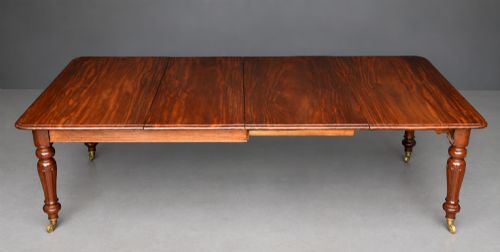
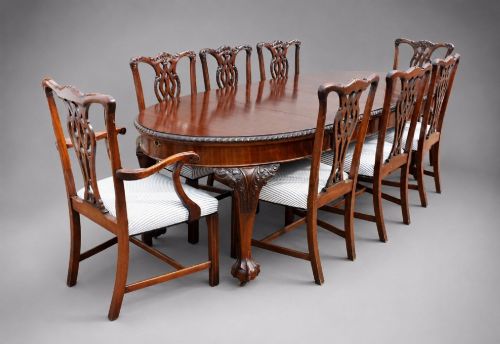
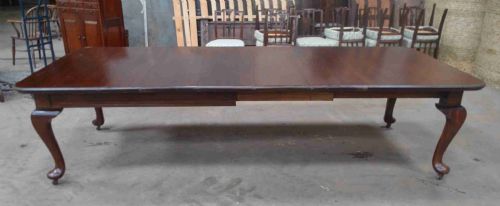
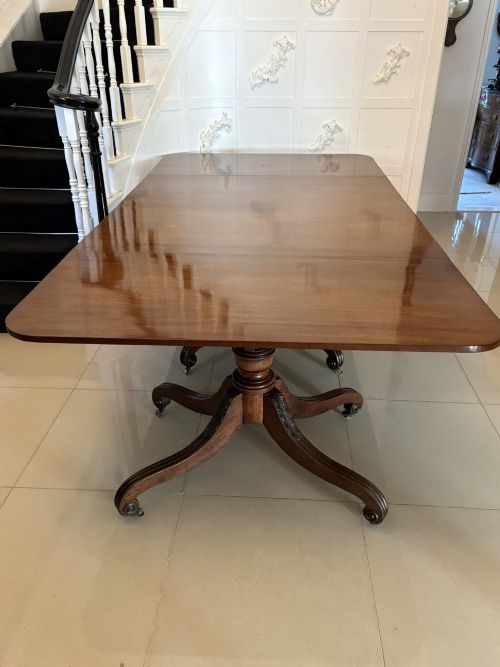
A brown mahogany conference table brings substantial timber and period presence into a workspace, offering generous seating for formal meetings.
Brown Mahogany Conference Table
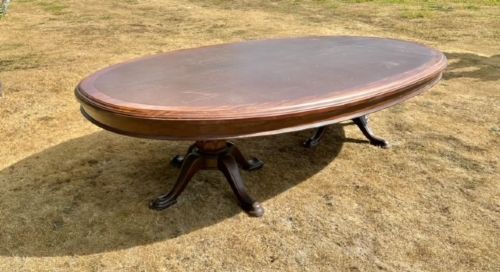
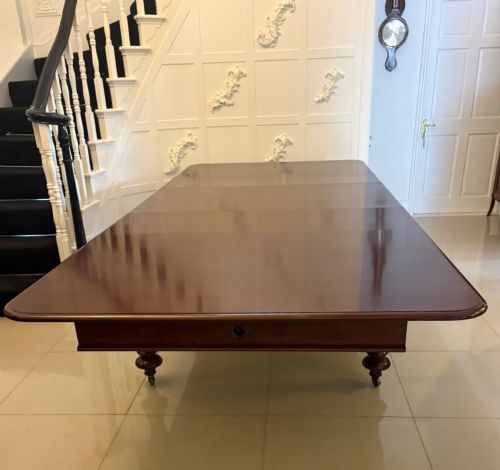
A brown mahogany conference table is typically a large extending dining or boardroom table repurposed for professional use. The examples found here span the Georgian, Regency, William IV, Victorian and Edwardian periods, running into later revivals.
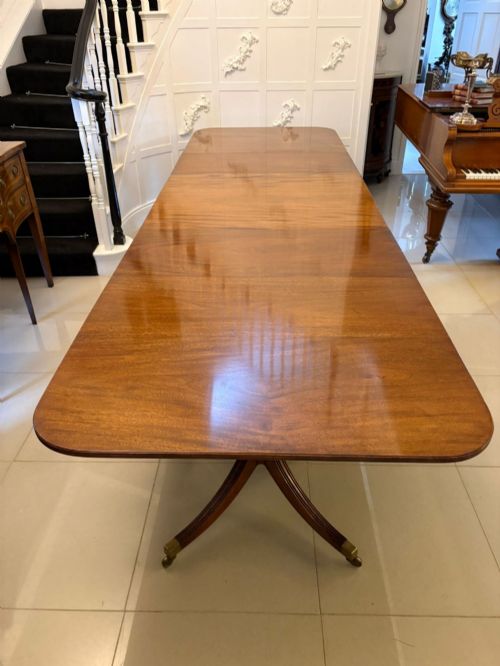
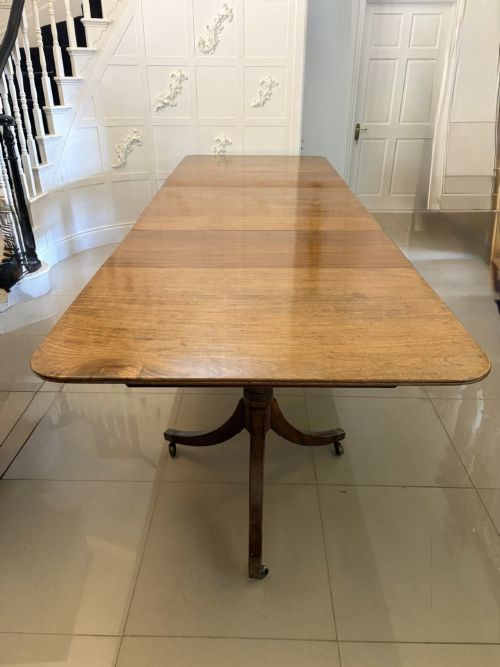
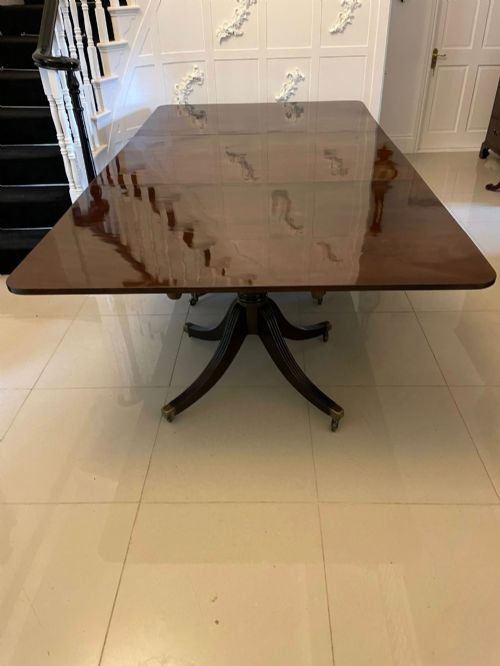
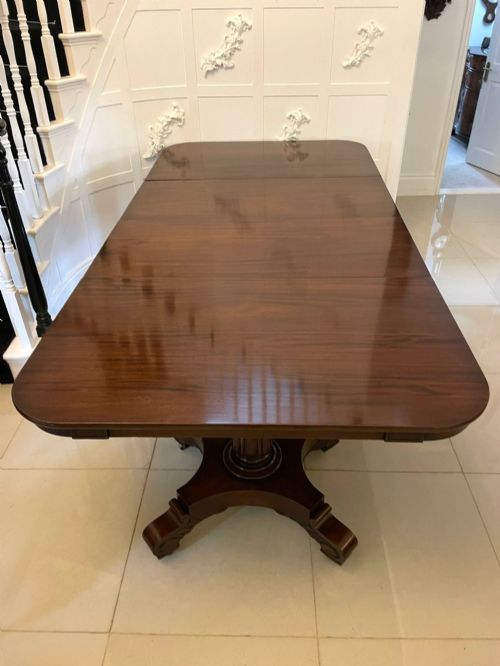
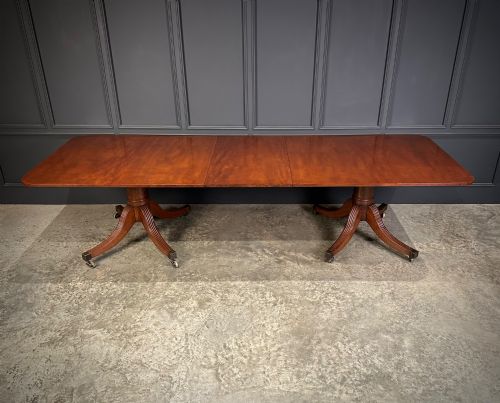
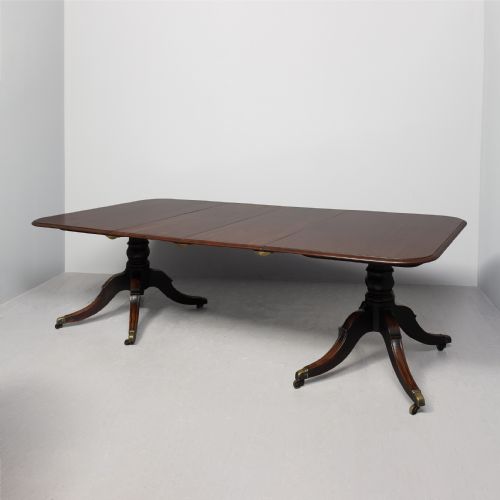
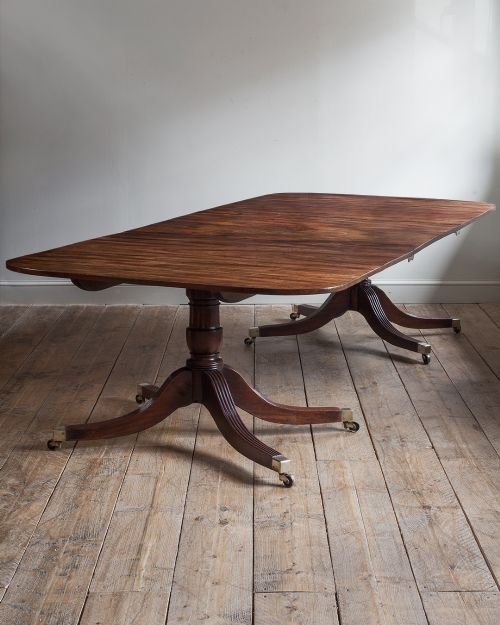
Most pieces rely on pedestal formats rather than fixed legs, utilising twin, triple or four-pillar designs to support extra leaves. These structures allow lengths to expand significantly, accommodating seating capacities from ten up to twenty-four guests or colleagues.
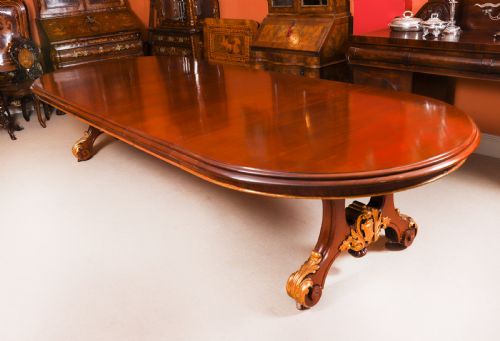
The primary forms draw heavily on traditional dining table architecture, particularly D-end sections and pillar supports fitted with brass castors. Buyers will encounter both period originals and revival pieces designed with similar proportions.
Materials and construction
Makers built these tables using solid mahogany and figured timber veneers, frequently selecting Cuban mahogany for rich grain patterns and flame figures. Brass hardware appeared on pedestal feet and extension mechanisms, while leather or fabric upholstery occasionally accompanied matching seating sets.
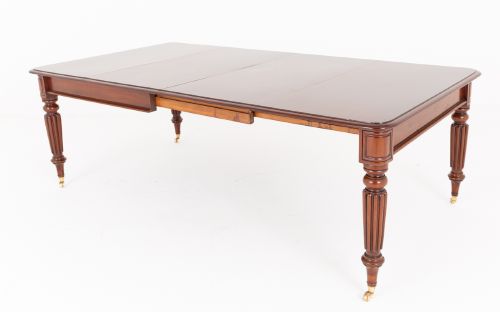
Extension systems relied on internal wind-out mechanisms operated by handles, allowing sections to part smoothly for additional leaves. Pedestals were turned or carved from dense timber blocks, terminating in reeded legs or sabre feet fitted with castors.
Some tables require an army of twenty-four colleagues just to test out the maximum seating capacity after lunch.
Distinctions in quality
The standard of a brown mahogany conference table rests on the selection of the timber veneer and the precision of the pedestal carving. Tables featuring highly figured Cuban mahogany or flame mahogany display superior visual depth across the top boards.
Structural integrity relies on the smoothness of the extending mechanism and the robustness of the pillar supports. Finer examples balance heavy leaf sections evenly across multiple pedestals without sagging, maintaining alignment when fully extended.
Wylie & Lochead, Glasgow·Whytock & Reid·Gillows
The Brown Mahogany Conference Table Glossary
- Pedestal
- A central support column, often single, double, or triple, holding up the main surface of a large table. These allow greater legroom for seated participants.
- Extending table
- A table designed with removable leaves and internal tracks to increase its overall length. Winding mechanisms are commonly used to operate them.
- Cuban mahogany
- A dense, durable timber highly prized for its rich colour and distinctive grain patterns. It was widely utilised in fine furniture-making during the Georgian and Regency eras.
- D-end
- A table end shaped in the semi-circular form of the letter D. These sections can be detached or separated when leaves are removed.
- Reeded legs
- Legs carved with parallel convex mouldings running vertically down the wood. This decorative detail frequently appears on Regency and Georgian furniture.
Brown Mahogany Conference Table: Frequently Asked Questions
How do I extend the table?
Most large tables utilise an internal wind-out mechanism operated by a removable handle. Turning the handle separates the pedestals so extra leaves can be inserted into the centre.
Once the leaves are placed in position, the mechanism is wound back together to secure the boards tightly in place.
How many people can sit at these tables?
Seating capacity depends on the number of pedestals and extra leaves, ranging from ten up to twenty-four people. Triple and four-pillar formats provide the length needed for large boardrooms.
Buyers should measure their room dimensions carefully to ensure adequate clearance around the table when fully extended.
How do I identify a Regency table?
Regency tables often feature pillar pedestals with reeded legs, brass castors, and restrained classical lines. The timber frequently shows rich figuration characteristic of early nineteenth-century cabinetmaking.
Proportions remain balanced even when extended to accommodate multiple leaves for large gatherings.
Can these tables be used for modern meetings?
These large timber tables function effectively as boardroom or conference tables due to their expansive surfaces and formal presence. Their sturdy pedestal construction provides ample legroom for seating.
Many professionals repurpose antique dining tables specifically to bring character and durability into modern working environments.