




Dark Wood Dinner Table
A dark wood dinner table grounds a room with deep timber tones and solid construction from the nineteenth and early twentieth centuries.
Dark Wood Dinner Table
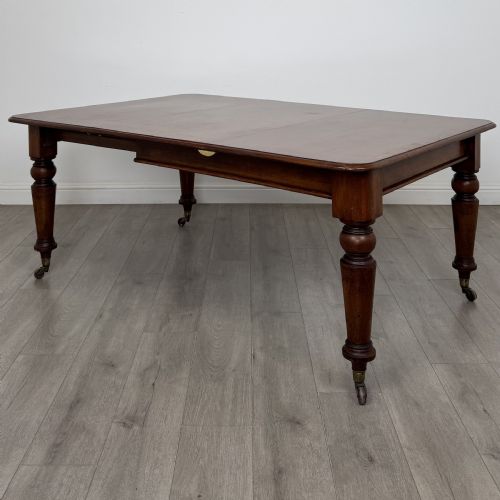
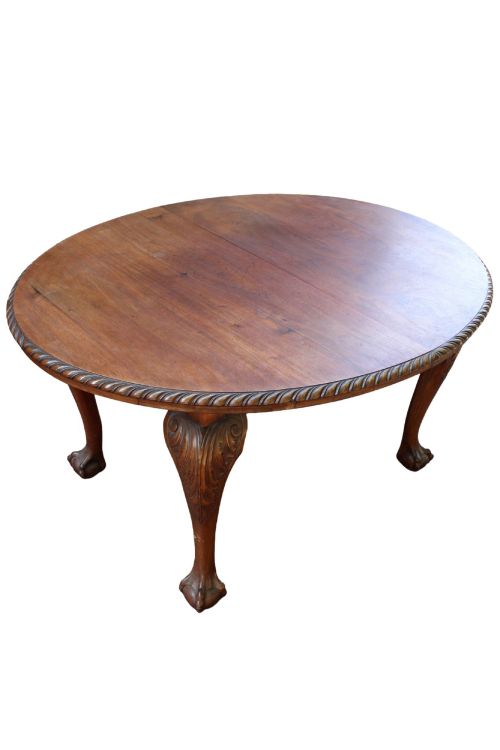
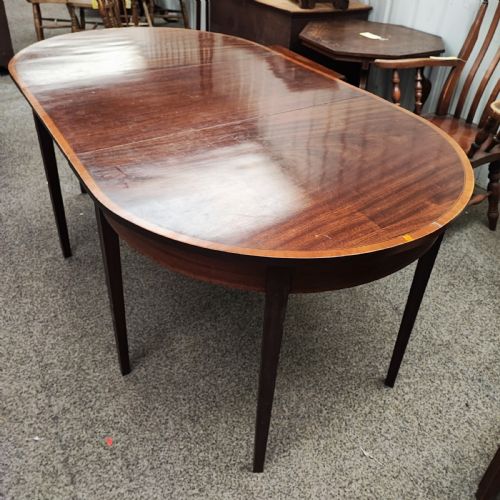
A dark wood dinner table serves as the central gathering place for meals, appearing primarily in nineteenth-century and Edwardian forms across this selection. These pieces originate from periods spanning the Victorian era through to the nineteen-thirties, with extending mechanisms frequently present to accommodate larger gatherings.
Makers utilised dense timbers such as mahogany and oak to build these dining tables, often incorporating pedestal bases or barley twist legs. Buyers regularly encounter extending designs alongside oval and pedestal variants suited to traditional dining spaces.
How they were made
Craftsmen built these tables using solid mahogany, oak, and walnut, selecting timber for grain pattern and structural strength. Joinery methods relied on traditional framing to support heavy leaves and daily use.
Metal components such as brass fittings appear on extending mechanisms and castors, allowing heavy tables to move smoothly. Surface finishing involved polishing the wood to highlight the natural dark tones of the material.
Listings feature dining tables constructed primarily from mahogany and oak across Victorian, Edwardian, and nineteenth-century periods.
What varies in quality
The choice of timber underpins the distinction between standard production and superior examples, with dense mahogany and quarter-sawn oak representing higher tiers of manufacture. Better pieces display refined carving on the legs and edges rather than plain turned supports.
The sophistication of the extending mechanism dictates the practical worth of a dining table, with well-engineered runners allowing leaves to insert without sagging. Secondary woods used in the framing and the stability of pedestal mountings further separate workshop standards.
Gillows of Lancaster and London·Waring and Gillow
The Dark Wood Dinner Table Glossary
- Extending table
- A dining table fitted with internal leaves and a mechanism to pull apart, allowing extra surface area for seating more guests.
- Pedestal base
- A central column support resting on feet, replacing traditional corner legs to maximise legroom around the perimeter.
- Mahogany
- A durable, reddish-brown hardwood sourced from tropical regions, favoured by cabinet makers for its stability and fine finish.
- Barley twist
- A type of turning shaped like a spiral rope, popular on the legs and supports of late nineteenth and early twentieth-century furniture.
Dark Wood Dinner Table: Frequently Asked Questions
How do I maintain the wood surface?
Clean the timber with a soft, dry cloth and apply occasional wax polish to nourish the grain.
Avoid placing hot dishes directly onto the polished surface to prevent heat marks.
How do extending leaves work?
The tabletop pulls apart along internal wooden or metal runners to reveal space for removable leaves.
Securing clips underneath hold the sections tightly together once closed.
What chairs match these tables?
Dining chairs from the same nineteenth or early twentieth-century periods complement the timber tones and construction styles.
Matching the primary wood, such as mahogany or oak, ensures a cohesive look in the dining room.
How do I identify the period?
Examine the leg styles, hardware materials, and construction techniques used in the framework.
Victorian and Edwardian pieces often display specific turning patterns and timber finishes characteristic of their decade of manufacture.