
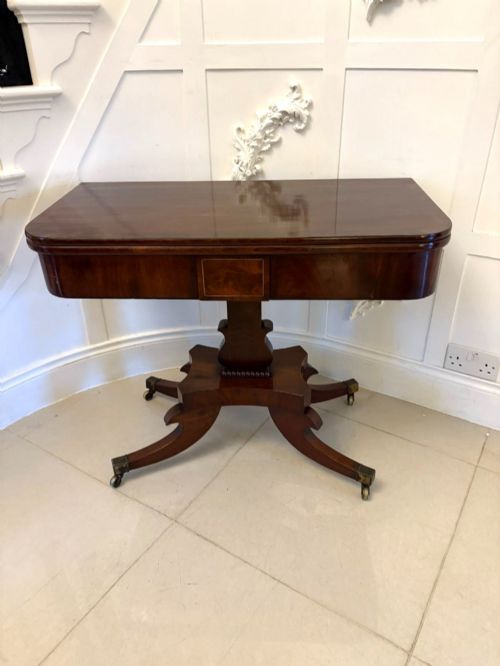
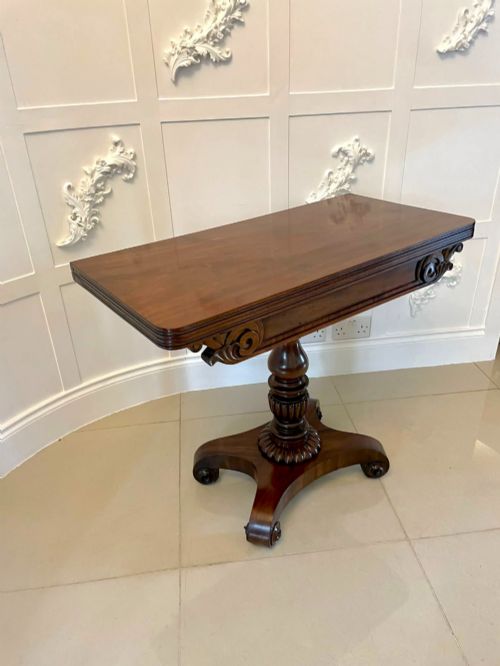
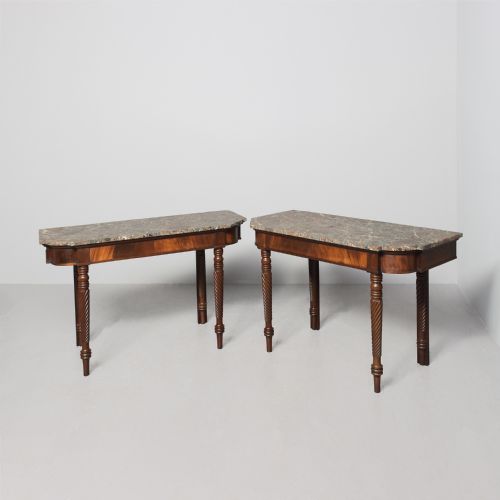
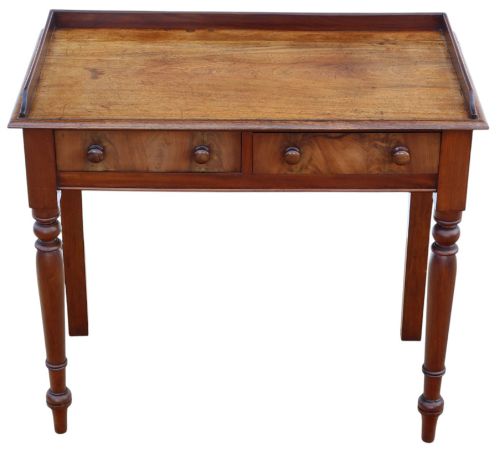

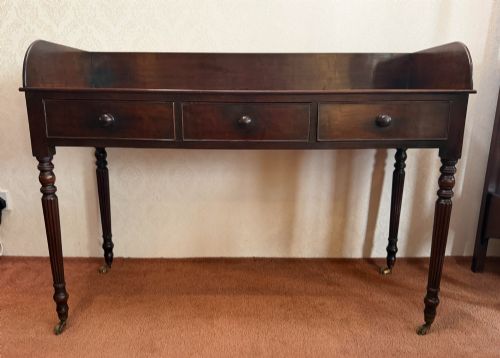
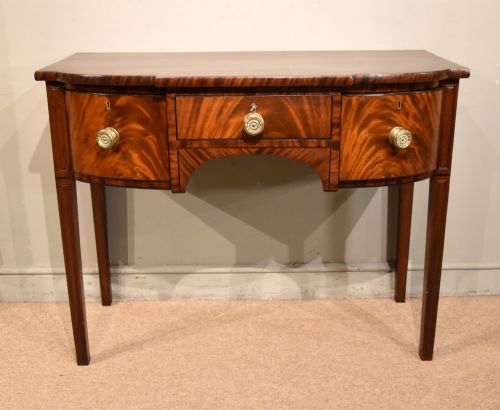
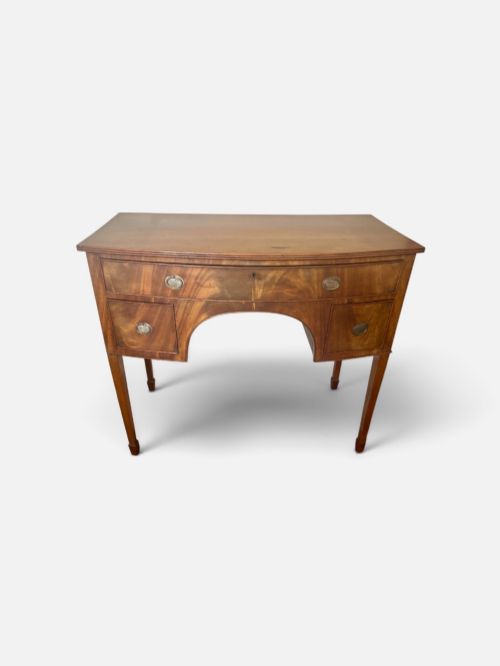
Regency Mahogany Hall Table
These pieces combine figured timbers with slender proportions, offering a practical surface for an entranceway.
The regency mahogany hall table in context
A regency mahogany hall table is a narrow, functional surface designed for narrow spaces, corridors and reception areas. The pieces gathered here span the nineteenth century, including Georgian and William IV periods, alongside later Victorian interpretations.
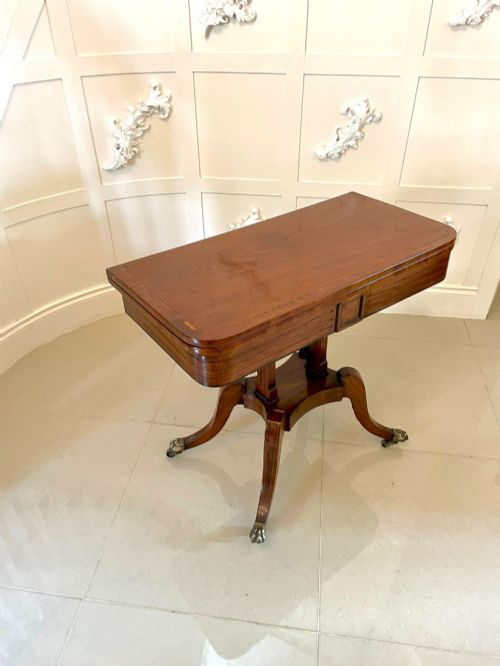
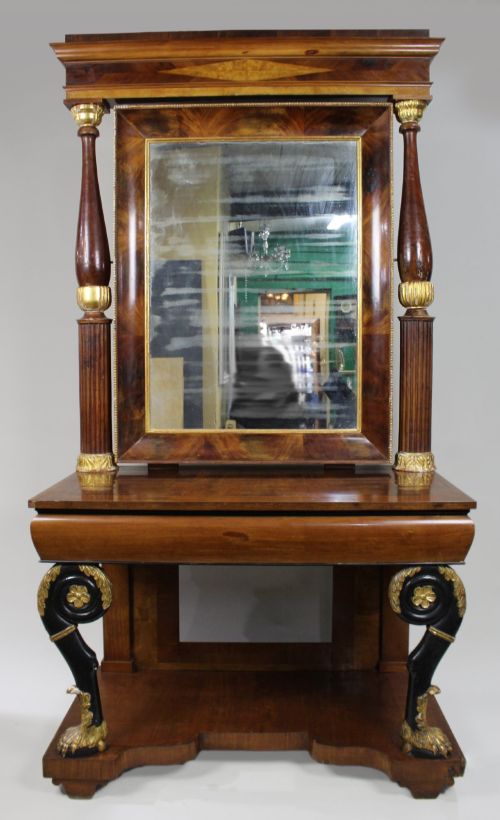
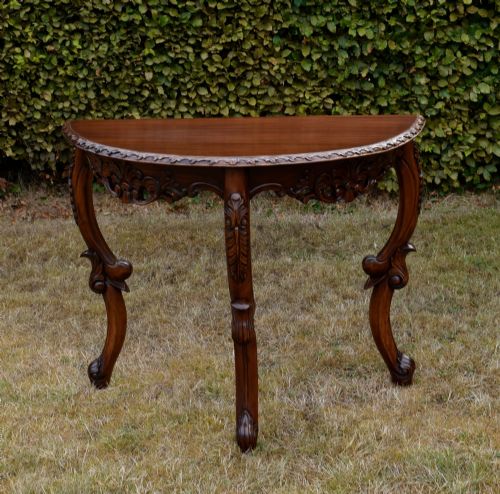
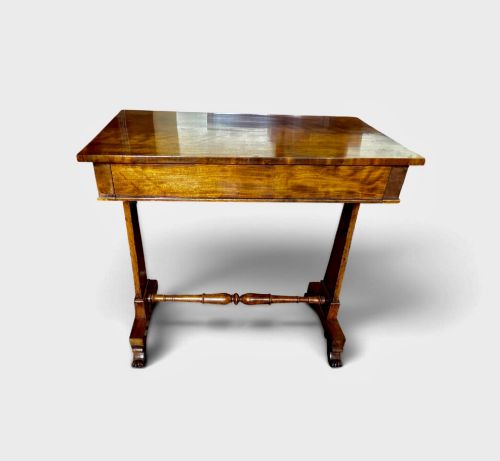
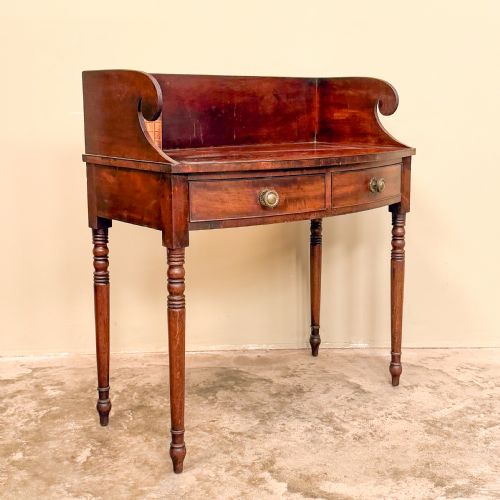
Most examples function as console tables, side tables or serving tables, often appearing with rectangular tops, demi-lune shapes or mirror backs. Makers constructed these items primarily for domestic hallways, where depth was restricted.
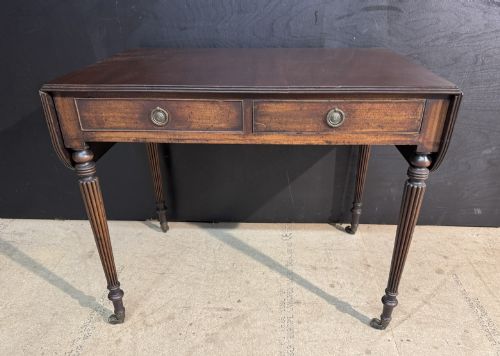
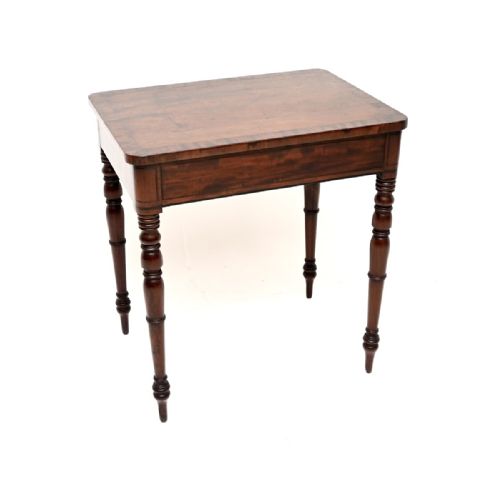
Buyers encounter variations ranging from simple rectangular boards to complex arrangements with dropped leaves, fold-over tops and tripod pedestals. The surviving stock demonstrates a persistent preference for timber surfaces designed to stand against walls.
Materials and construction
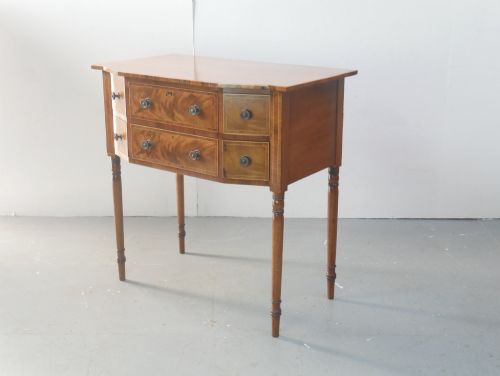
Cabinetmakers relied heavily on solid mahogany and flame mahogany veneer, sometimes complemented by boxwood stringing and brass inlays. Workshops selected timber figures to create dramatic grain patterns across table tops.
Structural elements frequently incorporated secondary timbers for drawer linings and internal frames, while glass and marble appeared on select variants. Joinery techniques included dovetailing for drawers and turned or pedestalled supports for the main structure.
Retail Price Guide 2026
Typical UK retail prices for regency mahogany hall table, calculated from the Sellingantiques database of over a million retail prices indexed since 2003. This retail price guide relies exclusively on Sellingantiques data; no external sources or auction records are used, so the figures do not describe the wider market.
Several tables disguised themselves as desks, sewing stations or card tables, proving nineteenth-century furniture loved a secret identity.
Distinctions in craftsmanship
Superior examples reveal themselves through the selection of symmetrical flame veneer and precise inlay work, rather than surface decoration alone. The depth of the timber and the crispness of turned or carved supports separate standard production from master craftsmanship.
Proportion dictates much of the appeal, with shallow depths and balanced pedestal configurations commanding greater attention. The integrity of the original joints and the preservation of the timber surface determine the standing of each piece.
Gillows of Lancaster·Maple and Co
The Regency Mahogany Hall Table Glossary
- Flame mahogany
- A veneer cut from the fork of the mahogany tree to produce a distinct, flamelike grain pattern. This figure was prized for prominent table tops.
- Console table
- A table designed to stand against a wall, frequently secured to it with brackets. These pieces offer narrow profiles suited to hallways.
- Demi-lune
- A half-moon shape characteristic of tables designed to sit flush against a wall. This format saved floor space in cramped entranceways.
- Pembroke table
- A drop-leaf table with hinged flaps on either side. These versatile items served occasional functions in various rooms.
- Stringing
- Thin inlay lines of a contrasting wood, such as boxwood, used to edge panels and borders. It provides delicate linear decoration.
Frequently Asked Questions
What is a regency mahogany hall table used for?
These tables served primarily as architectural furniture for placement in corridors, entrance halls and reception spaces. They held small items, lamps or calling cards while providing a decorative focal point.
Their shallow proportions ensured they did not obstruct narrow walkways. Households also utilised them as serving surfaces or sideboards during gatherings.
How can I tell the period of a hall table?
Dating relies on examining timber selection, secondary woods used in framing, and hardware such as drawer pulls. Georgian and Regency pieces display specific leg turns, brass inlay methods and veneer thicknesses.
Later Victorian interpretations often incorporate heavier proportions or different internal construction methods. Comparing joinery details across dated examples clarifies the timeline.
Are these tables suitable for small hallways?
The defining characteristic of these items is their restricted depth, particularly in demi-lune and console formats. They fit flat against walls without projecting dangerously into walking routes.
Narrow configurations and fold-over designs accommodate tight architectural layouts easily. Buyers frequently select them precisely for difficult urban corridors.
What maintenance do mahogany surfaces require?
Mahogany responds best to occasional dusting with a soft cloth and minimal moisture exposure. Excessive heat and direct sunlight can dry out the timber or fade the polished finish.
Applying traditional wax feeds the wood and maintains its natural sheen without building up heavy chemical layers. Proper placement away from radiators preserves the integrity of the veneer.