


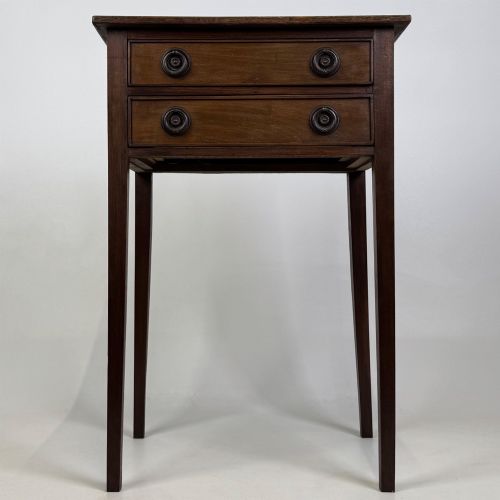
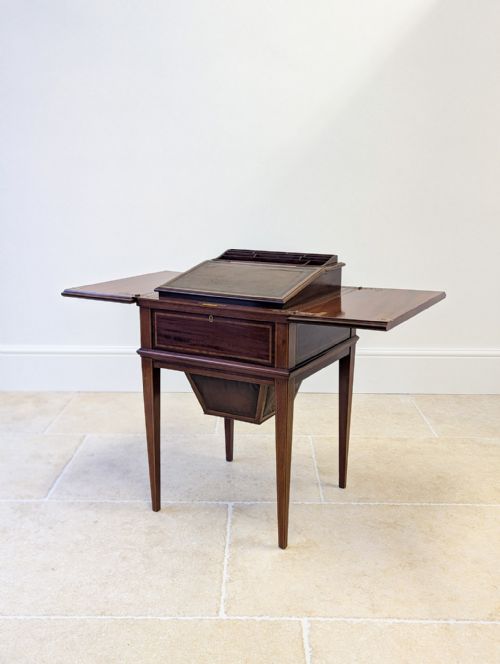
Mahogany Drawer Table
Mahogany drawer table pieces bring practical storage and rich timber warmth to any room, ranging from compact lamp stands to grand writing desks.
What these tables are
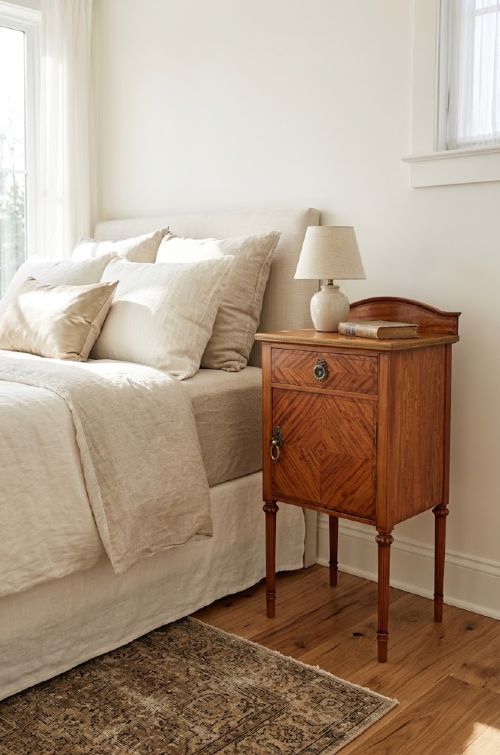
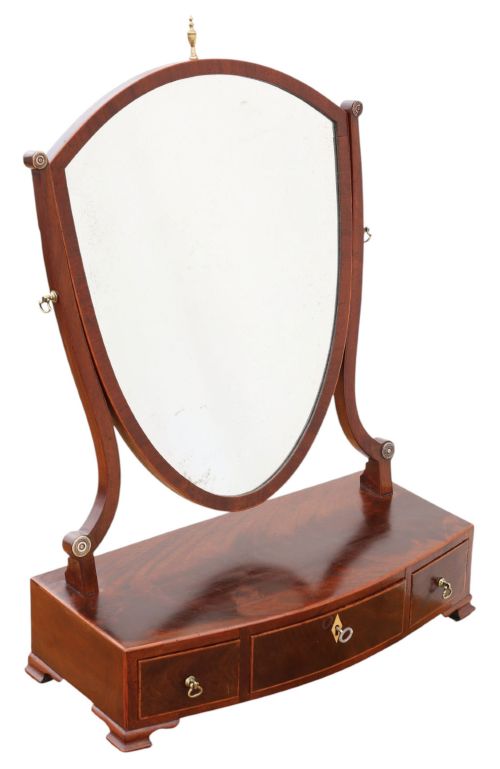
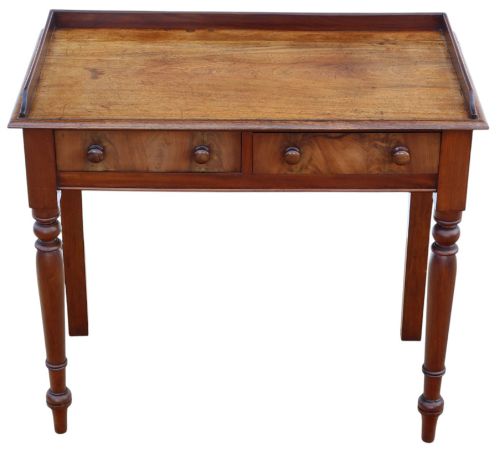
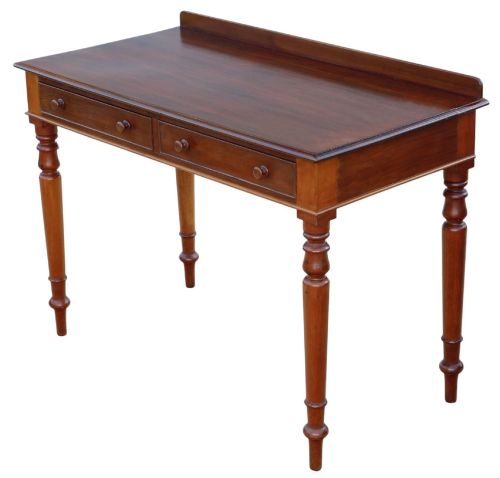
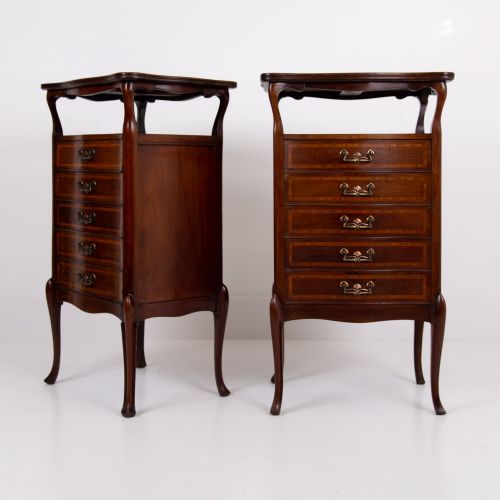
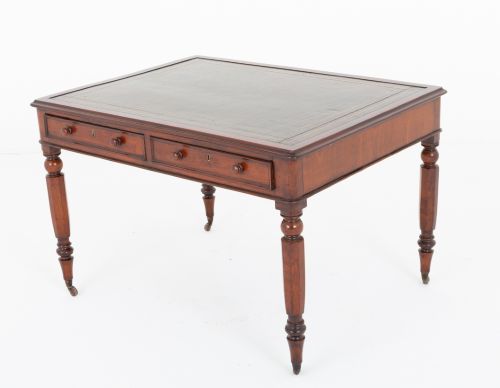
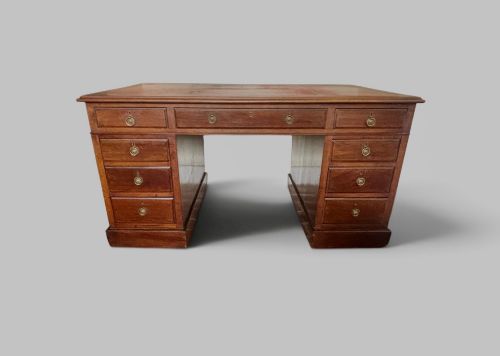
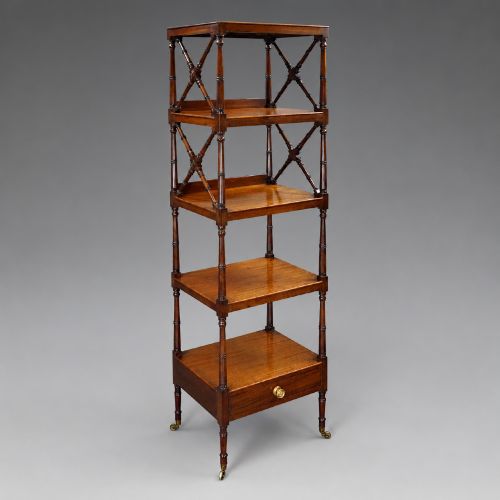
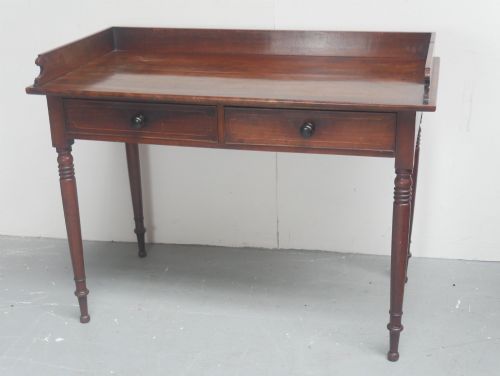
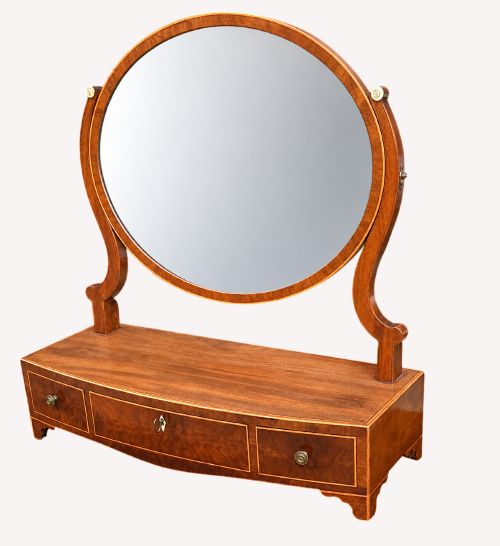
A mahogany drawer table serves as a functional surface with integrated storage, appearing in forms such as side tables, writing desks, hall consoles, and bedside units. These pieces span multiple eras, with Georgian, Regency, and Victorian examples appearing most frequently.
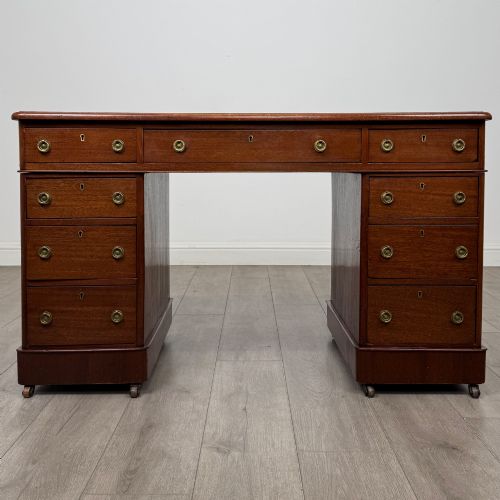
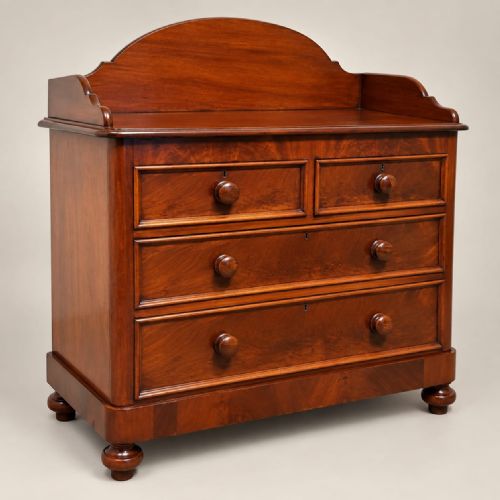
Buyers encounter everything from simple single-drawer lamp stands to multi-drawer partners desks and dressing tables. The variety reflects the adaptability of the timber and the changing demands for domestic furniture across the eighteenth and nineteenth centuries.
Materials and construction
Cabinet makers utilised solid mahogany and mahogany veneers over secondary timbers, often pairing the dark timber with contrasting details in boxwood and brass. Drawer linings frequently employ secondary woods, whilst hardware ranges from simple wooden knobs to cast brass pulls.
Joinery methods include hand-cut dovetails for drawer construction and pegged mortise and tenon joints for frames. Decorative touches like string inlay and reeded legs demonstrate the cabinet maker's hand.
Retail Price Guide 2026
Typical UK retail prices for mahogany drawer table, calculated from the Sellingantiques database of over a million retail prices indexed since 2003. This retail price guide relies exclusively on Sellingantiques data; no external sources or auction records are used, so the figures do not describe the wider market.
Distinctions in quality
Quality rests in the selection of the timber grain, the crispness of any inlaid stringing or carved detail, and the integrity of the drawer construction. Finer examples show careful book-matching of veneers and smooth movement in the drawers.
Proportion and restraint separate standard utility pieces from higher-end commission work. Well-judged leg profiles and balanced drawer arrangements elevate the presence of the furniture.
Gillows
The Mahogany Drawer Table Glossary
- Stringing
- A thin inlay of contrasting wood, such as boxwood, used to create fine decorative lines around drawer fronts or table edges.
- Lowboy
- A small dressing or side table with one or more rows of drawers supported on four tall legs.
- Dovetail
- A joint formed by interlocking wedge-shaped fingers, commonly used to join drawer sides to drawer fronts.
- Partners desk
- A large writing table designed for two people to use simultaneously, featuring drawers on opposite sides.
- Drop end table
- A table with hinged leaves at either end that can be raised or lowered to alter the surface area.
Frequently Asked Questions
What is a mahogany drawer table used for?
These tables provide a surface for lamps, books, or writing whilst offering enclosed storage within their built-in drawers. They function across hallways, living rooms, and bedrooms depending on their specific form.
Smaller versions serve as bedside or lamp tables, whereas larger multi-drawer formats operate as writing desks or sideboards.
How do I identify a Georgian table?
Georgian pieces often display formal proportions, restrained use of boxwood stringing, and traditional cabinet-making techniques like hand-cut dovetails. They tend to exhibit a deeper, richer patina built up over centuries of polish.
Examining the secondary woods inside the drawers helps confirm the period of manufacture alongside the external style.
Are these tables suitable for daily use?
Solid mahogany construction and robust joinery make these tables durable enough for modern domestic environments. Regular maintenance with appropriate wax keeps the timber nourished.
Care should be taken with moisture and direct heat to protect the antique polish and veneer surfaces.
What is the difference between a side table and a console table?
Side tables typically stand freely on four legs with finished backs, designed to be viewed from multiple angles in a room. Console tables often place emphasis on a decorative front and may have been designed to sit against a wall.
Both variants frequently incorporate one or more drawers beneath the main surface.