
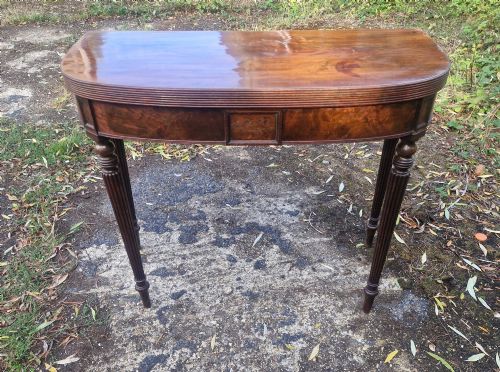
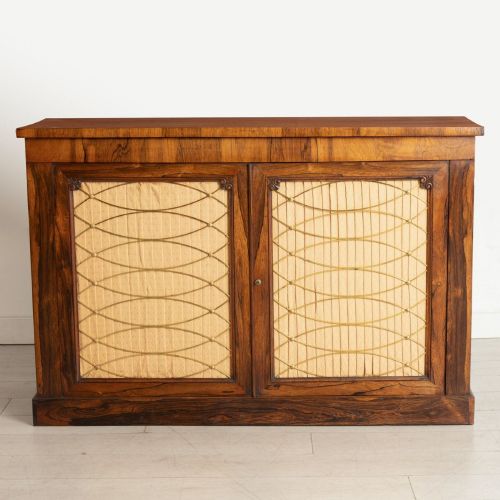
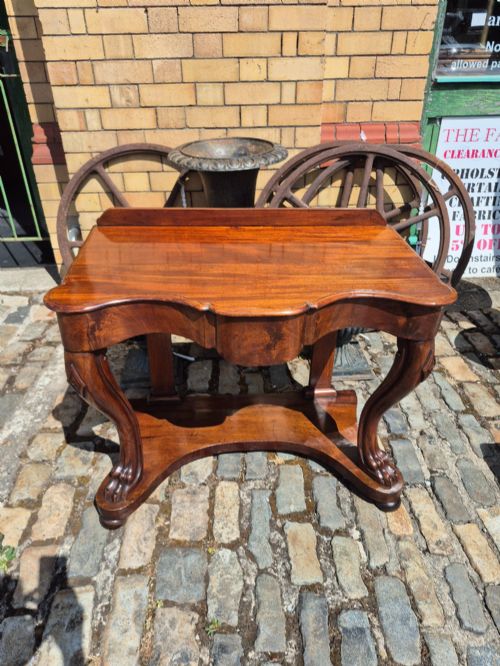
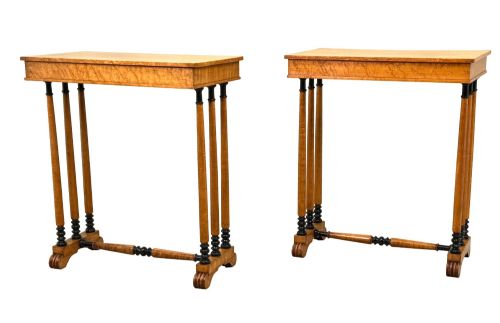
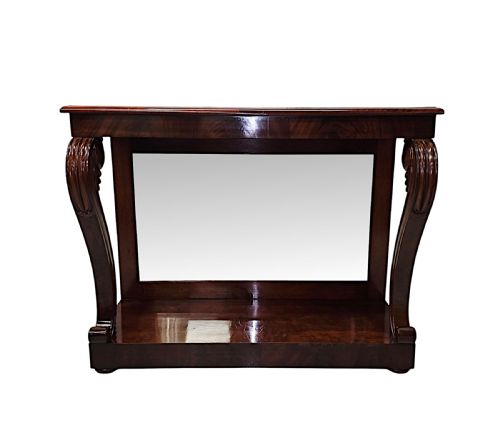
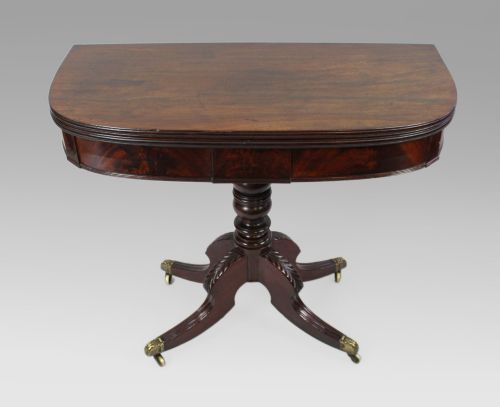
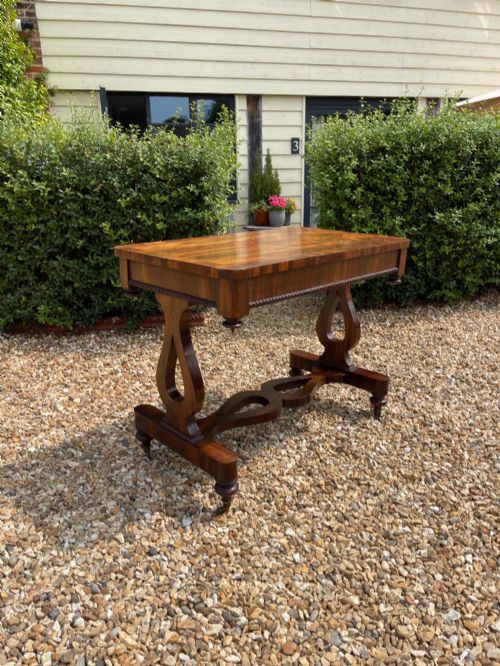
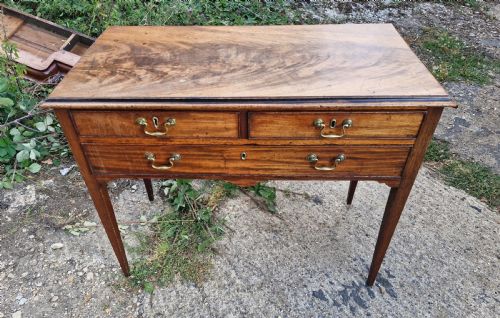

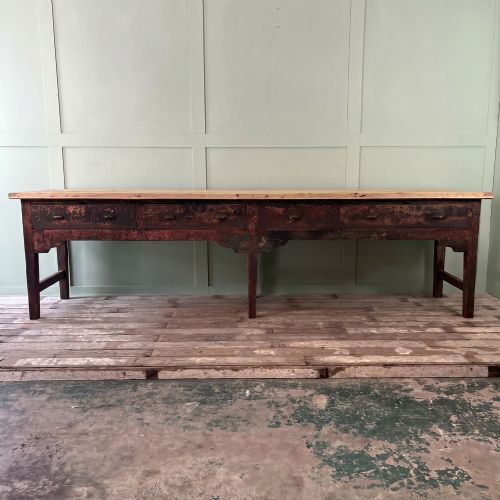
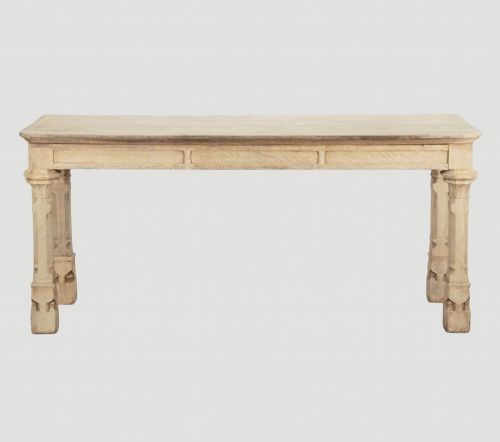
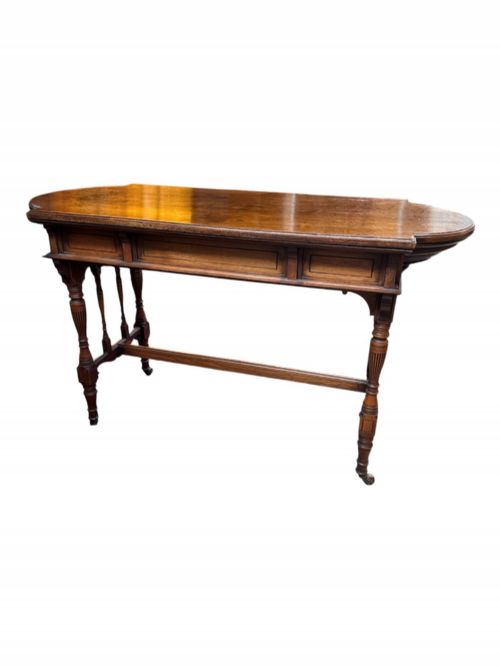
Early 19th Century Console
These early 19th century console tables combine architectural presence with polished timber and marble.
What an early 19th century console is
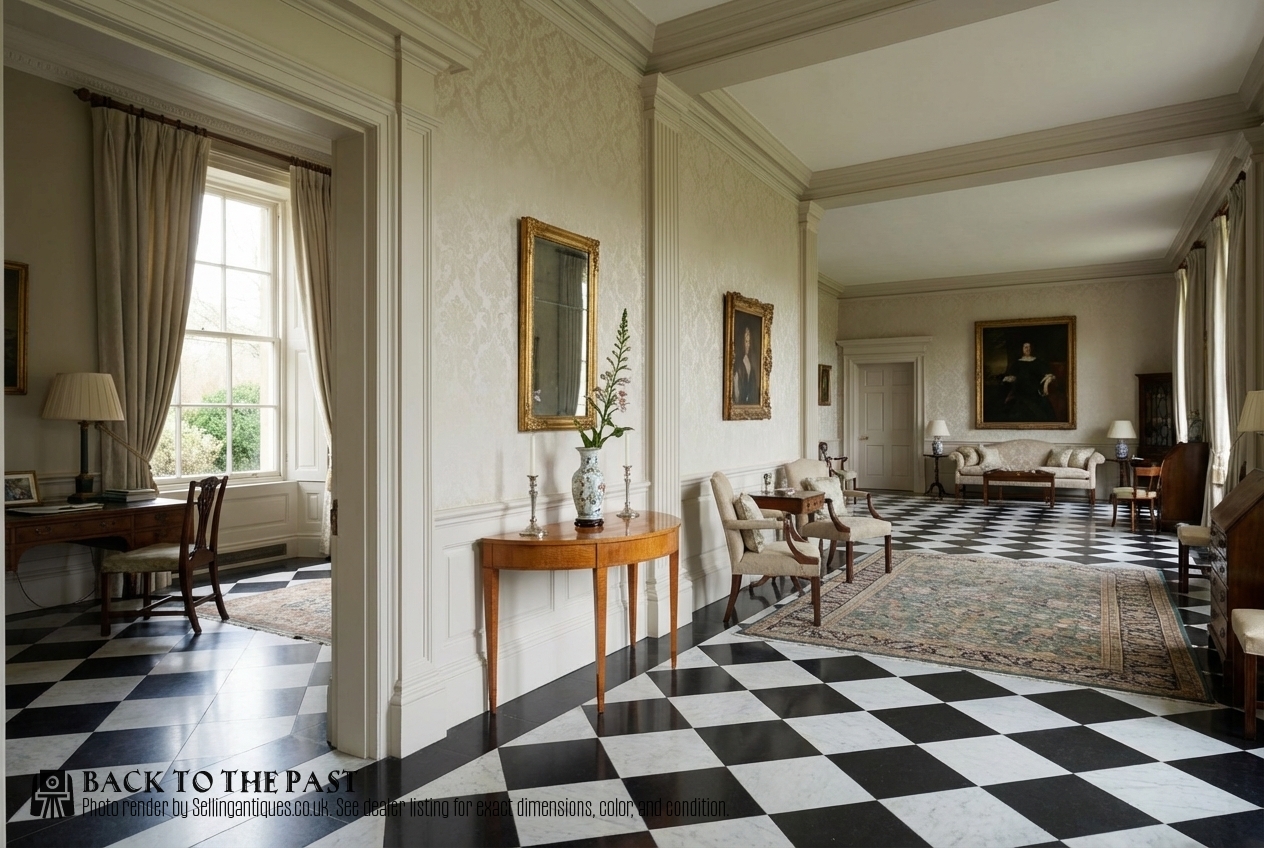
An early 19th century console table serves as a wall-mounted or freestanding surface designed to anchor a hallway or principal room. The form appears across Georgian, Regency, and Italian Neoclassical periods, spanning English, French, Italian, Swedish, Spanish, and Chinese workshops.
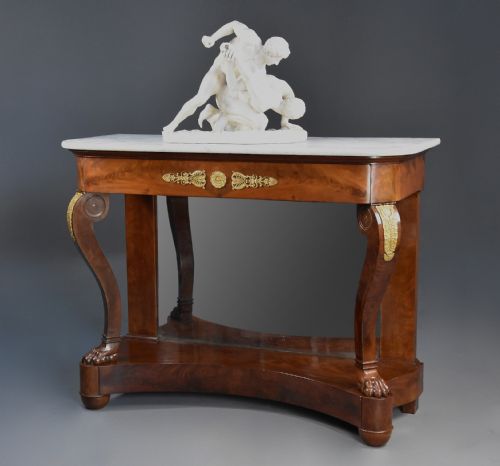
Most examples found here take the shape of console tables, often featuring demi-lune or rectangular tops. Many incorporate paired supports, mirror backs, or marble surfaces intended for display.
Makers of the era utilised a mix of domestic and exotic timbers alongside gilded and painted finishes to achieve a formal silhouette.
Materials and construction methods
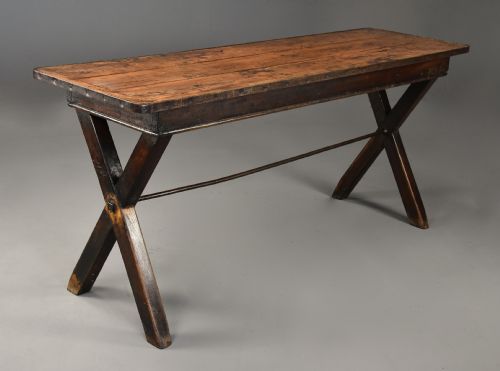
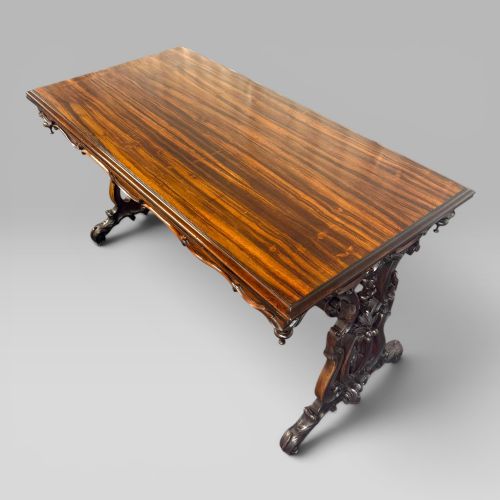
Cabinetmakers constructed these tables using solid carcases and detailed wood veneers, selecting mahogany, rosewood, walnut, satinwood, pine, oak, and Chinese hardwood. Many surfaces receive additional visual depth from parcel-gilt details, ormolu mounts, and paint.
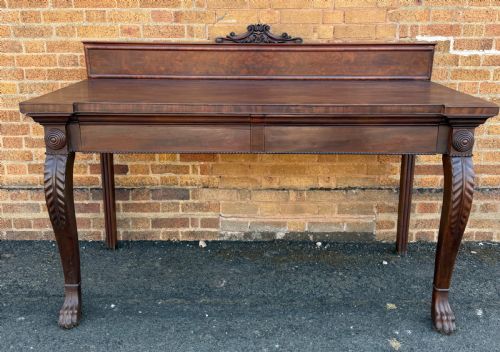
Tops frequently employ heavy inset marble or figured stone slabs paired with carved giltwood, brass accents, or monopodia supports. Joinery relies on traditional techniques suited to heavy stone and timber structures.
Retail Price Guide 2026
Typical UK retail prices for early 19th century console, calculated from the Sellingantiques database of over a million retail prices indexed since 2003. This retail price guide relies exclusively on Sellingantiques data; no external sources or auction records are used, so the figures do not describe the wider market.
Monopodia supports let single lions hold up your hallway surface.
Distinctions in quality
Quality rests on the selection of timber veneers and the crispness of carved giltwood or parcel-gilt ornament. Finer pieces integrate matched marble tops and sophisticated mirror-back panels that reflect light across the room.
Proportion and structural integrity distinguish provincial workshops from metropolitan cabinetmakers. The precision of joinery and the preservation of original mounts or painted surfaces dictate the standing of each piece.
Howard And Sons·Jonas Frisk
The Early 19th Century Console Glossary
- Demi-lune
- A half-moon shape used for console tables designed to stand flat against a wall. This format saves floor space while providing a substantial display surface.
- Parcel-gilt
- Partially gilded woodwork where gold leaf highlights specific carved details against a painted or polished timber ground. This technique creates contrast on Regency and Neoclassical frames.
- Monopodia
- A single animal leg, often lion-shaped, used as a structural support at the front corners of a console table. It derives from classical Roman furniture forms.
- Ormolu
- Gilded bronze mounts applied to the woodwork of furniture for decorative effect. They appear frequently on French and Regency examples.
- Giltwood
- Timber carved and coated with a layer of gold leaf. It defines the formal appearance of many continental console tables.
Frequently Asked Questions
Where do I put a console table?
These tables fit well in entrance halls, living rooms, or dining spaces where floor space is limited. Their shallow profile allows them to sit flush against a wall beneath a mirror or painting.
Because many feature finished backs or mirror panels, placement depends on sightlines within the room. Freestanding versions benefit from locations where light can strike the marble or gilt surface.
How do I care for a marble top?
Marble surfaces require regular dusting with a soft, dry cloth to prevent abrasion. Avoid acidic liquids like citrus or vinegar, which etch polished stone.
Use coasters and protective pads beneath objects placed on the stone. Gentle soap and water suffice for occasional cleaning.
Are these tables sturdy enough for daily use?
Console tables are built to support decorative objects, lamps, and occasional items rather than heavy loads. Wall-mounted versions rely on proper attachment to structural studs or masonry for stability.
Freestanding designs balance heavy stone tops on wooden frames, so lifting rather than dragging them prevents stress on the joints.
How do I identify a Regency console?
Regency pieces often display classical motifs such as monopodia supports, brass inlays, and rosewood veneers. They frequently incorporate mirror backs designed to amplify light in early 19th-century interiors.
Proportions tend to be architectural, drawing influence from Greek and Roman design.