
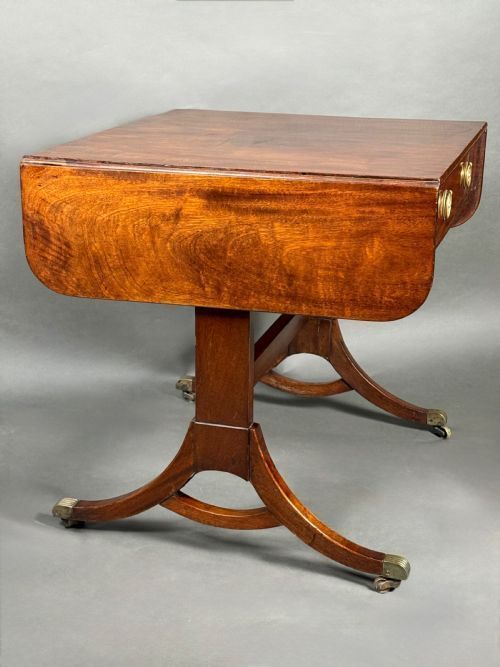
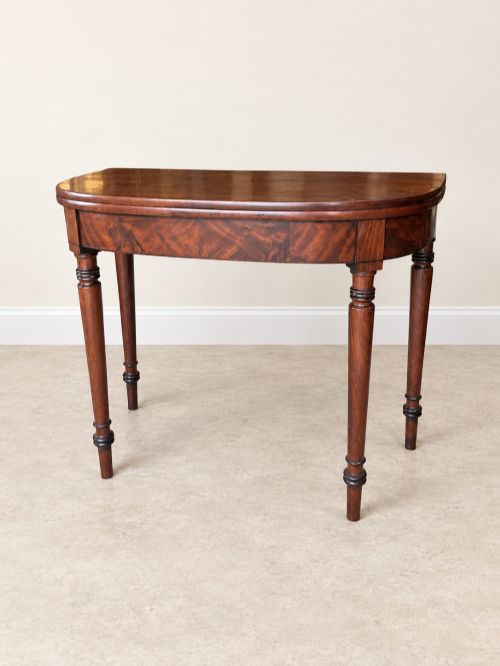
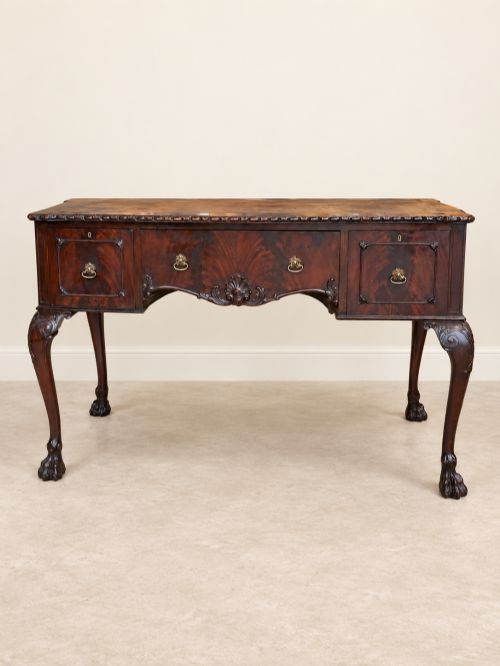
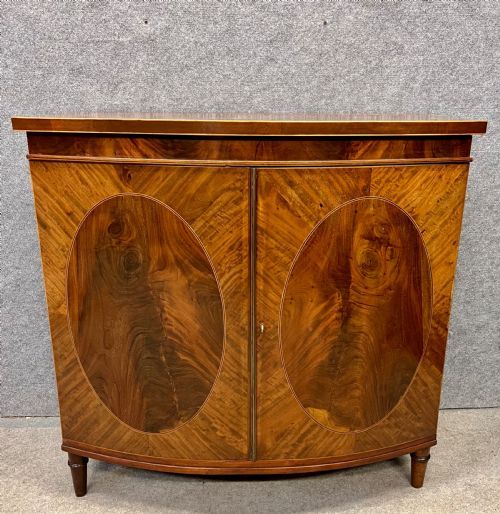
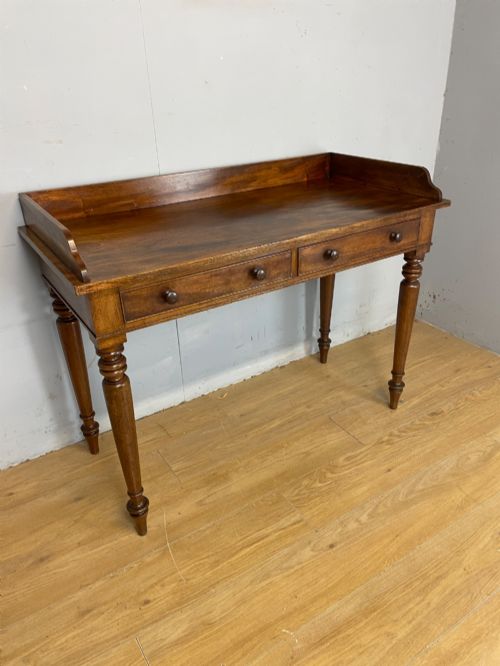
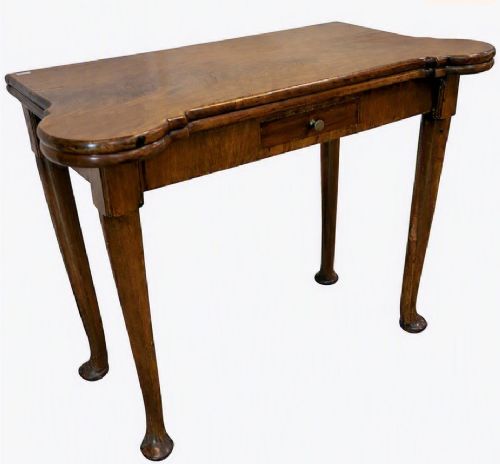
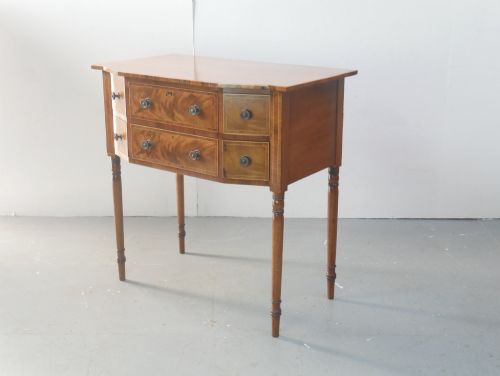
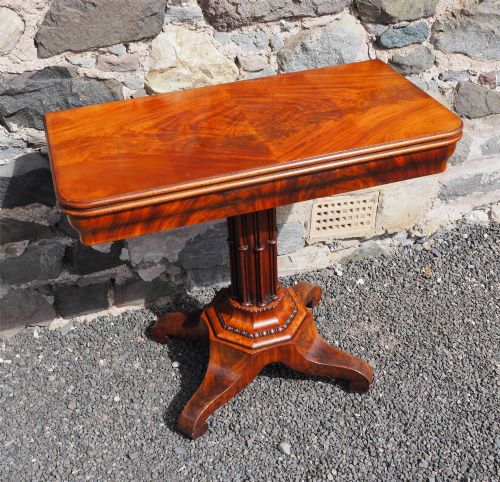
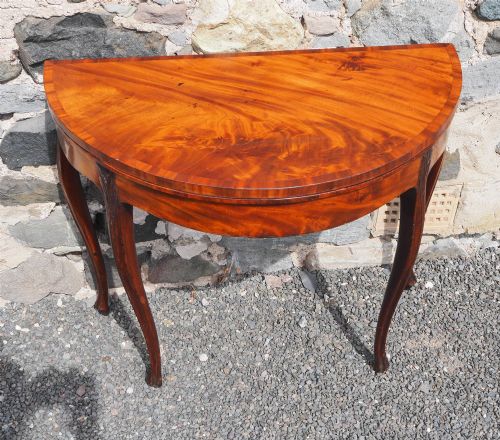
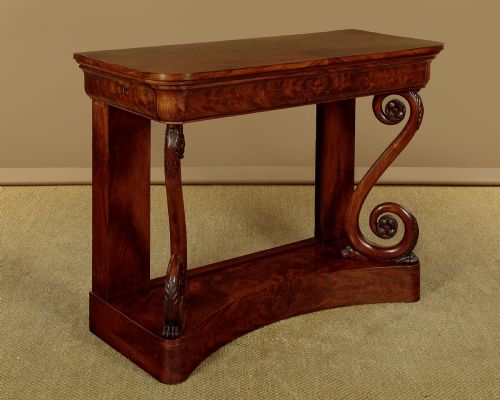
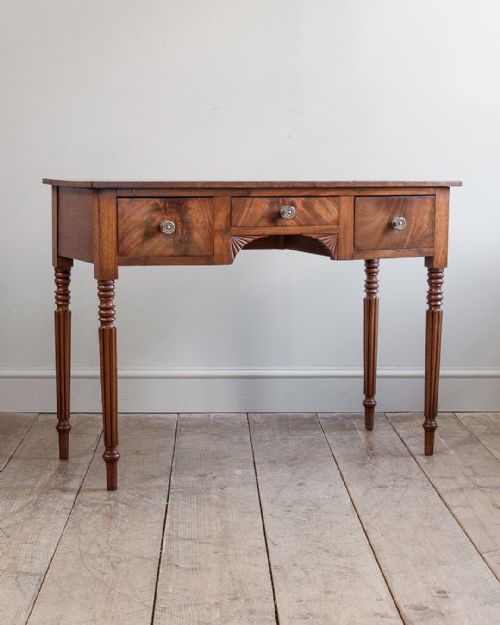
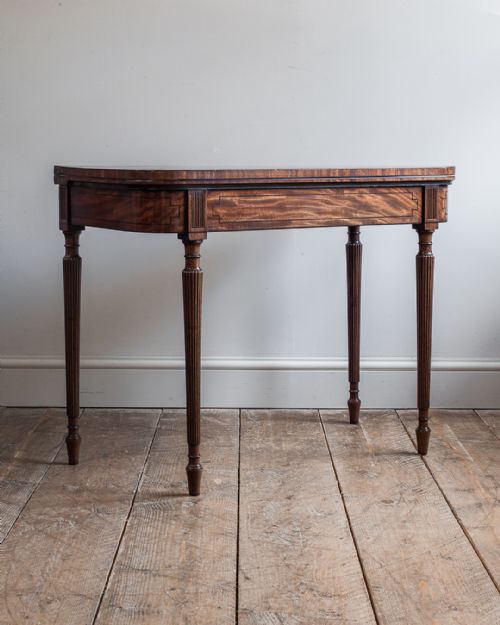
Flame Mahogany Console Table
A flame mahogany console table brings striking grain figures and rich warmth to an interior, making it a sought-after piece for hallways and reception rooms.
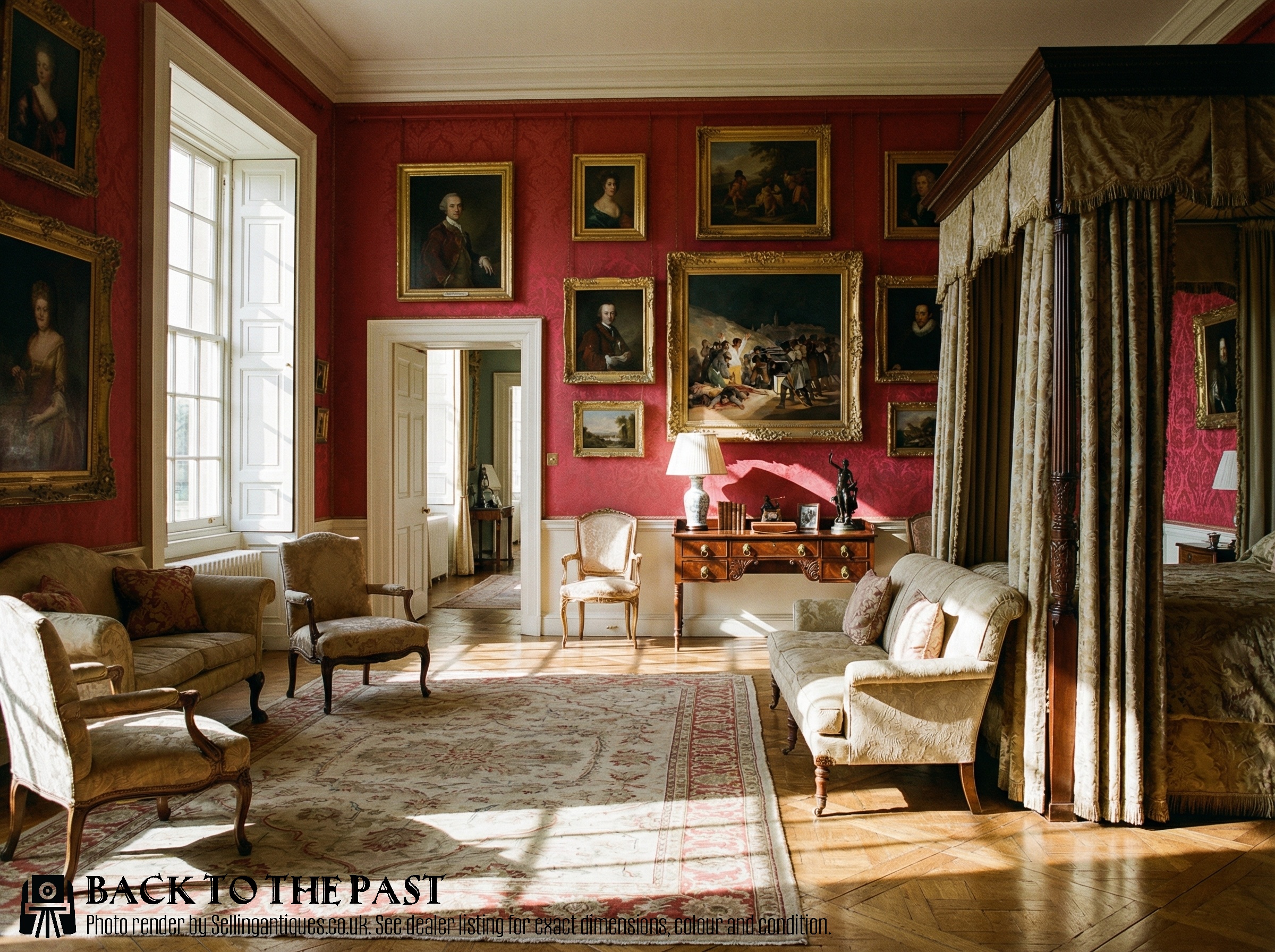
Flame Mahogany Console Table
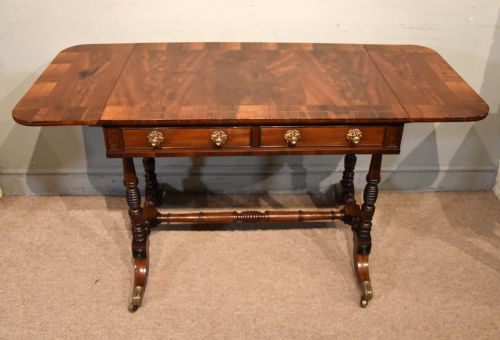
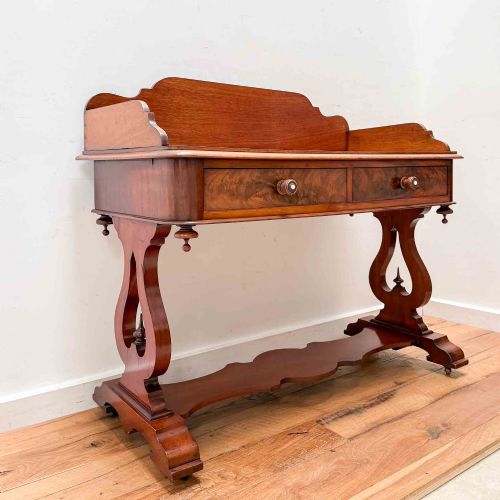
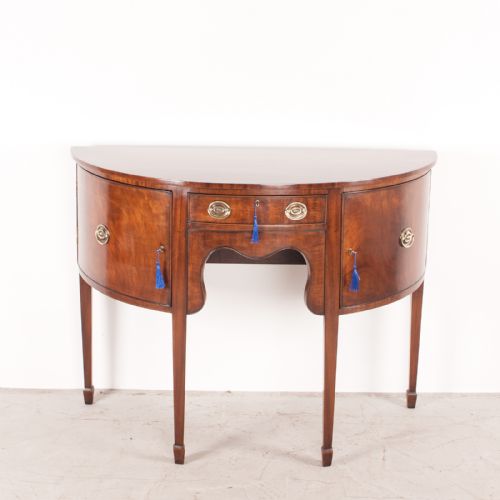
When you search for a flame mahogany console table, you are looking at wall-mounted or freestanding side furniture designed to anchor a room and display decorative objects. The pieces found here span the eighteenth, nineteenth, and early twentieth centuries, reflecting styles from Georgian elegance to French Empire and William IV robustness.
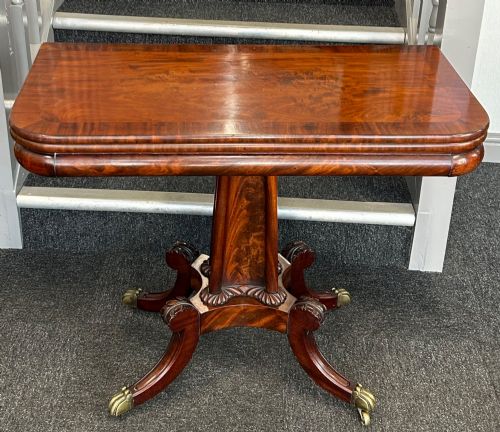
The selection ranges from direct console and serving forms to related surfaces such as sofa tables, card tables, and occasional tables that share similar proportions and materials. You will frequently encounter examples bearing marble tops, or featuring fold-over mechanisms that double their surface area.
Origins represented in these listings stretch across English workshops, Irish cabinets, and continental centres, notably French Empire production and Italian craftsmanship. This variety means you can choose between restrained linear forms and heavily figured showpieces depending on the character of your space.
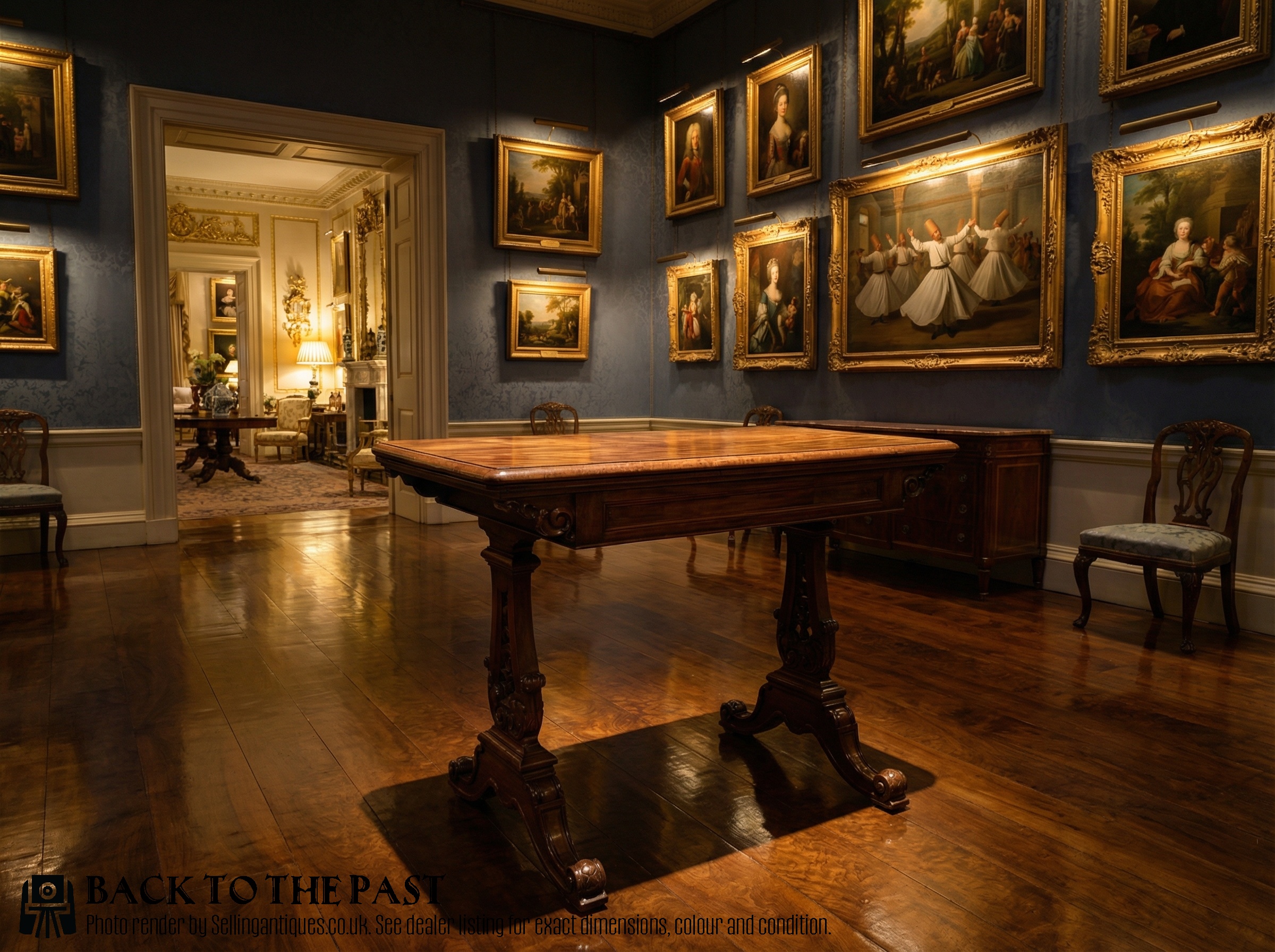
What varies in quality
The distinction between standard pieces and the finest examples rests on the intensity and placement of the veneer figures. Superior tables display deep, uninterrupted flame patterns that wrap cohesively around the apron and legs, matched with pristine original marble slabs or finely cast ormolu.
Proportion and execution of carved elements further separate the grades, as master cabinet makers achieved sharper definition in acanthus leaves, claw feet, and giltwood mounts. Structural integrity and the survival of original polished surfaces without excessive restoration dictate the upper tier of desirability.
Flame Mahogany Console Table Retail Price Guide 2026
Typical asking prices for flame mahogany console table among the pieces listed under this phrase on Sellingantiques today, from the lower quarter to the upper quarter. They describe what is for sale here now, not the wider market.
Some nineteenth-century makers carved dolphins right into the table supports, proving that Victorian furniture designers loved marine life just as much as we do.
The Flame Mahogany Console Table Glossary
- Flame mahogany veneer
- A thin slice of wood cut from the fork of the mahogany tree where branches meet the trunk, producing a distinctive, flickering flame-like pattern. This material was prized for decorative drawer fronts and table tops.
- Ormolu
- Gilded bronze mounts applied to furniture, frequently seen on French Empire pieces. The technique involves fusing gold to a bronze base to create rich metallic highlights.
- Console table
- A table designed to stand against a wall, traditionally fixed with brackets or supported by front legs. These tables often served decorative display purposes in formal halls and reception rooms.
- Demi-lune
- A half-moon shape characteristic of certain side tables and sideboards. This curved form allowed furniture to sit flush against a wall while softening the room's geometry.
- Fold-over table
- A table featuring a hinged top that opens to double the usable surface area, commonly found on card tables and tea tables. The mechanism often reveals a baize-lined playing surface or a hidden compartment.
Flame Mahogany Console Table: Frequently Asked Questions
Where should I place a console table?
These tables traditionally anchor entrance halls, living rooms, and dining spaces where floor space is limited. Their shallow depth allows them to sit against walls without obstructing walkways.
They function well beneath large mirrors or artwork, providing a surface for lamps, decorative bowls, and everyday items.
How do I care for flame mahogany?
Protect the polished wood surfaces by keeping them away from direct sunlight and excessive moisture. Regular dusting with a soft, dry cloth preserves the finish.
Avoid commercial silicone sprays and rely instead on traditional beeswax applied sparingly when the wood appears dry.
What is the difference between a console and a serving table?
Console tables were historically designed primarily for display against a wall, sometimes requiring structural attachment for stability. Serving tables were built sturdier to hold food and heavy objects in dining rooms.
Over time, the terms often overlapped in antique descriptions, though serving tables typically offer broader proportions.
How can I tell a Regency table from a Georgian one?
Georgian pieces, particularly from the George III era, often feature classical restraint, straight tapered legs, and subtle stringing inlay. Regency and William IV examples tend to introduce bolder architectural elements, such as heavy pedestal bases, carved paw feet, and expansive flame veneers.
Looking at the overall silhouette and secondary timber underneath helps clarify the period of production.