
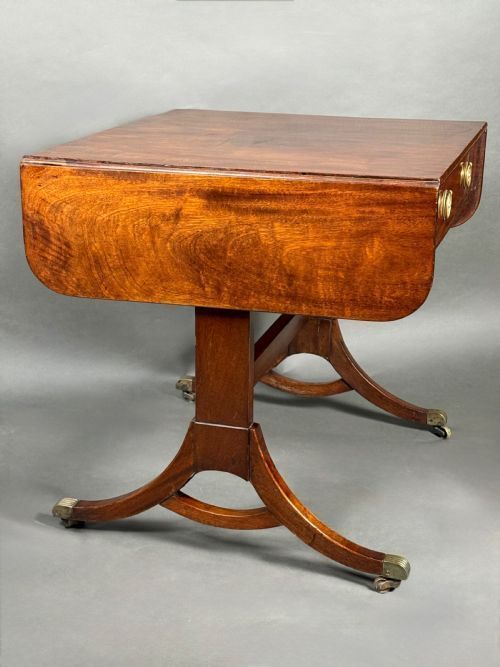
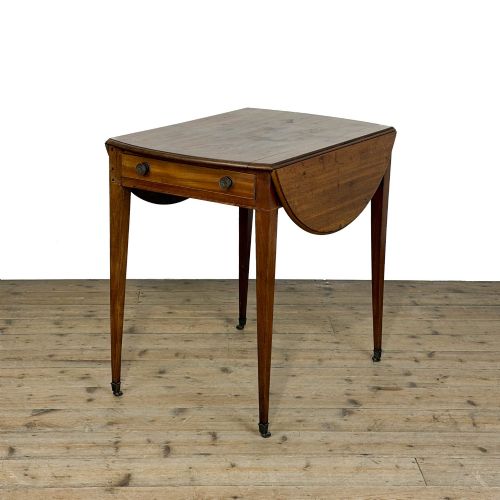
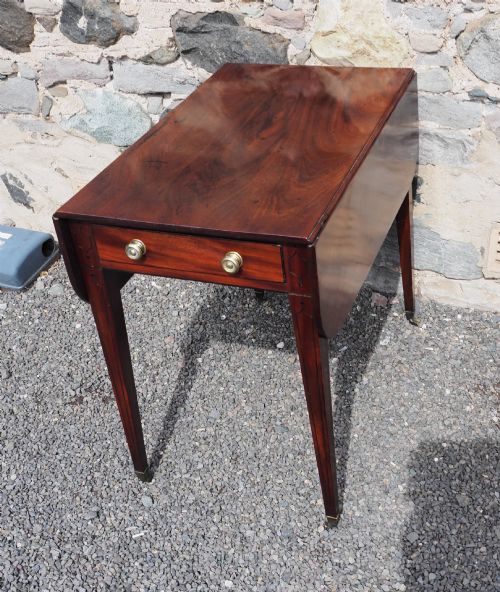
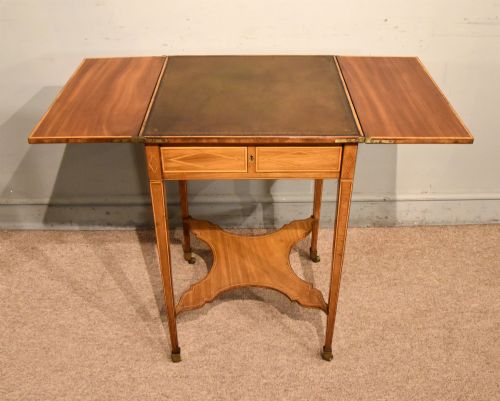
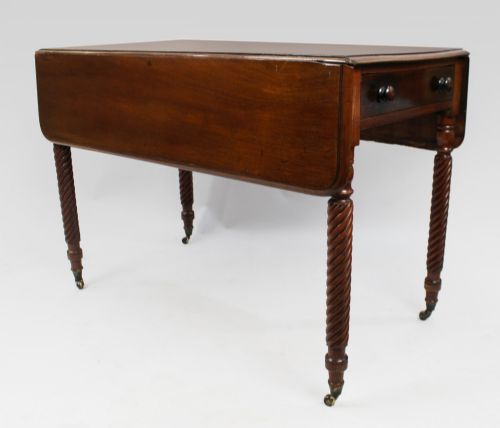
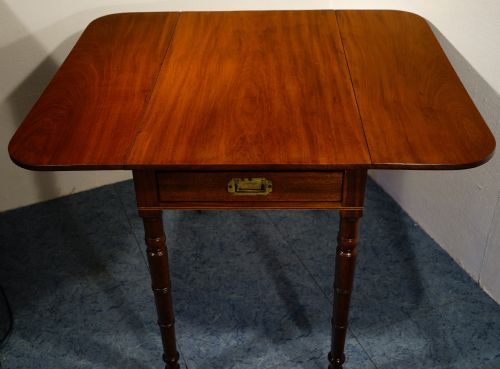
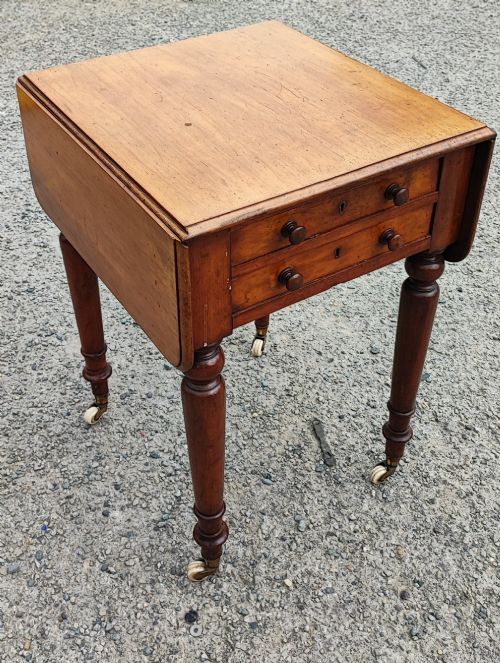
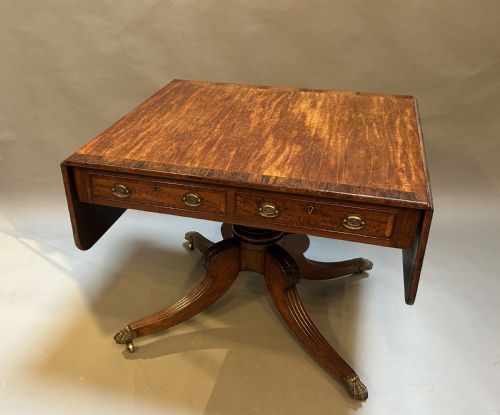
Brown Wood Pembroke Table
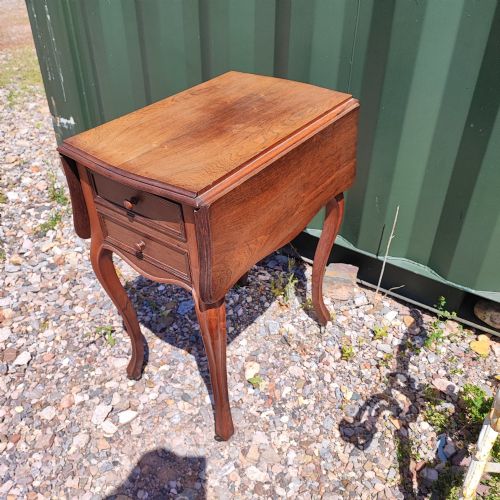
A brown wood pembroke table is a drop-leaf occasional piece prized for extending surfaces flexibly in period rooms.
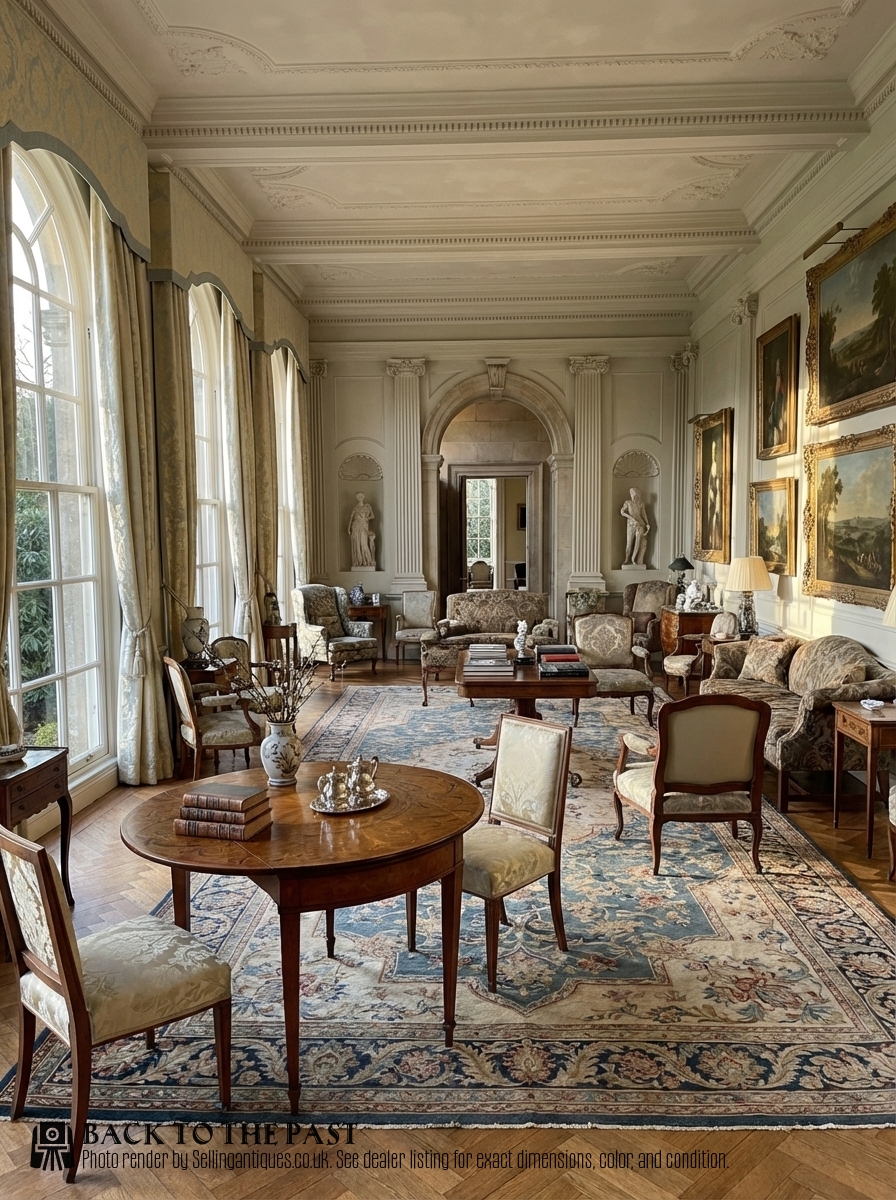
What these tables are
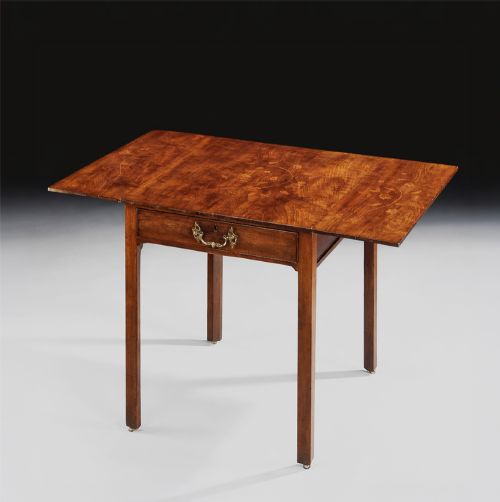
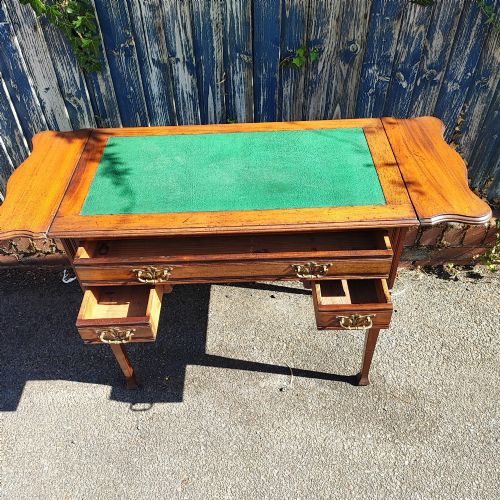
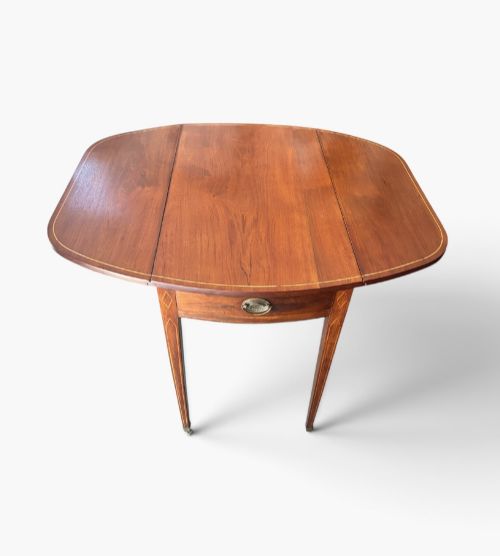
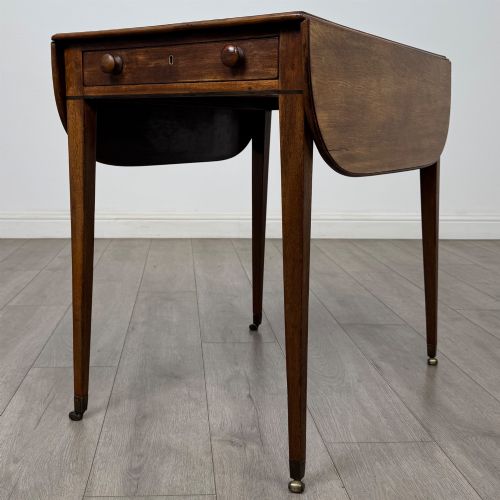
A brown wood pembroke table appears across Georgian, Regency, and Victorian periods, offering folding leaves that drop down when space is tight. These tables serve as versatile side tables or occasional tables in living spaces.
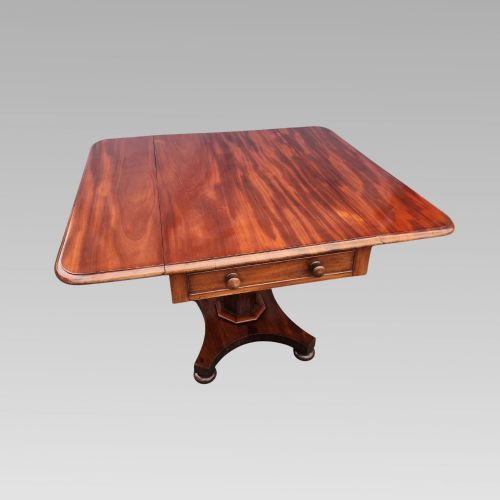
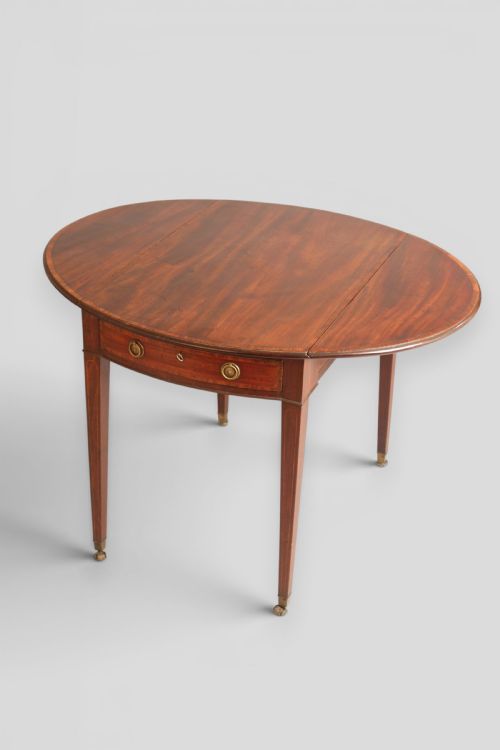
The inventory on this page ranges from early nineteenth-century examples to later 1900 pieces, showing both rectangular and oval formats. Most pieces encountered here utilise mahogany as the primary timber.
How they were made
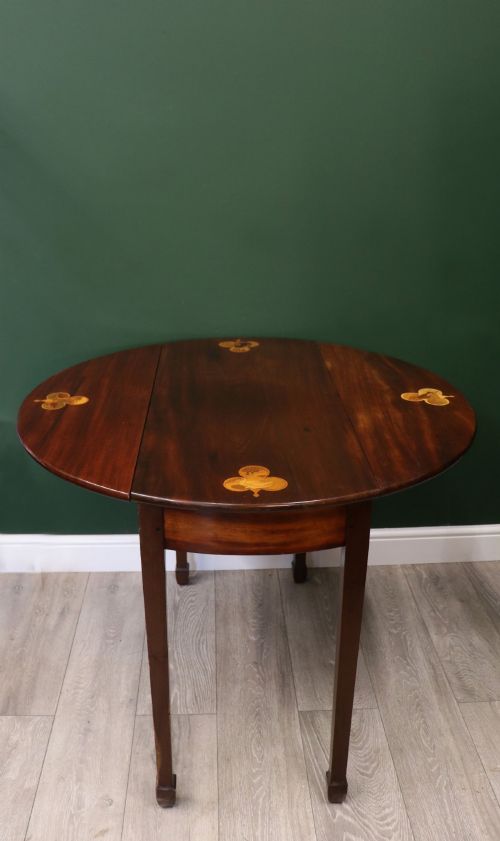
Cabinet makers constructed these drop-leaf tables predominantly using solid mahogany and veneers, often incorporating satinwood for contrasting details. Marquetry and inlay feature on select Georgian variants to ornament the surface.
Hardware components include brass fittings and hinges that support the folding flaps and drawer mechanisms. Metal elements operate alongside traditional joinery to secure the hinged leaves.
Retail Price Guide 2026
Typical UK retail prices for brown wood pembroke table, calculated from the Sellingantiques database of over a million retail prices indexed since 2003. This retail price guide relies exclusively on Sellingantiques data; no external sources or auction records are used, so the figures do not describe the wider market.
These tables hide their hinged flaps so well that unsuspecting tea cups have tumbled off when guests lean too casually.
What varies in quality
Quality separates simple utility pieces from finer decorative examples through the intricacy of inlay work and the choice of timbers. Satinwood highlights and marquetry indicate higher ambition in workshop design.
The crispness of the timber grain and the proportion of the drop-leaf supports determine the visual balance of the piece. Superior construction maintains stability across the hinged flaps when fully extended.
The Brown Wood Pembroke Table Glossary
- Pembroke table
- A small occasional table featuring two hinged flaps that drop down at the sides. It often includes one or more small drawers.
- Drop-leaf
- A tabletop design with hinged side sections that raise to extend the surface area. These leaves lower when compact storage is required.
- Marquetry
- Decorative veneer work forming pictorial or geometric patterns using various woods. This technique adorns select Georgian tops.
- Satinwood
- A lustrous yellowish timber utilised for contrasting inlay and stringing on eighteenth and nineteenth-century furniture.
- Regency
- A stylistic period spanning the early nineteenth century defined by classical restraint and elegant proportions.
Frequently Asked Questions
What is a pembroke table used for?
These drop-leaf tables function as flexible side tables or small occasional surfaces in principal rooms.
Their folding leaves allow them to sit compactly against a wall until extra surface area is needed.
How do I date a mahogany pembroke table?
Dating relies on stylistic markers and timber characteristics associated with Georgian, Regency, and Victorian periods.
Construction methods and secondary woods also help indicate whether a piece originates from the early nineteenth century or later.
Are these tables solid mahogany?
Makers utilised solid mahogany alongside mahogany veneers for the tops and framing of these pieces.
Secondary timbers and brass hardware support the folding leaf mechanisms beneath the surface.
What is the difference between Georgian and Victorian examples?
Georgian and Regency pieces frequently incorporate finer decorative elements like satinwood inlay and marquetry.
Victorian iterations tend to show heavier proportions while retaining the standard drop-leaf format.