
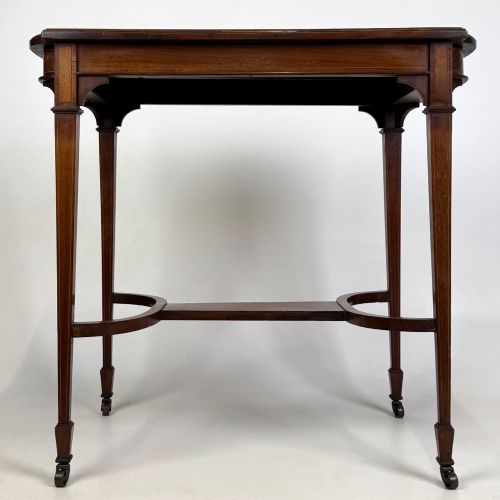
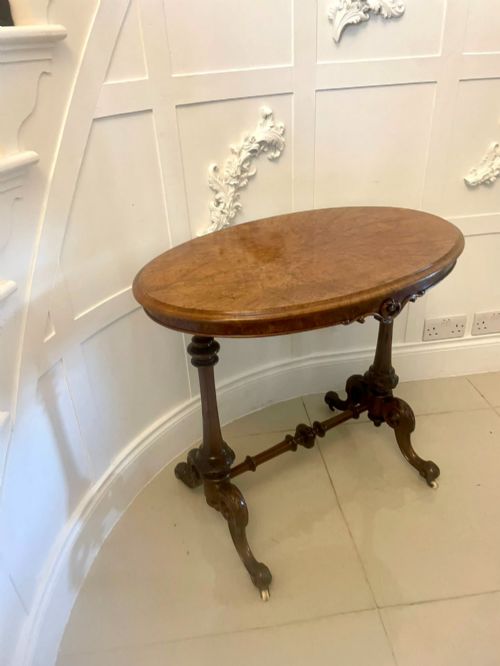
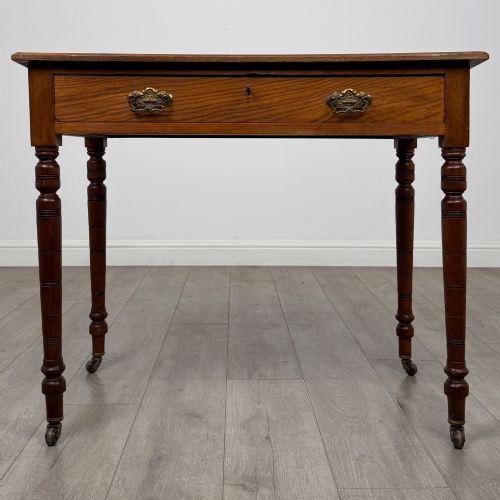
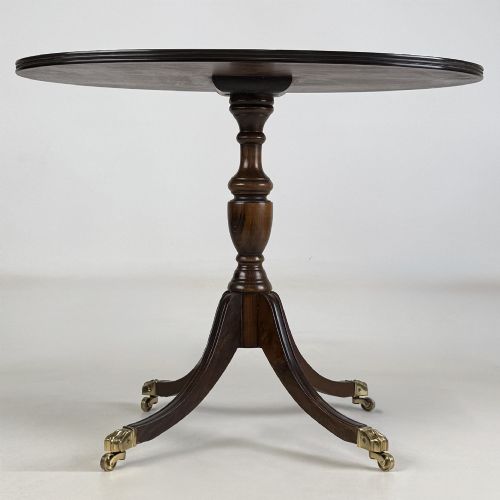
Antique Castored Side Table
An antique castored side table offers movable surface space and practical utility, built in periods from the Georgian era to the Edwardian years.
Antique Castored Side Table
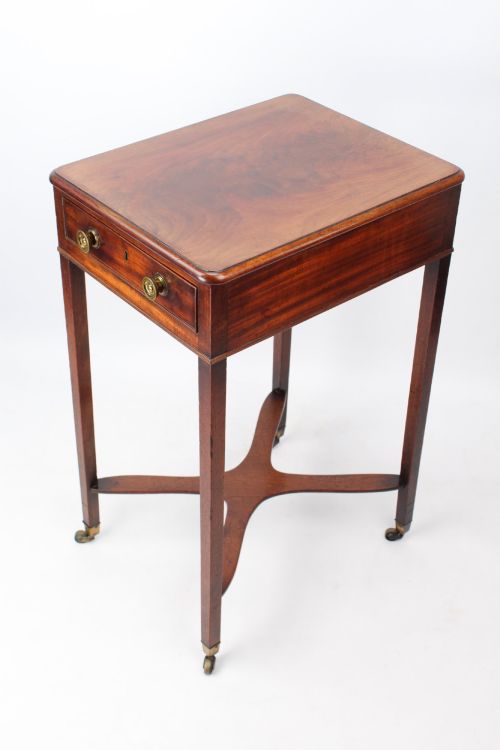
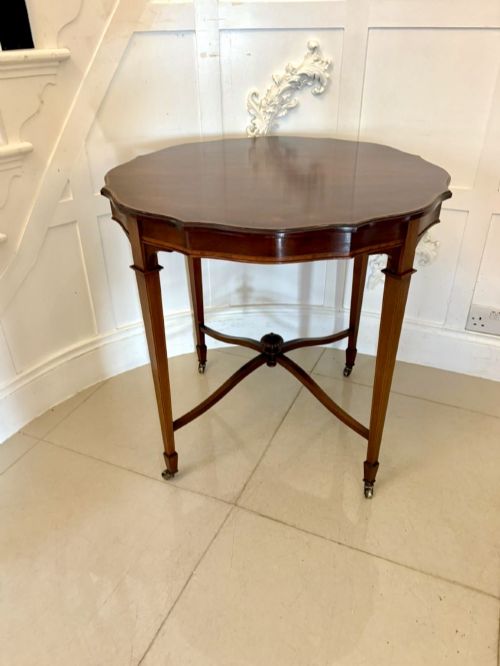
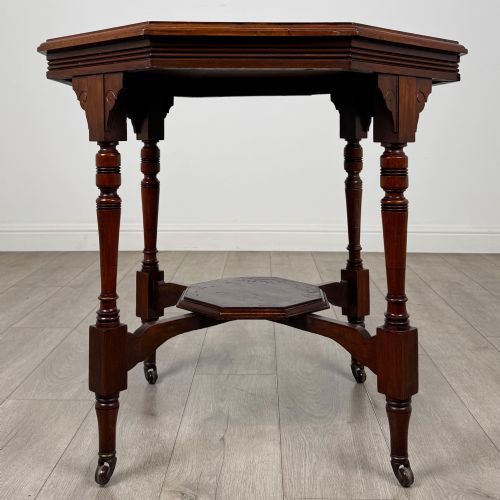
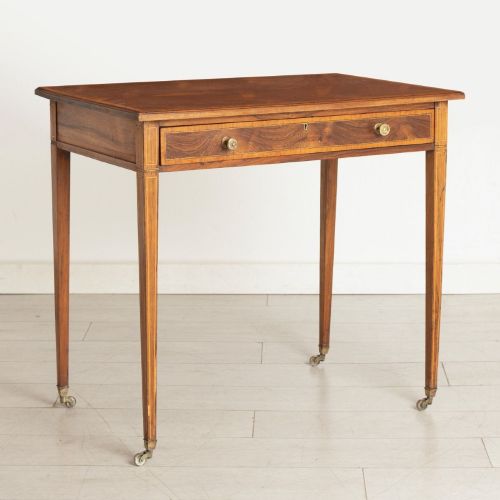
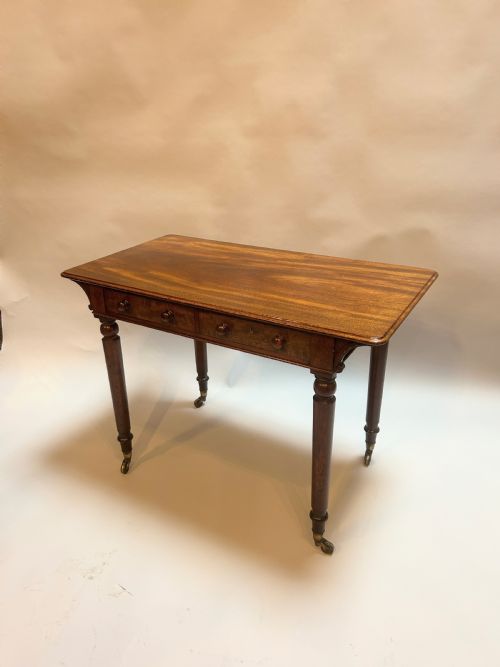
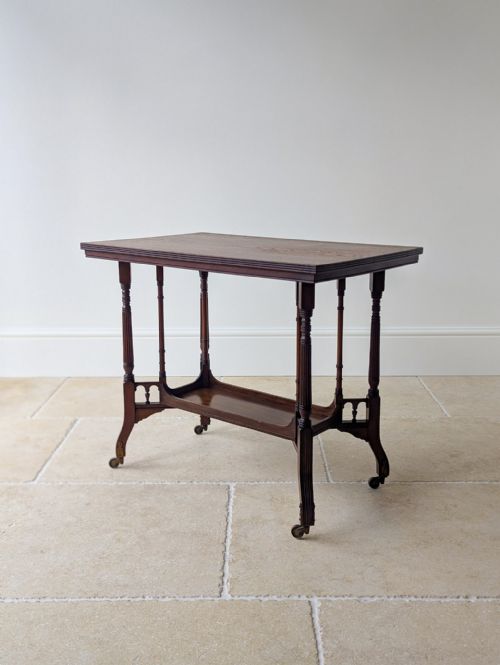
An antique castored side table brings flexible surface utility to a room, moving easily on small wheels fixed to the feet. When you search for this phrase, you encounter forms ranging from compact occasional tables and lamp tables to drop-leaf pembroke tables and writing desks.
The selections span multiple historical periods, with pieces originating in the Georgian, Regency, William IV, Victorian, and Edwardian eras. Mahogany, rosewood, and walnut dominate the forms, frequently paired with brass castors to ease movement across carpets and floorboards.
How they were made
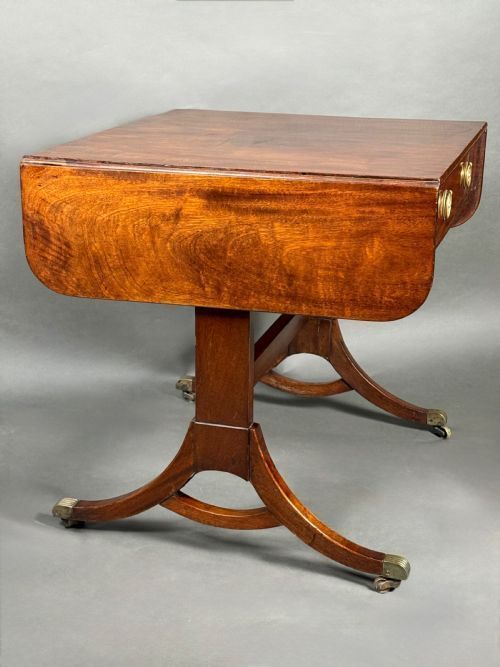
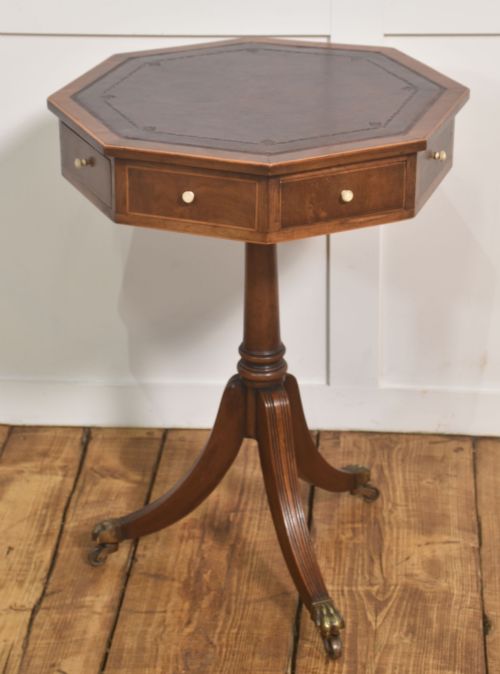
Cabinet makers utilised dense timber stocks like flame mahogany, rosewood, burr walnut, and satinwood, often applying cross-banding and boxwood stringing to accentuate the edges. Tops frequently rested on turned or pillar supports that transitioned downward into curving or sabre legs fitted with brass castors.
Joinery techniques relied on traditional housing and dovetail joints for drawers, while drop-leaf mechanisms utilised hinged rule joints. Secondary woods supported structural frames, and surfaces received hand-rubbed finishes that highlighted natural timber grain.
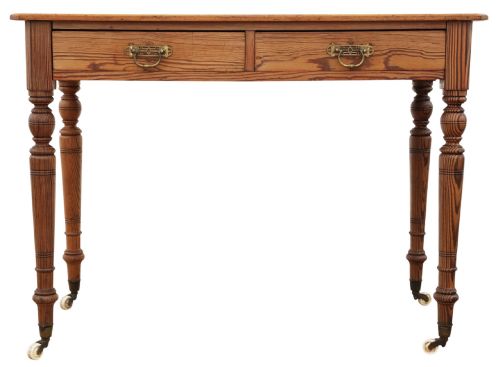
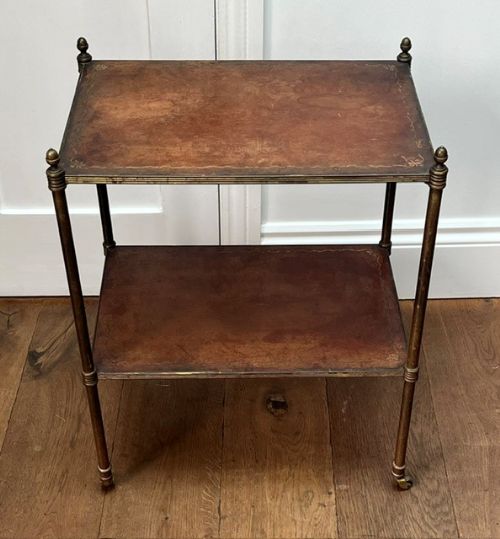
The furniture forms include side tables, occasional tables, writing desks, pembroke tables, and etageres.
What varies in quality
Quality rests primarily on the selection of timber veneers and the crispness of inlaid details such as boxwood stringing. Superior examples display carefully matched flame mahogany or burr walnut figures across the top surface, demonstrating intentional grain alignment.
Construction solidity and original hardware also dictate standard. Tables retaining their matching brass castors and functioning internal drawer framing command greater appreciation among collectors than those altered over time.
Gillows·Gregory & Co·Mallett of London
The Antique Castored Side Table Glossary
- Castor
- A small wheel fitted to the foot of a piece of furniture to allow easy rolling across the floor. They are frequently cast from brass.
- Pembroke table
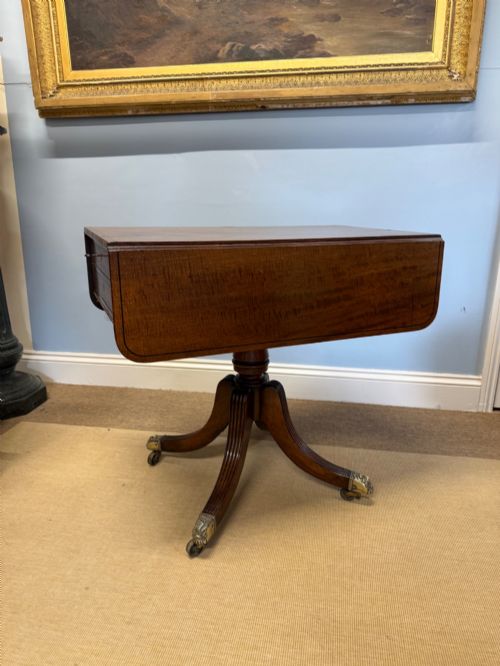
- A small rectangular table featuring two hinged drop leaves on opposing sides. It often includes a single end drawer.
- Satinwood
- A lustrous, hard timber native to India and Ceylon, displaying a golden yellow colour. Makers utilised it for inlay work and decorative banding.
- Stringing
- A narrow strip of contrasting wood inlaid into the surface of a panel or table top. Boxwood was a common choice for this technique.
- Étagère
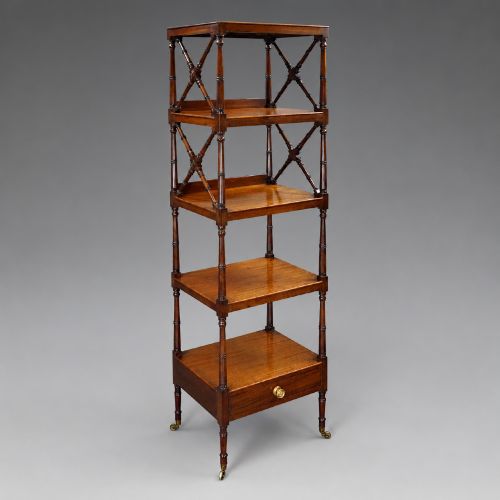
- An open tiered piece of furniture designed for displaying small objects or books. Examples in this category often feature multiple shelves supported by slender columns.
Antique Castored Side Table: Frequently Asked Questions
What periods do these tables come from?
The pieces span several eras, appearing predominantly from the Georgian, Regency, William IV, Victorian, and Edwardian periods. Craftsmanship evolved through these decades from formal mahogany designs to lighter satinwood and walnut occasional furniture.
Later examples stretch into the twentieth century, incorporating styles such as the Aesthetic Movement and Regency Revival while retaining functional castors for mobility.
How were castored tables used originally?
These tables served flexible functions in domestic interiors, moving easily around sitting rooms, libraries, and bedrooms as needs shifted. Drop-leaf and pembroke variants expanded when dining or writing occurred, then contracted to save floor space.
Writing and lamp tables provided portable surfaces for illumination and correspondence, allowing occupants to reposition furniture near fireplaces or windows.
Which timbers are most common?
Mahogany forms the majority of the surviving pieces, appearing in straight-grained, flame, and figured varieties across Georgian and Victorian examples. Rosewood and walnut also feature prominently, particularly in mid-nineteenth-century items.
Satinwood and boxwood appear frequently as contrasting inlay elements, while pitch pine and oak support utility writing and dressing forms.
How do I identify a Regency table?
Regency pieces often display classical proportions, sabre legs, and rich mahogany or rosewood surfaces accented with brass mounts and stringing. Tilt-top actions and Pembroke configurations are common among tables from this period.
Makers of this era focused on clean architectural lines combined with figured timber veneers and functional brass castors for ease of movement.