






Victorian Drop Leaf Desk
These Victorian drop leaf desk pieces and related folding tables offer flexible working space with rich timber grain and clever extending flaps.
Victorian Drop Leaf Desk
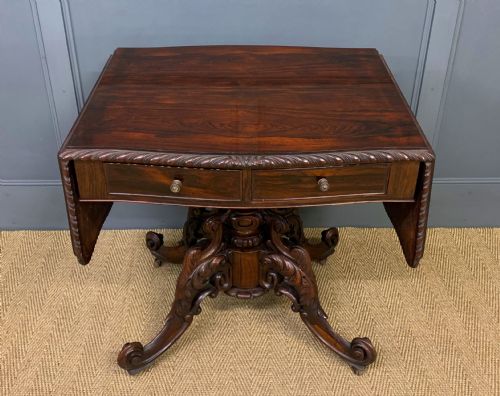
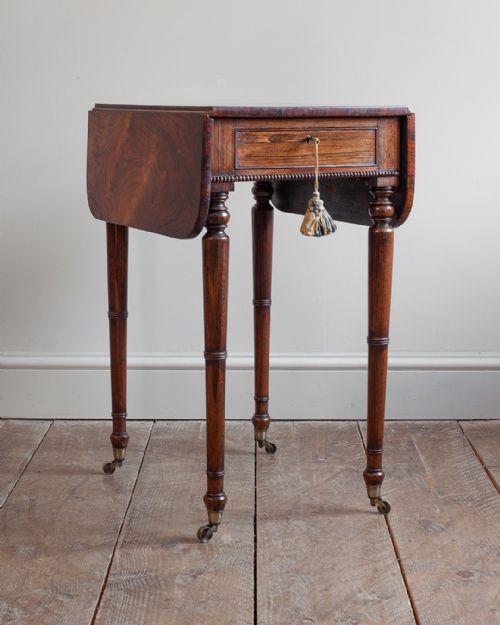
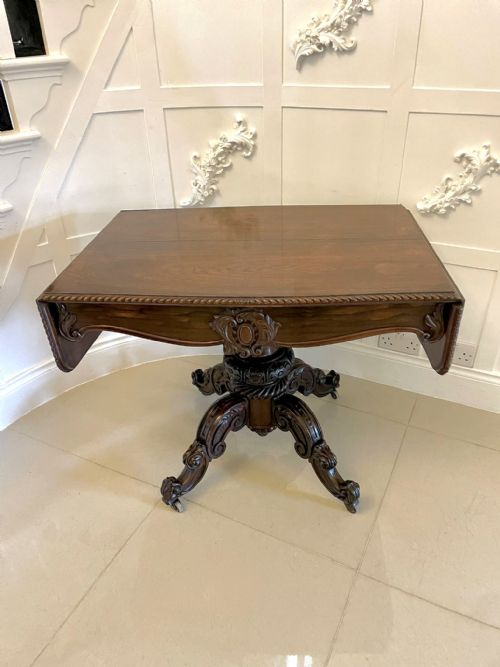
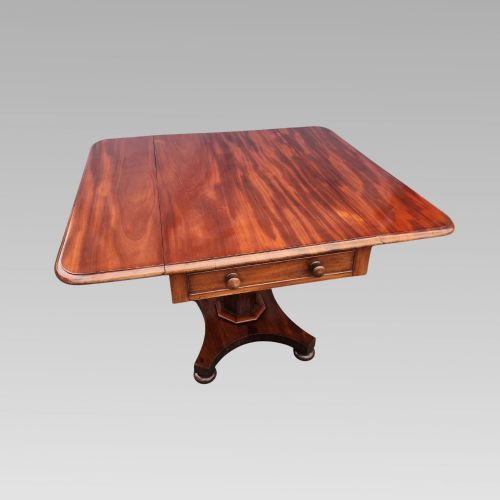
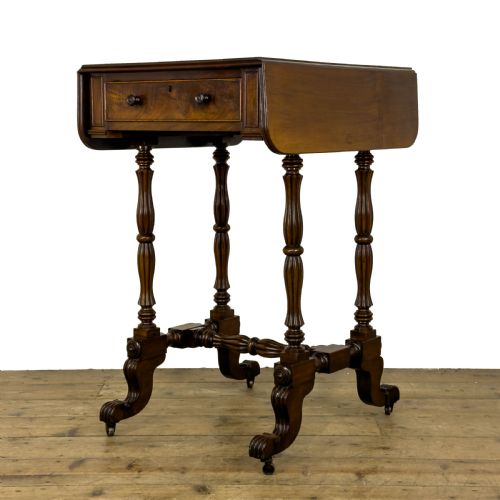
When you search for a victorian drop leaf desk, you encounter versatile writing and work tables designed with hinged flaps that drop down or lift up on folding supports. The selection centres primarily on mahogany, rosewood, and pine Pembroke or sofa tables from the nineteenth century.
Many of these pieces double as sewing or occasional tables, often featuring fitted drawers and writing surfaces. The materials span native and exotic timbers including oak, fruitwood, and burr walnut, reflecting the domestic needs of the period.
What varies in quality
The calibre of a nineteenth-century work or sofa table rests upon the choice of timber and the precision of its joinery. Examples featuring burr walnut veneers, intricate marquetry inlay, and carved rosewood demonstrate superior craftsmanship.
Functionality of the drop leaves and the smooth operation of internal drawers distinguish finer pieces from simpler utility tables. The integration of cabriole legs and matching grain across the flaps elevates the status of the furniture.
Victorian Drop Leaf Desk Retail Price Guide 2026
Typical asking prices for victorian drop leaf desk among the pieces listed under this phrase on Sellingantiques today, from the lower quarter to the upper quarter. They describe what is for sale here now, not the wider market.
Secret compartments inside nineteenth-century work tables often held needles and thread, proving that Victorian sewing required as much engineering as a modern desk.
The Victorian Drop Leaf Desk Glossary
- Drop-leaf table
- A table with hinged flaps on either side that can be folded down to save space or raised to increase surface area. These mechanisms allowed furniture to adapt easily to multi-purpose rooms.
- Pembroke table
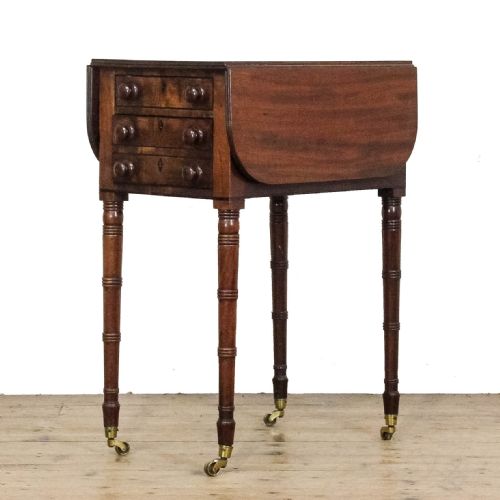
- A small rectangular table with two folding leaves, typically fitted with a single drawer. They gained popularity in the eighteenth and nineteenth centuries for domestic writing and breakfast use.
- Sofa table
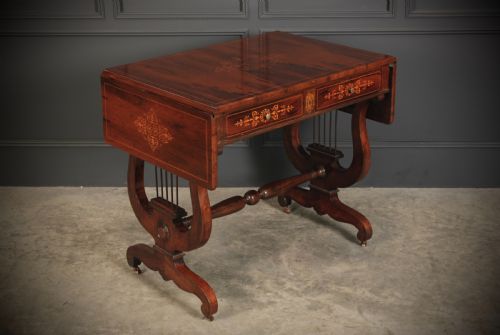
- A long, narrow table designed to stand in front of or behind a sofa, usually equipped with drop leaves and small drawers. They often feature double pedestal bases or trestle supports.
- Marquetry inlay
- Decorative patterns created by fitting thin slices of wood and other materials into a prepared veneer surface. This technique added elaborate floral or geometric designs to high-status rosewood and walnut furniture.
- Rule joint
- A moulding joint used to connect a table top to its drop leaf, leaving no gap when the leaf is raised. It creates a neat, finished appearance along the hinge line.
Victorian Drop Leaf Desk: Frequently Asked Questions
How do I use a drop leaf table?
Raise the hinged leaves on either side and swing the supporting wooden gate legs or brackets into place beneath them. Lower the leaves when you need to save floor space in a compact room.
Keep the surface clear of excessive weight on the unsupported outer edges of the flaps. Use coasters and placemats to protect the polished mahogany or rosewood timber from moisture.
What is a Pembroke table?
A Pembroke table is a compact rectangular table featuring two drop leaves on opposing sides and usually one or two small drawers. They were originally used for light writing, breakfast, or needlework.
Their relatively small footprint made them easy to move around nineteenth-century reception rooms and parlours as needed.
How do I identify a Victorian sofa table?
Look for a long, narrow proportion intended to sit near seating, combined with folding leaves and matching drawers. Many nineteenth-century examples rest on twin pedestals or shaped cabriole legs.
They frequently combine writing surfaces with compartments for sewing supplies or letters, reflecting domestic habits of the era.
What woods were used in these tables?
Cabinet makers utilised a range of timbers including mahogany, rosewood, burr walnut, oak, and pine. Exotic veneers and fruitwoods also appear across nineteenth-century work tables and kitchen furniture.
The choice of timber often indicates the intended room and social status of the piece, from utilitarian pine to finely figured rosewood.