


Pedestal Pembroke Table
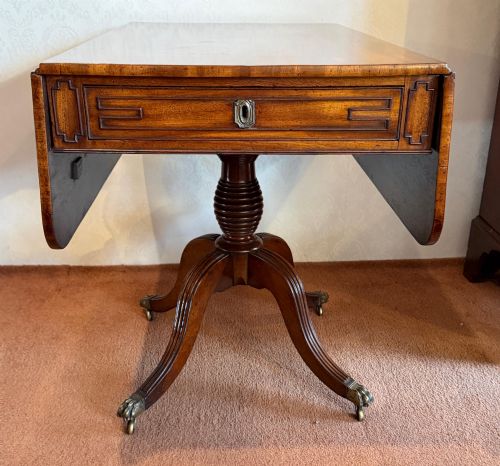
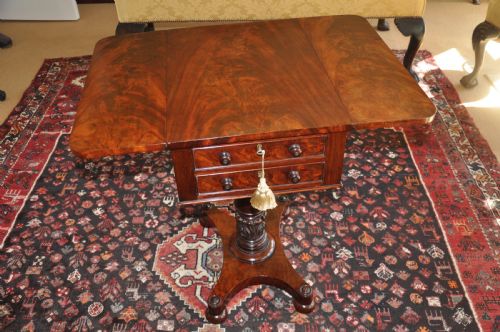
A pedestal pembroke table offers a clever drop-leaf surface balanced on a central column, designed for versatility in period interiors.
What these tables are
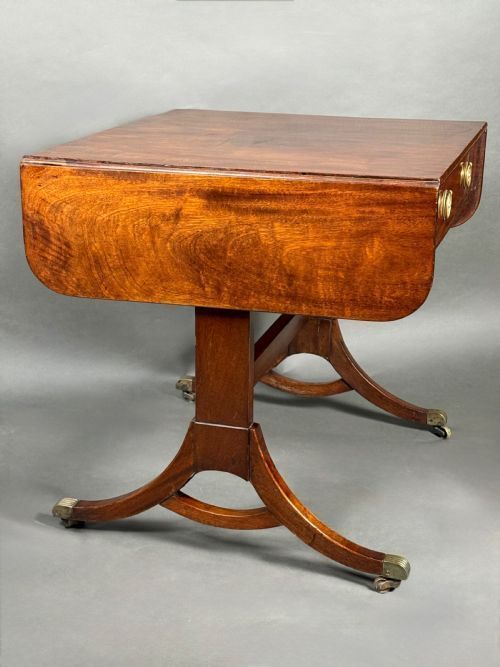
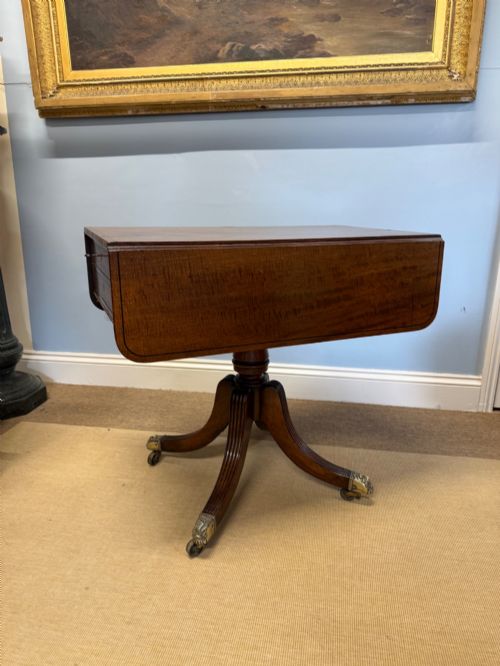
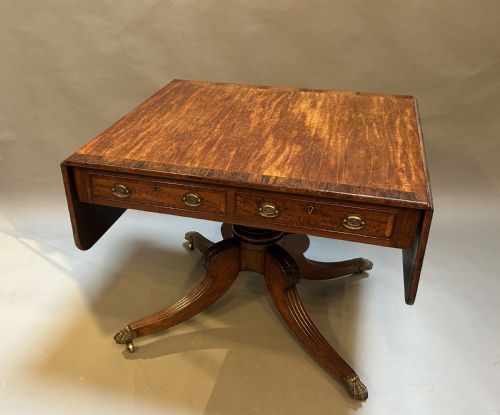
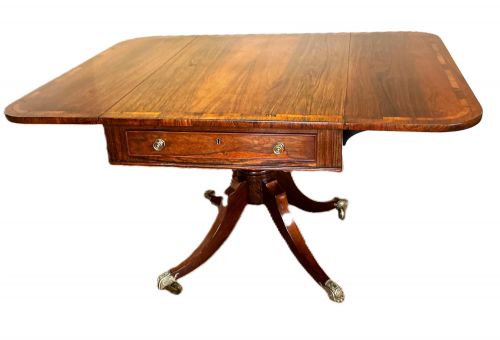
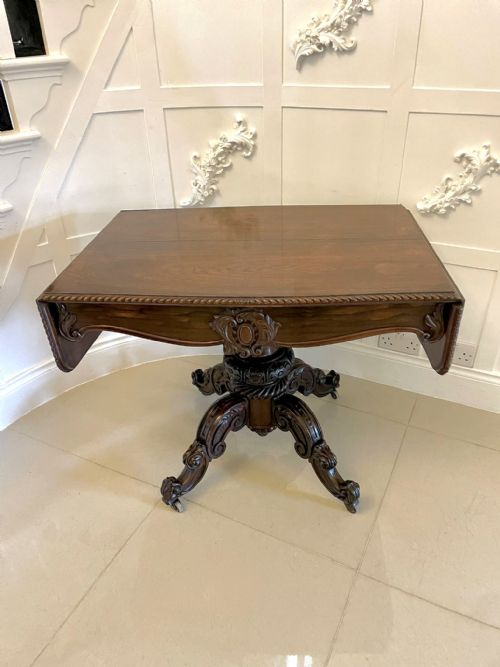
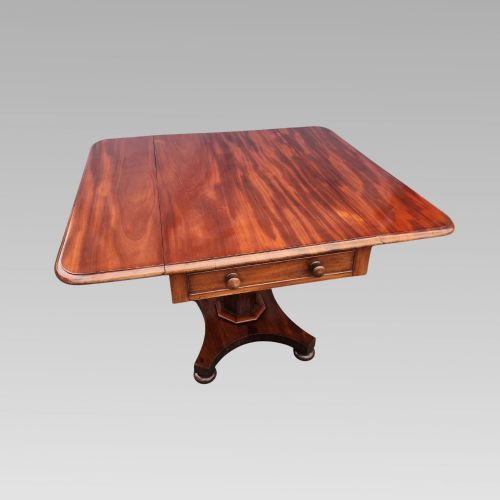
A pedestal pembroke table combines folding side flaps with a central pillar and stable base, serving as a flexible table for various rooms. These pieces appear primarily from the Regency, George III, and Victorian periods, reflecting the eras when such adaptable furniture was commonplace.
The central support generally stands on platform bases or fine feet, distinguishing them from traditional four-legged pembroke tables. This central pillar construction provides greater legroom while maintaining the characteristic drop-leaf top.
How they were made
Cabinet makers constructed these tables using solid and veneered timbers such as mahogany and rosewood. The tops feature hinged drop leaves supported by pull-out wooden brackets or swinging wooden arms beneath the surface.
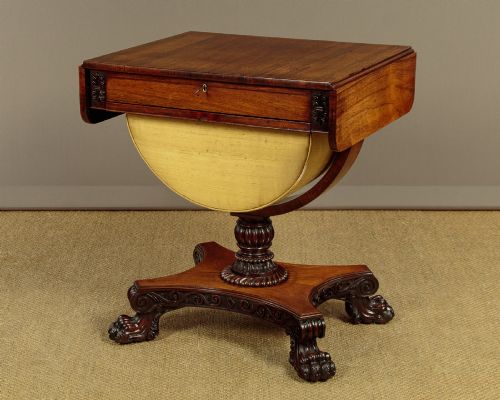
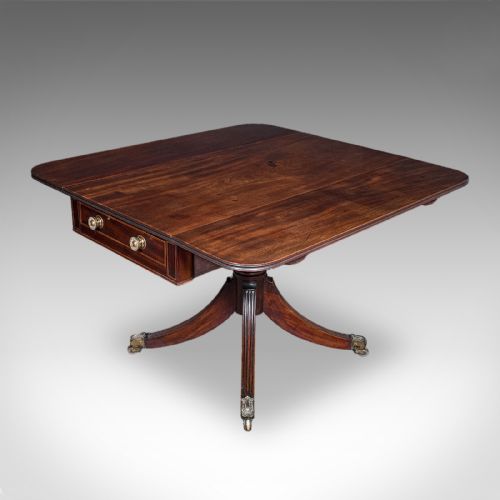
The central column connects the table top to a sturdy pedestal base, often carved or plain, resting on wooden feet or castors. Finer examples incorporate boxwood inlay or brass stringing into the timber surfaces to add decorative contrast.
Retail Price Guide 2026
Typical UK retail prices for pedestal pembroke table, calculated from the Sellingantiques database of over a million retail prices indexed since 2003. This retail price guide relies exclusively on Sellingantiques data; no external sources or auction records are used, so the figures do not describe the wider market.
Listings on this site feature tables predominantly from the Regency, George III, and Victorian periods, constructed in mahogany and rosewood.
What varies in quality
The distinction between standard examples and finer pieces lies in the choice of timber and the precision of the joinery. Superior tables display well-figured grain patterns in the mahogany or rosewood, along with crisply executed inlay work.
Structural refinement also separates the ranges, seen in the stability of the central pillar and the smooth operation of the drop-leaf hinges. Tables featuring finely turned supports and robust claw feet demonstrate greater craftsmanship from the period.
The Pedestal Pembroke Table Glossary
- Pembroke table
- A small table with hinged drop leaves on two opposing sides. This design allowed the surface area to expand or contract according to domestic needs.
- Pedestal support
- A central pillar holding up the table top rather than standard corner legs. This construction frees up space underneath the furniture.
- Drop leaf
- A hinged section of a table top that can be folded down to save space. These flaps are supported when raised by pivoting wooden arms.
- Boxwood inlay
- Narrow strips of pale wood inserted into recesses within a darker timber surface. This technique creates contrasting geometric borders or decorative motifs.
- Sofa table
- A long, narrow table traditionally placed in front of sofas, equipped with drop leaves. They share similarities in form and mechanism with pembroke tables.
Frequently Asked Questions
What is a pedestal pembroke table?
A pedestal pembroke table is a compact furniture piece featuring folding flaps on the sides and a central supporting column. It bridges the gap between a small side table and an expandable surface.
Cabinet makers designed them to sit against walls or in open spaces, ready to expand when extra surface area was required for dining or writing.
How were they used historically?
These tables served multiple functions in period homes, acting as breakfast tables, writing desks, or occasional surfaces for drawing rooms. The drop leaves allowed them to remain compact when space was tight.
In larger rooms, they could be moved easily and opened out to accommodate guests for modest meals or evening pastimes.
How do I identify a Regency period table?
Regency tables often display characteristic design elements such as rosewood veneers, brass inlay, and robust central pillars on platform bases. The proportions tend to be clean and classical.
Makers of this era focused on architectural lines and contrasting wood grains, moving away from the heavier carvings of earlier decades.
Are drop leaves sturdy enough for dining?
The drop leaves are supported by pivoting wooden brackets or swing arms housed beneath the table top. When properly engaged, these supports bear moderate weight safely.
However, users should avoid placing excessive downward pressure on the outer edges of the extended leaves to protect the hinges.
How should I care for rosewood and mahogany?
Maintaining these timber surfaces involves keeping them away from direct sunlight and sudden temperature changes, which can cause wood to warp or fade. Regular dusting with a soft cloth preserves the finish.
Applying occasional appropriate wax feeds the antique grain without building up heavy chemical residues.