

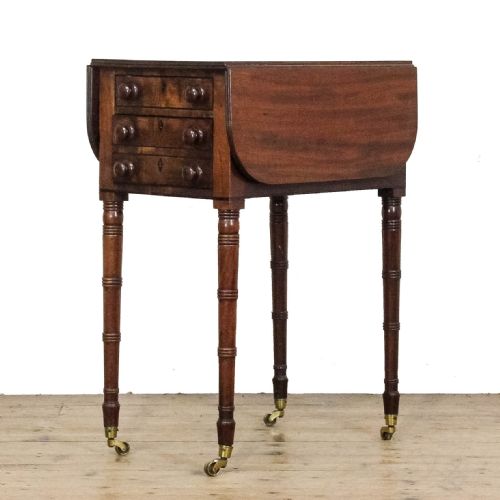


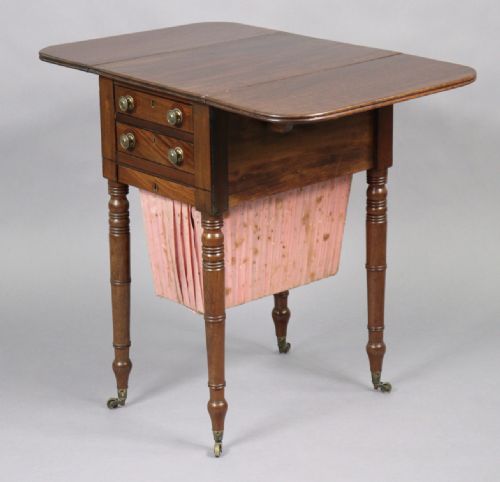


Nineteenth Century Pembroke Table
A nineteenth century pembroke table offers clever drop leaves and compact proportions, serving as a versatile folding surface for any room.
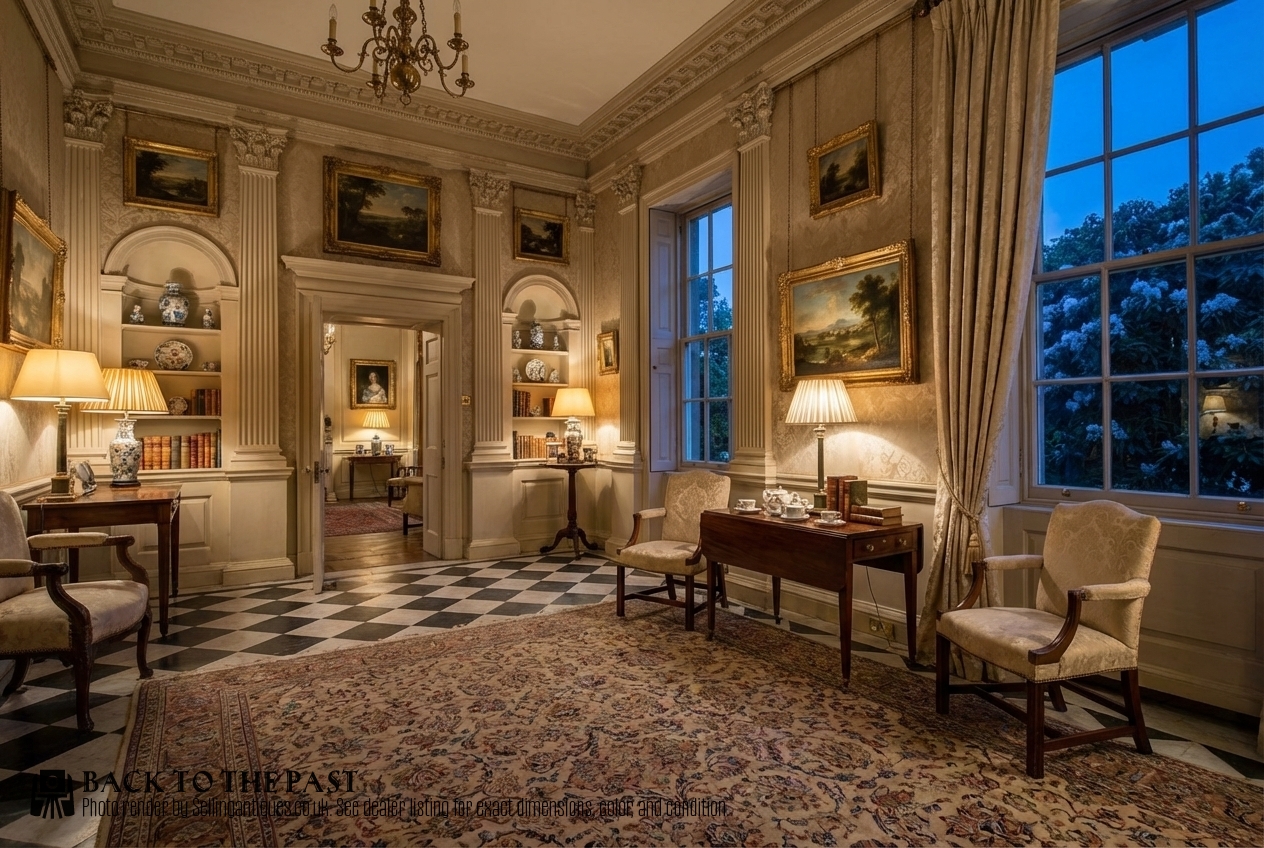
Nineteenth Century Pembroke Table
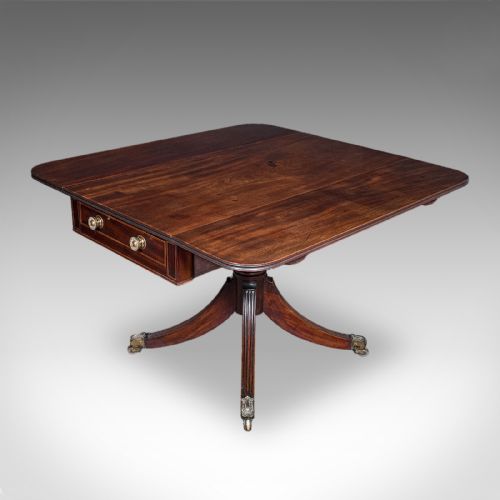
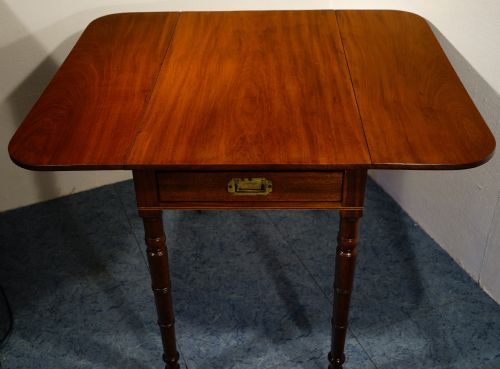
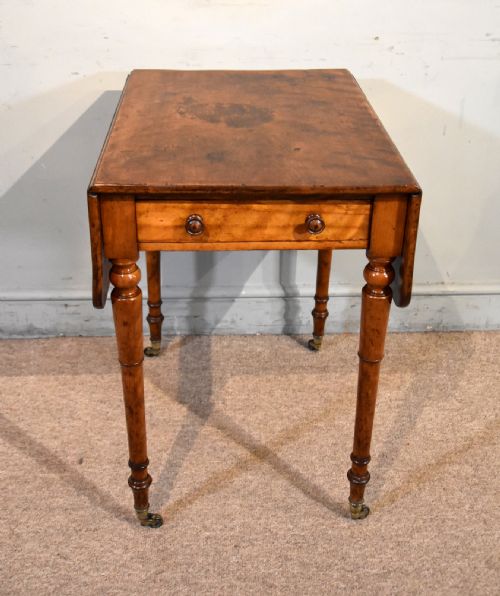
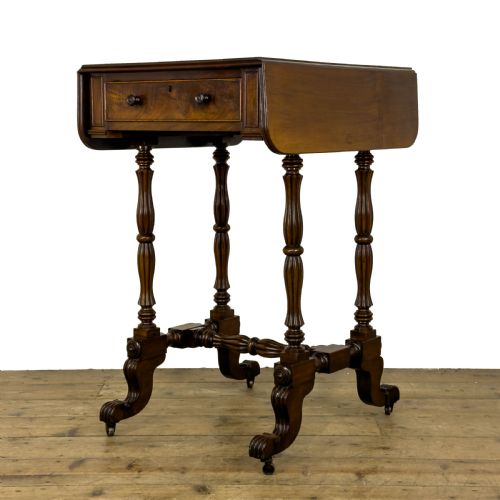
A nineteenth century pembroke table is a domestic folding table defined by its hinged drop flaps on either side, designed to expand surface space when needed and drop down to save room against a wall. The pieces seen here span periods from the Georgian and Regency eras through to the Victorian period, appearing in forms such as occasional tables, side tables, dining tables, and work tables.
Most examples you will encounter are constructed from mahogany, often associated with Cuban variants or pedestals, while others introduce contrasting timbers like satin birch, burr oak, and pollard oak. These tables function equally well as writing desks, breakfast tables, or lamp stands, adapting easily to modern domestic interiors through their practical drop-flap mechanism.
What varies in quality
The distinction between standard examples and finer pieces lies in the choice of cabinet timbers and decorative detail, such as figured mahogany, pollard oak, or delicate boxwood inlay. Superior construction is evident in the matching of wood grain across the drop leaves and the precise execution of pedestal bases and drawer assemblies.
Proportion and utility also separate the output of standard workshops from higher-end commissions, with certain pieces featuring complex multi-drawer work table formats or robust dining configurations rather than basic occasional tables.
Listings span the Georgian, Regency, and Victorian periods, with mahogany serving as the predominant material alongside decorative accents of satin birch, boxwood, and pollard oak.
Johnstone and Jeanes
The Nineteenth Century Pembroke Table Glossary
- Pembroke table
- A small drop-leaf table with hinged flaps on two opposing sides, typically fitted with one or two drawers.
- Drop leaf
- A hinged flap of wood attached to the main table top that can be raised to increase surface area or lowered when not in use.
- Pedestal table
- A table supported by a central upright column rising from a footed base, often featuring multiple supporting legs.
- Work table
- A specialised small table equipped with drawers or compartments, historically used for sewing or writing.
- Pollard oak
- Oak timber taken from pollarded trees, exhibiting a dense, knobbly cluster of growth rings prized for decorative veneer.
Nineteenth Century Pembroke Table: Frequently Asked Questions
What is a pembroke table used for?
A nineteenth century pembroke table functions as a flexible surface that expands using its drop leaves when extra space is required for dining, writing, or placing lamps.
Down, the leaves drop out of the way, allowing the table to sit neatly against a wall or in a narrow hallway as an occasional side piece.
How do I date a pembroke table?
Dating relies on identifying stylistic markers from periods such as Georgian, Regency, or Victorian, including leg turnings, brass hardware, and timber choices like mahogany or satin birch.
Cabinet-making techniques and secondary woods inside the drawers also provide clear indications of the era in which the table was built.
Are pembroke tables sturdy enough for dining?
Larger formats built during the Regency and Victorian periods are specifically designed to serve as dining tables or breakfast tables, offering robust pedestal bases or swing brackets.
Checking the stability of the drop leaf hinges and supporting brackets ensures the leaves remain secure and level under weight.
What is the difference between a work table and a pembroke table?
While both share drop-leaf designs, a work table typically includes integrated drawers or compartments originally intended for sewing and needlework.
Standard pembroke tables focus primarily on surface utility and folding leaves rather than internal storage compartments.